


Water Coalescer
In industrial fluid management, water contamination represents one of the most significant threats to system integrity and operational efficiency. Whether in aviation fuel, diesel, hydraulic oils, or lubricating systems, the presence of water—even in small quantities—can lead to accelerated component wear, microbial growth, and catastrophic equipment failure. A water coalescer is a specialized filtration and separation device engineered to remove water from hydrocarbons and other non-polar fluids. By leveraging the principles of fluid dynamics and material science, these systems ensure that fluids meet the stringent purity standards required for modern industrial applications.
For engineers and procurement teams, understanding the technical nuances of water coalescer design, material selection, and performance metrics is essential for optimizing system reliability. This guide examines the mechanics of coalescence, the role of precision-engineered components, and the criteria for selecting the appropriate filtration solution for demanding environments.
The Principles of Coalescence and Phase Separation
Water exists in hydrocarbon fluids in three primary states: dissolved, emulsified, and free water. Dissolved water is chemically bonded to the fluid molecules at a molecular level and cannot be removed by mechanical means. However, as fluid temperature drops or saturation levels are exceeded, this water precipitates out, becoming emulsified or free water.
A water coalescer specifically targets emulsified and free water. Emulsified water consists of microscopic droplets (typically less than 5 microns) that are dispersed throughout the fluid and do not settle out due to gravity. The coalescing process involves three distinct stages:
1. Interception and Capture: As the contaminated fluid passes through a specialized coalescing media, the fine water droplets are intercepted by the fibers of the media. This media is typically hydrophilic, meaning it has an affinity for water.
2. Coalescence: Once captured, these microscopic droplets move along the fibers and collide with other droplets. Through surface tension and molecular attraction, they merge (coalesce) into larger drops.
3. Separation: As the droplets grow in size and mass, they reach a point where the force of the fluid flow or gravity overcomes their adhesion to the media. These large droplets then fall out of the stream into a collection sump or are blocked by a secondary hydrophobic separator stage.
Structural Components of an Industrial Water Coalescer
The efficiency of a water coalescer depends heavily on the structural integrity and material composition of its internal elements. High-performance systems typically utilize a two-stage configuration to ensure maximum water removal and particulate filtration.
The Coalescer Element (First Stage)
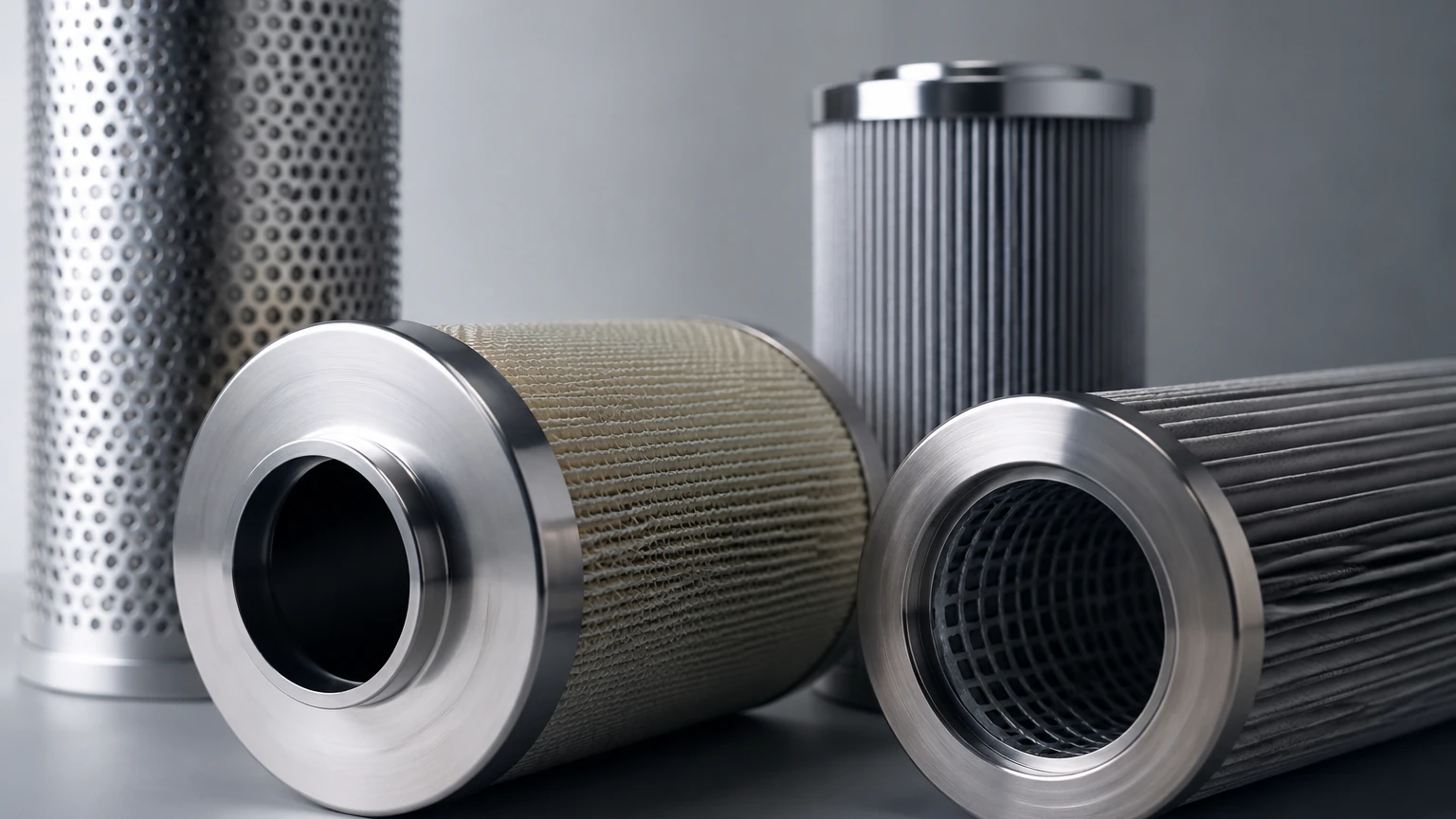
The first stage serves a dual purpose: it filters out solid particulate contaminants and initiates the coalescence of water. These elements are often constructed with graduated density layers. The outer layers trap solids, preventing them from plugging the inner coalescing layers. The core of the element is frequently supported by a stainless steel inner tube or mesh to prevent collapse under high differential pressure. At Kaifil, we specialize in providing the precision-engineered stainless steel components that provide the necessary structural support for these complex media layers.
The Separator Element (Second Stage)
The second stage is positioned downstream of the coalescer. While the coalescer grows the water droplets, some may still be carried along by the fluid velocity. The separator element is made of hydrophobic material—often Teflon-coated stainless steel wire mesh. This media allows the hydrocarbon fluid to pass through freely while repelling the enlarged water droplets, forcing them to settle into the bottom of the housing for drainage.
Housing and Sealing
The pressure vessel housing the elements must be designed to withstand the system's operating pressure and flow rates. Proper sealing, often using Viton or Buna-N O-rings, is critical to prevent bypass, which would allow contaminated fluid to reach the clean side of the system.
Material Engineering: The Role of Stainless Steel
In many industrial applications, particularly in the chemical, pharmaceutical, and petrochemical sectors, the durability of the filtration media is non-negotiable. While synthetic fibers are often used for the coalescing medium itself, the structural components—such as end caps, center tubes, and outer wraps—are predominantly made from stainless steel.
Corrosion Resistance
Stainless steel 304 and 316L are the industry standards for water coalescer components. 316L, with its addition of molybdenum, offers superior resistance to pitting and crevice corrosion, which is essential when dealing with fluids that may contain acidic compounds or when the system is located in marine environments.
Mechanical Strength
Industrial systems often experience pressure surges or high-viscosity starts. A water coalescer element must maintain its geometric integrity under these stresses. Stainless steel wire mesh and perforated cores provide the rigid framework necessary to support the delicate coalescing fibers, ensuring that the media does not shift or bypass during operation.
Cleanability and Longevity
Unlike disposable synthetic filters, stainless steel separator screens can often be cleaned and reused, depending on the nature of the contaminants. This reduces the total cost of ownership (TCO) and minimizes the environmental impact of frequent filter replacements.
Key Performance Metrics for Engineers
When evaluating a water coalescer, engineers must look beyond simple flow ratings. Several technical parameters define the true effectiveness of the system:
* Water Removal Efficiency: This is usually expressed in parts per million (PPM). A high-quality coalescer can reduce water content from several thousand PPM down to less than 10 PPM in a single pass.
* Particulate Filtration Rating: Since solids can interfere with the coalescence process, the element’s ability to remove particles (measured in microns) is vital. Most coalescers provide filtration down to 1 or 5 microns.
* Differential Pressure ($ΔP$): This is the pressure drop across the filter. A low initial $ΔP$ is desirable to minimize energy consumption. Engineers must monitor the terminal $ΔP$, which indicates when the element is saturated with solids and requires replacement.
* Flow Velocity: Coalescence is a velocity-sensitive process. If the fluid moves too quickly through the media, the water droplets may be sheared back into smaller emulsions before they can settle, a phenomenon known as "re-entrainment."
Applications Across Diverse Industries
The versatility of the water coalescer makes it a staple in various high-stakes industrial sectors:
Aviation and Marine Fuels
Jet fuel and diesel are highly susceptible to water contamination during transport and storage. In aviation, water in the fuel can freeze at high altitudes, blocking fuel lines. Water coalescers are mandatory at every stage of the fuel supply chain to ensure safety and engine reliability.
Hydraulic and Lubrication Systems
In heavy machinery, water in hydraulic oil reduces the fluid's lubricity and leads to the oxidation of metal surfaces. Coalescing systems integrated into the hydraulic circuit or used in "kidney loop" filtration units extend the life of pumps, valves, and actuators.
Oil and Gas Processing
During the extraction and refining of natural gas, liquid hydrocarbons often contain water that must be removed to prevent hydrate formation and corrosion in pipelines. Large-scale coalescing vessels are used to separate these phases before the gas enters the distribution network.
Selection Criteria: Choosing the Right Solution
To select the optimal water coalescer, purchasing teams and engineers should confirm the following technical details with their manufacturer:
1. Fluid Compatibility: Ensure that all materials, including the media, adhesives, and seals, are compatible with the base fluid and any additives it may contain.
2. Operating Temperature: High temperatures can lower the interfacial tension of the fluid, making coalescence more difficult. The system must be rated for the maximum expected temperature.
3. Viscosity: Higher viscosity fluids require more surface area and lower flow velocities to achieve effective separation.
4. Contaminant Load: If the fluid is heavily contaminated with solids, a pre-filter may be necessary to protect the coalescer element and extend its service life.
Maintenance and Troubleshooting
Regular monitoring is the key to ensuring the long-term performance of a water coalescer. The most common indicator of a problem is a rapid increase in differential pressure, which usually suggests a high particulate load. Conversely, if the differential pressure remains suspiciously low while water is detected downstream, it may indicate a ruptured element or a failure in the sealing mechanism.
It is also important to monitor the water drain frequency. If the sump fills more quickly than usual, it may indicate a sudden ingress of water into the system, such as a leaking tank vent or a failed heat exchanger. In systems using surfactant-heavy fluids (like certain detergents or additives), the coalescing media may become "disarmed." Surfactants coat the fibers and reduce their ability to attract water, necessitating more frequent element changes.
Conclusion
The water coalescer is an indispensable tool in the pursuit of fluid purity and equipment longevity. By understanding the mechanical principles of droplet growth and the importance of high-quality structural components, industrial operators can significantly reduce the risks associated with water contamination. Precision manufacturing, such as the custom stainless steel solutions provided by Kaifil, ensures that these systems perform reliably even under the most demanding conditions.
For engineers seeking to optimize their filtration processes or develop custom components for specific industrial applications, partnering with an experienced manufacturer is vital. To explore our range of custom stainless steel filtration solutions and technical support, please visit our Main Page. By focusing on material integrity and engineering precision, you can achieve superior separation performance and protect your critical infrastructure from the damaging effects of water contamination.
