


Water Filters Industrial
Industrial water filtration is a critical component of modern manufacturing, ensuring process efficiency, equipment longevity, and product purity across a wide range of sectors. Unlike residential or commercial systems, water filters industrial applications require robust construction, high flow capacities, and the ability to withstand extreme temperatures and chemical environments. For engineers and procurement managers, selecting the right filtration system involves a deep dive into material science, fluid dynamics, and specific application requirements.
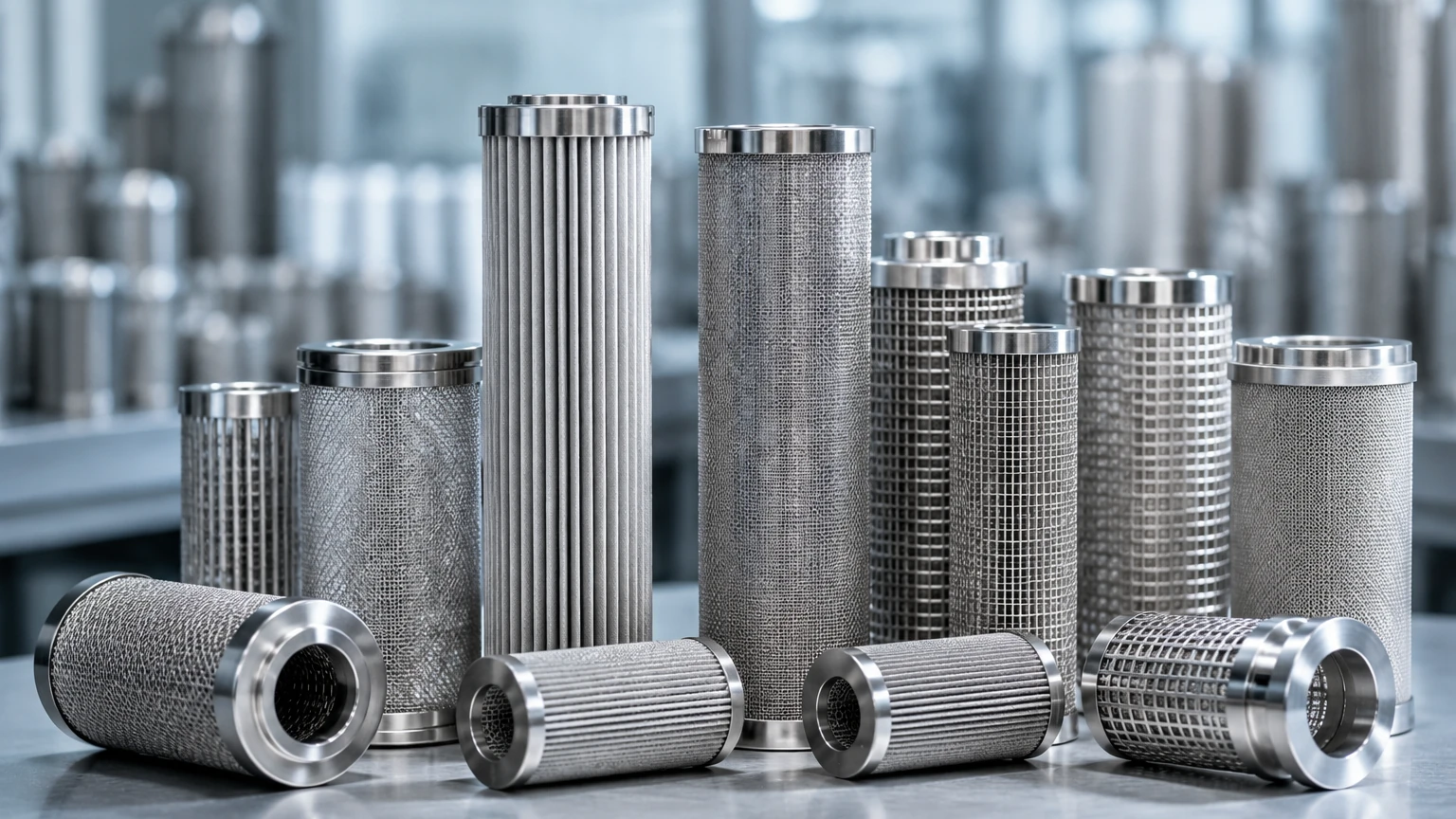
At the core of these systems are the filtration components themselves—often constructed from stainless steel to provide the durability and precision required for demanding industrial cycles. Understanding the nuances of these components is essential for optimizing performance and minimizing the total cost of ownership.
The Role of Stainless Steel in Industrial Water Filtration
When evaluating water filters industrial systems, the choice of material is the first and perhaps most critical decision. Stainless steel, particularly grades 304 and 316L, is the industry standard for high-performance filtration for several technical reasons.
Corrosion Resistance and Durability
Industrial water often contains chemicals, salts, or minerals that can lead to rapid oxidation in lesser materials. Type 304 stainless steel offers excellent resistance to many atmospheric environments and corrosive media. However, for more aggressive environments, such as those involving chlorides or high-salinity water, Type 316L is preferred due to its molybdenum content, which provides superior pitting resistance.
Temperature and Pressure Tolerance
Industrial processes frequently involve high-temperature water or steam cleaning (SIP/CIP) cycles. Stainless steel filter cartridges and wire mesh components maintain their structural integrity at temperatures where polymer-based filters would soften or fail. Furthermore, the high mechanical strength of metal filters allows them to withstand significant differential pressures without collapsing or bypassing contaminants.
Technical Classifications of Industrial Water Filter Media
Different industrial applications require different methods of particle capture. The design of the filter media determines whether the system performs surface filtration or depth filtration.
Stainless Steel Wire Mesh Filters
Wire mesh filters are primarily used for surface filtration. They consist of precisely woven stainless steel wires that create uniform openings. These are ideal for removing large particulates and are easily cleaned through backwashing or ultrasonic methods. Engineers often specify these for cooling water loops or as pre-filters for more sensitive downstream equipment.
Sintered Metal Filter Elements
Sintered filters are created by bonding multiple layers of wire mesh or metal powder through a high-temperature vacuum process. This creates a rigid, porous structure that provides depth filtration. Sintered elements are capable of capturing finer particles within the tortuous path of the media, making them suitable for high-precision water filters industrial needs, such as those found in pharmaceutical or semiconductor manufacturing.
Wedge Wire Screens
Wedge wire is characterized by its V-shaped profile wires. This design is particularly effective in industrial water intake and wastewater treatment because the V-shape minimizes clogging and facilitates easy cleaning. It is a preferred choice for high-volume solid-liquid separation.
Engineering Considerations for Filter Selection
Selecting a filter based solely on its micron rating is a common pitfall. A comprehensive engineering approach considers several interlocking variables to ensure the filtration system does not become a bottleneck in the production line.
Micron Rating: Absolute vs. Nominal
In the context of water filters industrial specifications, it is vital to distinguish between absolute and nominal ratings. A nominal rating refers to the filter's ability to retain a majority of particles of a certain size (e.g., 90%). An absolute rating, however, indicates that 99.9% or more of particles at that size will be captured. For critical process water, absolute-rated stainless steel cartridges are often required to ensure consistency.
Flow Rate and Differential Pressure (Delta P)
The flow rate is the volume of water passing through the filter per unit of time. As the filter captures contaminants, the resistance to flow increases, leading to a rise in differential pressure. Engineers must size the filter housing and elements to ensure that the initial pressure drop is low, typically between 2 to 5 psi, to allow for a functional service life before cleaning or replacement is necessary.
Chemical Compatibility
Beyond the filter media, the seals and gaskets (often made of EPDM, Viton, or PTFE) must be compatible with the water chemistry and any cleaning agents used. In chemical processing, for instance, the presence of solvents or high-pH fluids will dictate specific material pairings to prevent seal failure.
Application-Specific Requirements for Industrial Water Filters
Industrial water filtration is not a one-size-fits-all solution. Each industry has unique standards and challenges that dictate the design of the filtration component.
Food and Beverage Industry
In food and beverage production, water is often an ingredient. Filters must meet stringent hygienic standards. Stainless steel components are preferred because they can be polished to a high degree of smoothness (Ra < 0.8 µm), preventing bacterial growth and allowing for thorough sterilization. These systems are used for ingredient water, bottle washing, and steam filtration.
Pharmaceutical and Biotech
Precision is the priority in pharmaceutical water systems. Filtration components must be free of migrating fibers and capable of removing pyrogens or bacteria. Sintered stainless steel filters provide the necessary stability and precision for these high-stakes environments, often serving as final filters before the point of use.
Chemical and Petrochemical Processing
Water used in chemical plants often serves as a coolant or a solvent. The primary challenge here is the presence of aggressive chemicals and high temperatures. Stainless steel wire mesh filters provide the necessary chemical resistance to handle acidic or alkaline process water without degrading, ensuring that downstream heat exchangers and reactors remain free of scale and debris.
Power Generation and Cooling Towers
Large-scale cooling systems require the removal of sand, scale, and organic matter to prevent fouling of heat exchanger tubes. Water filters industrial systems in this sector often utilize high-flow wedge wire or coarse wire mesh to handle massive volumes of water with minimal maintenance intervention.
Maintenance, Cleaning, and Total Cost of Ownership
One of the primary advantages of utilizing stainless steel components in industrial water filtration is the ability to clean and reuse the filter media. While the initial capital expenditure for a stainless steel system is higher than that for disposable plastic or paper filters, the long-term economics often favor metal.
Cleaning Methodologies
- Backwashing: Reversing the flow of water to dislodge particles from the surface of the mesh.
- Ultrasonic Cleaning: Using high-frequency sound waves in a cleaning solution to remove fine particles embedded deep within sintered media.
- Chemical Cleaning: Using acids or bases to dissolve organic or mineral buildup, provided the filter material is compatible.
Evaluating Total Cost of Ownership (TCO)
When calculating TCO, engineers must look beyond the purchase price. Factors include:
1. Replacement Frequency: Disposable filters may need replacement every few weeks, whereas a stainless steel filter can last for years.
2. Disposal Costs: Spent disposable filters often count as industrial waste, incurring disposal fees.
3. Labor Costs: Frequent filter changes require more man-hours and potential system downtime.
4. Energy Efficiency: Metal filters can often be designed with larger surface areas to maintain lower pressure drops, reducing the energy required for pumping.
Customization and OEM Solutions in Industrial Filtration
Standard off-the-shelf filters often fail to meet the specific spatial or performance constraints of a specialized industrial plant. This is where customized filtration solutions become essential. Customization allows for the optimization of the filter's geometry, fitting types (such as NPT, Flange, or Tri-clamp), and specific mesh weaves to match the particle distribution of the source water.
Working with a manufacturer that understands the complexities of metal fabrication and filtration science enables the development of OEM components that integrate seamlessly into existing machinery. Whether it is a unique diameter for a filter housing or a reinforced structure for high-vibration environments, custom engineering ensures the filtration system performs as intended under real-world conditions.
For technical teams looking to optimize their processes, it is advisable to Review product options and application support to understand how specific stainless steel configurations can improve water quality and system reliability. The Main Page of a professional manufacturer provides deeper insights into the technical specifications and customization capabilities available for industrial-grade components.
Conclusion
Water filters industrial applications are the backbone of efficient industrial operations. By focusing on high-quality materials like stainless steel and considering the specific engineering parameters of the application, companies can achieve superior filtration performance. The transition from disposable to cleanable metal filtration components not only enhances process stability but also contributes to a more sustainable and cost-effective operation. As industrial standards continue to evolve, the demand for precision-engineered, durable filtration solutions will only increase, making informed selection and customization more important than ever.
