


Water Filtration System for Industrial
In the landscape of modern manufacturing, a water filtration system for industrial applications serves as a critical infrastructure component. Unlike municipal water treatment, industrial filtration must address a diverse range of contaminants, flow rates, and chemical environments that vary significantly between sectors such as chemical processing, food and beverage production, and pharmaceutical manufacturing. Selecting the right filtration technology is not merely a matter of removing debris; it is an engineering decision that impacts equipment longevity, process efficiency, and the total cost of ownership.
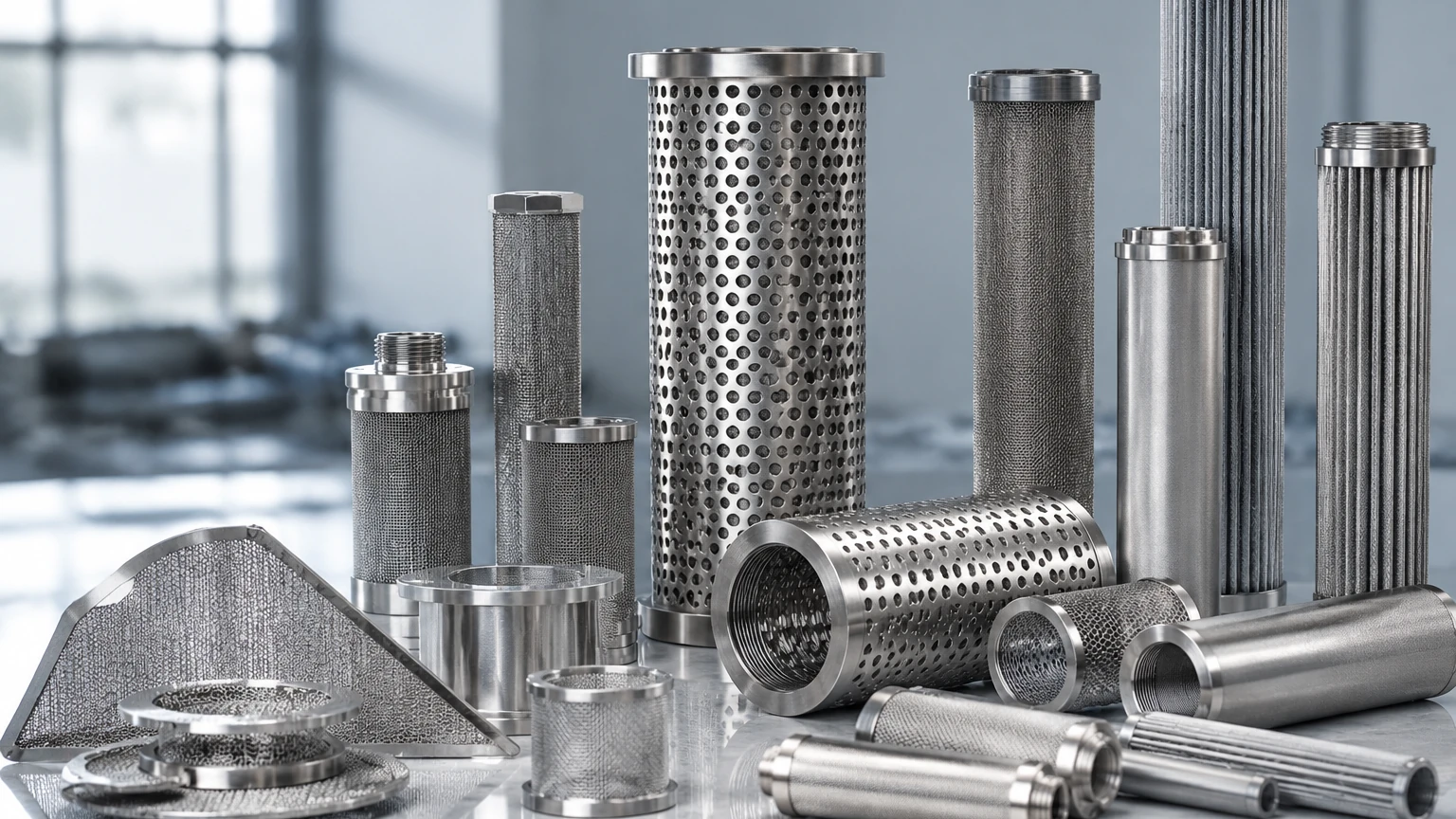
Industrial water systems often utilize stainless steel filtration components due to their mechanical strength and resistance to extreme conditions. As a professional manufacturer, Kaifil specializes in providing these high-performance metal filter solutions, ensuring that engineers can maintain precise control over their fluid streams. Understanding the technical nuances of these systems is essential for any technical professional or purchasing team tasked with optimizing industrial water quality.
Core Principles of Industrial Water Filtration
At its most basic level, a water filtration system for industrial use operates on the principle of mechanical separation. However, the complexity arises when considering the specific mechanisms of particle capture: surface filtration and depth filtration.
Surface Filtration
Surface filtration occurs when particles are trapped on the upstream side of the filter medium. This is typical of wire mesh filters and wedge wire screens. The advantage of surface filtration in an industrial context is its predictability and ease of cleaning. Because the contaminants do not penetrate the medium, they can often be removed through backwashing or mechanical scraping, making these components ideal for high-solids loading applications where frequent maintenance would otherwise be required.
Depth Filtration
Depth filtration involves a thicker medium, such as sintered metal or multi-layered mesh, where particles are trapped within the tortuous paths of the material. This method is superior for capturing a range of particle sizes and providing higher dirt-holding capacity. In industrial water loops where fine polishing is required—such as boiler feed water or ingredient water—depth filtration provides the necessary precision to protect sensitive downstream components like reverse osmosis (RO) membranes or high-pressure nozzles.
Engineering Considerations for System Selection
When designing or upgrading a water filtration system for industrial use, engineers must evaluate several interconnected variables. Failure to account for these can lead to premature filter failure, excessive pressure drops, or contaminated process streams.
Flow Rate and Velocity
The flow rate, typically measured in gallons per minute (GPM) or cubic meters per hour (m³/h), dictates the required effective filtration area (EFA). If the flow velocity is too high for a given filter size, it can force deformable particles through the mesh or cause structural fatigue in the filter element. Engineers must size the system to ensure that the fluid velocity remains within the laminar flow regime across the filter medium to maximize capture efficiency.
Differential Pressure (Delta P)
Differential pressure is the difference in pressure between the upstream and downstream sides of the filter. Every filter has an initial "clean" pressure drop. As contaminants accumulate, the Delta P increases. A robust industrial system must be designed to withstand the maximum expected differential pressure without collapsing or bypassing. Monitoring Delta P is the primary method for determining when a filter element requires cleaning or replacement.
Temperature and Chemical Compatibility
Industrial water is rarely just H2O. It often contains process chemicals, cleaning agents (CIP), or exists at elevated temperatures. Stainless steel, particularly grades 304 and 316L, is the industry standard for these environments. 316L, with its addition of molybdenum, offers superior resistance to chloride-induced pitting, which is a common failure mode in industrial water systems treated with chlorine or containing high mineral content.
The Role of Stainless Steel in Industrial Filtration
While polymer-based filters are common in light commercial applications, a water filtration system for industrial environments demands the durability of metal. Stainless steel filter cartridges and wire mesh components offer several distinct advantages:
1. Thermal Stability: Metal filters maintain their structural integrity at temperatures that would cause plastic housings or media to soften or degrade.
2. Pressure Resistance: In hydraulic and high-pressure water loops, stainless steel can withstand significant pressure spikes and high operating pressures without risk of bursting.
3. Cleanability and Reusability: Unlike disposable cartridges, stainless steel mesh and sintered elements can be cleaned via ultrasonic baths, chemical soaking, or backpulsing. This significantly reduces the long-term waste and replacement costs associated with industrial operations.
4. Zero Media Migration: High-quality stainless steel filters do not shed fibers or particles into the process stream, which is a critical requirement for pharmaceutical and food-grade applications.
For those seeking specific engineering support or customized component designs, you can Review product options and application support to see how custom metal filtration solutions fit into complex industrial architectures.
Customization and OEM Integration
No two industrial facilities are identical, which is why customization is a cornerstone of effective filtration. A water filtration system for industrial use often requires bespoke components to fit into existing piping layouts or to meet specific micron ratings that are not available in off-the-shelf products.
Tailored Micron Ratings
Micron ratings can be absolute or nominal. In critical industrial processes, an absolute rating is often required to ensure that 100% of particles above a certain size are removed. Manufacturers like Kaifil work with engineers to determine the exact mesh count or sintering density required to achieve these targets while balancing the need for adequate flow.
Structural Customization
Beyond the filtration media, the structural design of the filter element—such as the end cap configuration (DOE, SOE, Threaded), internal support cores, and outer guards—must be engineered to match the housing and the mechanical stresses of the application. Custom OEM solutions allow for the seamless integration of high-performance filtration into specialized machinery, such as industrial parts washers or large-scale cooling towers.
Maintenance and Total Cost of Ownership (TCO)
When evaluating a water filtration system for industrial use, the initial purchase price is only one part of the equation. Engineers and purchasing teams must consider the Total Cost of Ownership, which includes:
* Replacement Frequency: Disposable filters may have a lower upfront cost but require frequent replacement, leading to high recurring expenses and labor costs.
* Downtime: Systems that require frequent manual intervention for filter changes increase process downtime. Reusable stainless steel filters, especially those integrated into automated backwash systems, minimize this impact.
* Energy Consumption: A filter that clogs quickly or has an inherently high pressure drop forces pumps to work harder, increasing energy costs. Optimizing the filtration area through custom-pleated designs can mitigate these losses.
* Waste Disposal: In many regions, disposing of contaminated filter cartridges is regulated and expensive. Cleanable metal filters significantly reduce the volume of solid waste generated by a facility.
Industry-Specific Applications
The requirements for a water filtration system for industrial use vary by the final application. For example:
* Food and Beverage: Focuses on removing particulates that could affect product taste or clarity, while adhering to strict sanitary standards. Filters must be capable of withstanding frequent Clean-in-Place (CIP) cycles with caustic chemicals.
* Pharmaceuticals: Requires high-precision filtration for process water and steam. The use of 316L stainless steel and high-accuracy sintered media ensures that the water meets stringent pharmacopeia standards.
* Chemical Processing: Often involves corrosive fluids or high-temperature water loops. The chemical resistance of specialized alloys and the mechanical strength of wedge wire or heavy-duty mesh are paramount here.
* Hydraulic and Cooling Systems: These systems focus on protecting pumps and heat exchangers from scale and debris. Robust filtration prevents abrasive wear and maintains heat transfer efficiency.
Conclusion for Engineering and Purchasing Teams
Implementing an effective water filtration system for industrial applications requires a deep understanding of both the fluid dynamics and the material science involved. By moving away from generic solutions and toward engineered, stainless steel components, industrial facilities can achieve higher levels of reliability and efficiency.
When selecting a partner for these components, it is vital to confirm their manufacturing capabilities, material certifications, and experience in your specific industry. A well-designed filtration strategy does more than just clean water; it stabilizes the entire production process, protects capital equipment, and contributes to a more sustainable and cost-effective operation. For more information on technical specifications and custom designs, visit the Main Page to explore how precision-engineered metal filters can be integrated into your industrial water systems.
