


Witches Hat Strainer
In the landscape of industrial fluid handling and pipeline management, the protection of sensitive downstream equipment is a primary engineering concern. Among the various filtration components utilized during system commissioning and routine operations, the witches hat strainer—technically known as a conical strainer—serves as a critical line of defense. These components are designed to capture and remove solid contaminants from process streams, ensuring that pumps, valves, meters, and heat exchangers remain free from damage caused by construction debris, scale, or unexpected particulates.
While often categorized as "temporary" filtration solutions, the engineering rigor required to design and manufacture an effective witches hat strainer is substantial. At Kaifil, a professional manufacturer specializing in custom stainless steel filtration, we recognize that even a temporary component must meet the highest standards of durability and precision to prevent catastrophic system failures.
Understanding the Role of Witches Hat Strainers in Industrial Piping
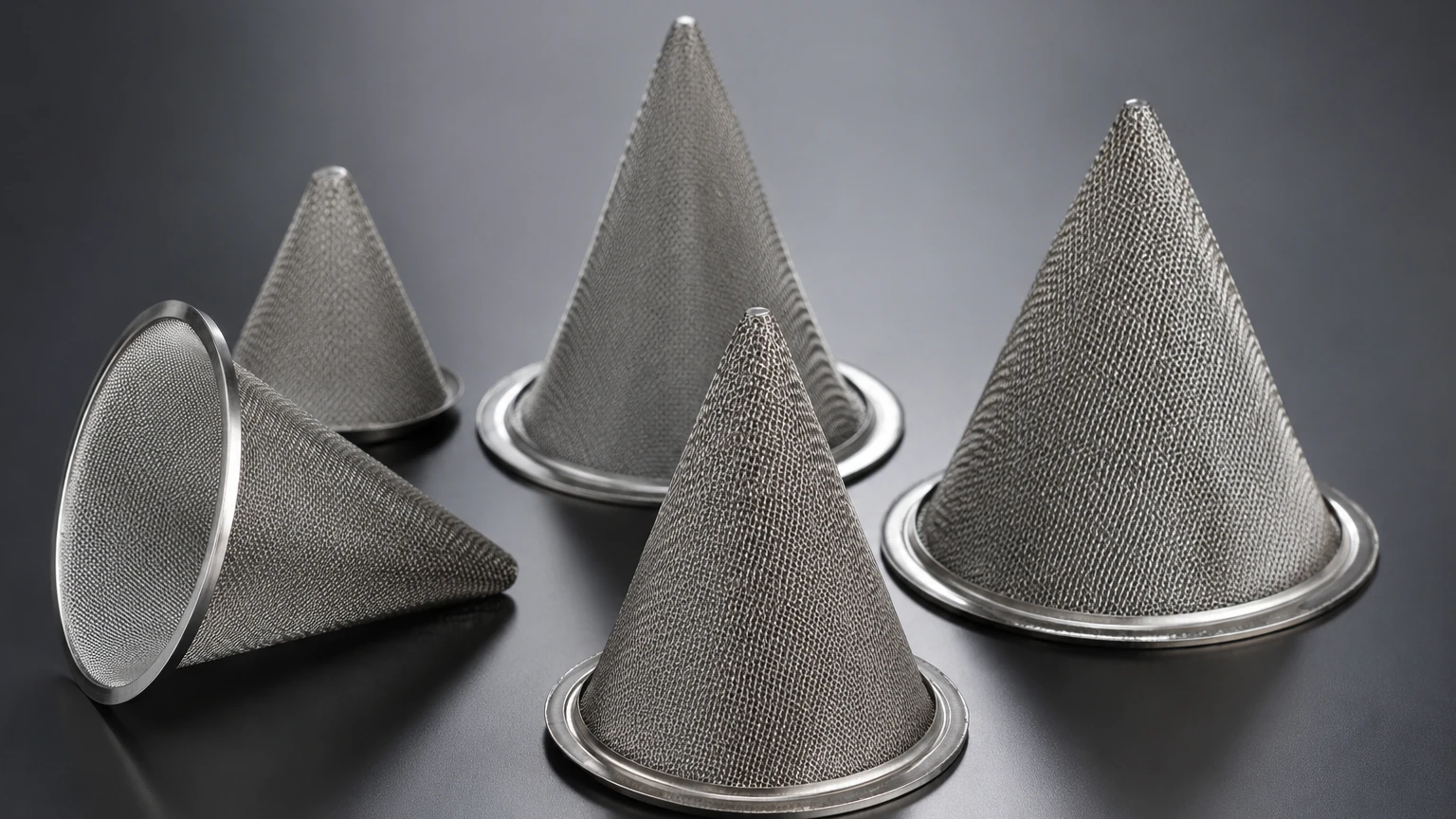
A witches hat strainer is a cone-shaped filtration device typically installed between two pipe flanges. Its distinctive conical geometry provides a significantly larger surface area than the cross-sectional area of the pipe itself, which is essential for managing pressure drop while capturing high volumes of debris.
Primary Functions
These strainers are most commonly employed during the "start-up" or "commissioning" phase of a new or modified piping system. During construction, foreign materials such as welding slag, bolt ends, gasket fragments, and scale often accumulate within the pipes. If these materials are allowed to reach high-speed rotating equipment like pumps or turbines, the resulting mechanical damage can lead to expensive downtime and repairs.
Beyond start-up, witches hat strainers are frequently used in applications where solids loading is intermittent or where a low-cost, easily removable filtration solution is required for batch processing. Because they are held in place by the compression of flange bolts, they do not require a dedicated strainer housing, making them an efficient choice for space-constrained environments.
Technical Specifications and Material Selection
The performance of a witches hat strainer is fundamentally tied to its material composition and structural design. Industrial environments demand materials that can withstand corrosive fluids, high temperatures, and significant mechanical stress.
Stainless Steel Grades
Kaifil utilizes high-grade stainless steel to ensure longevity and chemical compatibility. The most common selections include:
* Type 304 Stainless Steel: Suitable for general industrial applications, offering good corrosion resistance and mechanical strength at a cost-effective price point.
* Type 316/316L Stainless Steel: Preferred for chemical processing, pharmaceutical, and marine environments. The addition of molybdenum provides superior resistance to chlorides and pitting corrosion.
* Specialty Alloys: For highly aggressive environments, materials such as Monel, Hastelloy, or Duplex stainless steel may be specified to prevent premature failure.
Construction Methods: Perforated Plate vs. Wire Mesh
The filtration media of a witches hat strainer typically consists of a perforated metal base, which provides the necessary structural integrity. Depending on the required filtration fineness, this base may be lined with a fine stainless steel wire mesh.
* Perforated Only: Used for coarse straining where the goal is to catch large debris (e.g., stones or large metal fragments). Perforation sizes usually range from 1/16" to 1/4".
* Mesh Lined: For finer filtration requirements, a wire mesh is sintered or spot-welded to the interior or exterior of the perforated cone. This allows for filtration ratings down to 20 microns or finer, depending on the application’s needs.
Engineering Considerations: Flow Rate and Pressure Drop
One of the most critical aspects of selecting a witches hat strainer is calculating the impact on system hydraulics. Every filtration element introduces a degree of resistance to flow, manifested as a pressure drop (Delta P).
The Open Area Ratio
Engineers must consider the "Open Area Ratio" (OAR) of the strainer. This is the ratio of the total open area of the holes in the strainer to the cross-sectional area of the inlet pipe. A common industry standard is a 300% open area, meaning the strainer has three times the flow area of the pipe. This high ratio ensures that even as the strainer begins to collect debris, the pressure drop remains within acceptable limits for a longer period.
Cone Length and Geometry
The length of the cone directly influences the surface area. Short-profile cones (often called truncated cones) are used when space is limited, but they require more frequent cleaning due to their smaller surface area. Standard long-profile cones offer better flow characteristics and higher dirt-holding capacity. When designing custom solutions, Kaifil’s engineering team evaluates the flow velocity and fluid viscosity to determine the optimal cone length for the specific installation.
Application Scenarios Across Key Industries
Because of their versatility, witches hat strainers are found in a diverse range of sectors, each with unique operational demands.
Chemical and Petrochemical Processing
In these environments, the primary concern is material compatibility and the ability to handle high-pressure flows. Strainers are often used to protect control valves from scale that can break loose from carbon steel piping. The use of 316L stainless steel is standard here to mitigate the risk of intergranular corrosion.
Food and Beverage Production
For food-grade applications, the strainer must meet strict hygienic standards. This involves ensuring that all welds are smooth and free of pits or crevices where bacteria could proliferate. Stainless steel wire mesh filters are essential here for removing particulates from liquid ingredients or CIP (Clean-In-Place) solutions.
Water Treatment and Desalination
In water treatment, these strainers act as pre-filters for membranes or UV disinfection systems. They are particularly effective at catching large organic matter or sand that could bypass initial screening processes.
To explore the full range of custom filtration components available for these industries, technical teams can visit the Main Page for detailed product specifications and engineering support.
Installation Best Practices and Operational Maintenance
Proper installation is vital to the functional integrity of a witches hat strainer. Incorrect placement can lead to the collapse of the strainer or damage to the very equipment it is intended to protect.
Orientation: Upstream vs. Downstream
A common point of discussion among engineers is the orientation of the cone.
1. Cone Pointing Upstream: In this configuration, debris is collected around the base of the cone (near the flange). This is often preferred when the volume of debris is expected to be high, as it prevents the tip of the cone from becoming a concentrated point of stress.
2. Cone Pointing Downstream: Debris is collected inside the tip of the cone. This is the more traditional orientation for start-up strainers, as it makes it easier to ensure all captured debris is removed when the strainer is pulled from the line.
Monitoring Differential Pressure
Operating a system with a clogged strainer is a leading cause of pump cavitation and mechanical failure. It is standard practice to install pressure gauges upstream and downstream of the strainer location. Once the differential pressure reaches a pre-determined limit (typically 5-10 psi depending on the system design), the process must be halted, and the strainer removed for cleaning.
Maintenance and Cleaning
Since witches hat strainers are held between flanges, maintenance requires the depressurization and partial disassembly of the piping. The strainer is removed, cleaned (often via high-pressure water or ultrasonic cleaning for fine meshes), inspected for structural damage, and then either reinstalled or replaced with a permanent filtration solution if the commissioning phase is complete.
Customization and OEM Solutions for Precision Filtration
Off-the-shelf strainers often fail to meet the specific tolerances of high-performance industrial systems. Customization is frequently required to address unique pipe IDs, non-standard flange ratings, or extreme flow conditions.
Structural Reinforcement
In high-flow applications, the mechanical force of the fluid can cause a standard wire mesh cone to collapse or "telescope." Kaifil addresses this by incorporating heavy-duty perforated backing or internal support rings. This ensures the strainer maintains its shape even under significant differential pressure.
Tailored Dimensions
Not all pipelines follow standard ASME or DIN dimensions. Custom manufacturing allows for the adjustment of the flange ring diameter and thickness to ensure a perfect seal without interfering with gasket seating. This precision prevents bypass, ensuring that 100% of the fluid passes through the filtration media.
Selecting a Reliable Manufacturing Partner
When specifying a witches hat strainer, engineers must look beyond the initial purchase price and consider the total cost of ownership. A poorly manufactured strainer that fails in service can release metal fragments into the process stream, causing far more damage than the debris it was supposed to catch.
Kaifil’s commitment to quality involves rigorous material verification and advanced manufacturing techniques. By specializing in stainless steel filtration, we provide the technical expertise necessary to advise on mesh selection, structural design, and material compatibility. Our OEM capabilities allow us to work closely with engineering firms to develop filtration components that are perfectly matched to their application requirements.
In conclusion, while the witches hat strainer may appear to be a simple component, its role in protecting industrial infrastructure is indispensable. Through careful consideration of material science, fluid dynamics, and mechanical design, these strainers provide a cost-effective and reliable solution for maintaining the purity of process streams and the longevity of critical equipment. For those seeking specialized guidance or custom-engineered filtration solutions, reviewing professional manufacturing options is the first step toward optimized system performance.
