


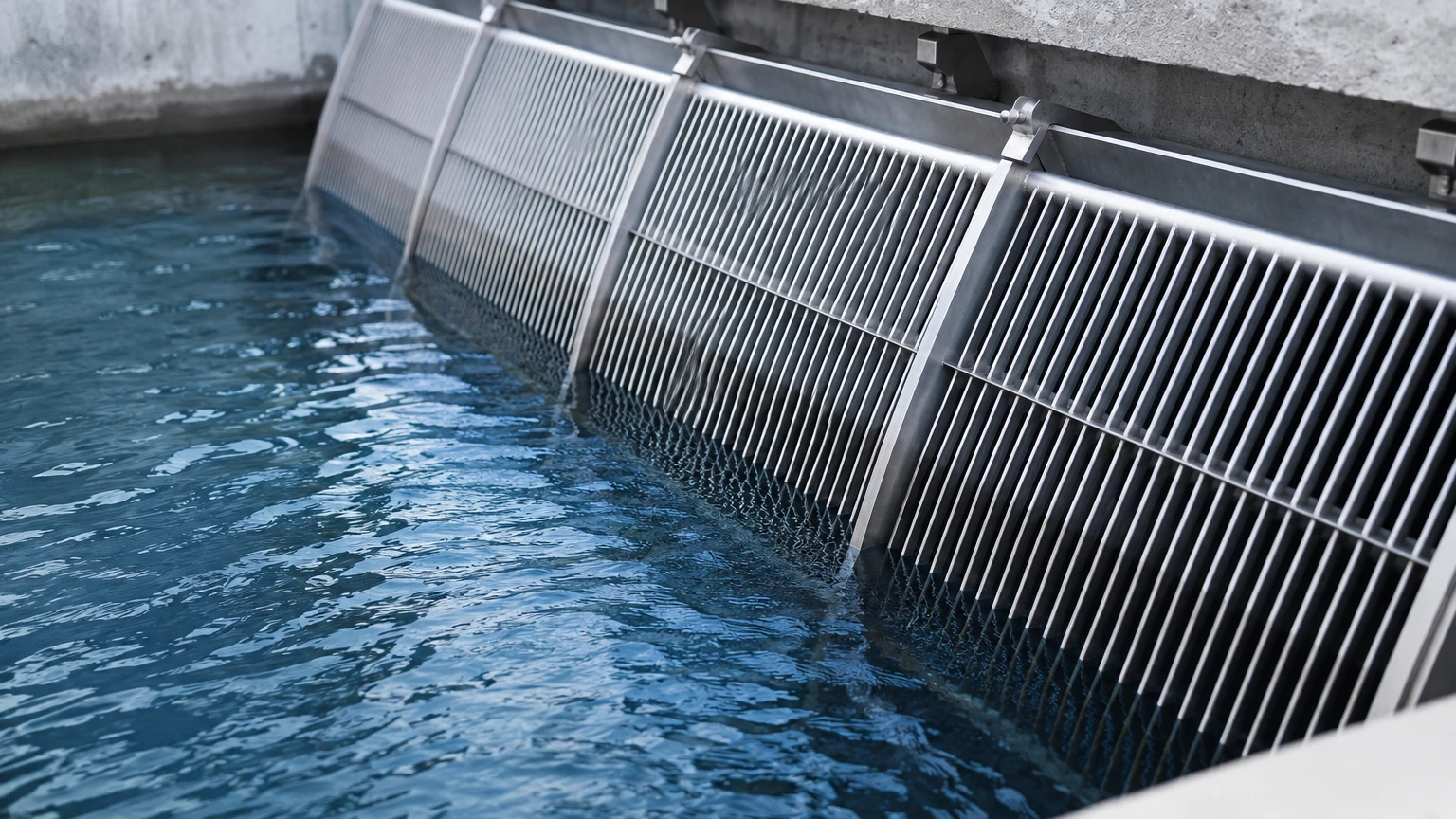
Water Intake Screens
Water intake screens serve as the primary defense mechanism for industrial and municipal water systems, protecting downstream equipment from debris, sediment, and aquatic life. In B2B environments—ranging from power generation and chemical processing to desalination and municipal water treatment—the efficiency of an intake system is directly tied to the design and material integrity of these screens. For engineers and procurement teams, selecting the correct screen involves balancing hydraulic performance, environmental compliance, and long-term maintenance costs.
As a specialized manufacturer of stainless steel filtration solutions, Kaifil provides the technical expertise required to navigate these complex engineering challenges. This guide examines the technical parameters, material considerations, and selection criteria essential for implementing effective water intake systems.
Engineering Principles of Water Intake Screens
The primary function of a water intake screen is to allow for the continuous withdrawal of water while excluding solids. However, the engineering behind this process must account for several fluid dynamic variables to ensure the system does not fail under operational stress.
Approach and Through-Slot Velocity
One of the most critical design factors is the approach velocity—the speed of the water as it nears the screen surface. Regulatory bodies often mandate low approach velocities (typically around 0.15 meters per second or 0.5 feet per second) to protect local fish populations and prevent aquatic organisms from being impinged against the screen.
Through-slot velocity, on the other hand, refers to the speed of the water as it passes through the screen openings. High through-slot velocities can lead to increased head loss and may pull smaller debris deeper into the mesh or wedge wire structure, causing premature clogging. Engineers must calculate the total open area of the screen to ensure that even at peak flow, the velocities remain within safe and efficient limits.
Head Loss and Hydraulic Efficiency
Head loss represents the reduction in total head (pressure) of the fluid as it moves through the screen. Excessive head loss can starve downstream pumps, leading to cavitation and mechanical failure. Factors influencing head loss include the percentage of open area, the shape of the filtration media (such as V-shaped wedge wire vs. square mesh), and the accumulation of debris. A well-designed water intake screen minimizes this resistance by maximizing the effective open area while maintaining structural rigidity.
Material Selection for Harsh Aquatic Environments
Water intake screens are permanently submerged and exposed to varying water chemistries, including high chloride levels in seawater, fluctuating pH in industrial runoff, and biological growth. Material selection is the most significant factor in determining the total cost of ownership (TCO).
Stainless Steel 304 and 316L
Stainless steel is the industry standard for intake screens due to its high strength-to-weight ratio and corrosion resistance.
* Grade 304: Suitable for freshwater applications with low chloride content. It provides excellent structural support and is cost-effective for municipal reservoirs and inland river intakes.
* Grade 316L: The "L" denotes low carbon, which improves weldability and resistance to intergranular corrosion. 316L contains molybdenum, making it significantly more resistant to pitting and crevice corrosion in brackish water or environments with moderate chemical exposure.
Duplex Stainless Steel and Super Alloys
For seawater desalination plants or high-salinity coastal environments, standard stainless steels may succumb to stress corrosion cracking. In these instances, Duplex stainless steels (such as 2205) are utilized. Duplex alloys offer nearly double the yield strength of austenitic stainless steels and superior resistance to localized corrosion, ensuring the screens remain functional for decades without structural degradation.
Biofouling Resistance
Biological growth, such as algae, zebra mussels, and barnacles, can rapidly occlude screen openings. While stainless steel provides a smooth surface that is easier to clean than plastic or galvanized steel, certain applications may require specialized coatings or the use of copper-nickel alloys to naturally inhibit biofouling. However, for most industrial applications, a robust mechanical or air-burst cleaning system paired with high-quality stainless steel is the most reliable solution.
Comparing Passive and Mechanical Intake Systems
Intake screens generally fall into two categories: passive systems and active (mechanical) systems. The choice between them depends on the water source, the volume of debris, and the available maintenance budget.
Passive Intake Screens
Passive screens, often utilizing wedge wire technology, have no moving parts. They rely on the natural ambient current to carry debris away from the screen surface. They are typically T-shaped or cylindrical and are installed offshore.
* Advantages: Low maintenance, no power requirements at the intake site, and excellent environmental compliance.
* Applications: Desalination, cooling water for power plants, and sensitive environmental zones.
Mechanical and Traveling Water Screens
Active systems use mechanical means to remove debris. Traveling water screens consist of a series of screen panels mounted on a continuous chain. As debris accumulates, the chain moves, lifting the panels out of the water where they are cleaned by high-pressure spray headers.
* Advantages: Capable of handling heavy debris loads and large fluctuations in water levels.
* Applications: River intakes with high seasonal leaf or silt loads and industrial plants with high-volume water requirements.
Key Evaluation Criteria for Procurement and Design
When specifying water intake screens, engineering teams must confirm several technical details to ensure the product is fit for purpose. At Kaifil, we emphasize the following criteria during the design phase:
1. Filtration Accuracy (Slot Size): The slot width must be smaller than the smallest debris that could damage downstream equipment, yet large enough to prevent rapid blinding. For fish protection, slot sizes are often as small as 1mm to 2mm.
2. Structural Load Requirements: The screen must withstand the hydrostatic pressure differential (differential pressure) that occurs when the screen becomes partially blocked. Failure to account for this can lead to the collapse of the screen basket or cylinder.
3. Flow Distribution: In large intake structures, water may not flow evenly across the entire screen surface. Internal baffles or flow modifiers may be required to ensure uniform velocity, which prevents "hot spots" of high velocity that can accelerate wear and debris impingement.
4. Connection Interfaces: Whether the screen is flange-mounted, slide-mounted, or integrated into a custom manifold, the sealing surfaces must be precision-engineered to prevent bypass—where unfiltered water leaks around the screen.
Maintenance and Longevity Considerations
A water intake screen is a long-term asset. Its performance over 10 to 20 years depends on the integration of effective cleaning mechanisms and a proactive maintenance schedule.
Air-Burst Cleaning Systems
For passive screens, an air-burst system is the most common cleaning method. A high-pressure burst of compressed air is released from inside the screen, forcing accumulated debris off the outer surface. The frequency of these bursts can be automated based on differential pressure sensors. If the pressure drop across the screen exceeds a pre-set limit, the system triggers a cleaning cycle.
Inspection and Replacement Cycles
Regular underwater inspections (via divers or ROVs) are necessary to check for structural integrity, corrosion, and the buildup of stubborn biofouling. While stainless steel components are durable, sacrificial anodes may need replacement in cathodic protection systems, and seals or gaskets should be inspected for degradation. Choosing a manufacturer that provides high-precision components ensures that replacement parts fit perfectly, reducing downtime during scheduled turnarounds.
Customization and OEM Integration with Kaifil
Standard off-the-shelf filtration products rarely meet the specific demands of large-scale industrial water intakes. Every site has unique flow rates, environmental constraints, and chemical profiles. Kaifil specializes in custom-engineered stainless steel filtration solutions that address these specific variables.
Our manufacturing capabilities include precision wedge wire production, custom wire mesh fabrication, and advanced welding techniques that ensure the structural integrity of every component. By working closely with engineering firms and plant managers, we develop filtration systems that optimize flow and minimize operational risks. For more information on our full range of industrial filtration capabilities, including custom cartridges and metal filter components, you can Review product options and application support on our Main Page.
Conclusion
Selecting the right water intake screens is a multifaceted decision that impacts the entire lifecycle of an industrial facility. By focusing on low approach velocities, high-grade materials like 316L or Duplex stainless steel, and the appropriate cleaning technology, engineers can ensure a steady supply of clean water while protecting both their equipment and the surrounding environment. Factual data and rigorous engineering calculations should always drive the selection process, ensuring that the intake system remains a reliable asset rather than a maintenance bottleneck.
