


Water Oil Separator Filter
In industrial fluid management, the effective separation of immiscible liquids is a critical requirement for maintaining equipment integrity, ensuring product purity, and meeting environmental compliance standards. A water oil separator filter serves as a specialized component designed to remove water from oil or oil from water, depending on the specific application. Unlike standard particulate filters that focus solely on solid contaminants, these systems utilize the physical properties of the fluids—such as density, surface tension, and viscosity—to achieve high-efficiency separation.
For engineers and procurement professionals, selecting the correct filtration media and housing configuration is paramount. Industrial environments often involve high pressures, corrosive chemicals, and fluctuating temperatures, necessitating robust solutions. As a professional manufacturer, Kaifil specializes in providing custom stainless steel filtration solutions that address these complex challenges. Understanding the technical nuances of how a water oil separator filter operates is the first step toward optimizing industrial processes.
Understanding the Role of the Water Oil Separator Filter in Industrial Systems
The presence of water in industrial oils, such as hydraulic fluids, lubricants, or fuels, can lead to catastrophic system failures. Water promotes oxidation, reduces the lubricating film strength, and encourages the growth of microorganisms. Conversely, in wastewater treatment or chemical processing, oil contamination in water streams can violate environmental regulations and damage downstream treatment equipment.
A water oil separator filter acts as a barrier and a facilitator. In most industrial configurations, these filters are integrated into the fluid circuit to continuously or batch-process the medium. The primary goal is to reach a specific purity level, often measured in parts per million (PPM), while maintaining the flow characteristics required by the system. By visiting the Main Page, technical teams can explore the various configurations available for these demanding tasks.
Technical Principles of Oil-Water Separation
To effectively specify a water oil separator filter, one must understand the three primary states of water-in-oil (or oil-in-water) mixtures:
1. Free Water/Oil: Large droplets that separate easily due to gravity.
2. Dispersed Water/Oil: Smaller droplets suspended in the continuous phase, requiring mechanical intervention to separate.
3. Emulsified Water/Oil: Microscopic droplets stabilized by surfactants or high shear forces, which are the most difficult to remove.
Coalescence Technology
Most high-performance separator filters utilize the principle of coalescence. As the contaminated fluid passes through a specialized medium—often a multi-layered stainless steel wire mesh or a synthetic fiber matrix—the small droplets are forced to collide and merge into larger globules. These larger globules then have sufficient buoyancy (or lack thereof) to rise to the top or sink to the bottom of the filter housing, where they can be drained.
Hydrophobic and Hydrophilic Media
The selection of the filter media is based on its affinity for water. Hydrophobic media repel water while allowing oil to pass, effectively "stripping" the water from the stream. Hydrophilic media attract water, facilitating the coalescing process. In many advanced water oil separator filter designs, a combination of these media is used in stages to achieve maximum efficiency.
Engineering Considerations for Stainless Steel Filtration Media
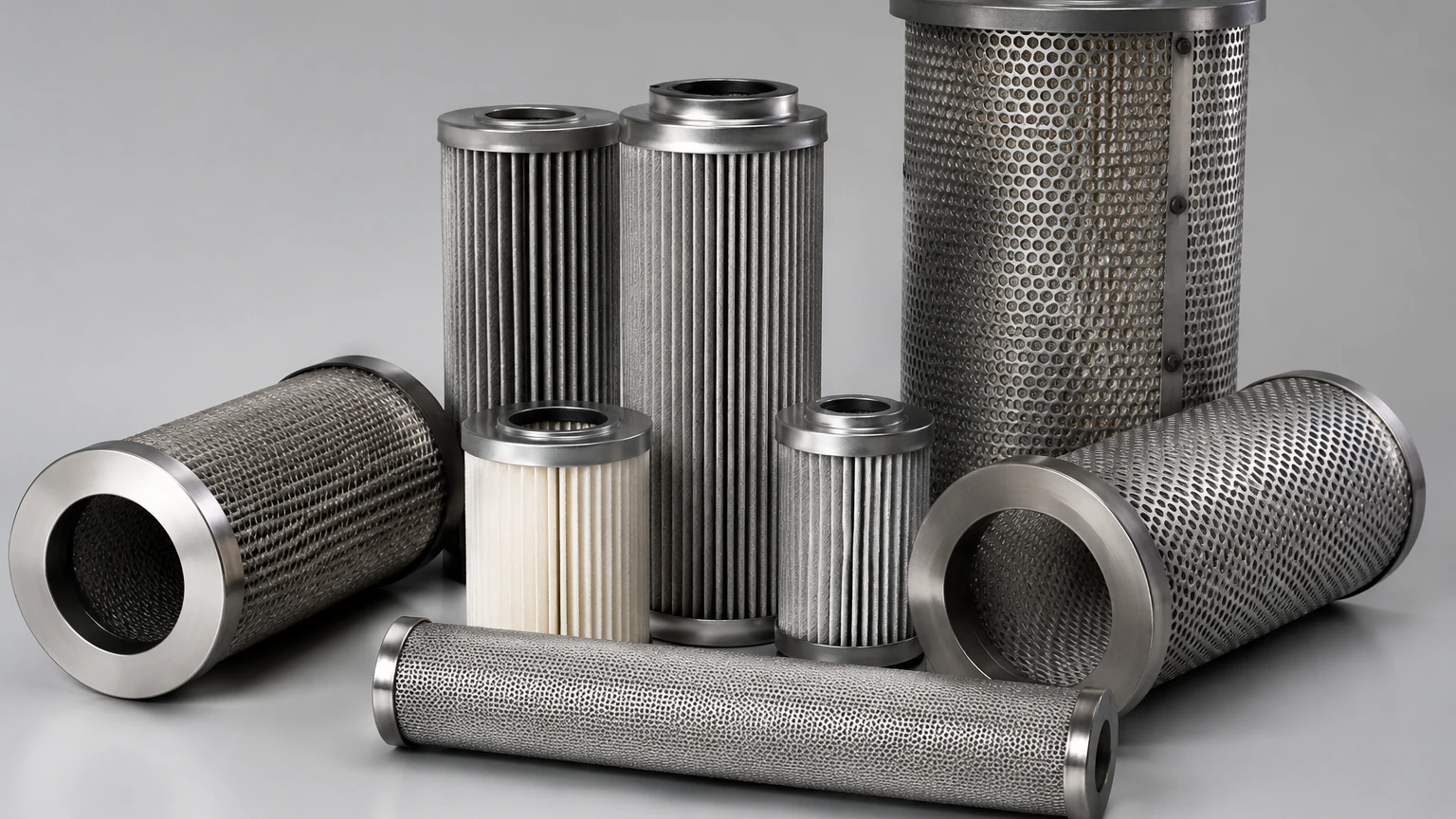
While synthetic materials are common in light-duty applications, industrial-grade separation requires the durability of metal. Stainless steel, particularly grades 304 and 316L, is the preferred material for water oil separator filter components due to several engineering advantages:
* Chemical Compatibility: Stainless steel resists corrosion from a wide range of industrial chemicals, fuels, and saline environments, which is critical when dealing with contaminated water streams.
* Thermal Stability: Industrial processes often operate at elevated temperatures where plastic or paper-based filters would degrade or lose structural integrity.
* Mechanical Strength: High-pressure hydraulic systems or high-flow fuel lines exert significant stress on filter elements. Stainless steel wire mesh provides the necessary pleat stability and resistance to pressure surges.
* Cleanability: Unlike disposable depth filters, stainless steel cartridges can often be cleaned and reused, reducing the long-term total cost of ownership and environmental impact.
Kaifil’s expertise in precision metal filter components ensures that the pore size distribution and structural reinforcement of the mesh are tailored to the specific viscosity and flow requirements of the application.
Key Performance Metrics for Selection
When evaluating a water oil separator filter, engineers must look beyond the initial purchase price and focus on technical performance metrics that impact system reliability.
Micron Rating and Efficiency
The micron rating defines the smallest particle (or droplet) the filter can reliably capture. However, in separation, the "Beta Ratio" or separation efficiency percentage is more descriptive. A filter might be rated for 10 microns, but its ability to remove 99.9% of dispersed water is what determines its effectiveness in protecting a turbine or engine.
Differential Pressure (ΔP)
Every filter introduces a pressure drop into the system. As the filter captures contaminants, this pressure drop increases. It is vital to select a filter with a low initial ΔP to ensure that the pump or gravity-fed system operates within its design parameters. For high-viscosity oils, the surface area of the filter media must be increased to keep the ΔP manageable.
Flow Velocity
Separation is a time-dependent process. If the fluid velocity through the media is too high, the droplets may be sheared back into smaller particles rather than coalescing. Proper sizing of the water oil separator filter housing is essential to ensure the "dwell time" is sufficient for effective separation.
Customization and OEM Solutions for Demanding Environments
Standard off-the-shelf filters rarely meet the exact needs of specialized industrial equipment. Customization is often required to fit specific spatial constraints or to handle unique fluid chemistries.
Tailored Mesh Configurations
By adjusting the weave pattern (such as plain, twill, or dutch weave) and the wire diameter, manufacturers can fine-tune the capillary action within the filter. This allows for the optimization of the water oil separator filter for specific oil weights, from light diesel to heavy gear oils.
Structural Integration
OEM solutions often involve integrating the filter element into existing manifolds or housings. This requires precision engineering of the end caps, seals (such as Viton or PTFE), and support cores to ensure a bypass-free fit. Kaifil provides comprehensive OEM support, working from technical drawings or performance specifications to deliver components that integrate seamlessly into larger industrial assemblies.
Maintenance and Operational Longevity
The lifecycle of a water oil separator filter is determined by the contaminant load and the maintenance regime. In systems with high particulate levels, a pre-filter is often recommended to protect the coalescing media from premature clogging.
Monitoring and Replacement Cycles
Industrial systems should be equipped with differential pressure gauges or sensors. A sudden rise in ΔP indicates that the filter is loaded with solids, while a decrease in separation efficiency (detected via fluid analysis) may indicate that the coalescing media has become "blinded" by surfactants or chemical films. Regular sampling of the effluent is the only definitive way to confirm that the separator is performing to its rated specification.
Cleaning Procedures
For stainless steel elements, cleaning methods such as ultrasonic baths, backflushing, or chemical cleaning can restore the filter's performance. It is important to confirm with the manufacturer that the cleaning agents used are compatible with both the metal and the sealing materials.
Industry-Specific Applications
The versatility of the water oil separator filter allows it to be deployed across diverse sectors:
* Marine and Shipping: Removing water from marine diesel and lubricating oils to prevent engine corrosion in high-humidity environments.
* Power Generation: Protecting steam turbines by removing water from the lubrication system, which is prone to condensation.
* Chemical Processing: Separating organic solvents from aqueous wash streams in pharmaceutical or specialty chemical production.
* Hydraulic Systems: Maintaining the dielectric strength and lubricity of hydraulic fluids in heavy machinery and aerospace applications.
* Food and Beverage: Ensuring that process water used in cooling or cleaning is free from oil contamination before discharge or reuse.
Conclusion: Selecting the Right Filtration Partner
Choosing a water oil separator filter is an engineering decision that directly impacts the uptime and efficiency of industrial operations. By focusing on material quality, precise engineering of the filtration media, and a clear understanding of the fluid dynamics involved, technical teams can significantly reduce the risks associated with fluid contamination.
Kaifil remains committed to delivering high-performance, customized stainless steel filtration solutions that meet the most demanding industrial standards. From initial design and material selection to the production of precision metal components, the focus is always on durability and reliable filtration performance. For more information on how custom filtration solutions can support your specific application, review product options and application support on the Main Page.
