


Water Sparger
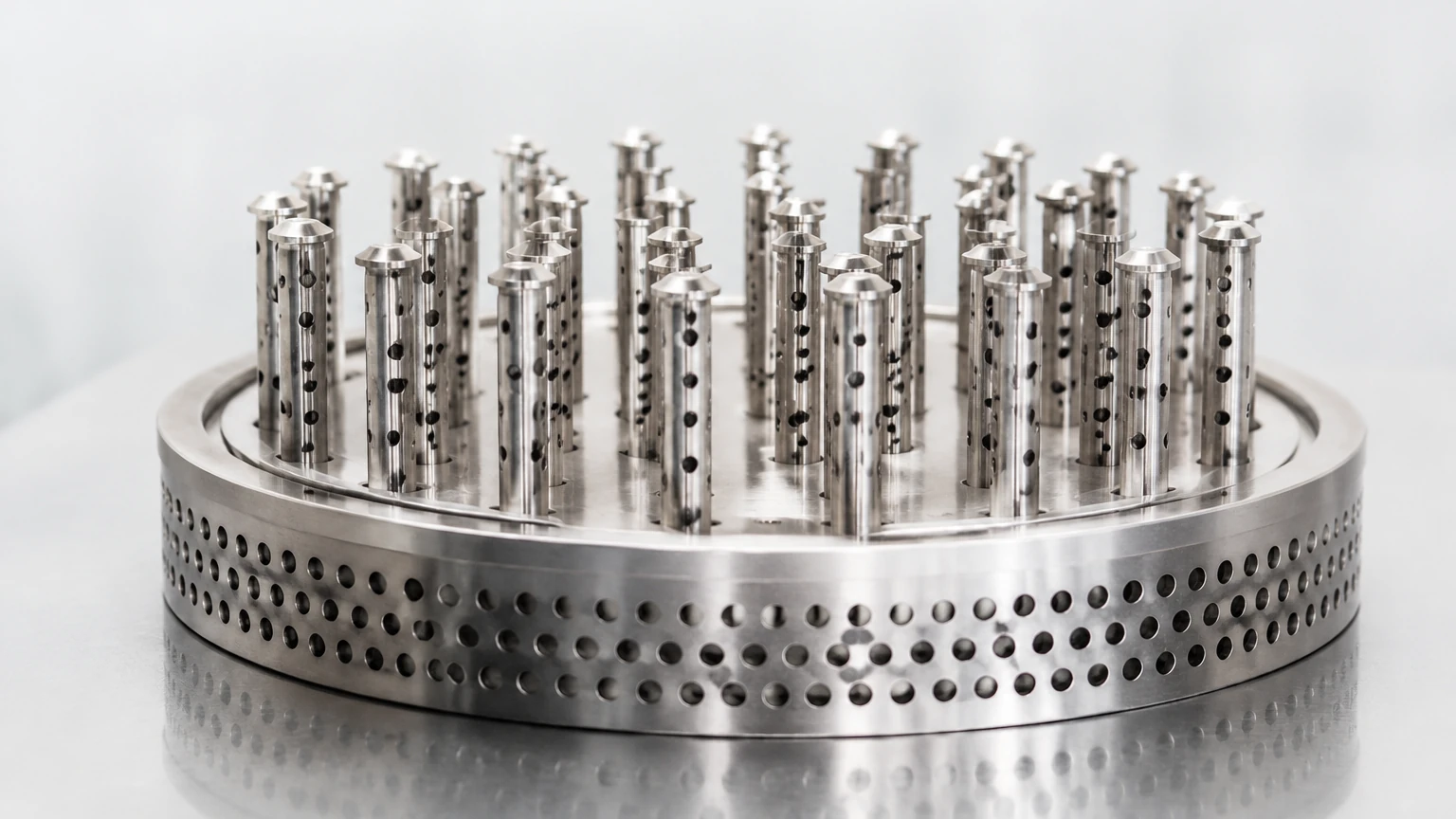
In industrial process engineering, the efficient introduction of gases into liquids is a fundamental requirement for various chemical, biological, and mechanical operations. A water sparger is a specialized device designed to inject gas—such as oxygen, nitrogen, carbon dioxide, or ozone—into a water-based liquid stream or vessel. Unlike simple drilled pipes, high-performance industrial spargers utilize porous media to create millions of tiny bubbles, significantly increasing the gas-liquid interfacial area and enhancing mass transfer rates.
For engineers and procurement teams, selecting the correct water sparger involves understanding the fluid dynamics of the application, the chemical compatibility of the materials, and the specific micron ratings required to achieve desired process outcomes. This guide examines the technical specifications, engineering considerations, and industrial applications of stainless steel sparging systems.
Understanding the Fundamentals of Industrial Water Spargers
The primary function of a water sparger is to facilitate mass transfer between a gas phase and a liquid phase. According to Henry's Law, the amount of dissolved gas in a liquid is proportional to its partial pressure above the liquid. However, the rate at which this equilibrium is reached depends heavily on the total surface area of the gas bubbles.
Traditional sparging methods, such as open pipes or drilled holes, produce large bubbles that rise quickly to the surface, resulting in low residence time and poor absorption efficiency. In contrast, porous metal spargers, typically manufactured from sintered stainless steel, generate fine bubbles (often in the range of 2 to 20 microns). These micro-bubbles have a much higher surface-area-to-volume ratio and a slower rise velocity, which maximizes the contact time and ensures more efficient gas dissolution.
The Role of Porous Stainless Steel in Sparger Performance
Material selection is critical when designing a water sparger for industrial environments. Sintered stainless steel, particularly Grade 316L, is the industry standard due to its mechanical strength, thermal stability, and corrosion resistance.
Advantages of Sintered Metal Media
1. Uniform Pore Distribution: Sintered media provides a consistent pore structure, ensuring that gas is distributed evenly across the entire surface of the sparger element. This prevents "channeling," where gas escapes through a single path of least resistance.
2. Structural Integrity: Unlike ceramic or plastic alternatives, stainless steel spargers can withstand high differential pressures and mechanical stresses without cracking or eroding.
3. Thermal Resistance: In applications involving steam injection or high-temperature chemical reactions, stainless steel maintains its geometric stability and filtration/sparging characteristics.
4. Cleanability: Sintered metal elements can be cleaned using various methods, including backpulsing, ultrasonic cleaning, or chemical CIP (Clean-in-Place) cycles, extending the service life of the component.
Key Engineering Parameters for Sparger Design
When specifying a water sparger, several technical variables must be calculated to ensure the system performs according to process requirements. Engineers must look beyond simple dimensions and focus on the following parameters:
Gas Flow Rate and Flux
The gas flow rate is usually measured in Standard Cubic Feet per Minute (SCFM) or Liters per Minute (LPM). The "flux" refers to the gas flow rate per unit area of the porous surface. If the flux is too high, small bubbles will coalesce into larger ones, defeating the purpose of the porous media. Designing for an optimal flux ensures the maintenance of micro-bubbles.
Exit Velocity
The velocity at which the gas exits the pores affects bubble detachment. High exit velocities can lead to turbulent conditions that may interfere with the stability of the liquid phase or cause premature bubble coalescence.
Differential Pressure (Delta P)
There must be a sufficient pressure gradient between the gas supply and the liquid head to overcome the "bubble point" of the porous media. The bubble point is the pressure required to force the first bubble through the largest pore of the wetted media. A well-designed system accounts for the liquid column height (hydrostatic pressure) plus the resistance of the porous element itself.
Critical Applications Across Industrial Sectors
Water spargers are utilized in a diverse range of industries, each with unique performance demands. Understanding these applications helps in selecting the right configuration, whether it be an in-line sparger or a tank-mounted assembly.
Water and Wastewater Treatment
In municipal and industrial wastewater treatment, spargers are used for aeration and ozonation. Aeration supplies oxygen to aerobic bacteria that break down organic matter. Ozonation involves injecting ozone gas to disinfect water and remove micropollutants. In both cases, the efficiency of the water sparger directly impacts the energy consumption of the blowers and the overall effectiveness of the treatment.
Food and Beverage Processing
Carbonation is perhaps the most well-known application for spargers in the beverage industry. Injecting CO2 into water, soft drinks, or beer requires precise control to achieve the desired volumes of dissolved gas. Additionally, nitrogen sparging is used to remove dissolved oxygen from edible oils and juices to prevent oxidation and extend shelf life.
Chemical and Pharmaceutical Synthesis
Many chemical reactions require the continuous introduction of gaseous reactants into a liquid catalyst or substrate. Hydrogenation, oxidation, and pH adjustment (using CO2) rely on spargers to maintain stoichiometric ratios and reaction kinetics. In pharmaceutical bioreactors, spargers provide the necessary dissolved oxygen (DO) levels for cell culture growth while minimizing shear stress that could damage sensitive cells.
Selecting the Right Water Sparger: A Technical Checklist
To ensure long-term reliability and process efficiency, purchasing teams and engineers should confirm the following details before finalizing a sparger design:
* Liquid Characteristics: What is the viscosity, density, and surface tension of the liquid? These factors influence bubble size and detachment.
* Gas Type: Is the gas corrosive, flammable, or inert? This dictates material compatibility and safety ratings.
* Operating Environment: What are the maximum operating temperatures and pressures? Does the system experience rapid pressure fluctuations?
* Installation Geometry: Will the sparger be installed in a large tank (requiring a manifold of multiple elements) or directly into a pipeline (in-line sparger)?
* Micron Rating: Does the process require 0.5, 2, 5, or 10-micron pores? Smaller pores create smaller bubbles but require higher driving pressures.
For specialized requirements, manufacturers like Kaifil offer customized engineering support to match the sparger's physical dimensions and filtration grades to the specific needs of the facility. You can Review product options and application support to determine the best configuration for your hardware setup.
Maintenance, Cleaning, and Service Life Considerations
Even the highest quality water sparger is subject to fouling over time. In water treatment, calcium carbonate scaling or biological biofilm growth can plug the pores of the sintered metal. In chemical processing, particulate matter in the gas stream or precipitates from the reaction can lead to increased differential pressure.
Preventive Maintenance
Monitoring the differential pressure across the sparger is the most effective way to track fouling. A significant increase in Delta P at a constant flow rate indicates that the pores are becoming restricted.
Cleaning Protocols
1. Backwashing: Reversing the flow of liquid or gas through the element to dislodge surface contaminants.
2. Chemical Cleaning: Soaking the element in acid or alkaline solutions to dissolve scales or organic deposits. It is vital to ensure the cleaning agents are compatible with 316L stainless steel.
3. Ultrasonic Cleaning: Using high-frequency sound waves in a solvent bath to remove deeply embedded particles from the porous structure.
Conclusion
The water sparger is a critical component in modern industrial processing, directly influencing the efficiency of gas-liquid mass transfer. By moving away from primitive gas injection methods and adopting precision-engineered porous stainless steel solutions, facilities can reduce gas consumption, improve reaction times, and enhance product quality.
When evaluating sparging solutions, focus on the technical synergy between the micron rating, material durability, and the specific fluid dynamics of your application. For those seeking reliable, custom-manufactured filtration and sparging components, visiting the Main Page of a professional manufacturer provides access to the technical expertise necessary for optimizing industrial filtration and gas diffusion systems.
