


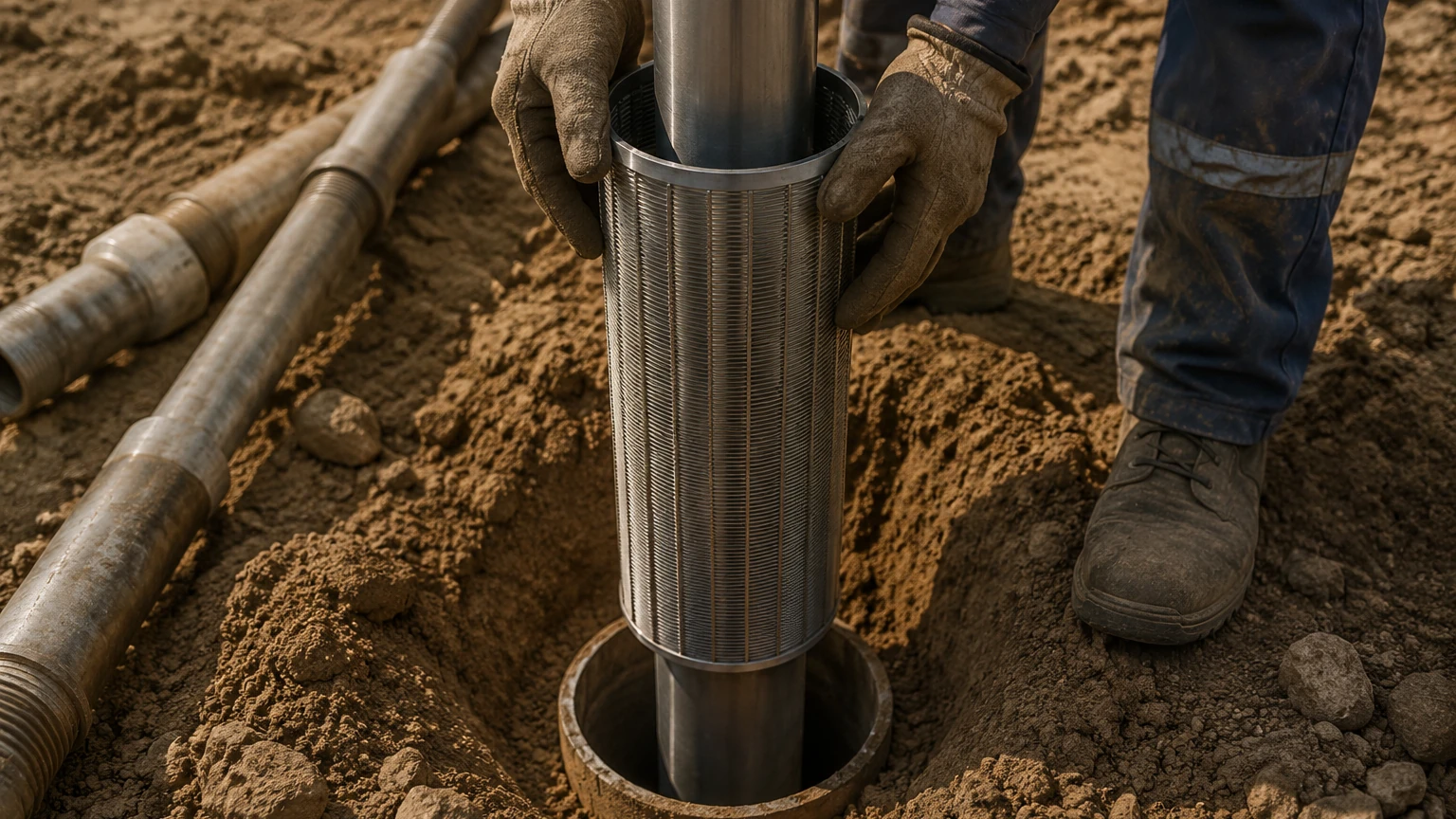
Well Screen Installation
In industrial water extraction, chemical processing, and environmental monitoring, the well screen serves as the critical interface between the aquifer and the production system. Successful well screen installation is not merely a mechanical task but a complex engineering process that dictates the efficiency, longevity, and maintenance requirements of the entire well. A poorly installed screen can lead to sand pumping, reduced flow rates, and premature structural failure, resulting in significant operational downtime and financial loss.
For engineers and project managers, understanding the technical nuances of installation—from material selection to borehole development—is essential for ensuring that the filtration system performs according to design specifications. This guide examines the technical requirements, procedural steps, and risk mitigation strategies involved in professional well screen deployment.
Understanding the Role of Well Screens in Industrial Systems
A well screen is a filtering device that allows water or fluids to enter the well while keeping the surrounding sediment or formation material out. In industrial contexts, these screens are often subjected to high pressures, corrosive environments, and significant mechanical stress. The primary objective of the installation is to create a stable, high-permeability zone around the screen that facilitates laminar flow and minimizes head loss.
High-performance screens, such as those manufactured from stainless steel, offer superior open areas compared to slotted pipes. This increased open area reduces the entrance velocity of the fluid, which in turn minimizes the potential for encrustation and erosion. When planning a project, engineers must evaluate the specific geological conditions to determine the appropriate screen type, whether it be continuous-slot (wedge wire), pipe-base, or shutter-style screens.
Pre-Installation Engineering and Material Selection
Before the well screen installation begins, several engineering parameters must be confirmed. Material selection is the most critical factor in determining the lifecycle of the well. While PVC or carbon steel may be suitable for shallow, non-corrosive environments, industrial applications typically demand the durability of stainless steel (Grade 304 or 316L). Stainless steel provides the necessary tensile strength to withstand installation stresses and the chemical resistance to survive aggressive groundwater or industrial fluids.
Slot Size and Sieve Analysis
To prevent sand infiltration, the slot size of the screen must be matched to the grain size distribution of the aquifer or the artificial gravel pack. This is achieved through a sieve analysis of the formation samples. If the slots are too large, the well will pump sand, damaging pumps and downstream equipment. If the slots are too small, the well will suffer from excessive drawdown and reduced yield.
Collapse Strength and Tensile Loading
Engineers must calculate the anticipated hydrostatic pressure and the weight of the screen string. The screen must have sufficient collapse strength to withstand the pressure exerted by the formation and the grout or gravel pack during installation. Furthermore, the joints—whether threaded or welded—must be capable of supporting the entire weight of the assembly as it is lowered into the borehole.
Technical Procedures for Well Screen Installation
The physical process of well screen installation requires precision and adherence to strict mechanical protocols. The following steps outline the standard industrial approach to deploying a screen string.
1. Borehole Preparation
Before the screen is lowered, the borehole must be cleaned and conditioned. This involves circulating drilling fluids to remove cuttings and ensuring the hole is straight and at the correct depth. A caliper log may be performed to verify the borehole diameter, which is essential for calculating the volume of the gravel pack.
2. Assembly and Centering
The screen sections are joined together at the surface. It is imperative to use centralizers—devices that snap onto the screen to keep it positioned in the center of the borehole. Proper centering ensures that the gravel pack will have a uniform thickness around the entire circumference of the screen. Without centralizers, the screen may rest against the borehole wall, creating a "dead zone" where filtration is ineffective and the risk of sand entry is high.
3. Lowering the String
The screen string is lowered into the hole using a hoist or drilling rig. During this phase, the weight of the string must be monitored constantly. Any sudden change in weight could indicate that the screen has hung up on a ledge or is encountering an obstruction. In deep wells, the buoyancy of the drilling fluid must be accounted for in the weight calculations.
4. Setting the Screen
Once the screen reaches the target depth, it is suspended from the surface or set on a bottom cap. In some configurations, a "telescoping" method is used where the screen is lowered through the casing and expanded or set with a packer. For those looking to explore specific component designs for these applications, the Main Page of professional manufacturers offers detailed technical specifications on custom-engineered filtration components.
The Critical Role of Gravel Packing and Filter Media
In many industrial wells, an artificial gravel pack is installed in the annular space between the screen and the borehole wall. The gravel pack acts as a secondary filter and stabilizes the formation. The success of the well screen installation often depends on the proper placement of this media.
The Tremie Pipe Method
The most reliable way to install a gravel pack is via a tremie pipe. This involves lowering a small-diameter pipe into the annulus and pumping the gravel/sand slurry from the bottom up. This method prevents the gravel from bridging (getting stuck) at shallow depths and ensures a dense, continuous pack around the screen.
Material Specifications
The gravel used must be well-rounded, siliceous, and free of organic matter or fine silts. The size of the gravel is typically 4 to 6 times the 70% retained size of the formation material. If the gravel pack is inconsistent, the well may develop "voids," leading to sudden collapses of the formation against the screen, which can cause mechanical deformation.
Well Development: Optimizing Filtration Performance
Installation is not complete until the well has been developed. Well development is the process of removing the fine particles (silts and clays) from the formation and the gravel pack to create a highly permeable zone around the screen.
Development Techniques
* Surging: Using a plunger-like tool to move water back and forth through the screen slots, breaking up bridges of fine particles.
* High-Velocity Jetting: Spraying water at high pressure through the slots to agitate the gravel pack.
* Over-pumping: Pumping the well at a rate higher than its intended production rate to draw out fines.
Effective development reduces the "skin effect" (resistance to flow at the borehole wall) and ensures that the well reaches its maximum specific capacity. It also serves as a final check on the integrity of the well screen installation; if the well continues to produce sand after extensive development, it may indicate a breach in the screen or an incorrectly sized gravel pack.
Mitigating Risks and Ensuring Long-Term Durability
Several risks can compromise a well screen installation. Identifying these early in the planning phase is vital for industrial reliability.
* Corrosion and Scaling: In geothermal or chemical applications, mineral scaling can plug screen slots. Selecting high-grade stainless steel or specialized alloys can mitigate this, but engineers should also plan for periodic chemical cleaning (acidizing).
* Mechanical Damage: During installation, the screen can be scratched or dented. Even minor surface damage to stainless steel can become a focal point for localized corrosion (pitting). Careful handling and the use of protective guides are necessary.
* Differential Pressure: If the screen becomes plugged, the pressure difference between the outside and the inside of the screen can exceed its collapse rating. Installing pressure sensors and monitoring drawdown levels can prevent catastrophic failure.
Evaluating Total Cost and Selection Criteria
When specifying components for well screen installation, the focus should be on the total cost of ownership rather than the initial purchase price. A lower-cost screen made from inferior materials may save capital expenditure initially but will lead to higher energy costs (due to increased drawdown) and expensive rehabilitation or replacement costs within a few years.
Industrial operators should confirm the following with their suppliers before proceeding:
1. Material Certification: Ensure the stainless steel grades are verified and meet ASTM or ISO standards.
2. Customization Options: Confirm that slot widths can be precision-cut to match specific sieve analysis results.
3. Structural Ratings: Verify collapse and tensile strength ratings for the specific depth and pressure of the project.
By following these technical guidelines and prioritizing high-quality materials, engineering teams can ensure that their well screen installation provides a reliable, high-flow filtration solution for the duration of the project's intended lifespan. For further technical data on custom stainless steel filtration solutions and engineering support, reviewing the capabilities on the Main Page can assist in the selection of precision components tailored to demanding industrial environments.
