


Coalescor
In industrial fluid processing, the separation of immiscible liquids or the removal of entrained liquid droplets from gas streams is a critical requirement for maintaining product purity and protecting downstream equipment. A coalescor (often referred to as a coalescer) is a specialized mechanical device designed to perform this separation by merging small droplets into larger ones, which can then be easily removed by gravity. Unlike standard particulate filters that simply trap solids, a coalescor utilizes the physical properties of fluids—such as surface tension, density, and viscosity—to facilitate phase separation.
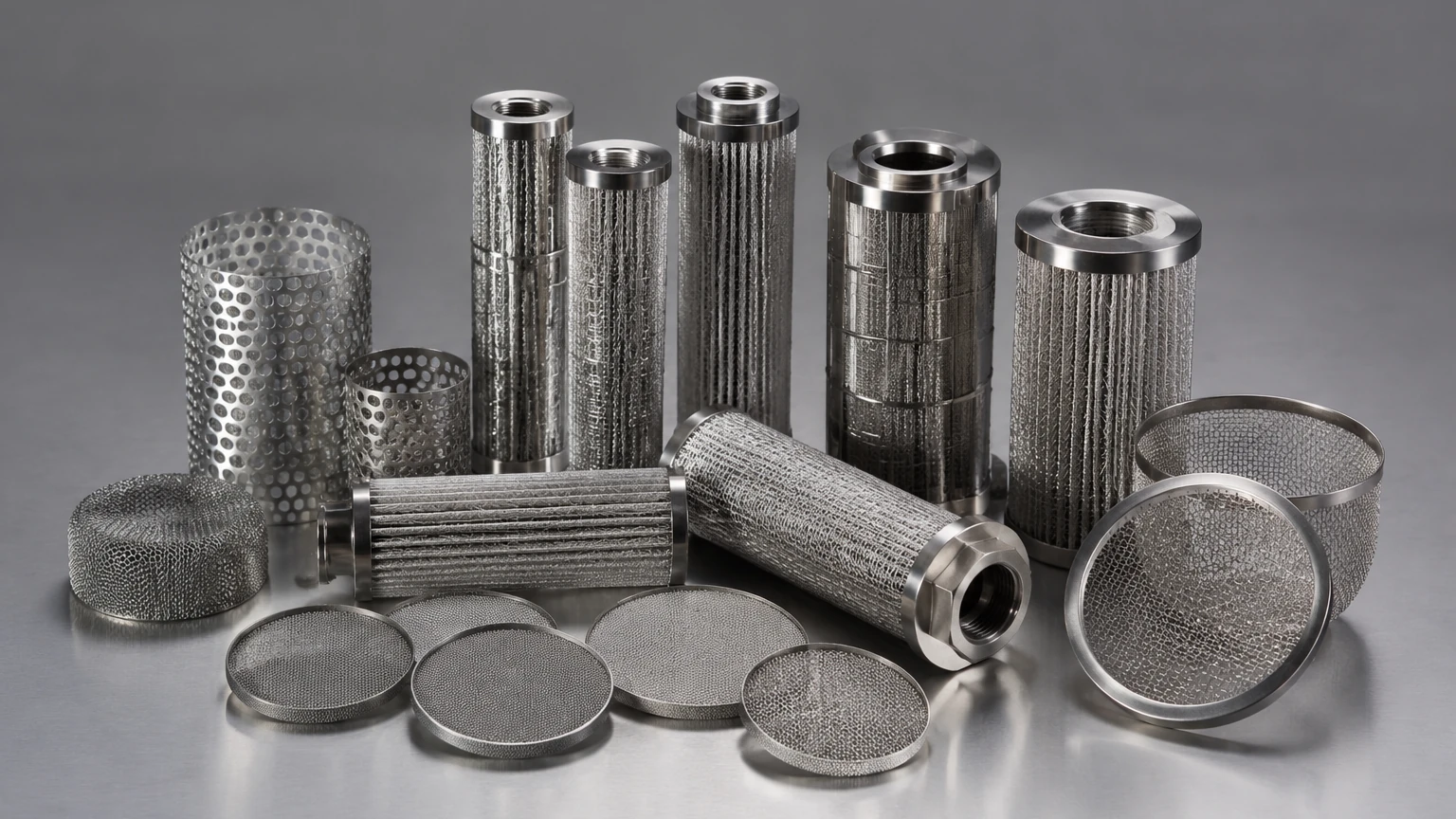
For engineers and procurement professionals, selecting the right coalescor involves understanding the complex interactions between the fluid phases and the media. Stainless steel filtration components, such as those found on the Kaifil Main Page, play a vital role in these systems, offering the durability and chemical resistance necessary for demanding industrial environments.
The Engineering Principles of Coalescence
The operation of a coalescor is governed by the principles of fluid dynamics and interfacial science. The process typically occurs in three distinct stages: interception, attachment, and coalescence.
Interception and Attachment
As the contaminated fluid passes through the coalescing media—which may consist of layers of stainless steel wire mesh, sintered metal, or specialized fibers—the dispersed droplets (the discontinuous phase) come into contact with the media fibers. Because the media is designed to be "wetted" by the dispersed phase, the droplets attach to the surface of the fibers. This is often achieved by selecting materials with specific surface energies; for example, a hydrophilic medium will attract water, while a hydrophobic medium will repel it.
The Coalescence Process
Once attached, these tiny droplets move along the fibers and collide with other droplets. Through these collisions, they merge to form larger droplets. As the size of the droplets increases, the drag forces from the flowing fluid eventually overcome the adhesive forces holding them to the media. The enlarged droplets are then released into the flow stream.
Gravity Separation
According to Stokes' Law, the settling or rising velocity of a droplet is proportional to the square of its diameter. By significantly increasing the droplet size, the coalescor allows gravity to take over. In a liquid-liquid coalescor, the heavier phase (usually water) settles to the bottom of the vessel, while the lighter phase (usually oil or fuel) rises to the top. In gas-liquid applications, the heavy liquid droplets fall out of the gas stream into a collection sump.
Types of Coalescor Systems and Their Applications
Industrial coalescors are generally categorized based on the phases they are designed to separate. Each type requires specific engineering considerations regarding vessel design and media selection.
Liquid-Liquid Coalescors
These are most commonly used to remove water from hydrocarbons, such as diesel, jet fuel, or lubricating oils. They are also essential in chemical processing for separating organic and aqueous phases after a reaction. A liquid-liquid coalescor typically utilizes a two-stage process. The first stage is the coalescing element, and the second stage is a separator element (often made of a hydrophobic material like Teflon-coated stainless steel mesh) that prevents any remaining small water droplets from passing through.
Gas-Liquid Coalescors
In natural gas processing and compressed air systems, liquid aerosols can cause significant damage to compressors and turbines. Gas-liquid coalescors remove these fine mists. These systems often handle high velocities, requiring robust internal components. Stainless steel wire mesh is frequently used here as a pre-filter or a primary coalescing stage due to its ability to withstand high pressure differentials and corrosive gas constituents like hydrogen sulfide (H2S).
Material Selection: Why Stainless Steel Matters
The choice of media material is perhaps the most critical factor in the longevity and efficiency of a coalescor. While synthetic fibers are common in light-duty applications, industrial-grade coalescors frequently rely on stainless steel components for several technical reasons:
1. Chemical Compatibility: In chemical processing, the fluids involved may be highly acidic or alkaline. Stainless steel (304 or 316L) provides the necessary corrosion resistance to prevent media degradation, which could otherwise lead to downstream contamination.
2. Thermal Stability: Many industrial separation processes occur at elevated temperatures where polymer-based media would soften or melt. Stainless steel maintains its structural integrity and surface properties across a wide temperature range.
3. Mechanical Strength: Coalescing elements are subject to pressure fluctuations and high flow velocities. A rigid stainless steel structure prevents media migration—a common failure mode where pieces of the filter media break off and enter the clean fluid stream.
4. Cleanability: Unlike disposable glass fiber elements, stainless steel wire mesh coalescors can often be cleaned and reused, reducing the total cost of ownership and environmental impact.
Key Technical Specifications for Selection
When specifying a coalescor for a new project or as a replacement component, engineers must evaluate several performance metrics beyond simple micron ratings.
Interfacial Tension (IFT)
IFT is a measure of the force between the two immiscible liquids. Fluids with low IFT (below 20 dynes/cm) are much harder to separate because the droplets do not merge easily. In such cases, a more dense and specialized coalescing media is required to force the droplets together.
Flux Rate and Residence Time
The flux rate (flow per unit area) must be carefully controlled. If the velocity is too high, the droplets may be sheared back into smaller sizes before they can coalesce, or they may be carried through the separator stage by momentum. Adequate residence time within the media is essential for the attachment phase to occur effectively.
Solid Contamination Loading
Coalescors are not intended to be primary particulate filters. If the fluid contains a high concentration of solids, these particles will coat the coalescing media, preventing the droplets from attaching to the fibers. This is known as "fouling." It is standard engineering practice to install a high-efficiency particulate pre-filter upstream of the coalescor to protect the coalescing elements.
Common Operational Risks and Maintenance
Even a well-designed coalescor can fail if operational parameters shift or if maintenance is neglected. Understanding these risks is vital for ensuring continuous plant operation.
Surfactant Disarming
Surfactants (surface-active agents) are chemicals that reduce the interfacial tension between liquids. They can "disarm" a coalescor by coating the media fibers and the droplets, preventing them from merging. This is a common issue in fuel systems where additives or contaminants act as surfactants. Monitoring the effluent for cloudiness even when pressure drops are normal is a key diagnostic step.
Differential Pressure Monitoring
The pressure drop across the coalescor elements is the primary indicator of their condition. A sudden increase in differential pressure usually indicates particulate fouling, while a sudden drop might indicate a ruptured element or "channeling," where the fluid bypasses the media entirely.
Breakthrough and Carryover
Breakthrough occurs when the dispersed phase is detected in the outlet stream. This can happen if the flow rate exceeds the design capacity or if the media has reached the end of its functional life. Regular sampling and the use of automated moisture or oil-in-water sensors are recommended for critical applications.
Customization and OEM Solutions
Every industrial application has unique challenges, from space constraints in offshore oil rigs to strict hygiene requirements in food and beverage production. Standard off-the-shelf coalescor elements often fall short of meeting these specific needs. This is where custom engineering becomes essential.
Manufacturers like Kaifil specialize in developing bespoke stainless steel filtration solutions that integrate seamlessly into existing coalescor vessels. By adjusting the wire diameter, weave pattern, and layering of the mesh, engineers can fine-tune the coalescing performance for specific viscosities and surface tensions. Custom-designed end caps and support structures ensure that the elements can withstand the specific mechanical stresses of the application.
When evaluating a supplier for coalescor components, it is important to confirm their capabilities in material traceability and precision manufacturing. For high-stakes industries like pharmaceuticals or aerospace, the quality of the stainless steel and the precision of the weld points can be the difference between a successful separation process and a costly system failure.
Conclusion
The coalescor remains an indispensable tool in the modern industrial toolkit, providing a reliable method for phase separation that filters alone cannot achieve. By leveraging the durability of stainless steel and the physics of droplet growth, these systems ensure that processes remain efficient and equipment remains protected. For those looking to optimize their filtration systems or source high-performance components, exploring the technical options available on the Main Page of a specialist manufacturer is the first step toward achieving superior separation results. Understanding the nuances of IFT, flux rates, and material compatibility will allow engineers to specify a solution that provides long-term reliability and the lowest total cost of ownership.
