


Well Screens
In the context of industrial fluid management and groundwater extraction, well screens serve as the critical interface between the source medium and the processing system. These precision-engineered components are designed to allow the entry of water or process fluids while simultaneously blocking the ingress of sand, gravel, and other particulates. For engineers and procurement professionals, selecting the appropriate well screens is not merely a matter of sizing; it is a complex decision involving hydraulic efficiency, structural integrity, and long-term chemical compatibility.
As a specialist in custom stainless steel filtration solutions, Kaifil provides high-performance filtration components that address the rigorous demands of industrial applications. Understanding the technical nuances of well screen design is essential for optimizing system performance and minimizing the total cost of ownership in sectors such as chemical processing, water treatment, and food production.
Fundamental Functions of Well Screens in Industrial Environments
The primary objective of a well screen is to provide a stable, non-clogging entry point for fluids. In industrial settings, this function extends beyond simple sand control. Well screens must maintain structural stability under significant hydrostatic pressure and resist the corrosive effects of diverse chemical environments.
Particulate Retention and Sand Control
Effective well screens are engineered to retain the formation material (in water wells) or the catalyst/media (in industrial reactors). By creating a controlled barrier, the screen prevents the migration of solids into the pumping system. This is crucial because the presence of abrasive particulates can lead to rapid wear on pump impellers, valves, and downstream filtration stages.
Hydraulic Efficiency
A well-designed screen minimizes the resistance to flow, often referred to as head loss. By maximizing the available open area, engineers can ensure that the entrance velocity of the fluid remains low. Low entrance velocity is critical because it reduces the likelihood of encrustation and minimizes the energy required to move the fluid through the system.
Technical Specifications: Slot Size and Open Area Engineering
The performance of well screens is largely dictated by two geometric factors: slot size and the percentage of open area. These specifications must be tailored to the specific granulometry of the surrounding environment.
Determining Optimal Slot Size
Slot size selection is typically based on a sieve analysis of the aquifer material or the specific particulate size in a process stream. In water well applications, the slot size is often chosen to retain a specific percentage of the filter pack or the natural formation. If the slots are too large, the system will "pump sand," leading to mechanical failure. If the slots are too small, the screen will experience excessive head loss and may become prematurely blinded by fines.
The Importance of High Open Area
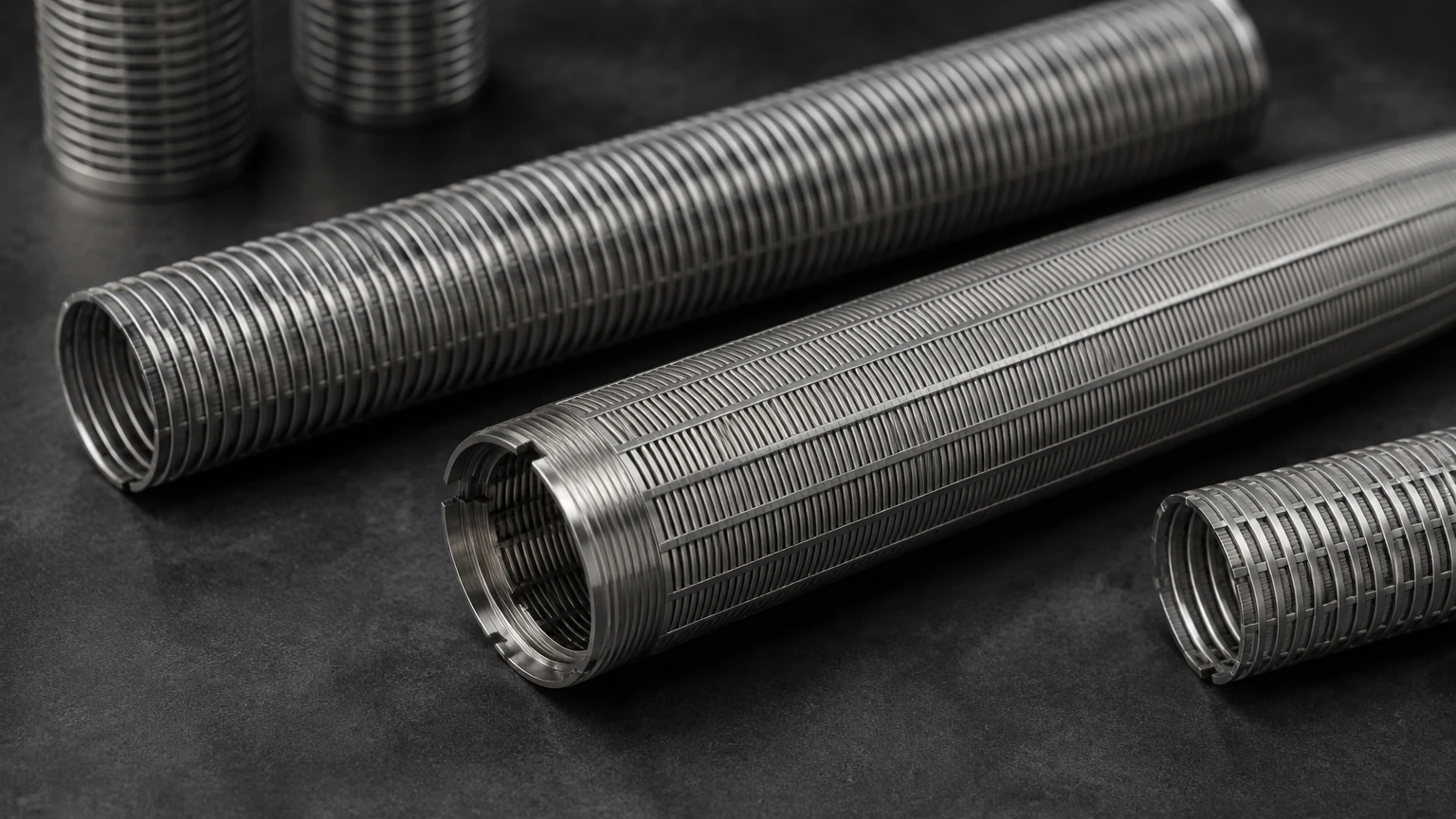
The open area of a screen is the ratio of the total area of the openings to the total surface area of the screen. Continuous-slot designs, such as those utilizing wedge wire technology, offer significantly higher open areas compared to perforated or louvered pipes.
High open area provides several technical advantages:
* Reduced Entrance Velocity: By spreading the flow over a larger area, the velocity at any single point is lowered. This prevents the transport of fine sediments toward the screen.
* Energy Savings: Lower resistance translates to lower pumping costs over the life of the well.
* Extended Service Life: Lower velocities reduce the rate of chemical precipitation and biological fouling, which are often velocity-dependent processes.
Material Selection: The Advantages of Stainless Steel Alloys
In industrial filtration, the choice of material is as important as the mechanical design. While carbon steel or plastic (PVC) screens may be suitable for shallow, non-corrosive domestic wells, industrial applications almost exclusively demand the use of stainless steel.
Corrosion Resistance
Industrial fluids often contain dissolved gases, salts, or chemicals that can rapidly degrade inferior materials. Kaifil specializes in the use of high-grade stainless steel, such as 304 and 316L.
* Grade 304: Offers excellent resistance to a wide range of atmospheric and mildly corrosive environments. It is the standard for many food and beverage applications.
* Grade 316L: Contains molybdenum, which provides superior resistance to chlorides and pitting. This is the material of choice for pharmaceutical processing, chemical plants, and applications involving brackish water or seawater.
Durability and Strength-to-Weight Ratio
Stainless steel provides the mechanical strength necessary to withstand high collapse pressures at depth while maintaining a relatively thin profile. This allows for larger internal diameters within a given borehole size, further enhancing hydraulic capacity. Furthermore, stainless steel is resistant to the physical abrasion caused by the movement of particulates, ensuring that slot dimensions remain precise over decades of service.
Structural Integrity and Mechanical Load Considerations
Well screens are subjected to various mechanical stresses during installation and throughout their operational life. Engineering teams must confirm that the selected screen can withstand these loads to prevent catastrophic structural failure.
Collapse Strength
As fluid is pumped out of a well, the pressure inside the screen drops relative to the pressure outside. This pressure differential creates a compressive load. The collapse strength of the screen is a function of the material's yield strength, the diameter of the screen, and the thickness of the support rods and wire. In deep industrial wells, calculating the maximum anticipated drawdown is vital to ensure the screen does not buckle.
Tensile Strength
During installation, the screen string is often suspended by its own weight. The joints and the screen body must possess sufficient tensile strength to support the entire load, including any additional weight from gravel packs or specialized fittings. Precision welding techniques are paramount here to ensure that the structural integrity of the screen is not compromised at the connection points.
Customization and OEM Integration for Industrial Applications
Every industrial environment presents unique challenges, which is why standardized off-the-shelf solutions often fall short. Customization allows for the optimization of filtration performance based on specific fluid dynamics and chemical profiles.
Wedge Wire vs. Wire Mesh
While traditional well screens often utilize wedge wire (V-wire) for its non-clogging properties, some high-precision industrial applications require the finer filtration capabilities of stainless steel wire mesh. Kaifil’s expertise allows for the integration of these materials into hybrid designs. For example, a wedge wire core can provide the necessary structural support for a fine wire mesh overlay, combining mechanical strength with micron-level filtration accuracy.
Specialized Fittings and Connections
Industrial well screens must often interface with existing piping systems, pump housings, or reactor vessels. Customization includes the provision of specialized end fittings, such as NPT threads, flanges, or weld rings. Ensuring a seamless fit reduces installation time and eliminates potential leak paths in the system.
Maintenance Strategies for Prolonging Filter Service Life
Even the best-engineered well screens require a maintenance strategy to address the inevitable buildup of minerals or biological matter.
Monitoring Performance
Engineers should establish a baseline for specific capacity (flow rate per unit of drawdown). A decline in specific capacity is a leading indicator of screen plugging. Regular monitoring allows for proactive maintenance before the flow rate drops below critical levels.
Cleaning and Rehabilitation
Stainless steel screens are highly resilient to various rehabilitation methods. They can withstand high-pressure water jetting, mechanical surging, and the application of strong acids or chlorine treatments used to dissolve mineral scales and biofilms. Unlike plastic screens, which can be damaged by heat or aggressive chemicals, stainless steel provides the flexibility to use the most effective cleaning agents available.
Conclusion and Selection Support
Selecting the right well screens is a critical engineering decision that impacts the efficiency and longevity of industrial fluid systems. By focusing on high-quality materials like stainless steel and prioritizing technical factors such as slot geometry and collapse strength, facilities can ensure reliable performance even in the most demanding environments.
Kaifil’s commitment to precision manufacturing and technical expertise makes us a preferred partner for custom filtration components. Whether you are designing a new water intake system or optimizing a chemical process, our engineering team is available to provide guidance on material selection and design specifications. To explore our full range of stainless steel filtration solutions and technical capabilities, we invite you to Review product options and application support on our Main Page. By partnering with a manufacturer that understands the complexities of industrial filtration, you can achieve a durable, cost-effective solution tailored to your specific application requirements.
