


What Is Coalescing
In the landscape of industrial separation and filtration, the term "coalescing" refers to a critical process used to separate two immiscible phases—typically liquid droplets from a gas stream or one liquid from another. Unlike standard particulate filtration, which focuses on capturing solid contaminants, coalescing is a dynamic process designed to merge small, entrained droplets into larger masses that can be easily removed by gravity. Understanding what is coalescing and how it functions is essential for engineers and procurement teams tasked with protecting downstream equipment, ensuring product purity, and maintaining system efficiency in demanding environments.
For industrial operators, the efficiency of a coalescing system directly impacts the longevity of compressors, turbines, and chemical reactors. By implementing high-quality stainless steel filtration components, such as those detailed on our Main Page, facilities can achieve the precise separation required for high-pressure and high-temperature applications.
Understanding the Fundamentals of Coalescence
To answer the question of what is coalescing from a technical perspective, one must look at the physics of fluid dynamics. Coalescence is the process where two or more droplets, bubbles, or particles merge during contact to form a single daughter droplet. In industrial filtration, this is achieved through a specialized media—often a graded-density material or a precision-engineered stainless steel mesh—that encourages these droplets to collide and combine.
The process is governed largely by the principles of surface tension and interfacial tension. In a gas-liquid coalescer, for example, a gas stream carrying a fine mist of oil or water passes through the coalescing media. As the gas navigates the tortuous path of the filter fibers or wire mesh, the liquid droplets are forced into contact with the media and each other. Once the droplets reach a sufficient size (and mass), the force of gravity overcomes the aerodynamic drag of the gas flow, causing the liquid to drain away into a collection sump.
There are two primary types of coalescing:
1. Mechanical Coalescing: Utilizes physical barriers like wire mesh, fiber beds, or vanes to intercept droplets.
2. Electrostatic Coalescing: Uses electrical fields to induce droplet migration and collision, commonly used in the crude oil industry to separate water from oil.
The Mechanics of Industrial Coalescing Filters
Industrial coalescing filters operate through a three-stage mechanism. Understanding these stages helps engineers evaluate the performance of different filter designs and materials.
1. Capture and Interception
As the contaminated fluid enters the filter housing, the small droplets (often in the sub-micron range) must first be captured by the media. This occurs through three physical phenomena:
* Direct Interception: Large droplets simply hit the filter fibers because their path is narrower than the droplet diameter.
* Inertial Impaction: Heavier droplets cannot follow the rapid changes in fluid direction around the fibers and instead strike the media due to their momentum.
* Brownian Diffusion: Extremely small droplets (less than 0.1 microns) move erratically due to molecular collisions, eventually bumping into the filter fibers.
2. Droplet Growth (Coalescence)
Once captured, the droplets reside on the surface of the media. As more fluid passes through, more droplets are captured, and they begin to crawl along the fibers. When these droplets meet, they merge. This is the core of what is coalescing: the transformation of a fine aerosol into large, heavy drops. The choice of media is vital here; if the media is too "slippery" (low surface energy), the droplets may blow through before they grow large enough.
3. Release and Drainage
When the droplets have grown large enough that the gravitational force acting on them exceeds the viscous drag of the fluid stream, they fall. In a vertical housing, the liquid typically drains to the bottom, while the "clean" gas or liquid exits through the top. If the fluid velocity is too high, it can lead to "re-entrainment," where the large droplets are broken back down and carried away by the flow, defeating the purpose of the coalescer.
Material Selection: The Role of Stainless Steel in Coalescing Systems
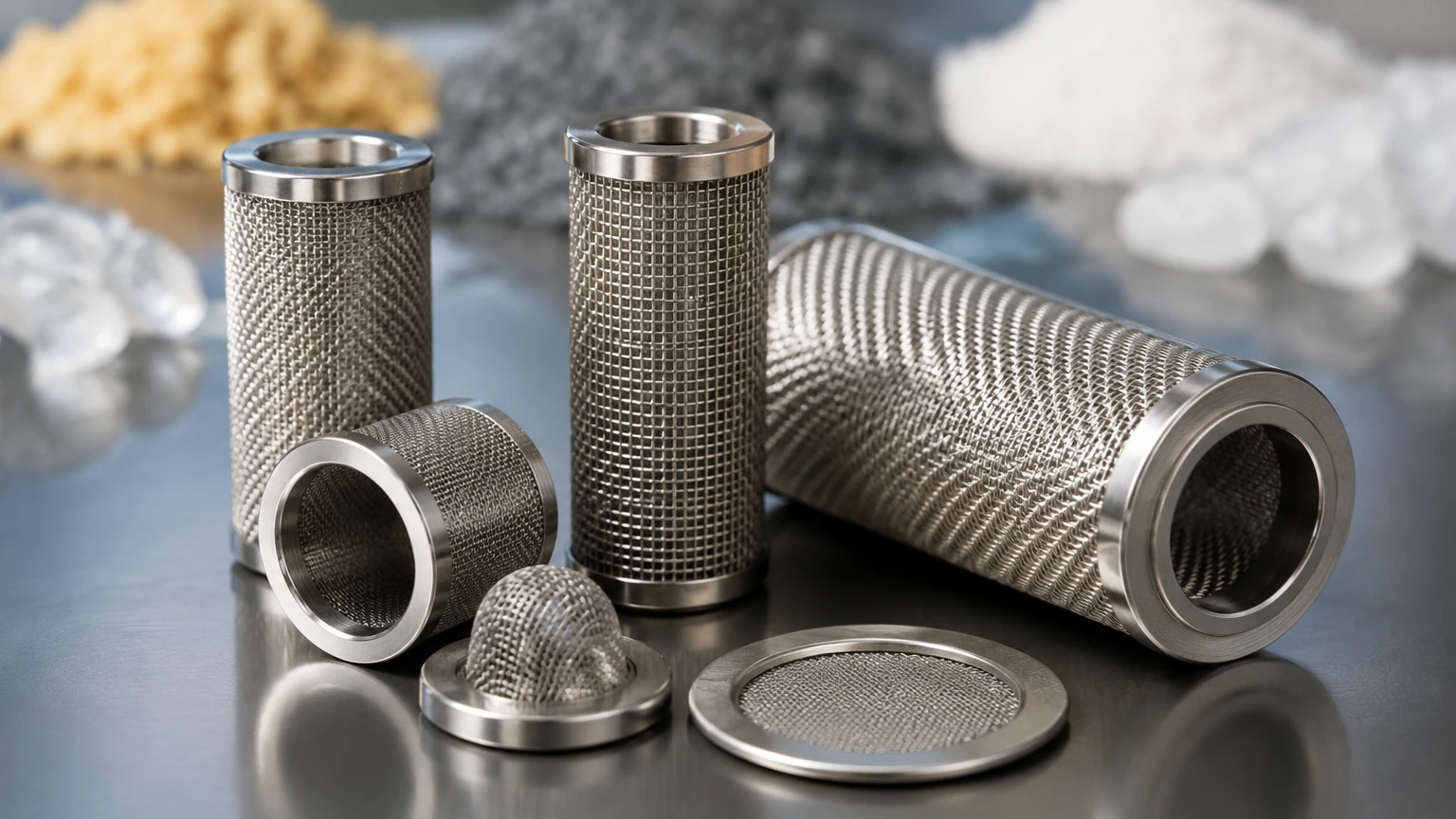
While synthetic fibers are common in light-duty applications, industrial-grade coalescing often requires the durability of metal. Stainless steel wire mesh and sintered metal fibers are preferred in sectors like chemical processing and steam filtration due to their unique properties.
Durability and Chemical Compatibility
Stainless steel (typically 304 or 316L) offers exceptional resistance to corrosion. In applications involving acidic gases or caustic liquids, synthetic filters may degrade, leading to media migration—where pieces of the filter itself contaminate the downstream flow. Stainless steel maintains its structural integrity, ensuring consistent filtration performance over long cycles.
Temperature Resistance
Many coalescing processes occur at elevated temperatures where polymers would soften or melt. Stainless steel components can operate in environments exceeding 500°F (260°C), making them indispensable for high-temperature gas separation and steam processing.
Customization of Surface Area
At Kaifil, we specialize in custom stainless steel filtration solutions that allow for precise control over the surface area and porosity of the media. By adjusting the weave pattern or the density of the sintered fibers, we can optimize the media for specific droplet sizes, ensuring maximum coalescence efficiency with minimal pressure drop.
Key Applications Across Industrial Sectors
The question of what is coalescing is best answered by looking at its practical utility across various industries. Wherever a liquid contaminant interferes with a process, a coalescer is likely present.
Compressed Air Systems
In manufacturing, compressed air is often contaminated with oil mist from the compressor and water vapor from the atmosphere. Coalescing filters are the primary line of defense, preventing this oil and water from reaching pneumatic tools, paint sprayers, or sensitive pharmaceutical packaging lines.
Petrochemical and Oil & Gas
In the natural gas industry, liquid hydrocarbons and water must be removed before the gas is transported via pipeline. Coalescing elements separate these liquids to prevent pipeline corrosion and protect downstream turbines. Similarly, in refineries, coalescers are used to separate water from jet fuel and diesel to meet strict purity standards.
Refrigeration Systems
Ammonia and halocarbon refrigeration systems use oil for lubrication. Coalescing oil separators are used to remove oil from the refrigerant gas after it leaves the compressor, ensuring the heat exchangers remain clean and efficient.
Hydraulic Systems
Water ingress in hydraulic oil can lead to component wear and fluid oxidation. Coalescing systems are often used in "kidney loop" filtration setups to continuously remove water from the reservoir, extending the life of the hydraulic fluid and the system pumps.
Engineering Considerations for Coalescer Selection
When specifying a coalescing filter, engineers must look beyond the initial micron rating. Several variables dictate whether a coalescer will succeed or fail in the field.
Fluid Velocity and Flux
One of the most common causes of coalescer failure is excessive fluid velocity. If the gas or liquid moves too quickly through the media, the droplets do not have enough "residence time" to merge. Furthermore, high velocity can strip coalesced droplets off the back side of the filter, a phenomenon known as re-entrainment. Designers must calculate the "flux" (flow per unit area) to ensure the media is sized correctly for the application.
Viscosity and Density
The greater the difference in density between the two phases (e.g., water vs. air), the easier the coalescence. However, as the viscosity of the continuous phase increases, it becomes harder for the droplets to move and merge. In high-viscosity oil applications, the coalescer may need to be significantly larger or operated at higher temperatures to reduce viscosity.
Interfacial Tension (IFT)
IFT is a measure of the force between the surfaces of the two immiscible liquids. A low IFT (often caused by the presence of surfactants or additives) makes it very difficult for droplets to coalesce. In these cases, specialized "pre-filter" stages may be required to remove surfactants before they reach the primary coalescing element.
Maintenance, Troubleshooting, and Performance Optimization
Even the best-designed coalescing system requires a maintenance strategy. Because coalescers deal with liquids, their failure modes differ from standard particulate filters.
* Differential Pressure (ΔP) Monitoring: While coalescers are designed to handle liquids, they will eventually clog if the fluid contains solid particulates. A rising ΔP usually indicates solid contamination. If the ΔP is too high, it can collapse the internal support core of the filter.
* Liquid Level Management: If the drainage system (e.g., an automatic float drain) fails, the liquid level in the housing will rise. Once it reaches the filter element, the liquid will be pulled through into the clean side of the system.
* Replacement Cycles: Unlike some metal filters that can be cleaned and reused, depth-style coalescing elements often have a finite lifespan. However, stainless steel mesh coalescers used in heavy industrial applications can often be cleaned using ultrasonic baths or chemical cleaning, provided the contaminants are not permanently embedded in the fibers.
Conclusion
Understanding what is coalescing is the first step toward optimizing industrial separation processes. By leveraging the physics of droplet growth and selecting the appropriate materials—particularly durable stainless steel—engineers can ensure their systems remain dry, clean, and efficient. Whether you are removing oil from compressed air or water from fuel, the right coalescing strategy reduces downtime and protects your most valuable assets.
For technical guidance on selecting the right stainless steel filter configurations for your coalescing needs, or to explore our full range of custom filtration components, please refer to our Main Page. Our team of experts is ready to assist with material selection, flow calculations, and custom designs tailored to your specific industrial environment.
