


Drum Filtration
In industrial liquid-solid separation, drum filtration stands as a cornerstone technology for continuous processing. Designed to handle high-volume flows with varying solids loading, these systems rely heavily on the integrity and precision of the filter media. For engineers and procurement specialists, understanding the nuances of drum filtration—from mechanical principles to the specific metallurgy of the filter mesh—is essential for optimizing plant efficiency and reducing long-term operational costs.
As a specialized manufacturer of stainless steel filtration solutions, Kaifil provides the technical components and engineering expertise required to maintain these systems at peak performance. This guide examines the technical foundations of drum filtration, the critical role of material selection, and the engineering considerations that drive successful industrial implementation.
The Mechanics of Industrial Drum Filtration
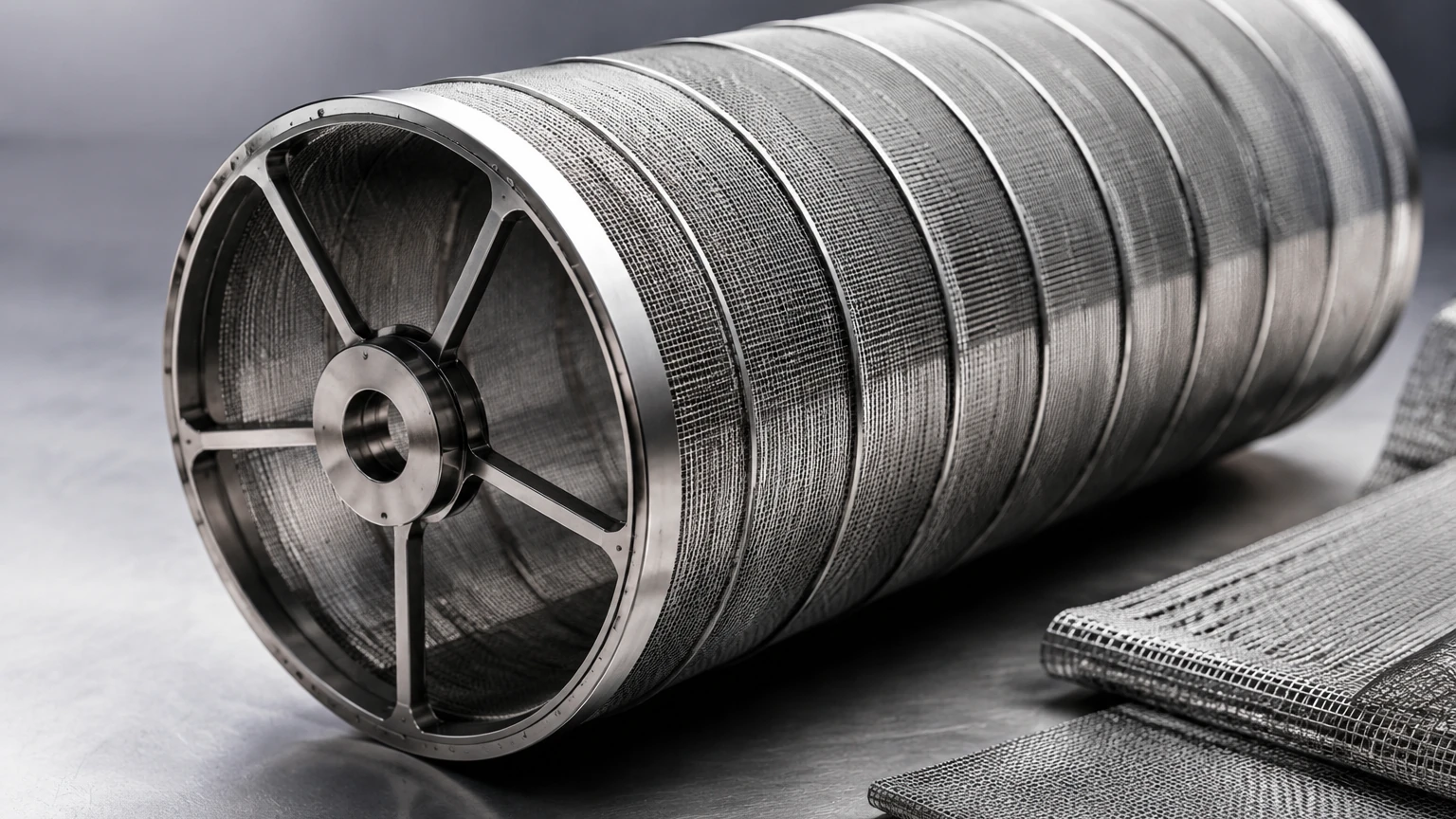
Drum filtration operates on the principle of mechanical separation through a rotating cylindrical drum. The drum is partially submerged in a vat containing the slurry or liquid to be filtered. As the drum rotates, the liquid passes through the filter media—typically a high-precision stainless steel wire mesh or perforated metal—while the solids are retained on the exterior surface.
There are several variations of this technology, categorized primarily by the driving force of the filtration:
1. Gravity Drum Filters: These rely on the head pressure of the fluid to drive it through the mesh. They are commonly used in wastewater treatment and aquaculture where the solids load is relatively low and the required filtration fineness is moderate.
2. Vacuum Drum Filters (RVDF): A vacuum is applied to the interior of the drum, pulling the liquid through the media and forming a "filter cake" on the outside. This is a standard in chemical processing and mining where high-volume dewatering is required.
3. Pressure Drum Filters: These operate within a sealed housing under pressure, allowing for faster throughput and the handling of volatile or hazardous materials that cannot be exposed to the atmosphere.
Regardless of the drive mechanism, the efficiency of the system is dictated by the interaction between the drum’s rotational speed, the submergence level, and the hydraulic resistance of the filter media. Engineers must balance these variables to ensure a consistent flow rate while maintaining the required filtrate clarity.
Engineering Considerations for Filter Media Selection
The most critical component of any drum filter is the filter media. While synthetic cloths are used in some applications, industrial-grade stainless steel wire mesh is the preferred choice for demanding environments due to its mechanical strength, thermal stability, and chemical resistance.
Material Composition
In chemical and food processing, the choice of alloy is non-negotiable. Stainless steel 304 is suitable for general industrial use, but 316L is the industry standard for drum filtration involving corrosive elements or high-salinity environments. The low carbon content in 316L minimizes carbide precipitation during welding, ensuring that the structural integrity of the filter drum remains intact even under heavy mechanical stress.
Mesh Weave and Micron Ratings
The geometry of the weave determines both the filtration accuracy and the flow resistance. Plain weave mesh offers high open areas for maximum flow, while Dutch weave patterns provide superior strength and finer filtration levels (down to 5-10 microns). For drum filtration, the mesh must be engineered to withstand the tension of the drum and the abrasive forces of the "doctor blade" or discharge mechanism used to remove the filter cake.
Structural Support
In large-scale drum filters, the fine filtration mesh is often supported by a coarser backing mesh or a perforated metal plate. This multi-layer construction prevents the fine mesh from deforming under pressure or vacuum, extending the service life of the component. Kaifil specializes in these multi-layered Main Page configurations, ensuring that the filtration surface remains flat and functional throughout its operational cycle.
Optimization Factors for High-Performance Filtration
Achieving optimal performance in drum filtration requires more than just selecting a fine mesh. Engineers must evaluate the total system dynamics to avoid premature failure or throughput bottlenecks.
1. Effective Filtration Area: The throughput of a drum filter is directly proportional to its surface area. However, the "effective" area is only the portion of the drum submerged in the slurry. Increasing the submergence can improve throughput but may affect the drying time of the filter cake in vacuum systems.
2. Cake Formation and Discharge: In many industrial processes, the layer of solids (the cake) actually acts as the primary filter medium. The stainless steel mesh serves as the septum that initiates this process. If the mesh is too coarse, solids will pass through initially (turbid filtrate); if it is too fine, it may blind (clog) before a proper cake can form.
3. Backwashing and Cleaning Cycles: To maintain continuous operation, many drum filters utilize backwash sprays. The durability of the stainless steel mesh is vital here, as it must resist the high-pressure impact of cleaning nozzles without fraying or losing its pore geometry.
Industrial Applications and Compatibility
Drum filtration is utilized across a broad spectrum of industries, each with unique requirements for filtration accuracy and material compatibility.
* Food and Beverage: Used for clarifying juices, oils, and syrups. The media must be food-grade, easy to sanitize, and resistant to organic acids. Stainless steel 316L is typically required to meet stringent hygiene standards.
* Chemical Processing: Drum filters handle aggressive solvents, acids, and bases. The chemical compatibility of the filter media is paramount to prevent leaching or corrosion-induced failure.
* Pharmaceuticals: Precision is the priority here. Filter media must have tightly controlled pore sizes to ensure the recovery of valuable active ingredients from slurries.
* Water and Wastewater Treatment: Large-scale gravity drum filters remove suspended solids and algae. These systems require high-flow mesh that can operate for years with minimal maintenance.
By partnering with a manufacturer that understands these industry-specific demands, purchasing teams can ensure that the replacement components they source are fit for purpose and compliant with relevant regulations.
Maintenance, Durability, and Total Cost of Ownership
While the initial cost of high-quality stainless steel filter media may be higher than synthetic alternatives, the Total Cost of Ownership (TCO) is significantly lower in industrial settings. Synthetic filters are prone to tearing, stretching, and chemical degradation, leading to frequent downtime and replacement costs.
Wear and Mechanical Stress
Drum filters are subject to constant mechanical movement. The filter media must endure the tension of being wrapped around the drum, the centrifugal forces of rotation, and the physical scraping of the discharge system. Stainless steel's high tensile strength ensures that the mesh maintains its tension and position, preventing leaks and bypass.
Cleaning and Regeneration
Unlike disposable filters, stainless steel drum filter media can be cleaned and reused for thousands of cycles. Ultrasonic cleaning or high-pressure chemical CIP (Clean-in-Place) processes can restore the mesh to near-original permeability, a feat that is impossible with most fabric filters.
Predicting Replacement Cycles
Engineers should monitor the pressure differential across the drum and the clarity of the filtrate. A gradual increase in baseline pressure usually indicates "blinding"—the entrapment of particles within the mesh depth. High-quality precision-woven mesh from Kaifil is designed to minimize this entrapment, facilitating easier cleaning and longer intervals between deep-cleaning cycles.
Customization for Specialized Filtration Requirements
No two industrial processes are identical. Factors such as particle shape, liquid viscosity, and temperature fluctuations necessitate customized filtration solutions. Standard off-the-shelf mesh often fails to meet the specific demands of a specialized chemical process or a high-speed production line.
Kaifil’s OEM capabilities allow for the development of bespoke filtration components tailored to the specific dimensions and performance requirements of any drum filter system. This includes:
* Custom Micron Ratings: Engineering the weave to capture specific particle size distributions.
* Specialized Edge Treatments: Reinforced edges or custom mounting hardware to ensure a perfect fit on the drum frame, preventing bypass.
* Advanced Metallurgy: Utilizing high-nickel alloys or specialized coatings for extreme environments where standard stainless steel may not suffice.
For engineers looking to optimize their current systems or develop new equipment, reviewing technical specifications and application support is the first step toward achieving reliable, long-term filtration performance. By focusing on precision engineering and material durability, facilities can significantly reduce their operational risks and improve product consistency.
In conclusion, drum filtration is a robust and efficient method for continuous industrial separation, provided that the filter media is correctly specified for the application. The transition from generic solutions to engineered stainless steel components represents a strategic investment in plant reliability. For more information on custom filtration components and technical support, visit the Main Page to explore professional solutions tailored to your industry’s needs.
