


What Is the Transfer of Heat By Direct Contact
In industrial engineering and thermal management, understanding the mechanisms of energy movement is essential for optimizing system performance. When technical professionals ask, "what is the transfer of heat by direct contact," they are referring to conduction. Conduction is one of the three primary modes of heat transfer—alongside convection and radiation—and it plays a critical role in the design and operation of industrial filtration systems, heat exchangers, and fluid processing equipment.
For manufacturers like Kaifil, which specializes in custom stainless steel filtration solutions, the principles of conduction are foundational. Whether managing high-temperature polymer melts or cryogenic fluids, the direct contact between the process medium and the metal filter elements dictates the thermal stability, mechanical integrity, and overall efficiency of the filtration process.
The Fundamentals of Thermal Conduction
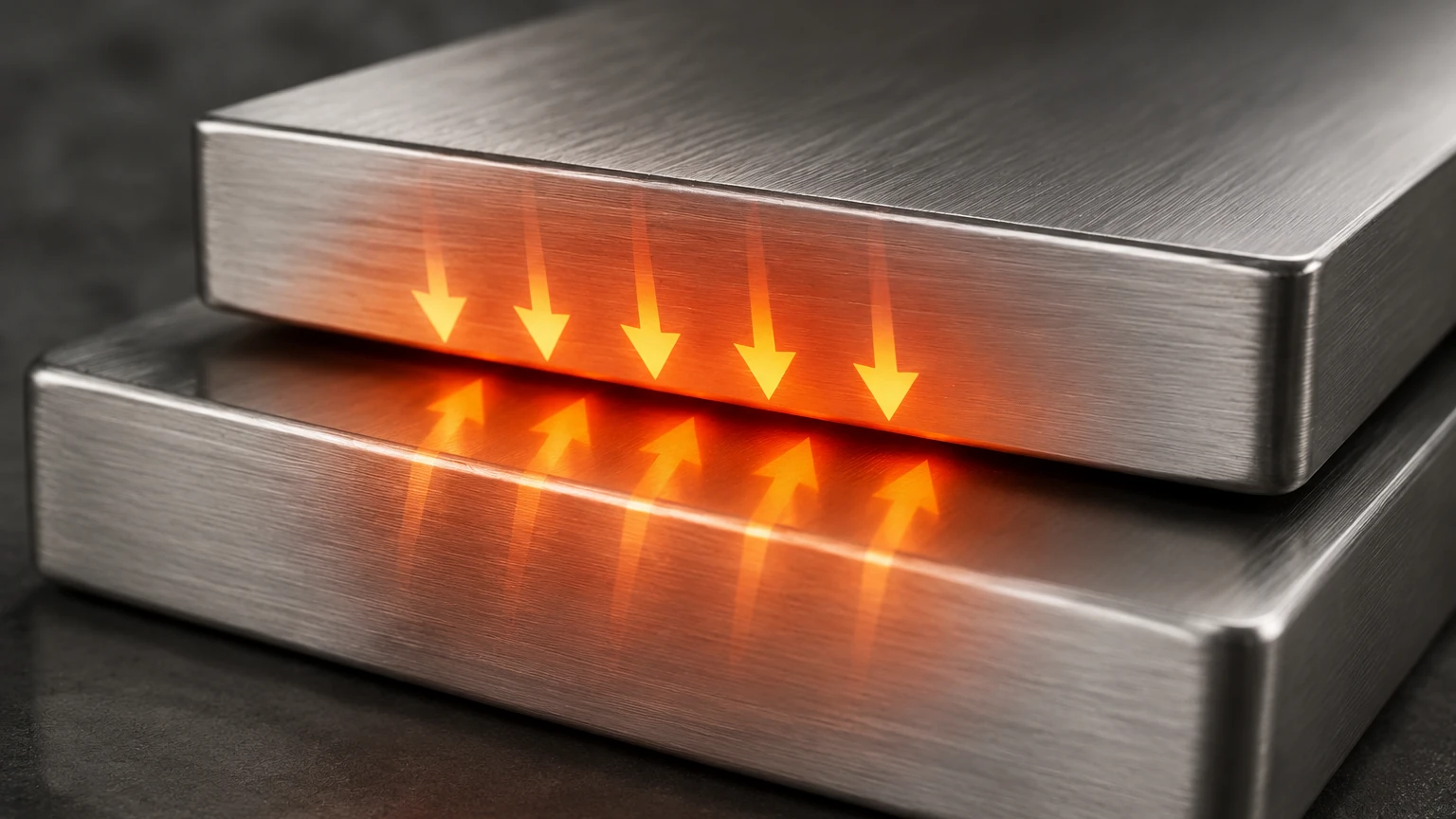
To answer the question of what is the transfer of heat by direct contact in a technical sense, we must look at the molecular level. Conduction occurs when kinetic energy is transferred between adjacent molecules or atoms within a substance or between two objects in physical contact. In solids, particularly metals, this transfer is facilitated by two main mechanisms: lattice vibrations (phonons) and the movement of free electrons.
In the context of stainless steel filters, the high density of free electrons in the metallic lattice allows for relatively efficient heat transfer compared to non-metallic materials. When a hot fluid comes into direct contact with a stainless steel mesh, the faster-moving molecules of the fluid collide with the atoms of the metal. This increases the vibrational energy of the metal atoms, which is then passed along the structure of the filter element and eventually to the filter housing or the surrounding environment.
Fourier’s Law of Heat Conduction
The rate at which heat is transferred through direct contact is governed by Fourier’s Law. This mathematical relationship states that the heat flux is proportional to the temperature gradient and the thermal conductivity of the material. For engineers selecting filtration components, the formula is expressed as:
*q = -k ∇T*
Where:
* q is the heat flux.
* k is the material's thermal conductivity.
* ∇T is the temperature gradient.
Understanding this relationship is vital when designing systems where the filter must either retain heat (to prevent fluid solidification) or dissipate heat (to protect downstream components).
Thermal Conductivity of Filtration Materials
When evaluating what is the transfer of heat by direct contact in an industrial setting, material selection is the most significant variable. Stainless steel is the industry standard for demanding filtration applications due to its balance of mechanical strength, corrosion resistance, and thermal properties.
However, different grades of stainless steel exhibit different thermal conductivities. For instance:
1. AISI 304 Stainless Steel: Often used in standard industrial applications, it has a thermal conductivity of approximately 16.2 W/m·K at 100°C.
2. AISI 316L Stainless Steel: Preferred for chemical processing due to its molybdenum content, its thermal conductivity is slightly lower, around 15.0 W/m·K at 100°C.
3. Specialty Alloys: In extreme cases, alloys like Inconel or Hastelloy may be used, which have significantly different thermal profiles designed for high-temperature stability.
For a comprehensive look at how these materials are integrated into high-performance systems, engineers can visit the Main Page of the Kaifil technical resource center. Choosing the right alloy ensures that the transfer of heat by direct contact does not lead to localized overheating or structural fatigue of the filter media.
The Impact of Heat Transfer on Filtration Performance
In many industrial processes, the temperature of the fluid is directly linked to its viscosity. Because filtration involves the passage of fluid through a porous medium, any change in temperature caused by conduction can alter the pressure drop across the filter.
Viscosity and Pressure Drop
As heat is transferred from the filter element to a cooler fluid via direct contact, the fluid’s temperature rises, typically decreasing its viscosity (especially in oils and polymers). A lower viscosity reduces the resistance to flow, thereby lowering the differential pressure ($ΔP$). Conversely, if a filter element is significantly cooler than the process fluid, the fluid in direct contact with the mesh may cool rapidly, increasing viscosity and potentially leading to "blinding" or clogging of the filter pores.
Thermal Gradients in Sintered Media
Sintered metal fiber and multi-layer mesh laminates present a unique case for conduction. Because these materials consist of multiple layers of metal fused together, they provide a continuous path for heat transfer. This allows for more uniform temperature distribution across the filter surface compared to non-metallic or disposable filters. In high-temperature applications, such as steam filtration or hot gas cleaning, this uniformity prevents "hot spots" that could lead to premature material failure.
Structural Integrity and Thermal Expansion
One of the most critical engineering considerations regarding what is the transfer of heat by direct contact is thermal expansion. When materials are heated through conduction, they expand at rates defined by their Coefficient of Thermal Expansion (CTE).
In a filtration assembly, the filter element (e.g., a stainless steel cartridge) is in direct contact with the filter housing. If the element and the housing are made of different materials or experience different temperature gradients, they will expand at different rates. This can lead to:
* Mechanical Stress: Compression or tension at the sealing points.
* Bypass Leaks: If the expansion causes a gap between the gasket and the sealing surface.
* Buckling: In long filter cartridges, excessive thermal expansion can cause the center core or the outer mesh to deform.
Engineers must calculate the expected expansion based on the operating temperature and ensure that the housing design and sealing mechanisms (such as O-rings or metal seals) can accommodate these changes. Stainless steel 316L has a CTE of approximately 16.0 to 18.0 x 10⁻⁶ /K, which must be factored into the tolerances of custom-manufactured components.
Heat Transfer in Specific Industrial Applications
The practical application of conduction principles varies significantly across industries. Below are examples of how direct contact heat transfer influences filtration design:
1. Polymer Melt Filtration
In the production of plastics and synthetic fibers, polymers are processed at extremely high temperatures to maintain a liquid state. The filter must be heated—often via direct contact with a heated housing or jacket—to ensure the polymer does not solidify within the mesh. Here, the conduction from the housing to the filter media is essential for continuous operation.
2. Cryogenic Filtration
In the processing of liquefied natural gas (LNG) or liquid nitrogen, the filter is in direct contact with fluids at sub-zero temperatures. The conduction of heat from the external environment into the system must be minimized. The filter materials must remain ductile and avoid brittle fracture at these extremes, requiring specialized stainless steel grades that retain toughness.
3. Food and Beverage Pasteurization
During the filtration of juices or dairy products that have undergone thermal treatment, the filter elements are often subjected to Clean-In-Place (CIP) cycles involving hot caustic solutions or steam. The transfer of heat by direct contact during these cycles ensures that the entire surface of the filter reaches the required sterilization temperature.
Evaluating Total Cost of Ownership (TCO) Through Thermal Management
When purchasing industrial filters, engineers should look beyond the initial unit price and consider the total cost of ownership, which includes energy efficiency. Because what is the transfer of heat by direct contact determines how much energy is lost or gained through the filtration stage, it impacts the utility costs of the entire plant.
An inefficiently designed filter housing that allows excessive conduction to the ambient air acts as a heat sink, forcing the system's heaters to work harder. By selecting filters with optimized surface areas and housings with appropriate insulation, companies can significantly reduce energy consumption. Furthermore, choosing high-quality stainless steel filters that can withstand repeated thermal cycling without losing structural integrity reduces replacement frequency and downtime.
Key Considerations Before Purchasing
Before finalizing a filtration solution for a thermally sensitive process, technical teams should confirm the following details with their manufacturer:
* Operating Temperature Range: What are the minimum and maximum temperatures the filter will encounter?
* Thermal Cycling Frequency: How often will the system transition between hot and cold states?
* Material Compatibility: Does the chosen stainless steel grade have the appropriate thermal conductivity and CTE for the application?
* Sealing Requirements: Are the seals capable of maintaining a leak-proof barrier despite thermal expansion caused by direct contact heat transfer?
* Customization Options: Can the filter support be reinforced to handle the mechanical stresses of high-temperature gradients?
By addressing these questions, engineers ensure that the physical reality of heat conduction works in favor of the process rather than against it. Reliable filtration is not just about capturing particles; it is about maintaining the thermal and structural equilibrium of the entire fluid system.
For more technical specifications on stainless steel filtration components and their performance in high-temperature environments, you can explore the various product categories and engineering guides available on the Main Page. Understanding the nuances of heat transfer by direct contact is the first step toward achieving a more durable and efficient industrial operation.
Download What Is the Transfer of Heat By Direct Contact as a PDF
