


Wide Orifice Pipette Tips
In the precision-driven world of laboratory research and industrial fluid handling, the geometry of a fluid path significantly influences the integrity of the sample and the accuracy of the results. Wide orifice pipette tips represent a specialized engineering solution designed to overcome the physical limitations of standard narrow-bore tips. While standard tips are optimized for aqueous solutions and high-speed dispensing, they often fail when confronted with high-viscosity fluids, fragile biological structures, or particulate-laden samples.
Understanding the technical nuances of wide orifice pipette tips is essential for engineers and lab managers who must balance throughput with sample protection. This guide explores the fluid dynamics, application requirements, and selection criteria for these components, drawing parallels between laboratory-scale fluid handling and industrial filtration principles found on the Main Page of specialized manufacturers.
Understanding the Engineering of Wide Orifice Pipette Tips
The primary differentiator of a wide orifice pipette tip is the internal diameter of the distal end. While a standard pipette tip typically features an orifice diameter ranging from 0.4mm to 0.6mm, wide orifice versions expand this to 1.0mm, 1.5mm, or even larger. This seemingly minor adjustment in geometry has profound effects on the physics of liquid transfer.
Fluid Dynamics and Shear Stress
One of the most critical factors in fluid handling is shear stress. As a liquid is drawn into a tip, the velocity of the fluid increases as the path narrows. In a standard tip, the high velocity at the narrow opening creates significant shear forces. For delicate samples, such as high-molecular-weight genomic DNA or live mammalian cells, these forces can cause mechanical degradation or cell lysis.
Wide orifice pipette tips reduce the velocity gradient across the opening. By providing a larger cross-sectional area, the same volume of liquid can be aspirated at a lower velocity, drastically reducing the shear stress acting upon the sample. This is analogous to industrial filtration systems where flow velocity must be managed to prevent "breakthrough" or damage to sensitive filter media.
Viscosity and Flow Resistance
Viscosity is the measure of a fluid's resistance to flow. According to the Poiseuille equation, the pressure drop required to move a fluid through a tube is inversely proportional to the fourth power of the radius. Therefore, doubling the diameter of the orifice reduces the resistance to flow by a factor of sixteen. For viscous substances like 100% glycerol, resins, or dense oils, standard tips often create a vacuum lag, leading to inaccurate volumes or complete clogging. Wide orifice designs allow these thick fluids to move freely, ensuring that the volume aspirated matches the volume intended by the pipette setting.
Key Applications in Laboratory and Industrial Fluid Handling
Wide orifice pipette tips are not general-purpose tools; they are engineered for specific scenarios where standard tips introduce unacceptable risks. Their use cases span from genomic research to industrial quality control.
Genomic DNA Research
In genomics, maintaining the structural integrity of long-strand DNA is paramount. When DNA is forced through a narrow aperture, the resulting shear can fragment the strands, leading to poor sequencing results or inaccurate mapping. Wide orifice tips are the standard choice for handling genomic DNA to ensure that the genetic material remains intact from extraction through to analysis.
Cell Culture and Stem Cell Research
Cell viability is the cornerstone of successful cell biology. Standard pipette tips can act as a mechanical "sieve," subjecting cells to physical trauma as they pass through the narrow opening. In stem cell research or when handling fragile primary cells, wide orifice tips minimize the risk of accidental cell death or premature differentiation caused by mechanical stress.
Handling Particulate-Laden Samples
In many industrial and environmental applications, samples contain suspended solids. This might include environmental water samples with silt, food products with pulp, or industrial slurries. Standard tips easily clog when a particle's diameter approaches the orifice size. Wide orifice pipette tips provide the necessary clearance to handle these heterogeneous mixtures without interruption, much like how specialized stainless steel filter cartridges are selected based on their ability to handle specific particle loads without premature fouling.
Critical Evaluation Criteria for Selection
When procuring wide orifice pipette tips for a B2B environment, purchasing teams and engineers must evaluate several technical specifications to ensure compatibility with their existing workflows.
Orifice Diameter and Consistency
Not all "wide orifice" tips are created equal. It is vital to confirm the exact diameter of the opening. A tip intended for viscous oils may require a 1.5mm opening, whereas a tip for genomic DNA might only need 1.0mm. Furthermore, manufacturing consistency is critical. In automated liquid handling systems, even a slight variation in the orifice diameter between tips in a rack can lead to volumetric inconsistencies across a 96-well plate.
Material Compatibility and Surface Energy
Most wide orifice tips are manufactured from medical-grade polypropylene. However, for applications involving low-surface-tension liquids or precious samples, "low retention" versions are often required. These tips undergo specialized molding processes or surface treatments to ensure that viscous liquids do not stick to the internal walls, which would otherwise lead to sample loss and inaccurate dispensing.
Fit and Seal Integrity
The performance of a pipette tip is only as good as its seal with the pipette itself. Incompatible fits can lead to air leaks, which are particularly problematic when handling the high-vacuum pressures required to aspirate viscous fluids. It is recommended to verify that the tip design is compatible with the specific brand and model of pipettes used in the facility.
Performance Risks and Mitigation in Precision Pipetting
While wide orifice pipette tips solve problems related to shear and viscosity, they introduce their own set of challenges that must be managed through proper technique and engineering controls.
Volumetric Accuracy at Low Volumes
The larger opening of a wide orifice tip can make it more difficult to achieve precise "touch-off" (removing the last drop from the tip). Surface tension behaves differently at a larger opening, potentially leaving a larger residual droplet behind. To mitigate this, users should calibrate their pipettes specifically for use with wide orifice tips if high precision at low volumes is required.
Evaporation and Contamination
Because the opening is larger, there is a greater surface area of the liquid exposed to the air during the transfer process. For highly volatile liquids, this can lead to increased evaporation rates. Additionally, the larger opening may slightly increase the risk of airborne contamination if the tips are left exposed in a non-sterile environment. Utilizing filtered wide orifice tips can help mitigate aerosol contamination within the pipette barrel itself.
Clogging vs. Flow Rate
In industrial contexts, the choice of a wide orifice is a trade-off between flow rate and filtration efficiency. While a wider opening prevents clogging, it also allows larger particles to pass through. If the goal is to protect a downstream sensor or delicate instrument, the orifice size must be carefully balanced against the maximum allowable particle size in the system.
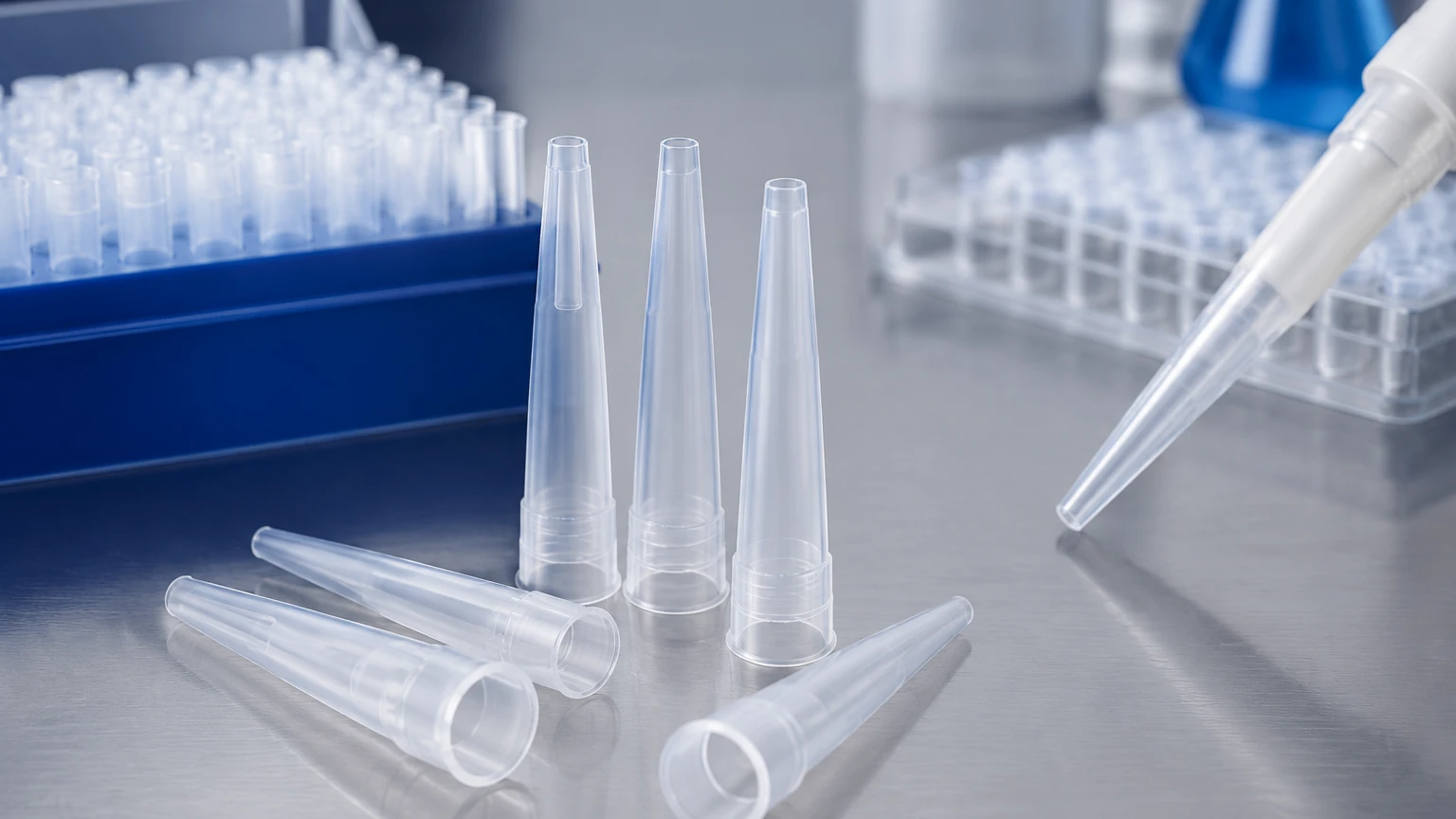
Comparing Standard vs. Wide Orifice Designs
| Feature | Standard Pipette Tip | Wide Orifice Pipette Tip |
| :— | :— | :— |
| Orifice Diameter | 0.4mm – 0.6mm | 1.0mm – 1.5mm |
| Primary Benefit | High precision for aqueous solutions | Low shear, handles viscous fluids |
| Shear Stress | High | Low |
| Best For | PCR, ELISA, general buffers | Genomic DNA, Cell culture, Slurries |
| Risk Factor | Clogging, sample fragmentation | Reduced precision at micro-volumes |
The Role of Custom Filtration and Fluid Components
The principles governing the design of wide orifice pipette tips—managing fluid velocity, reducing pressure drops, and accommodating particulates—are the same principles that drive the design of industrial filtration systems. In many high-stakes industrial environments, plastic consumables are replaced by durable, precision-engineered metal components.
For instance, in chemical processing or high-temperature fluid handling, a plastic pipette tip is insufficient. Engineers instead turn to stainless steel filtration solutions and custom-machined nozzles that provide the same "wide orifice" benefits but with the durability of metal. Manufacturers like Kaifil specialize in these types of transitions, moving from laboratory-scale logic to industrial-scale performance. Whether it is a wire mesh filter or a custom-designed cartridge, the goal remains the same: ensuring the fluid reaches its destination with its properties intact.
Those looking for robust filtration components that mirror the precision of laboratory tools can find extensive resources on the Main Page of industrial filtration experts. These sites offer technical data on how different mesh sizes and orifice designs impact flow characteristics in demanding environments.
Conclusion and Procurement Considerations
Selecting the right wide orifice pipette tips requires a deep understanding of the fluid being handled and the sensitivities of the sample. For B2B buyers, the focus should be on manufacturing quality, dimensional consistency, and material purity.
Before finalizing a purchase, technical teams should confirm:
1. The specific orifice diameter required for their most viscous or particulate-heavy sample.
2. Compatibility with existing manual or automated pipetting platforms.
3. Sterility requirements, especially for cell culture and genomic applications.
4. Total cost of ownership, considering how much sample loss or experimental failure is prevented by using a specialized tip versus a standard one.
By treating the pipette tip as a critical engineering component rather than a simple consumable, organizations can significantly improve the reliability of their fluid handling processes. For broader fluid management and filtration needs that extend beyond the benchtop, consulting with industrial experts ensures that every step of the fluid path is optimized for performance and durability.
