


Wind Turbine Filters
In the wind energy sector, the reliability of mechanical and hydraulic systems is directly proportional to the cleanliness of the fluids and air circulating within the nacelle. Wind turbine filters serve as the primary defense mechanism against particulate contamination, which is responsible for the majority of premature component failures in gearboxes, pitch control systems, and cooling circuits. For engineers and maintenance professionals, selecting the correct filtration media is not merely a matter of routine replacement but a strategic decision to extend the mean time between failures (MTBF) and reduce the total cost of ownership (TCO).
As turbines increase in size and move into more challenging environments—such as offshore installations with high salt-mist exposure or remote desert locations with high dust concentrations—the technical demands on wind turbine filters have intensified. This article examines the engineering considerations, material selection, and performance metrics essential for optimizing wind turbine filtration systems.
The Role of Filtration in Wind Turbine Reliability
Wind turbines operate under variable loads and harsh environmental conditions. The critical components housed in the nacelle, particularly the gearbox and hydraulic power units, require high-purity oil to function without excessive wear. Contaminants such as metal shavings from gear meshing, silica dust from the atmosphere, and moisture can lead to abrasive wear, surface fatigue (pitting), and oil degradation.
Effective filtration manages these risks by maintaining fluid cleanliness levels according to ISO 4406 standards. In a typical utility-scale turbine, filtration is required in three primary areas:
1. Gearbox Lubrication: The gearbox is the most expensive component to repair. Filtration systems here must handle high-viscosity oils and high flow rates while capturing both coarse particles and fine silt.
2. Hydraulic Systems: These systems control the blade pitch and yaw mechanisms. Even minor contamination can cause valve sticking or seal damage, leading to a loss of aerodynamic control.
3. Cooling and Air Intake: Generators and power electronics generate significant heat. Air filters must prevent dust and salt from entering the cooling circuits, which could otherwise lead to overheating or electrical arcing.
Technical Specifications and Engineering Considerations
When evaluating wind turbine filters, engineers must look beyond simple dimensions. The performance of a filter is defined by its ability to balance efficiency, pressure drop, and dirt-holding capacity.
Filtration Accuracy and Beta Ratios
Filtration accuracy is typically measured in microns (µm). However, the nominal rating is often insufficient for industrial applications. Engineers rely on the Beta Ratio (β), which describes the filter's efficiency at a specific particle size. For example, a β10 = 1000 rating means that for every 1,000 particles of 10 microns entering the filter, only one passes through. In wind turbine gearboxes, high-efficiency glass fiber or specialized stainless steel wire mesh media are often employed to achieve the stringent cleanliness levels required by bearing manufacturers.
Pressure Drop (ΔP)
Every filter introduces a resistance to flow, known as pressure drop. A high initial pressure drop reduces the energy efficiency of the pump and can trigger bypass valves prematurely, allowing unfiltered oil to circulate. Selecting a filter with optimized pleat geometry and high-permeability media ensures that the system operates within safe pressure limits even during cold starts when oil viscosity is at its peak.
Material Compatibility
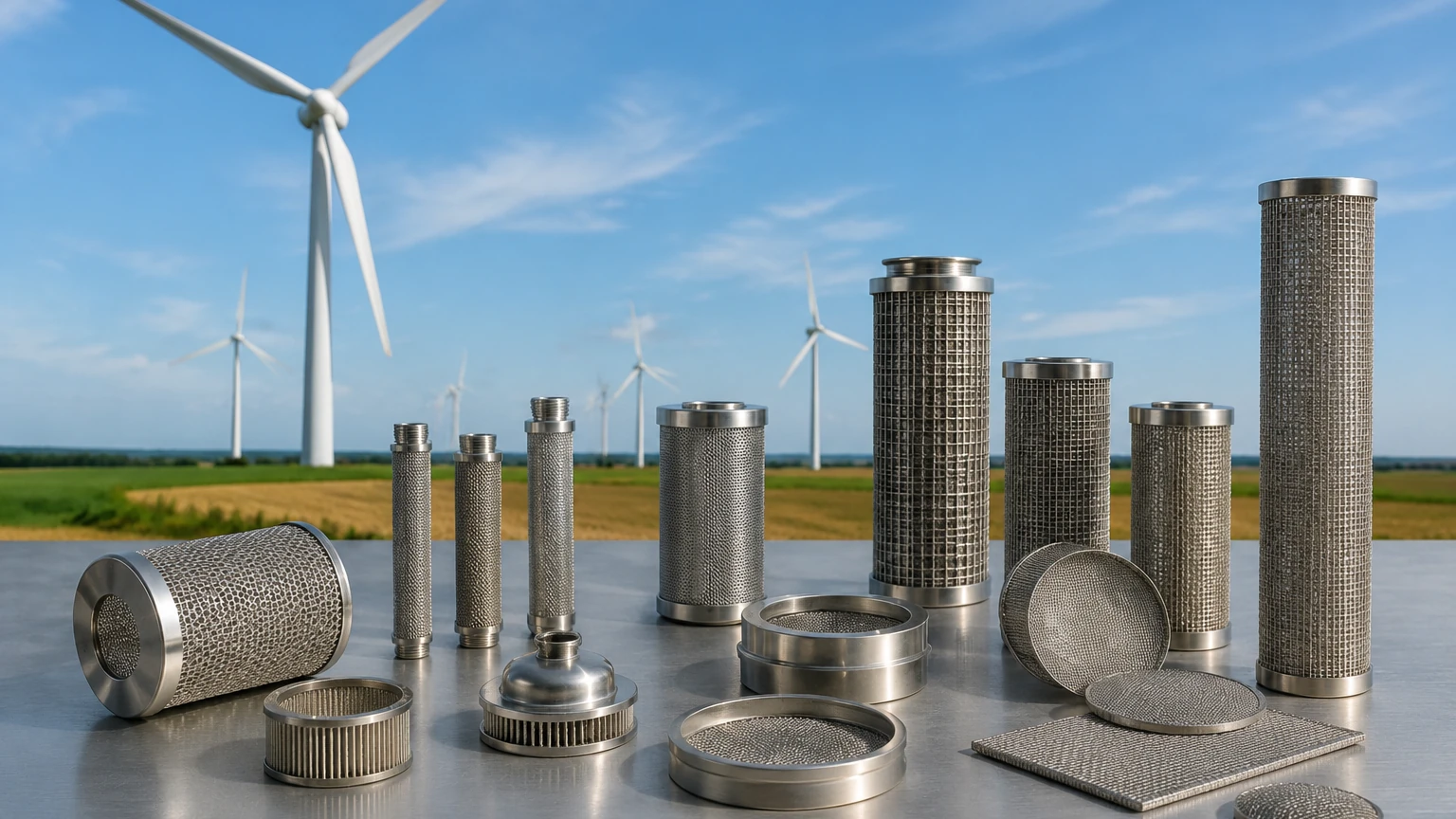
The choice of material is critical for durability. While synthetic media are common for disposable elements, stainless steel filter cartridges and wire mesh components are increasingly used in permanent or high-pressure locations. Stainless steel (typically 304 or 316L) offers superior resistance to corrosion—a vital factor for offshore turbines—and can withstand the mechanical stresses of high-pressure hydraulic lines without collapsing.
Key Types of Wind Turbine Filters
Industrial filtration in wind energy is categorized by the specific system it protects. Each application requires different media structures and housing designs.
Gearbox Oil Filtration (Inline and Offline)
Most modern turbines utilize a dual filtration strategy for the gearbox. Inline filters are positioned directly in the main lubrication loop to catch particles before they reach the bearings. Offline (or kidney-loop) filtration systems operate independently, continuously polishing the oil at a lower flow rate. These offline systems often include water-absorbing elements to remove dissolved and free water from the lubricant, preventing oil oxidation and additive depletion.
Hydraulic Pitch and Yaw Filters
Hydraulic systems require high-pressure filters capable of handling rapid pressure fluctuations. These filters are often equipped with magnetic inserts to capture ferrous particles generated by pump wear. Precision metal filter components are preferred here due to their structural integrity and ability to maintain precise pore sizes under stress.
Cooling System and Desiccant Breathers
As oil levels in the gearbox and hydraulic tanks fluctuate, air is drawn in from the environment. Desiccant breathers are used to filter out particulates and strip moisture from the incoming air. Simultaneously, cooling air filters for the generator must be designed for high airflow with minimal resistance to ensure effective thermal management.
Selection Criteria for Industrial Procurement
For purchasing teams and plant engineers, selecting a filtration partner involves more than comparing part numbers. The following factors should guide the procurement process:
* OEM vs. Customized Solutions: While standard filters are available, many turbine models have unique space constraints or performance requirements. Working with a manufacturer that offers customized stainless steel filtration solutions allows for the development of components that fit specific nacelle layouts and operational profiles.
* Dirt-Holding Capacity (DHC): A filter with a higher DHC will last longer before reaching its terminal pressure drop. This is particularly important in the wind industry, where the cost of a technician climbing the tower to replace a filter can exceed the cost of the filter itself.
* Environmental Resilience: For offshore wind farms, filter housings and internal mesh must be resistant to salt-spray corrosion. Stainless steel is the industry standard for these demanding environments due to its longevity and ease of cleaning.
Engineers looking for detailed technical data on material performance and custom design options can refer to the Main Page for comprehensive product specifications and application support.
Managing Contamination Risks and Maintenance Cycles
Predictive maintenance is the goal of modern wind farm operations. Filtration systems are now frequently integrated with sensors that monitor pressure differential and oil cleanliness in real-time. This data allows operators to move away from fixed-interval replacement to condition-based maintenance.
Common risks associated with poor filtration include:
* Bypass Operation: If a filter becomes clogged and the bypass valve opens, the system is essentially unprotected. Monitoring the time spent in bypass is critical for preventing catastrophic gearbox failure.
* Varnish Formation: Fine particles and moisture can catalyze the formation of varnish—a sticky byproduct of oil degradation. Varnish can coat internal surfaces and cause solenoid valves in the pitch system to fail.
* Micro-pitting: Inadequate filtration of sub-5-micron particles can lead to micro-pitting on gear teeth, which eventually evolves into major structural cracks.
By utilizing high-quality wire mesh filters and precision-engineered cartridges, operators can significantly mitigate these risks. Metal filters, in particular, offer the advantage of being robust enough to handle the "slugs" of contamination that often occur during the initial break-in period of a new turbine.
Custom OEM Solutions for Wind Energy
As turbine technology evolves, the filtration requirements become more specialized. Manufacturers like Kaifil provide the engineering expertise needed to develop custom stainless steel filtration solutions that meet the exact needs of wind turbine OEMs. From wire mesh filters for suction lines to precision metal filter components for high-pressure hydraulics, customization ensures that every micron of protection is optimized for the specific flow rates, pressures, and environmental conditions of the site.
Customization options often include:
* Variable Pleat Density: To maximize surface area within a fixed housing size.
* Reinforced Support Layers: To prevent media migration in high-vibration nacelle environments.
* Specialized End Caps: To ensure a leak-proof seal and compatibility with existing housing hardware.
Conclusion
Wind turbine filters are a critical investment in the operational life of a wind farm. By understanding the technical nuances of Beta ratios, material durability, and system-specific requirements, engineers can ensure that their turbines remain productive for their intended 20-to-25-year lifespan. Whether it is protecting a multi-megawatt gearbox or ensuring the precision of a hydraulic pitch system, the quality of the filtration component is the determining factor in system health.
For those seeking reliable, high-performance filtration components tailored to industrial applications, reviewing the available technical resources and product options is the next logical step. Detailed information on custom manufacturing and material selection can be found on the Main Page, providing the necessary data to support informed purchasing decisions in the wind energy sector.
