


1 2 Expanded Metal
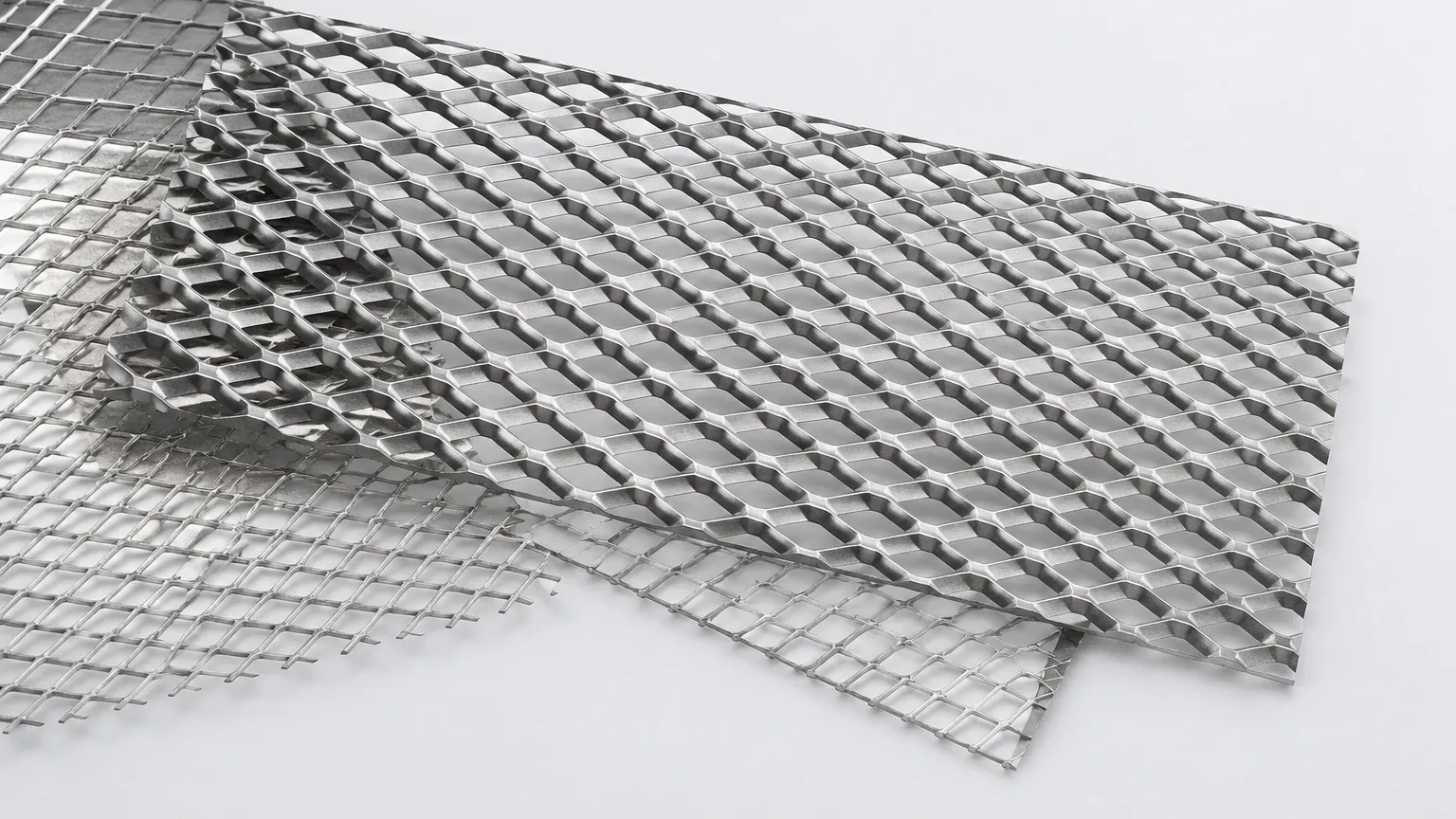
In the landscape of industrial filtration and structural reinforcement, the selection of the correct media is a critical engineering decision that impacts the longevity, efficiency, and safety of a system. Among the various options available to engineers and procurement teams, 1 2 expanded metal (commonly referred to as 1/2-inch expanded metal) stands out as one of the most versatile and widely utilized specifications. This material, characterized by its diamond-shaped openings and rigid structure, serves as a foundational component in everything from high-pressure hydraulic filters to protective machinery guards.
At Kaifil, our focus on precision manufacturing ensures that these components meet the rigorous standards required for industrial applications. Understanding the technical nuances of 1 2 expanded metal—including its dimensions, material properties, and performance characteristics—is essential for optimizing filtration systems and ensuring structural integrity in demanding environments.
Understanding the Technical Specifications of 1 2 Expanded Metal
The term "1 2" in the context of expanded metal typically refers to the nominal size of the diamond opening, specifically the Short Way of Design (SWD). To specify this material accurately for an industrial project, engineers must look beyond the nominal size and evaluate the four primary dimensions that define its geometry:
1. Short Way of Design (SWD): The distance from the center of a bond to the center of the next bond measured across the short diamond diagonal. For 1 2 expanded metal, this is nominally 0.5 inches.
2. Long Way of Design (LWD): The distance from the center of a bond to the center of the next bond measured across the long diamond diagonal. This typically ranges from 1.0 to 1.25 inches depending on the specific tool set used during manufacturing.
3. Strand Width: The amount of metal fed into the expanding machine between the upper and lower dies to produce one strand. This dimension directly influences the weight and strength of the finished product.
4. Strand Thickness: The thickness of the base metal used. In B2B procurement, this is often designated by a gauge number (e.g., 1/2" #13 or 1/2" #16).
Unlike Perforated & Expanded Metal produced by punching holes (which creates significant scrap), expanded metal is manufactured by slitting and stretching the sheet simultaneously. This process creates a continuous piece of metal without joins or welds, resulting in a high strength-to-weight ratio and a unique three-dimensional profile that can be leveraged for specific flow dynamics in filtration.
Material Selection: Why Stainless Steel Dominates Industrial Filtration
While 1 2 expanded metal can be produced from carbon steel, aluminum, or galvanized steel, stainless steel remains the gold standard for industrial filtration and high-performance applications. Kaifil specializes in stainless steel solutions because the material provides the chemical and thermal resistance necessary for harsh processing environments.
Stainless Steel 304 vs. 316
For the majority of industrial applications, Type 304 stainless steel offers an excellent balance of corrosion resistance and cost-effectiveness. It is suitable for food and beverage processing, general industrial machinery, and water treatment systems. However, in environments involving high chloride concentrations or aggressive chemicals—such as marine applications or pharmaceutical processing—Type 316 stainless steel is the preferred choice. The addition of molybdenum in 316 provides superior resistance to pitting and crevice corrosion.
Thermal Stability
In high-temperature filtration, such as steam filtration or hot gas exhaust systems, the material must maintain its structural integrity without warping. Stainless steel 1 2 expanded metal retains its mechanical properties at temperatures where aluminum would soften and carbon steel would oxidize rapidly.
Standard vs. Flattened 1 2 Expanded Metal: Performance Trade-offs
When sourcing 1 2 expanded metal, engineers must choose between two primary finishes: Standard (Raised) and Flattened. The choice between these two significantly affects the performance of the filter or support structure.
Standard (Raised) Expanded Metal
Standard expanded metal leaves the machine with the strands and bonds set at a uniform angle to the plane of the sheet. This creates a three-dimensional surface that provides:
* High Rigidity: The angled strands act like structural trusses, providing excellent resistance to bending and pressure.
* Enhanced Surface Area: The raised profile can help break up laminar flow in fluid filtration, potentially increasing the efficiency of subsequent fine-mesh layers.
* Mechanical Grip: In non-filtration applications, the raised surface provides excellent traction and grip.
Flattened Expanded Metal
Flattened expanded metal is produced by passing the standard expanded sheet through a cold-roll reducing mill. This process flattens the strands and bonds into a single plane, resulting in a smooth, level surface. The advantages for filtration include:
* Uniform Thickness: This is critical when the expanded metal is used as a support core inside a cylindrical filter cartridge, ensuring a tight fit with the end caps.
* Protection of Fine Media: A flattened surface is less likely to abrade or puncture delicate wire mesh layers that are wrapped around it.
* Ease of Cleaning: The smooth surface prevents particles from becoming trapped in the "nooks" created by raised strands, which is vital for systems requiring regular backwashing or CIP (Clean-In-Place) cycles.
The Role of 1 2 Expanded Metal in Filtration Systems
In the context of industrial filtration, 1 2 expanded metal rarely acts as the primary filtration medium for fine particles. Instead, it serves as the "backbone" of the filter assembly. Its primary roles include:
Support Cores for Filter Cartridges
In stainless steel filter cartridges, the primary filtration layer (often a fine wire mesh or sintered metal) is frequently too thin to withstand high differential pressures. A cylinder of 1 2 expanded metal is placed inside or outside the mesh to provide structural support. This prevents the mesh from collapsing or bursting under the force of the fluid flow.
Pre-Filtration and Trash Screens
In water treatment and chemical intake systems, 1 2 expanded metal is used as a primary screen to remove large debris, such as stones, plastic, or organic matter, before the fluid reaches more sensitive downstream equipment. The 1/2-inch opening is ideal for protecting pumps and valves from large-scale damage while maintaining a high flow rate.
Protective Guards and Enclosures
Beyond the fluid stream, expanded metal is used to protect the filtration housing itself. It can be used as a protective wrap around pleated filter elements to prevent physical damage during handling, installation, or high-velocity surges.
Engineering Considerations: Open Area and Flow Dynamics
One of the most critical factors for any engineer specifying 1 2 expanded metal is the percentage of open area. This determines the pressure drop (delta P) across the filter and the total throughput capacity of the system.
For a standard 1 2 expanded metal specification (such as 1/2" #13), the open area typically falls between 60% and 80%. However, this can be precisely adjusted by changing the strand width. A narrower strand increases the open area and reduces pressure drop but decreases the structural strength of the sheet. Conversely, a wider strand increases strength but may restrict flow and lead to higher energy costs for pumping.
When designing a system, it is important to calculate the "Effective Open Area." This calculation must account for the angle of the strands if using standard (raised) metal, as the projected open area (viewed straight on) differs from the actual path fluid must take. Kaifil provides detailed technical data to help engineers match the open area of the support metal to the flow requirements of the primary filter media.
Customization and OEM Capabilities for Industrial Applications
Every industrial application has unique constraints, from the chemical composition of the fluid to the physical dimensions of the housing. Standard off-the-shelf expanded metal often requires further processing to be useful in a B2B manufacturing context.
Kaifil offers extensive customization for 1 2 expanded metal components, including:
* Precision Slitting and Shearing: Cutting sheets to exact tolerances for seamless integration into filter assemblies.
* Cylindrical Forming and Welding: Rolling expanded metal into tubes for use as filter cores, with specialized welding techniques that ensure the seam is as strong as the base material.
* Surface Finishing: Options such as electropolishing or passivating to enhance corrosion resistance and ensure a burr-free surface, which is critical for pharmaceutical and food-grade applications.
* Custom Gauges: Providing non-standard thicknesses to meet specific weight or pressure requirements that standard industrial catalogs do not carry.
When selecting a partner for Perforated & Expanded Metal solutions, it is vital to confirm their ability to maintain tight tolerances and provide material certifications (MTRs) to verify the grade of stainless steel used.
Common Risks and Evaluation Criteria for Procurement
Procuring 1 2 expanded metal involves more than just checking a price list. Low-quality expanded metal can lead to systemic failures. Procurement teams should evaluate potential suppliers based on the following risks:
1. Burrs and Sharp Edges: Poorly maintained dies can leave sharp burrs on the strands. In a filtration system, these burrs can break off and contaminate the downstream fluid or damage the fine filter mesh. Ensure your supplier has a robust deburring process.
2. Dimensional Inconsistency: Variations in the SWD or LWD across a single sheet can lead to alignment issues during welding or assembly, causing delays in production.
3. Material Substitution: In some markets, lower-grade alloys are sometimes substituted for 304 or 316 stainless steel. Always require material test reports to confirm the chemical composition.
4. Flatness Tolerances: For flattened expanded metal, ensure the supplier can meet specific thickness tolerances, as variations can interfere with the sealing of filter end caps.
Conclusion
1 2 expanded metal is a foundational component in modern industrial filtration, offering a unique combination of strength, high open area, and cost-efficiency. Whether used as a support core for a high-precision stainless steel cartridge or as a robust pre-filtration screen, its performance is dictated by the precision of its manufacture and the suitability of its material grade.
By focusing on technical specifications like SWD, LWD, and strand geometry, and by choosing the appropriate stainless steel alloy, engineers can significantly improve the reliability of their filtration systems. Kaifil remains committed to providing the technical expertise and manufacturing precision necessary to turn these raw materials into high-performance industrial solutions. For those in the design or procurement phase, confirming the specific environmental demands and flow requirements will ensure that the selected expanded metal exceeds the expectations of the application.
