


Expanded Metal 1515
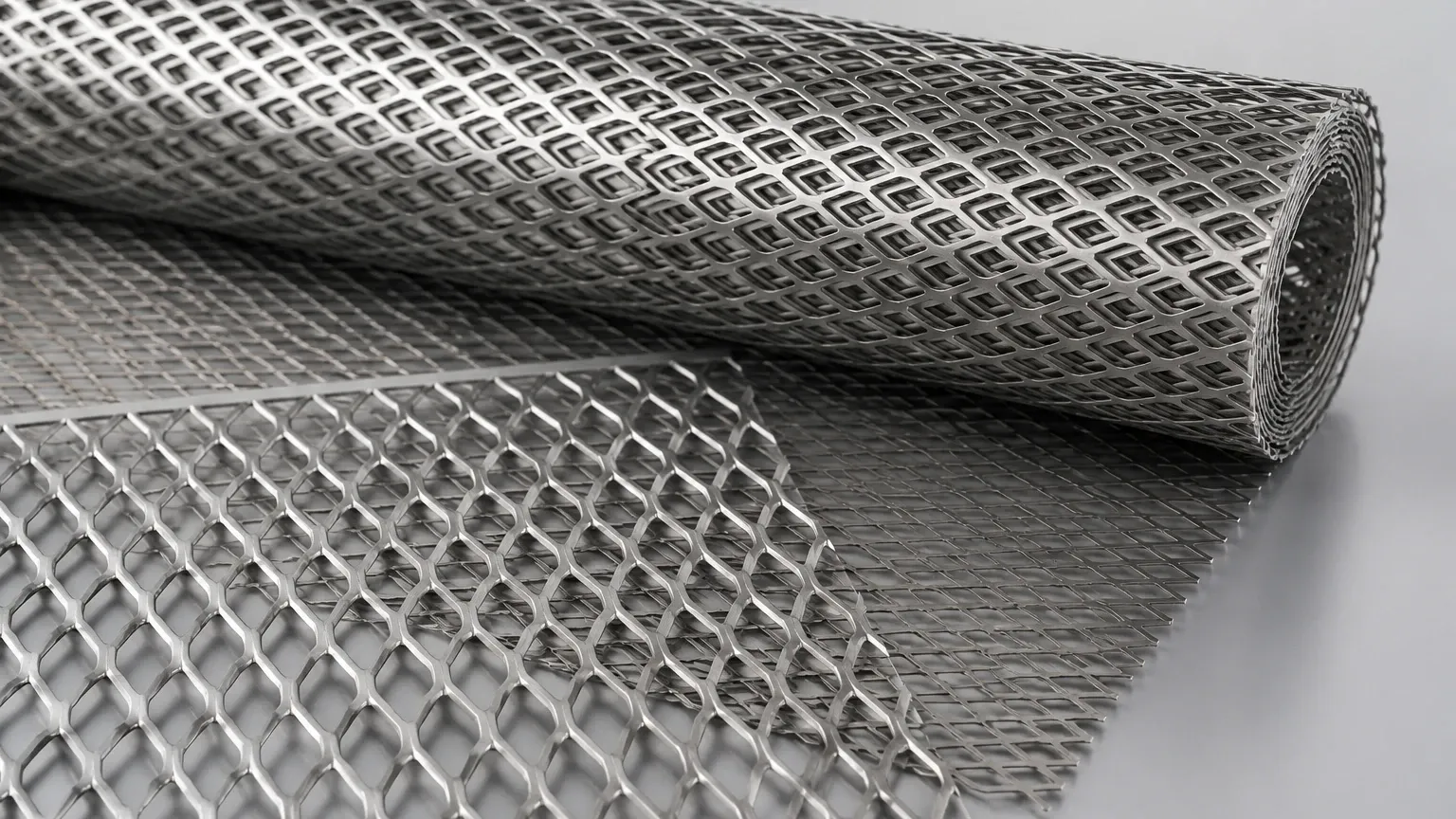
In the landscape of industrial filtration and structural reinforcement, selecting the correct mesh geometry is critical for ensuring both mechanical integrity and operational efficiency. Expanded metal 1515 represents a specific pattern and specification frequently utilized in heavy-duty filtration, architectural screening, and protective enclosures. Unlike perforated metal, which is created by punching holes and removing material, expanded metal is produced by simultaneously slitting and stretching a solid sheet. This process creates a diamond-shaped pattern that offers a high strength-to-weight ratio and excellent structural rigidity.
For engineers and procurement professionals, understanding the nuances of expanded metal 1515—including its dimensional tolerances, material properties, and performance characteristics—is essential for optimizing system design. As a specialized manufacturer, Kaifil provides precision-engineered Perforated & Expanded Metal solutions tailored to demanding industrial environments. This guide examines the technical specifications and engineering considerations required when integrating expanded metal 1515 into industrial applications.
Technical Specifications of Expanded Metal 1515
The designation "1515" typically refers to the nominal dimensions of the diamond opening or a specific manufacturer code within international standards (such as JIS or DIN). In most industrial contexts, these numbers relate to the Long Way of the Mesh (LWM) and the Short Way of the Mesh (SWM).
Dimensional Parameters
To evaluate expanded metal 1515 for a specific project, four primary measurements must be confirmed:
1. LWM (Long Way of Mesh): The distance from the center of one joint to the center of the next joint across the long diamond axis. For 1515 patterns, this is often approximately 15mm or 25mm depending on the specific standard used.
2. SWM (Short Way of Mesh): The distance from the center of one joint to the center of the next joint across the short diamond axis. In a 1515 specification, this frequently aligns with a 15mm nominal pitch.
3. Strand Width: The amount of metal between the openings. This determines the overall open area and the mechanical strength of the sheet.
4. Strand Thickness: The original thickness of the base metal sheet. For filtration support, thicknesses typically range from 0.5mm to 2.0mm.
Flattened vs. Raised (Standard)
Expanded metal 1515 is available in two distinct forms: raised and flattened.
* Raised (Standard) Expanded Metal: The strands and bonds are set at a uniform angle to the plane of the sheet. This provides maximum rigidity and a high-friction surface, which is ideal for filtration applications where the mesh must grip a filter media or provide turbulent flow characteristics.
* Flattened Expanded Metal: The raised mesh is passed through a cold-rolling reducing mill. This results in a smooth, flat surface. Flattened 1515 is often preferred when the mesh serves as an outer protective cage for delicate filter cartridges, as it prevents the mesh from cutting into the filter media during assembly or operation.
Material Selection and Corrosion Resistance
The performance of expanded metal 1515 is heavily dependent on the alloy selected. In industrial filtration, where exposure to corrosive chemicals, high temperatures, or high-pressure differentials is common, stainless steel is the industry standard.
Stainless Steel 304 and 304L
Grade 304 is the most common stainless steel used for expanded metal. It offers excellent formability and good corrosion resistance for general industrial applications, such as water treatment and food processing. 304L (low carbon) is often specified if the expanded metal must be welded into a filter housing, as it prevents carbide precipitation during the welding process.
Stainless Steel 316 and 316L
For more aggressive environments, such as chemical processing, marine applications, or pharmaceutical production, Grade 316 is required. The addition of molybdenum provides superior resistance to pitting and crevice corrosion, particularly in chloride-rich environments. Kaifil specializes in fabricating expanded metal 1515 from these high-grade alloys to ensure long-term durability in demanding filtration systems.
Specialty Alloys
In extreme cases involving high-temperature oxidation or highly acidic media, alloys such as Duplex stainless steel or Monel may be considered. However, for the majority of industrial filtration support structures, 316L provides the optimal balance of performance and cost-effectiveness.
Engineering Advantages in Industrial Filtration
Expanded metal 1515 is frequently chosen over other materials like woven wire mesh or perforated plate for specific engineering reasons. Its unique structure provides several functional benefits in a filtration context.
Structural Rigidity and Support
In high-pressure hydraulic or gas filtration, the primary filter media (such as fine wire mesh or fiberglass) lacks the structural strength to withstand the pressure drop ($ΔP$) across the element. Expanded metal 1515 acts as a robust "skeleton." Because the mesh is made from a single piece of metal without joins or welds at the intersections, it distributes mechanical stress more evenly than woven mesh.
Optimized Open Area
The open area of expanded metal 1515 determines the flow rate and the initial pressure drop of the system. Engineers must calculate the percentage of open area to ensure it does not restrict flow while still providing adequate support. Typically, expanded metal offers a higher open area percentage than perforated metal of the same thickness, allowing for more compact filter designs without sacrificing throughput.
Turbulence Promotion
In certain liquid filtration applications, the angular strands of raised expanded metal 1515 can promote micro-turbulence near the surface of the filter media. This can help prevent the rapid buildup of a filter cake, potentially extending the time between cleaning cycles or backwashing.
Comparing Perforated & Expanded Metal for Support Structures
When designing a filtration component, engineers often debate between using perforated plate or expanded metal. While both fall under the category of Perforated & Expanded Metal solutions, they serve different priorities.
| Feature | Expanded Metal 1515 | Perforated Metal |
| :— | :— | :— |
| Material Waste | Near zero (slitting and stretching) | Significant (slugs from holes) |
| Weight | Lighter for the same strength | Heavier |
| Cost | Generally lower due to less waste | Higher due to material loss |
| Surface | Can be raised or flat | Always flat |
| Flow Path | Three-dimensional (angular) | Two-dimensional (straight) |
| Aesthetics | Industrial diamond pattern | Highly customizable hole shapes |
For industrial support cores and outer guards, expanded metal 1515 is often the more cost-effective choice because the manufacturing process utilizes 100% of the raw material, whereas perforated metal can result in up to 40-60% material waste depending on the hole pattern.
Common Risks and Quality Evaluation Criteria
Procuring expanded metal 1515 requires careful attention to quality standards to avoid downstream failures in filtration systems. Low-quality expanded metal can introduce contaminants or cause mechanical failure.
Burrs and Sharp Edges
The expansion process involves cutting the metal. If the tooling is not properly maintained, the resulting mesh will have significant burrs. In filtration, these burrs can break off and enter the downstream flow (media migration) or puncture the primary filter layer. High-quality expanded metal should undergo deburring or pickling processes to ensure a clean surface.
Dimensional Consistency
If the expansion machine is not calibrated correctly, the LWM and SWM can vary across the sheet. This leads to inconsistent open areas and difficulties in welding the mesh into cylindrical shapes. Engineers should verify that the manufacturer adheres to strict tolerances, typically within +/- 5% of the nominal dimensions.
Material Integrity
Because the metal is stretched to its limit during production, any inclusions or defects in the original sheet can lead to "strand breakage." A single broken strand can compromise the structural integrity of a filter cartridge under high pressure. Visual inspection and material certifications (MTRs) are essential for verifying the quality of the base alloy.
Customization and Procurement Checklist
When ordering expanded metal 1515 for an OEM project or a replacement part, providing precise information to the manufacturer ensures the component will perform as expected. Before finalizing a purchase, confirm the following details:
* Exact Dimensions: Specify the required LWM, SWM, strand width, and thickness. Do not rely solely on the "1515" designation, as standards vary by region.
* Sheet or Coil Size: Determine if the material should be delivered in flat sheets or coils. For automated filter production lines, coils are often preferred.
* Direction of the Diamond: In cylindrical filters, the orientation of the LWM (either parallel or perpendicular to the length of the cylinder) affects the ease of rolling and the final crush strength.
* Surface Treatment: Specify if the mesh requires flattening, degreasing, electropolishing, or pickling. For food and pharmaceutical applications, electropolishing is often mandatory to ensure a sterile surface.
* Quantity and Lead Time: Custom expanded metal patterns may require specific tooling. Confirm that the manufacturer has the capability to produce the 1515 pattern in the required volume.
Conclusion
Expanded metal 1515 is a versatile and efficient material for industrial filtration and structural support. Its diamond-shaped geometry provides a unique combination of strength, high open area, and cost-efficiency that is difficult to match with other metal forms. By selecting the appropriate material grade—typically 304L or 316L stainless steel—and specifying the correct dimensional parameters, engineers can significantly improve the durability and performance of their filtration systems.
As a manufacturer focused on precision metal filtration, Kaifil provides the technical expertise and manufacturing capabilities to deliver high-quality expanded metal solutions. Whether you require standard patterns or custom-engineered components, understanding the technical boundaries of expanded metal 1515 ensures a more reliable and cost-effective end product. For further technical data or to discuss specific application requirements, reviewing the available Perforated & Expanded Metal options is the recommended next step in the procurement process.
