


1 2 Inch Expanded Metal
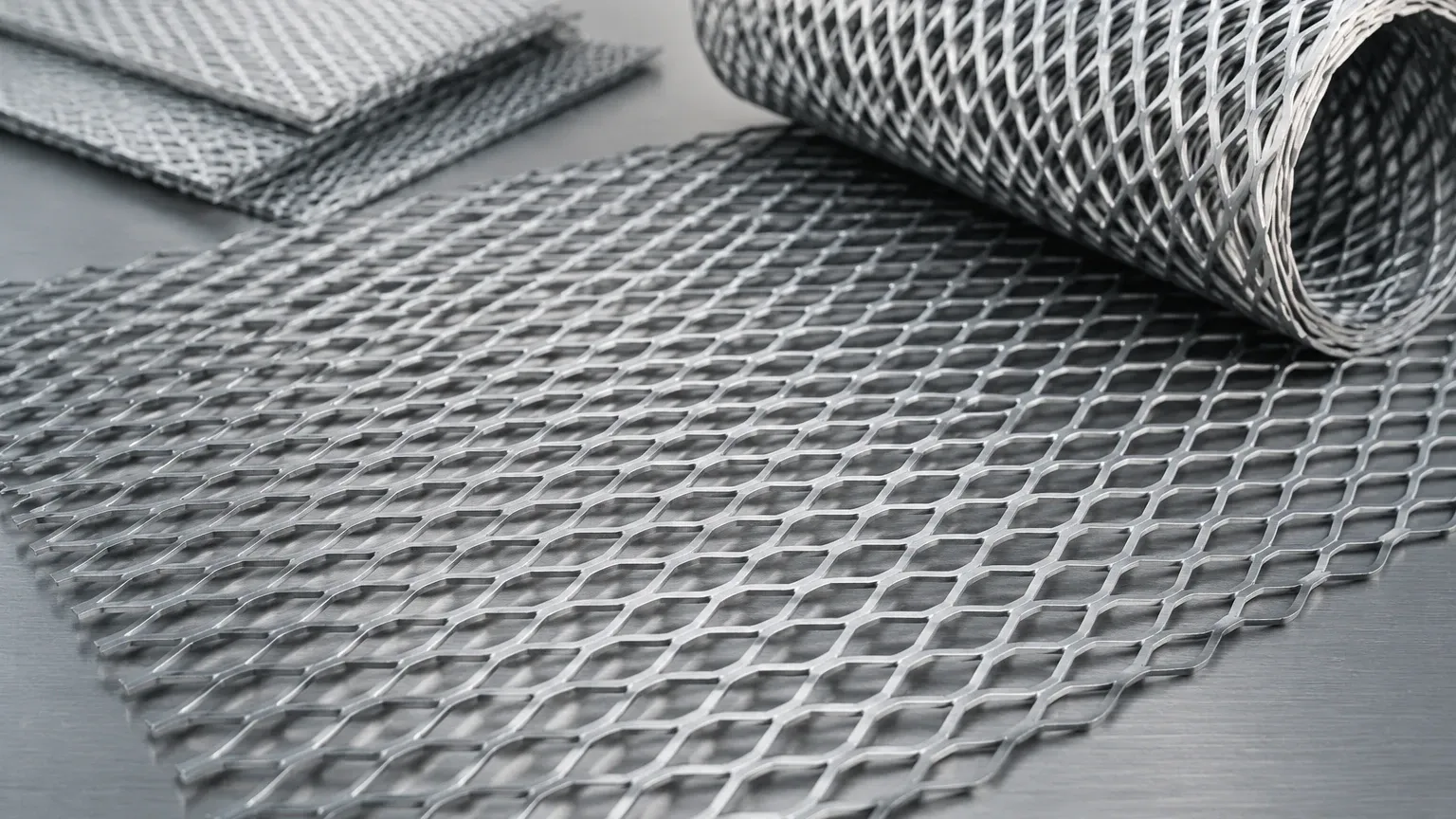
In industrial manufacturing and filtration engineering, the selection of structural media is a critical decision that impacts the durability, efficiency, and safety of the final system. Among the various options available, 1 2 inch expanded metal—referring to the nominal dimension of the diamond opening—is one of the most versatile and widely utilized specifications. This material is produced through a process of simultaneous slitting and stretching, resulting in a continuous, jointless mesh that offers a unique combination of high strength-to-weight ratio and precise open area.
For engineers and procurement professionals, understanding the technical nuances of Perforated & Expanded Metal is essential for optimizing performance in applications ranging from heavy-duty industrial filtration to machine guarding and architectural reinforcement. This guide examines the engineering properties, material considerations, and application-specific benefits of 1 2 inch expanded metal.
Understanding the Specifications of 1 2 Inch Expanded Metal
The term "1 2 inch expanded metal" typically refers to the Short Way of Design (SWD) dimension of the diamond-shaped opening. To specify this material accurately for an industrial project, several geometric parameters must be defined:
* SWD (Short Way of Design): The distance from the center of a bond on one side to the center of the bond on the opposite side, measured across the short axis of the diamond. In this case, the nominal value is 0.5 inches.
* LWD (Long Way of Design): The distance measured across the long axis of the diamond, usually ranging from 1.0 to 1.25 inches for a 1/2" SWD product.
* Strand Width: The amount of metal fed into the precision dies to create the mesh. This determines the density and strength of the finished product.
* Strand Thickness: The original thickness of the base metal sheet.
* Open Area: Expressed as a percentage, this indicates the ratio of the openings to the total area. For 1 2 inch expanded metal, the open area typically falls between 60% and 80%, depending on the strand width.
By manipulating these variables, manufacturers like Kaifil can tailor the mechanical properties of the mesh to meet specific load-bearing or flow-rate requirements.
Manufacturing Processes: Standard vs. Flattened Expanded Metal
When sourcing 1 2 inch expanded metal, engineers must choose between two primary finishes: standard (raised) and flattened. Each serves distinct functional purposes in an industrial environment.
Standard (Raised) Expanded Metal
Standard expanded metal is the direct product of the expanding machine. The strands and bonds are set at a uniform angle to the plane of the sheet. This creates a three-dimensional surface that provides:
* Maximum Rigidity: The angular orientation of the strands increases the structural depth of the sheet, making it more resistant to bending.
* Enhanced Grip: The raised edges provide natural slip resistance, which is beneficial for walkways or drainage grates.
* Directional Flow Control: The angled strands can be used to deflect light, sound, or fluid flow in specific directions.
Flattened Expanded Metal
Flattened expanded metal is produced by passing the standard expanded sheet through a cold-roll reducing mill. This process levels the strands and bonds into a single plane, resulting in a smooth, flat surface. The advantages include:
* Surface Uniformity: Ideal for applications where the mesh must be bonded to other materials or where a smooth contact surface is required, such as in pleated filter supports.
* Safety: The removal of raised edges reduces the risk of abrasion or snagging in manual handling environments.
* Thickness Precision: The rolling process ensures a consistent gauge across the entire sheet, which is critical for high-precision filtration components.
Material Selection and Chemical Compatibility
While expanded metal can be produced from various alloys, stainless steel remains the gold standard for industrial and chemical processing applications. At Kaifil, the focus is on providing durable solutions that withstand aggressive environments.
Stainless Steel (304 and 316L)
Stainless steel 1 2 inch expanded metal is preferred in the pharmaceutical, food and beverage, and chemical industries. Grade 304 offers excellent corrosion resistance for general industrial use, while Grade 316L (low carbon) is specified for environments involving high chloride concentrations or acidic solutions. The inherent strength of stainless steel allows for thinner strands without sacrificing structural integrity, which can maximize the available open area for filtration.
Carbon Steel and Aluminum
For less demanding environments, carbon steel provides a cost-effective solution, though it often requires secondary finishing such as galvanizing or powder coating to prevent oxidation. Aluminum expanded metal is chosen for its lightweight properties and natural atmospheric corrosion resistance, making it suitable for aerospace or architectural applications where weight reduction is a primary engineering goal.
Engineering Advantages in Industrial Filtration Systems
In the field of industrial filtration, 1 2 inch expanded metal serves as a foundational component, particularly in the construction of high-pressure filter cartridges and large-scale strainers. Its role is often both functional and structural.
Structural Support for Filter Media
Thin filtration membranes or fine wire meshes often lack the mechanical strength to withstand high differential pressures. 1 2 inch expanded metal is frequently used as an internal support core or an external protective wrap. Its diamond structure provides multi-directional strength, preventing the collapse or bursting of the primary filter media during surges in flow or high contaminant loading.
Pre-Filtration and Coarse Straining
In water treatment and hydraulic systems, 1 2 inch expanded metal can act as a primary strainer. It is effective at capturing large debris—such as wood chips, plastic fragments, or large scale—before the fluid reaches finer, more expensive filtration stages. This extends the service life of the entire system and reduces maintenance costs.
Turbulence Promotion
In certain chemical processing applications, the angular geometry of raised expanded metal can be used to induce controlled turbulence. This can enhance mixing or heat transfer efficiency in specialized reactor vessels where filtration and processing occur simultaneously.
Critical Performance Metrics: Open Area and Flow Dynamics
For engineers, the most critical aspect of 1 2 inch expanded metal is how it affects the movement of fluids or gases. The percentage of open area directly correlates to the pressure drop across the mesh.
1. Pressure Drop (ΔP): A higher open area results in a lower initial pressure drop. Because 1 2 inch expanded metal offers a relatively large opening compared to finer meshes, it allows for high flow rates with minimal energy loss.
2. Contaminant Capacity: The geometry of the diamond opening allows for a degree of "depth" in the collection of solids, especially in standard (raised) configurations. This can prevent the rapid "blinding" or clogging that occurs with flat perforated sheets.
3. Mechanical Stability: Unlike woven wire mesh, which can experience wire migration under high vibration or flow, expanded metal is a single piece of material. The bonds are part of the metal itself, ensuring that the 1/2" opening remains constant throughout the lifecycle of the component.
Selection Criteria for Industrial Purchasing Teams
When evaluating 1 2 inch expanded metal for a project, purchasing teams should confirm several factors with their manufacturer to ensure the product meets the intended application requirements:
* Dimensional Tolerances: Confirm the allowable variance in SWD and LWD. For precision filtration components, tighter tolerances are often required to ensure a proper fit within housings.
* Edge Configuration: Specify whether the sheets should have "random sheared" edges (where diamonds are cut through) or "bond sheared" edges (where the cut follows the solid metal bond). Bond shearing provides a safer, finished edge but may increase production costs.
* Surface Finish: For food-grade or pharmaceutical applications, the metal may require electropolishing or ultrasonic cleaning to remove burrs, oils, and surface contaminants.
* Load Requirements: If the metal is used for walkways or heavy-duty guards, provide the manufacturer with the expected load per square foot to determine the necessary strand thickness and width.
Conclusion
1 2 inch expanded metal is a versatile, high-performance material that provides essential structural and filtration functions across the industrial spectrum. Whether used as a support core for a stainless steel filter cartridge or as a protective screen in a chemical plant, its unique diamond structure offers a balance of strength and transparency that few other materials can match.
By selecting the appropriate material grade, finish, and strand dimensions, engineers can ensure their systems operate with maximum efficiency and minimal downtime. As a specialist in custom stainless steel filtration, Kaifil provides the technical expertise and manufacturing precision necessary to deliver expanded metal solutions tailored to the most demanding industrial environments.
For detailed specifications or to discuss custom filtration designs, engineers are encouraged to Review product options and application support to find the optimal configuration for their specific technical needs.
