


10 Gauge Expanded Metal
In industrial engineering and heavy-duty manufacturing, the selection of structural and filtration components depends heavily on the balance between material thickness, weight, and mechanical integrity. 10 gauge expanded metal represents a robust category of industrial material frequently utilized in environments where durability and high load-bearing capacity are non-negotiable. As a specialized manufacturer of Perforated & Expanded Metal, Kaifil provides these components to serve as critical structural supports, safety guards, and primary filtration layers across the chemical, hydraulic, and food processing sectors.
Understanding the technical nuances of 10 gauge expanded metal is essential for engineers and procurement teams who must ensure that the material meets specific pressure, flow, and environmental requirements. This guide examines the specifications, manufacturing variations, and engineering considerations necessary for selecting the right expanded metal solution.
Technical Specifications of 10 Gauge Expanded Metal
The term "10 gauge" refers to the thickness of the base metal sheet before the expansion process. In the context of carbon steel, 10 gauge typically corresponds to a nominal thickness of approximately 0.1345 inches (3.42 mm). For stainless steel, which is a primary material for Kaifil’s high-performance filtration components, the gauge thickness remains a critical baseline for determining the final strength of the expanded mesh.
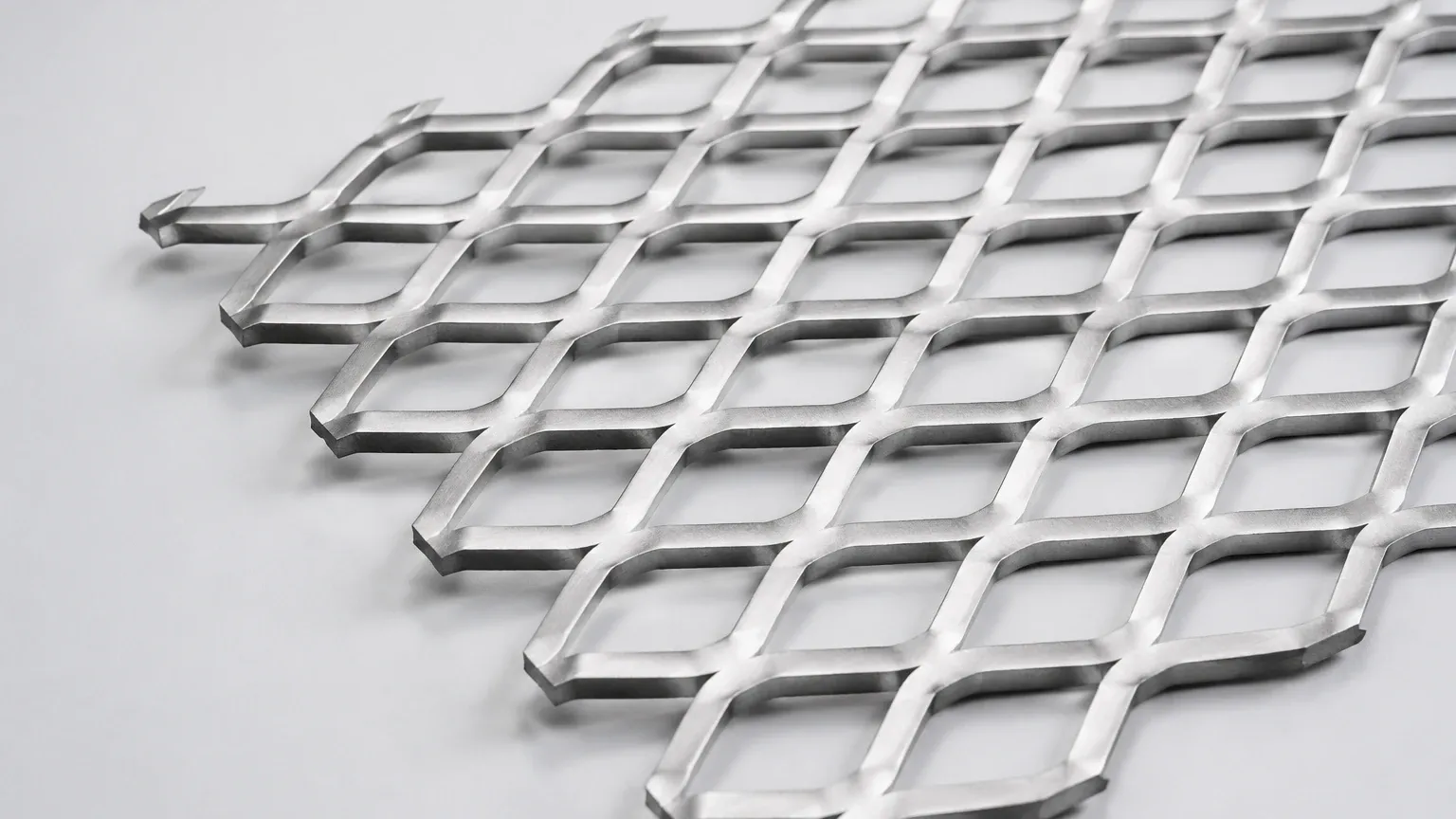
Expanded metal is produced by simultaneously slitting and stretching a solid metal sheet. Unlike perforated metal, which involves punching holes and creating scrap, the expansion process creates a diamond-shaped pattern without any material waste. The resulting mesh is characterized by several key dimensions:
* SWD (Short Way of Diamond): The distance from the center of one bond to the center of the next bond measured across the short axis of the diamond.
* LWD (Long Way of Diamond): The distance measured across the long axis of the diamond.
* Strand Width: The amount of metal fed between the upper and lower dies to produce one strand.
* Strand Thickness: The original thickness of the base metal (in this case, 10 gauge).
When specifying 10 gauge expanded metal, engineers must consider the "opening size" (the clear space between strands) rather than just the SWD and LWD, as the strand width will reduce the actual open area available for fluid or airflow.
Manufacturing Variations: Standard vs. Flattened
One of the most important decisions during the design phase is whether to utilize standard (raised) or flattened 10 gauge expanded metal. Each variation offers distinct mechanical properties suitable for different industrial applications.
Standard (Raised) Expanded Metal
Standard expanded metal comes off the machine with the strands and bonds set at a uniform angle to the plane of the sheet. This creates a three-dimensional surface that offers several advantages:
* Rigidity: The angled strands provide exceptional structural strength and resistance to bending.
* Grip: The raised edges provide an anti-slip surface, often used in industrial walkways or drainage grates.
* Deflection: In filtration and screening, the raised profile can help deflect larger debris away from the mesh surface.
Flattened Expanded Metal
Flattened expanded metal is produced by passing the standard expanded sheet through a cold-rolled reducing mill. This process flattens the strands and bonds into a single plane, resulting in a smooth, flat surface. For B2B applications involving precision filtration or internal machine components, flattened 10 gauge expanded metal is often preferred because:
* Thickness Consistency: It provides a uniform thickness across the entire sheet, which is critical when the metal is used as a support core for fine wire mesh in filter cartridges.
* Safety: The removal of sharp edges makes it safer for handling and prevents damage to sensitive filter media that may be layered against it.
* Ease of Fabrication: A flat surface is generally easier to weld, shear, and form into cylindrical shapes for hydraulic or chemical filter housings.
Material Selection for Corrosive Environments
While 10 gauge expanded metal can be manufactured from carbon steel or aluminum, industrial filtration and chemical processing applications typically demand the use of stainless steel. Kaifil specializes in stainless steel alloys to ensure long-term performance in demanding environments.
304 Stainless Steel
Grade 304 is the most common choice for general industrial use. It offers excellent corrosion resistance to most oxidizing acids and is widely used in food and beverage processing due to its ease of cleaning and sanitization. In 10 gauge thickness, 304 stainless steel provides a high strength-to-weight ratio for protective guards and support structures.
316 Stainless Steel
For applications involving marine environments, chlorides, or highly corrosive chemical solvents, 316 stainless steel is the preferred specification. The addition of molybdenum enhances its resistance to pitting and crevice corrosion. Engineers selecting 10 gauge expanded metal for pharmaceutical or offshore oil and gas applications often mandate 316L (low carbon) to ensure weld integrity and prevent intergranular corrosion.
Engineering Advantages in Industrial Filtration
In the realm of industrial filtration, 10 gauge expanded metal rarely acts as the primary filtration medium for fine particles. Instead, it serves as a critical structural component within a multi-layer filtration system. Its role is multifaceted:
1. Support for Fine Mesh: Fine wire mesh lacks the structural integrity to withstand high differential pressures. A 10 gauge expanded metal cylinder or plate acts as a "skeleton," supporting the fine mesh and preventing it from collapsing or deforming under flow stress.
2. Pre-Filtration and Trash Screening: In water treatment or intake systems, the large diamond openings of 10 gauge expanded metal can serve as a primary screen to remove large debris (stones, wood, plastic) before the fluid reaches more sensitive downstream components.
3. Flow Distribution: The geometry of the diamond openings helps break up laminar flow and creates controlled turbulence, which can improve the distribution of fluid across the surface of a filter, preventing "blind spots" and extending the service life of the filter element.
4. Heat Dissipation: In high-temperature gas filtration, the large surface area of the 10 gauge strands helps dissipate heat, protecting the integrity of the overall assembly.
Performance Metrics: Open Area and Pressure Drop
For engineers designing systems with Perforated & Expanded Metal, calculating the percentage of open area is a vital step. The open area determines the velocity of the fluid passing through the screen and the resulting pressure drop (delta P).
10 gauge expanded metal offers a high percentage of open area compared to solid plates, often ranging from 40% to 80% depending on the diamond size (SWD/LWD) and strand width. A higher open area results in a lower pressure drop, which reduces the energy requirements for pumps and compressors. However, increasing the open area usually involves reducing the strand width or increasing the diamond size, which can compromise the structural load-bearing capacity. Engineers must perform a trade-off analysis to ensure the material is strong enough to withstand the system's maximum operating pressure while remaining porous enough to meet flow rate targets.
Customization and Secondary Processing
Standard off-the-shelf expanded metal sheets often require secondary processing to meet the specific needs of an OEM project. Kaifil provides comprehensive customization options for 10 gauge expanded metal to ensure seamless integration into the final product:
* Precision Shearing: Cutting sheets to exact tolerances to fit into filter housings or frames without the need for on-site adjustment.
* Cylindrical Forming: Rolling the expanded metal into tubes or cylinders for use as filter cores or outer cages. This requires precise calculation of the "stretch" factor during rolling to ensure the seam aligns perfectly for welding.
* Welding and Assembly: Utilizing TIG, MIG, or spot welding to join expanded metal to end caps, flanges, or other structural components. Proper welding technique is crucial for 10 gauge stainless steel to maintain corrosion resistance at the heat-affected zones.
* Surface Finishing: Options such as electropolishing, pickling, or powder coating can be applied to enhance corrosion resistance or meet specific aesthetic and hygienic standards.
Selection Checklist for Purchasing Teams
Before finalizing a purchase order for 10 gauge expanded metal, procurement and engineering teams should confirm the following details to avoid compatibility issues:
* Material Grade: Is 304, 316L, or carbon steel required for the specific chemical environment?
* Style: Is the application better suited for Standard (raised) or Flattened mesh?
* Diamond Dimensions: Specify the SWD and LWD. For example, a "3/4 #10" designation typically refers to a 0.923" LWD and 10 gauge thickness.
* Open Area Requirements: Does the calculated open area meet the flow rate and pressure drop specifications of the system?
* Tolerances: What are the allowable variances in sheet size and flatness?
* Compliance: Does the material need to meet specific industry standards, such as FDA requirements for food contact or ASTM standards for material strength?
By focusing on these technical parameters, industrial professionals can leverage 10 gauge expanded metal to create durable, efficient, and cost-effective filtration and structural solutions. Kaifil’s expertise in manufacturing and customizing these components ensures that every application, from heavy-duty hydraulic filters to industrial safety guards, performs reliably under the most demanding conditions.
