


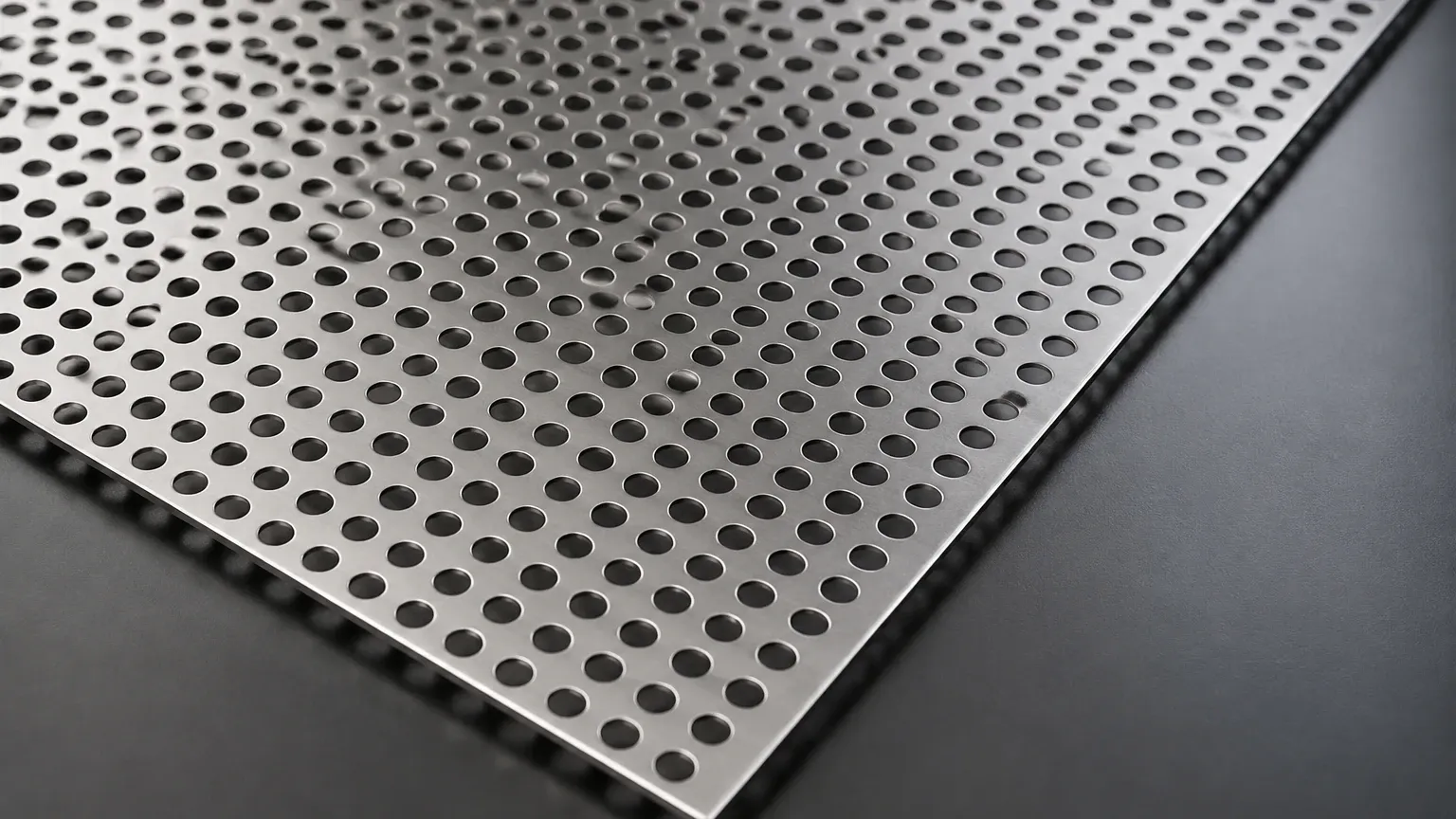
1/2 Perforated Metal Sheet
In the realm of industrial filtration and structural engineering, the 1/2 perforated metal sheet represents a critical standard for medium-to-heavy-duty separation tasks. Whether utilized as a primary strainer, a protective screen, or a structural support for finer wire mesh layers, the precise specification of a 1/2-inch aperture requires a deep understanding of material science, open area calculations, and mechanical integrity. For engineers and procurement teams, selecting the right perforated or expanded metal component is not merely about hole size; it is about balancing flow rates, pressure drops, and the corrosive nature of the operating environment.
At Kaifil, we specialize in the precision manufacturing of Perforated & Expanded Metal solutions, focusing on stainless steel alloys that provide the durability required for demanding industrial applications. This guide examines the technical nuances of the 1/2-inch perforated specification and the engineering considerations necessary for optimal performance.
Technical Specifications and Geometry of 1/2 Inch Perforated Metal
The term "1/2 perforated metal sheet" typically refers to a sheet with a hole diameter of 0.500 inches. However, the performance of the sheet is dictated by more than just the hole size. Engineers must define the hole pattern, the pitch (center-to-center distance), and the resulting open area.
Hole Patterns and Pitch
The most common configuration for industrial filtration is the 60-degree staggered round hole pattern. This layout provides the highest inherent strength and the most uniform distribution of stress across the sheet. In a 1/2-inch round hole configuration, the pitch is usually set between 5/8-inch and 11/16-inch.
* Staggered Pattern: Offers superior structural integrity and is the standard for most liquid and gas filtration applications.
* Straight Line Pattern: Often used for aesthetic or specific mechanical sorting applications where structural load is secondary to alignment.
Calculating Open Area
The open area percentage is perhaps the most vital metric for filtration efficiency. It determines the flow capacity and the pressure drop across the media. For a 60-degree staggered round hole pattern, the formula is:
Open Area % = (D² × 90.69) / P²
*(Where D = Hole Diameter and P = Pitch)*
For a 1/2-inch hole on an 11/16-inch staggered pitch, the open area is approximately 48%. If the application requires higher throughput, the pitch must be reduced, though this may compromise the mechanical strength of the "bridge" (the metal remaining between the holes).
Material Selection: The Case for Stainless Steel
While perforated sheets can be manufactured from carbon steel or aluminum, industrial filtration environments—particularly in chemical processing, food and beverage, and pharmaceutical sectors—demand the properties of stainless steel.
SS304 vs. SS316
* Grade 304: The most common choice for general industrial use. It offers excellent corrosion resistance to most oxidizing acids and is highly weldable, making it ideal for custom filter cartridges.
* Grade 316: Contains molybdenum, which significantly enhances resistance to chlorides and pitting. This is the authoritative choice for marine environments, pharmaceutical processing, and high-salinity water treatment applications.
Gauge and Thickness
The thickness of the 1/2 perforated metal sheet must be calibrated against the pressure of the fluid stream. Common thicknesses for 1/2-inch perforations range from 16 gauge (0.0598") to 11 gauge (0.1196"). Thicker materials are necessary when the sheet acts as a support cage for high-pressure hydraulic filters or as a heavy-duty intake screen in water treatment plants.
Perforated vs. Expanded Metal: Engineering Trade-offs
When evaluating Perforated & Expanded Metal for a project, it is essential to understand the manufacturing differences and how they affect the final application.
Perforated Metal Characteristics
Perforated metal is produced by punching holes into a solid sheet. This process allows for extreme precision in hole size and spacing. It results in a flat, smooth surface that is easy to clean and maintain. In filtration, this is preferred when precise particle retention is required or when the filter must be frequently backwashed.
Expanded Metal Characteristics
Expanded metal is created by slitting and stretching the sheet simultaneously. This process produces no waste and results in a diamond-shaped aperture. While expanded metal is often more cost-effective and provides a high strength-to-weight ratio, it lacks the precise aperture control of perforated metal. It is frequently used for secondary support or as a guard to prevent large debris from entering a system.
Industrial Applications for 1/2 Perforated Metal Sheets
The 1/2-inch aperture is a versatile size used across multiple sectors for separation, protection, and support.
1. Pre-Filtration and Strainers
In large-scale water treatment and chemical processing, 1/2-inch perforated sheets serve as primary strainers. They remove large particulates, such as stones, plastic debris, or organic matter, before the fluid reaches more sensitive fine-mesh filters or membrane systems. This protects downstream equipment from mechanical damage and clogging.
2. Support Cages for Filter Cartridges
For high-pressure hydraulic or gas filtration, fine wire mesh media lacks the structural rigidity to withstand the differential pressure. A 1/2-inch perforated stainless steel sheet is often rolled and welded into a cylinder to act as an internal or external support core. The 1/2-inch holes allow for high flow rates while the thick metal walls prevent the filter media from collapsing.
3. Food and Beverage Processing
In the food industry, perforated sheets are used for sorting, drying, and scalding. Stainless steel 304 or 316 is mandatory here to meet hygiene standards. The 1/2-inch hole size is common in the processing of larger grains, pulses, and vegetables, where it facilitates efficient drainage or air circulation.
4. Architectural and Acoustic Panels
Beyond filtration, these sheets are used for sound attenuation and safety guarding. In industrial engine rooms, perforated metal backed with acoustic insulation helps dampen high-frequency noise while maintaining structural durability.
Engineering Evaluation and Customization Criteria
Before ordering a 1/2 perforated metal sheet, engineers should confirm several critical factors to ensure the component meets the system's operational requirements.
Margin Requirements
Standard perforated sheets often come with "minimum margins" (unperforated areas along the edges). However, for custom filter assemblies, specific margins may be required for welding or bolting. At Kaifil, we provide customized margins to ensure that the sheet can be seamlessly integrated into the final housing or frame without requiring extensive post-processing.
Flatness and Stress Relieving
The perforating process can introduce internal stresses into the metal, causing the sheet to curl or bow. For applications requiring high-precision fitment, such as automated sorting trays or precision filter housings, the sheets must undergo a leveling process to ensure they meet strict flatness tolerances.
Surface Finish and Deburring
In many B2B applications, particularly in the pharmaceutical and food sectors, the presence of burrs (sharp metal fragments) is unacceptable. Deburring and polishing (such as electropolishing) are often necessary to ensure the perforated sheet does not trap contaminants and is safe for handling during maintenance cycles.
Maintenance, Longevity, and Total Cost of Ownership
While the initial purchase price of a 1/2 perforated metal sheet is a factor, the total cost of ownership (TCO) is driven by durability and maintenance requirements.
Cleaning Cycles
Stainless steel perforated sheets are highly resistant to fouling. In liquid filtration, they can often be cleaned via high-pressure washing or chemical soaking. The smooth surface of perforated metal (as opposed to the textured surface of expanded metal) makes it significantly easier to return to a "like-new" state, extending the replacement cycle.
Corrosion and Wear
In abrasive environments, such as mining or heavy chemical processing, the thickness of the sheet should be over-engineered to account for material loss over time. Choosing SS316 over SS304 may have a higher upfront cost but can double the service life of the component in corrosive environments, reducing downtime and labor costs associated with frequent replacements.
Conclusion: Selecting a Manufacturing Partner
Selecting a 1/2 perforated metal sheet involves more than choosing a hole size from a catalog. It requires a detailed analysis of the fluid dynamics, mechanical stresses, and chemical exposures inherent in the application. As a professional manufacturer, Kaifil provides the technical expertise and advanced manufacturing capabilities needed to produce high-performance Perforated & Expanded Metal components tailored to specific industrial needs.
By focusing on material quality, precise tolerances, and customized designs, we help engineers achieve efficient and durable filtration performance. Whether you are designing a new filtration system or seeking a reliable OEM partner for replacement components, confirming the technical specifications—from open area to alloy grade—is the first step toward a successful installation.
