


16 Gauge Perforated Metal
In the landscape of industrial filtration and structural engineering, material thickness serves as a fundamental determinant of performance, durability, and cost-efficiency. Among the various specifications available, 16 gauge perforated metal represents a versatile "middle ground" frequently utilized in demanding environments. For engineers and procurement teams, understanding the technical nuances of this specific gauge—approximately 0.0598 inches or 1.5mm thick—is essential for optimizing filtration systems and protective assemblies.
As a specialized manufacturer of stainless steel filtration solutions, Kaifil provides precision-engineered Perforated & Expanded Metal components tailored to rigorous industrial standards. This guide examines the technical properties, material considerations, and engineering applications of 16 gauge perforated metal to assist in informed selection and integration.
Understanding 16 Gauge Perforated Metal Specifications
The term "gauge" refers to a standardized measurement of thickness, but it is important to note that the exact decimal thickness can vary slightly depending on the material type. For instance, 16 gauge stainless steel is typically 0.0595 inches, while 16 gauge carbon steel is approximately 0.0598 inches. In high-precision industrial applications, engineers should always specify the decimal thickness to ensure compatibility with housing tolerances and structural calculations.
16 gauge perforated metal is characterized by its balance of rigidity and formability. It is thick enough to withstand significant mechanical stress and internal pressures within a filtration system, yet thin enough to be rolled into cylinders or formed into custom shapes without the need for heavy industrial forging equipment. This makes it an ideal substrate for filter cartridges, strainers, and protective screens.
Hole Patterns and Geometries
The performance of perforated metal is largely defined by its hole pattern. The most common configurations include:
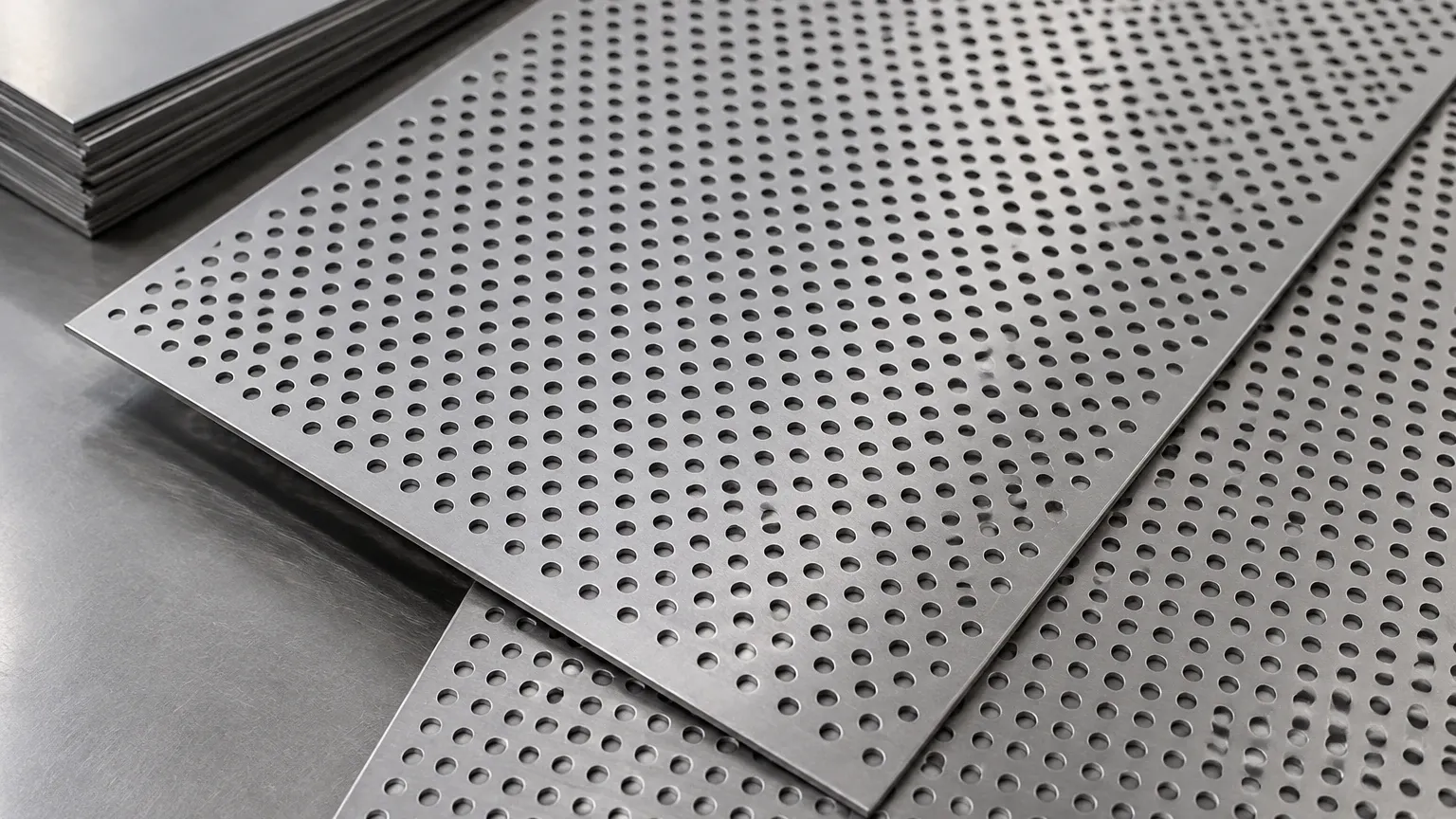
* Round Holes: The industry standard for filtration, offering the best balance of structural strength and open area. Round holes can be arranged in a 60-degree staggered pattern (providing maximum open area and strength) or a straight-line pattern.
* Square Holes: Often selected for architectural applications or specific screening processes where a higher open area is required, though they may offer less structural integrity than round holes under high pressure.
* Slotted Holes: Frequently used in solid-liquid separation and grain processing, where the elongated shape helps prevent clogging while maintaining a specific flow direction.
Material Selection for Industrial Filtration Environments
The choice of material for 16 gauge perforated metal is dictated by the chemical and thermal conditions of the application. While carbon steel and aluminum are available, stainless steel remains the preferred choice for industrial filtration due to its superior resistance to corrosion and high temperatures.
Stainless Steel 304 vs. 316
For most general-purpose industrial applications, Grade 304 stainless steel provides excellent durability and corrosion resistance at a cost-effective price point. However, in environments involving high chloride concentrations, marine conditions, or aggressive chemical processing (such as in the pharmaceutical or chemical sectors), Grade 316 stainless steel is recommended. The addition of molybdenum in 316 stainless steel significantly enhances its resistance to pitting and crevice corrosion, ensuring a longer service life for 16 gauge perforated metal components.
Specialty Alloys
In extreme environments involving highly acidic or alkaline fluids, or temperatures exceeding 800°F, specialty alloys like Monel, Inconel, or Hastelloy may be required. While 16 gauge remains a common thickness for these materials, the punching and perforation process requires specialized tooling and expertise to maintain dimensional accuracy.
Engineering Performance: Open Area and Flow Dynamics
One of the most critical factors for engineers when specifying 16 gauge perforated metal is the "Open Area Percentage." This figure represents the ratio of the total area of the holes to the total area of the sheet. It directly influences the flow rate, pressure drop, and filtration efficiency of the component.
Calculating Open Area
For a standard 60-degree staggered round hole pattern, the open area is calculated using the formula:
OA = (D² × 90.69) / P²
*Where D is the hole diameter and P is the center-to-center pitch.*
A higher open area allows for greater flow rates and lower pressure drops, which is vital for energy-efficient pump operation in hydraulic and water treatment systems. However, increasing the open area reduces the structural rigidity of the 16 gauge sheet. Engineers must find the optimal point where the material remains strong enough to resist deformation under the system's maximum operating pressure while meeting the required flow characteristics.
Pressure Drop Considerations
In filtration applications, 16 gauge perforated metal often serves as a support core for finer wire mesh layers. In this configuration, the perforated metal must provide sufficient mechanical support to prevent the mesh from collapsing under differential pressure. If the open area is too low, the perforated metal itself becomes a bottleneck, causing an unnecessary pressure drop across the filter assembly.
Applications in Industrial Filtration and Protection
Because of its structural integrity, 16 gauge perforated metal is a staple in various industrial sectors. Its applications range from primary filtration to mechanical protection.
Filter Cartridge Cores and Sleeves
In the manufacturing of industrial filter cartridges, 16 gauge stainless steel is frequently used to create the inner support core. The thickness provides the necessary hoop strength to resist the inward pressure of the fluid. Conversely, it can also be used as an outer sleeve to protect delicate pleated media from mechanical damage during installation or backwashing cycles.
Basket Strainers and Suction Diffusers
For large-scale water treatment and chemical processing, 16 gauge perforated metal is used to fabricate basket strainers. These components remove large particulates from the fluid stream to protect downstream equipment like pumps and valves. The 16 gauge thickness ensures that the basket can be cleaned and reused multiple times without losing its shape.
Acoustic Dampening and Ventilation
Beyond filtration, this material is used in industrial machinery enclosures for noise reduction and heat dissipation. The perforations allow for airflow while the 16 gauge thickness provides a sturdy barrier that contributes to the overall structural frame of the equipment.
Manufacturing Standards and Customization Capabilities
Producing high-quality 16 gauge perforated metal requires precision at every stage of the manufacturing process. At Kaifil, we focus on delivering components that meet exact engineering tolerances to ensure seamless integration into the final product.
CNC Punching and Leveling
The perforation process involves high-speed CNC punching presses. As the metal is punched, internal stresses can cause the sheet to warp or curl. Professional manufacturers utilize precision leveling rollers to flatten the material after perforation, ensuring that the 16 gauge sheet remains within flatness tolerances required for subsequent welding or assembly.
Deburring and Surface Finishing
Perforation naturally creates burrs on the "exit" side of the hole. In filtration applications, these burrs can trap contaminants or damage secondary filter media like wire mesh. Mechanical deburring is a standard part of the process to ensure a smooth surface. Depending on the application, additional finishes such as electropolishing or passivating can be applied to enhance corrosion resistance and cleanliness, particularly for the food and beverage or pharmaceutical industries.
Custom Margins and Blank Areas
Engineers often require "margins"—unperforated areas along the edges of the sheet—to facilitate welding or mounting. Custom 16 gauge perforated metal can be produced with specific blank areas tailored to the design of the filter housing or structural frame, reducing the need for secondary trimming and waste.
Technical Procurement: Key Factors for Engineers
When sourcing 16 gauge perforated metal, providing a complete technical specification is vital to avoid performance failures or installation issues. Engineers should confirm the following details before finalizing an order:
1. Exact Decimal Thickness: Confirm whether 0.0595" (SS) or 0.0598" (CS) is required.
2. Hole Size and Pitch: Specify the diameter and center-to-center distance, ensuring the resulting open area meets flow requirements.
3. Hole Arrangement: Indicate if the pattern is staggered (60° or 45°) or straight-line.
4. Margin Requirements: Define the width of the unperforated edges on all four sides.
5. Flatness and Camber Tolerances: Crucial for automated assembly or precision welding.
6. Material Certification: Request Mill Test Reports (MTRs) to verify the chemical composition and mechanical properties of the steel.
Conclusion
16 gauge perforated metal is a critical component in the toolbox of industrial engineers. Its unique combination of strength, weight, and versatility makes it indispensable for creating durable filtration cores, protective screens, and structural elements. By carefully selecting the material grade, hole pattern, and open area, technical professionals can ensure their systems operate with maximum efficiency and longevity.
Kaifil's expertise in custom stainless steel filtration allows us to provide high-performance Perforated & Expanded Metal solutions that meet the most demanding industrial specifications. Whether you require standard sheets or fully fabricated custom filter components, focusing on technical precision and material quality is the key to successful project outcomes.
