


20 Gauge Perforated Sheet Metal
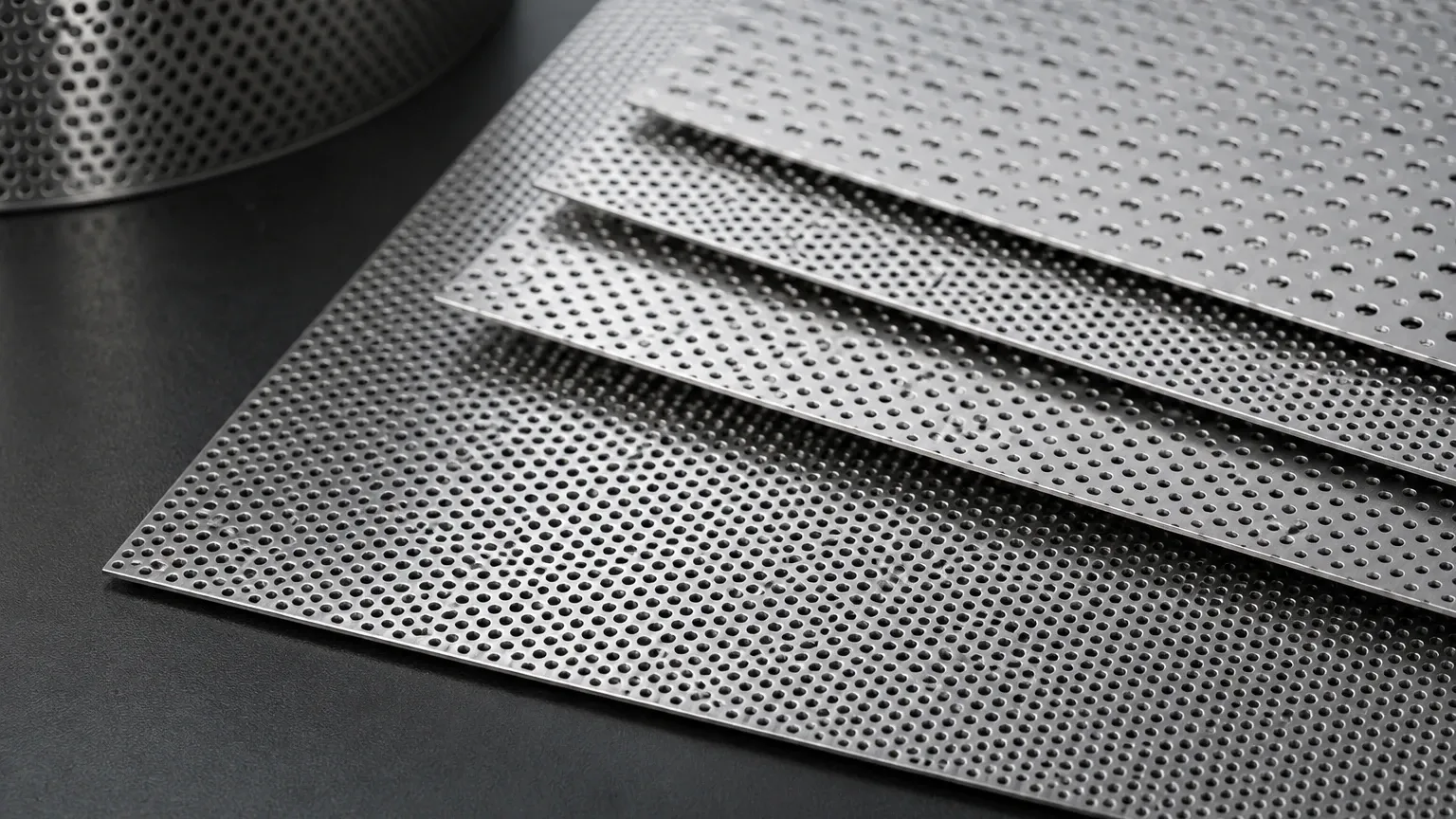
In industrial filtration and precision engineering, the selection of material thickness and perforation patterns is a critical decision that directly impacts the structural integrity, flow rate, and longevity of a system. Among the various specifications available, 20 gauge perforated sheet metal occupies a significant position due to its versatility and balanced mechanical properties. For engineers and procurement professionals, understanding the technical nuances of this specific gauge is essential for optimizing the performance of filtration components and industrial screens.
As a specialized manufacturer of custom stainless steel filtration solutions, Kaifil utilizes Perforated & Expanded Metal to create robust support structures and primary filtration media. This guide examines the technical specifications, engineering considerations, and application-specific advantages of 20 gauge perforated sheets within industrial environments.
Understanding 20 Gauge Specifications and Material Properties
The term "gauge" refers to a standardized measurement of thickness, but it is important to note that the actual decimal thickness varies depending on the material being measured. When specifying 20 gauge perforated sheet metal, engineers must distinguish between different metal types to ensure the component fits within the designed tolerances.
* Stainless Steel (300 and 400 Series): For stainless steel, 20 gauge is typically standardized at 0.0375 inches (0.9525 mm). This thickness is preferred in filtration for its excellent corrosion resistance and ability to withstand high-pressure differentials without significant deformation.
* Carbon Steel: For cold-rolled or hot-rolled carbon steel, 20 gauge is approximately 0.0359 inches (0.9119 mm). This is often used in less corrosive environments or where cost-efficiency is prioritized over longevity.
* Aluminum: In aluminum, 20 gauge is roughly 0.0320 inches (0.8128 mm). Aluminum is selected primarily for weight-sensitive applications or where specific thermal conductivity is required.
In the context of industrial filtration, the weight of the material is also a factor. 20 gauge stainless steel weighs approximately 1.575 pounds per square foot (before perforation). Once perforated, this weight decreases proportionally to the "open area" percentage of the design. This strength-to-weight ratio makes 20 gauge an ideal candidate for large-scale filter housings and internal support cores.
The Role of 20 Gauge Perforated Sheet Metal in Industrial Filtration
In complex filtration systems, perforated metal rarely acts alone. It is often a component of a multi-layered assembly. Within these systems, 20 gauge perforated sheet metal serves two primary functions:
1. Structural Support for Fine Media
Fine wire mesh or non-woven filter media lack the inherent rigidity to withstand high flow velocities or pressure surges. In these instances, a 20 gauge perforated cylinder or plate acts as the "skeleton" of the filter cartridge. It provides the necessary mechanical strength to prevent the fine media from collapsing or pleating unevenly under stress. The thickness of 20 gauge provides enough wall strength to resist buckling while remaining thin enough to be rolled into small-diameter tubes.
2. Primary Coarse Filtration
In applications involving large particulate matter—such as food processing, wastewater treatment, or heavy industrial cooling systems—the perforated metal itself serves as the primary filter. The 20 gauge thickness ensures that the edges of the holes remain sharp and defined, which is critical for consistent particle retention. It is durable enough to handle abrasive materials that would quickly erode thinner foils or tear fine mesh.
Design Parameters: Hole Patterns and Open Area
The performance of 20 gauge perforated sheet metal is defined by its hole geometry and the resulting open area. These factors determine the pressure drop across the filter and the size of the particles that can pass through.
Hole Shapes
* Round Holes: The most common and cost-effective pattern. Round holes offer the best structural integrity and are the easiest to manufacture with high precision.
* Square Holes: Provide a higher open area than round holes but can lead to stress concentrations at the corners, potentially reducing the lifespan of the sheet in high-vibration environments.
* Slotted Holes: Frequently used for screening elongated particles or in applications where flow directionality is important.
Patterns and Pitch
* 60-Degree Staggered: This is the industry standard for filtration. It provides the most uniform distribution of holes and the highest possible open area while maintaining the structural strength of the "bridges" (the metal between the holes).
* Straight Line: Holes are aligned in both horizontal and vertical rows. This pattern is generally weaker than staggered patterns and is typically reserved for aesthetic or specific mechanical alignment purposes.
Calculating Open Area
For a standard 60-degree staggered round hole pattern, the percentage of open area (OA) is calculated using the formula:
OA = (D² × 90.69) / P²
Where D is the hole diameter and P is the pitch (the distance from the center of one hole to the center of the adjacent hole). For 20 gauge sheets, engineers must balance a high open area for low pressure drop against the need for sufficient "bridge" width to maintain the sheet's rigidity.
Engineering Advantages and Selection Criteria
When selecting 20 gauge perforated sheet metal for a project, several engineering advantages should be considered against the specific requirements of the application.
Strength-to-Weight Ratio
20 gauge offers a unique middle ground. It is significantly stronger than 24 or 26 gauge foils, allowing it to be used in pressurized vessels, yet it is much lighter and easier to form than 11 or 14 gauge plate. This makes it highly efficient for portable filtration units or systems where total equipment weight is a constraint.
Fabrication Ease
One of the primary reasons engineers specify 20 gauge is its workability. It can be precision-sheared, cold-formed, and rolled into cylinders with diameters as small as two inches without cracking or requiring specialized heavy machinery. Furthermore, it is thick enough to be TIG (Tungsten Inert Gas) or laser welded reliably, which is essential for creating the seamless longitudinal joints required in high-quality filter cartridges.
Chemical and Thermal Compatibility
By selecting the appropriate alloy—such as 316L stainless steel—20 gauge perforated metal can operate in highly acidic or alkaline environments. It also maintains its structural properties at elevated temperatures, which is a requirement in chemical processing and steam filtration.
Common Risks and Quality Control in Procurement
Procuring 20 gauge perforated sheet metal requires attention to detail to avoid common manufacturing defects that can compromise a filtration system.
1. Burr Formation
The punching process naturally creates a "punch side" (smooth) and a "die side" (which may have small burrs). In filtration, burrs can trap contaminants prematurely or even break off and enter the downstream flow. High-quality manufacturers like Kaifil utilize deburring processes and precision tooling to ensure that the 20 gauge sheets are smooth and safe for sensitive applications like food and beverage or pharmaceutical processing.
2. Flatness and Oil Canning
Perforating a metal sheet introduces internal stresses. If not properly leveled, the sheet may exhibit "oil canning" (a wavy or buckled appearance). For components that must fit into tight housings, specifying a flatness tolerance is critical. Precision leveling after perforation is a standard requirement for high-end industrial components.
3. Margin Specifications
Margins are the unperforated areas along the edges of the sheet. For 20 gauge components intended for welding, having a "blank" margin is essential for a clean, strong weld. Engineers should specify the exact width of margins on all four sides to ensure the component integrates correctly with the rest of the assembly.
Technical Confirmation Checklist for Engineers
Before finalizing a purchase order for 20 gauge perforated sheet metal, technical teams should confirm the following parameters to ensure the product meets the application’s demands:
* Material Grade: Is 304 sufficient, or does the environment require the superior pitting resistance of 316L?
* Hole Diameter and Pitch: Does the hole size align with the required filtration rating or the support requirements of the secondary media?
* Open Area Percentage: Is the open area sufficient to prevent excessive pressure drop (Delta P) at maximum flow rates?
* Dimensional Tolerances: Are the length, width, and flatness tolerances compatible with the final housing?
* Surface Finish: Is passivation required to restore the chrome-oxide layer after fabrication, or is a specific Ra (roughness average) needed for sanitary applications?
* Certification: Do you require Mill Test Reports (MTRs) to verify the chemical composition and physical properties of the steel?
Conclusion
20 gauge perforated sheet metal is a foundational material in the world of industrial filtration and metal fabrication. Its specific thickness provides a versatile platform for creating durable, efficient, and high-performance filtration components. By carefully considering hole patterns, material grades, and fabrication requirements, engineers can leverage this material to solve complex fluid dynamics and structural challenges.
At Kaifil, we specialize in transforming raw Perforated & Expanded Metal into precision-engineered filtration solutions. Whether you require custom-rolled 20 gauge support cores or flat perforated screens for industrial sieving, our technical expertise ensures that every component meets the rigorous standards of your specific industry. Focusing on quality, durability, and precise filtration performance, we work closely with global partners to deliver reliable OEM components for the most demanding industrial environments.
