


2mm Perforated Metal
In industrial filtration and mechanical engineering, the selection of media is dictated by the balance between structural integrity and functional performance. Among the various specifications available, 2mm perforated metal stands as a versatile standard for medium-coarse filtration, separation, and support structures. This technical guide explores the engineering considerations, material properties, and application-specific logic behind selecting 2mm perforated metal for industrial environments.
Technical Parameters of 2mm Perforated Metal
When specifying 2mm perforated metal, engineers must define more than just the hole diameter. The performance of the sheet is determined by the interaction between the hole size, the arrangement (pattern), and the pitch.
Hole Geometry and Arrangement
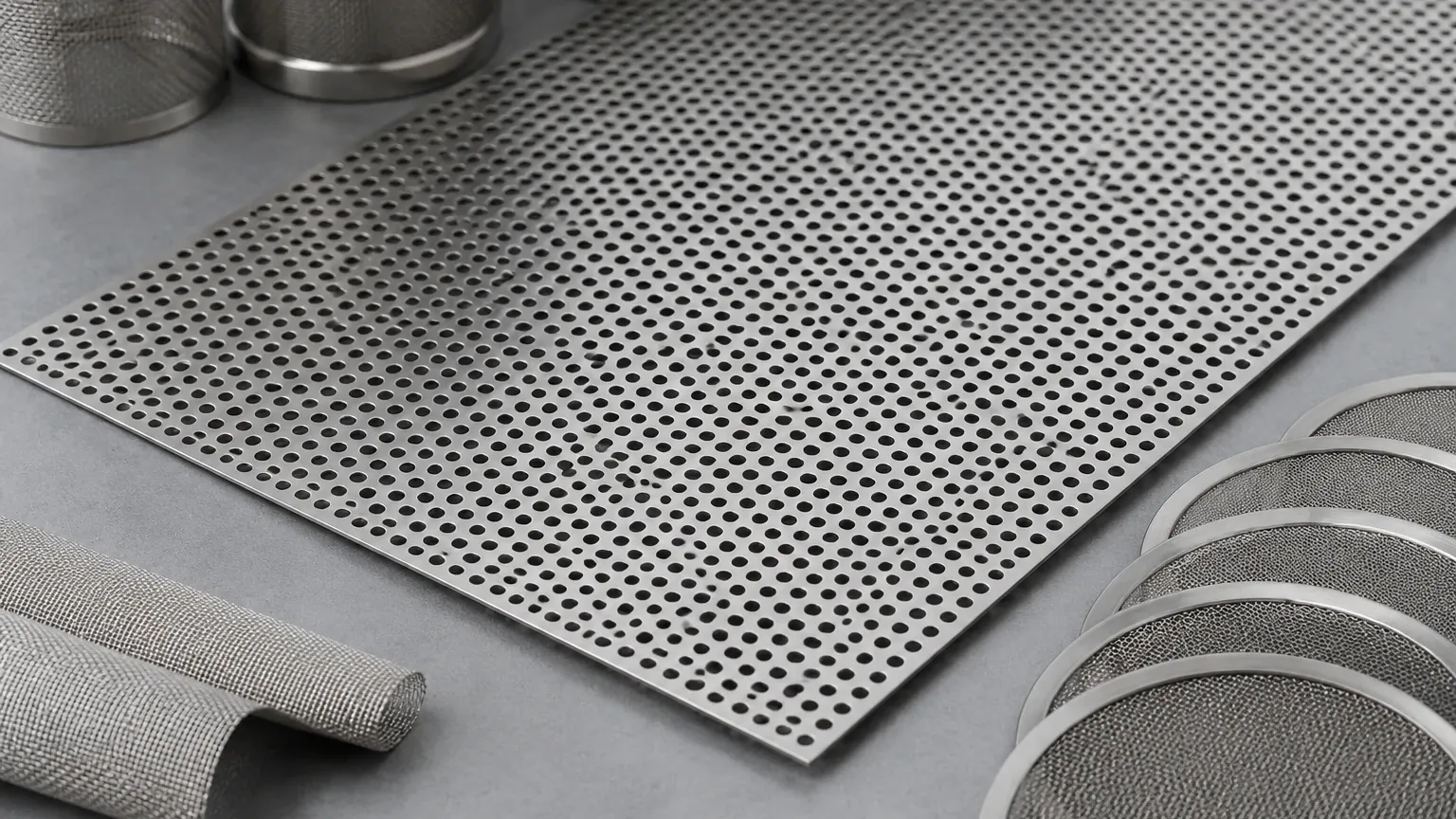
While "2mm" typically refers to the diameter of a round hole, the arrangement of these holes significantly impacts the mechanical strength and the flow characteristics of the medium. The most common arrangement is the 60-degree staggered pattern. This configuration provides the highest open area for a given pitch and ensures uniform stress distribution across the metal sheet.
In contrast, straight-line patterns or 45-degree staggered patterns may be used for specific aesthetic or directional flow requirements, but they often sacrifice structural rigidity. For 2mm perforated metal, a staggered pattern is generally preferred in filtration to prevent "blind spots" where particles could accumulate without being processed.
Calculating Open Area
The open area percentage is a critical metric for calculating flow rates and pressure drops. For a standard 60-degree staggered pattern with a 2mm hole diameter ($d$) and a specific pitch ($p$), the formula for open area is:
$$Open Area \% = \frac{d^2 \times 90.69}{p^2}$$
If the pitch is 3mm, the open area would be approximately 40.3%. Increasing the pitch increases the "bar" (the metal between holes), which enhances the sheet's strength but reduces the total throughput. Engineers must specify the pitch based on the required balance between the structural load the filter must withstand and the volume of fluid or gas that must pass through it.
Material Science and Chemical Compatibility
The longevity of Perforated & Expanded Metal components is directly tied to the metallurgy of the substrate. In industrial filtration, stainless steel is the primary choice due to its mechanical properties and resistance to environmental degradation.
Stainless Steel Grade 304 vs. 316L
For most general-purpose industrial applications, Grade 304 stainless steel provides sufficient corrosion resistance and high-temperature stability. However, in environments involving chlorides, high acidity, or pharmaceutical-grade purity, Grade 316L is the standard. The addition of molybdenum in 316L enhances resistance to pitting and crevice corrosion, which is vital when the 2mm perforated metal is used in marine environments or chemical processing plants.
Specialty Alloys
In extreme cases, such as high-temperature exhaust filtration or highly corrosive petrochemical processing, materials like Duplex stainless steel or Monel may be required. These materials offer superior yield strength and resistance to stress corrosion cracking, ensuring that the 2mm perforations maintain their dimensional accuracy under high-pressure differentials.
Engineering the Open Area for Flow Dynamics
The primary function of 2mm perforated metal in a filtration system is often to act as a primary strainer or as a support cage for finer mesh layers. Understanding the flow dynamics is essential to prevent system failure.
Pressure Drop Considerations
As fluid passes through the 2mm apertures, a localized increase in velocity occurs, leading to a pressure drop (ΔP). If the open area is too low, the resulting backpressure can strain pumps and reduce system efficiency. Conversely, if the open area is too high, the structural integrity of the filter element may be compromised, leading to deformation or "ballooning" under high flow rates.
Interstitial Velocity
Engineers must also consider the interstitial velocity—the speed of the fluid as it passes through the holes. High velocities can lead to erosion of the hole edges over time, especially if the fluid contains abrasive particulates. For 2mm perforated metal, maintaining a controlled velocity is key to extending the service life of the component and ensuring that the filtration remains consistent.
Structural Integrity and Support Roles
One of the most common uses for 2mm perforated metal is as a support structure for fine wire mesh or pleated filter media. In this role, the perforated metal does not perform the primary filtration but provides the mechanical strength necessary to prevent the finer media from collapsing.
Internal Cores and External Guards
In cylindrical filter cartridges, a 2mm perforated metal core provides the internal skeleton. The thickness of the metal (typically ranging from 0.5mm to 2.0mm for these applications) must be chosen based on the collapse pressure rating of the filter. The 2mm hole size is often ideal because it provides a large enough open area to minimize flow restriction while maintaining enough metal surface to support the mesh without allowing it to sag into the holes.
Resistance to Mechanical Stress
Unlike expanded metal, which is slit and stretched, perforated metal is punched. This process allows for precise control over the margins (the unperforated areas at the edges of the sheet). Margins are essential for welding the perforated sheet into tubes or frames, providing a solid surface that ensures a leak-proof seal and structural stability at the joints.
Manufacturing Precision and Quality Control
The utility of 2mm perforated metal depends heavily on the precision of the manufacturing process. Inconsistent hole sizes or irregular pitch can lead to uneven flow distribution and premature failure.
CNC Punching and Burrs
High-speed CNC punching is the standard method for producing 2mm perforated metal. However, the punching process naturally creates a "die side" and a "punch side." The punch side typically has sharp edges or small burrs. In applications like food processing or pharmaceutical manufacturing, these burrs must be removed through electropolishing or mechanical deburring to prevent material entrapment and ensure a sanitary surface.
Flatness and Leveling
The punching process introduces internal stresses into the metal sheet, which can cause it to curl or warp. For precision filtration components, the material must undergo a leveling process to ensure it meets flatness tolerances. This is particularly important when the perforated metal is to be automatically rolled into cylinders or laser-welded into complex assemblies.
Application-Specific Selection Criteria
Choosing the right 2mm perforated metal requires an understanding of the specific demands of the industry in question.
* Food and Beverage: In this sector, the focus is on cleanability. 2mm perforated metal is often used in grain drying, fruit juice straining, and as support for fine screens in breweries. The surface finish (Ra value) must be low enough to prevent bacterial growth.
* Chemical Processing: Here, the focus shifts to chemical compatibility. The 2mm holes are often used to catch large catalysts or debris that could damage downstream equipment. The thickness of the sheet is usually increased to account for potential metal loss due to slow-rate corrosion over years of service.
* Water Treatment: In intake screens, 2mm perforated metal serves as a barrier against aquatic life and large debris. The choice of material often leans toward 316L or even Super Duplex to withstand the corrosive nature of brackish or seawater.
Total Cost of Ownership and Maintenance
When evaluating 2mm perforated metal, purchasing teams should look beyond the initial acquisition cost and consider the total cost of ownership (TCO).
Cleaning and Reusability
One of the significant advantages of stainless steel perforated metal is its cleanability. Unlike disposable synthetic filters, 2mm perforated metal components can be cleaned via backwashing, ultrasonic cleaning, or chemical baths. This reusability significantly lowers the long-term operational costs of a filtration system.
Replacement Cycles
The replacement cycle for 2mm perforated metal is generally long, provided the material was correctly specified for the environment. Failure typically occurs due to mechanical fatigue (vibration-induced cracking) or unforeseen chemical attacks. By selecting the correct gauge (thickness) and material grade at the outset, engineers can ensure the component lasts for the entire intended lifecycle of the filtration unit.
Customization Options
Standard sheets are available, but custom-engineered 2mm perforated metal often provides better value. Customization includes specific hole patterns to match flow requirements, unique sheet dimensions to reduce waste during fabrication, and specialized finishes to meet industry standards. For complex projects, working with a manufacturer that offers OEM capabilities ensures that the perforated component integrates perfectly with the rest of the filtration assembly.
In conclusion, 2mm perforated metal is a fundamental component in industrial filtration, offering a balance of precision and durability. By carefully considering the open area, material grade, and manufacturing quality, technical professionals can optimize their systems for maximum efficiency and longevity. For those seeking specialized configurations or integrated filtration solutions, exploring the full range of Perforated & Expanded Metal options is the first step toward achieving reliable industrial performance.
