


2×4 Expanded Metal
In the landscape of industrial filtration and structural support, 2×4 expanded metal serves as a fundamental component for engineers and procurement specialists. While the term "2×4" frequently refers to the standard sheet dimensions of 2 feet by 4 feet, its utility in specialized environments—such as chemical processing, pharmaceutical manufacturing, and high-pressure hydraulic systems—depends heavily on the underlying technical specifications of the mesh itself. As a manufacturer specializing in precision filtration solutions, Kaifil provides high-performance Perforated & Expanded Metal designed to meet the rigorous demands of industrial applications.
Understanding the nuances of expanded metal goes beyond simple sizing. It involves a deep dive into material science, mechanical properties, and the specific geometric configurations that dictate flow rates and structural integrity. This guide explores the technical parameters, application benefits, and selection criteria for 2×4 expanded metal within the B2B industrial sector.
Understanding the Technical Specifications of 2×4 Expanded Metal
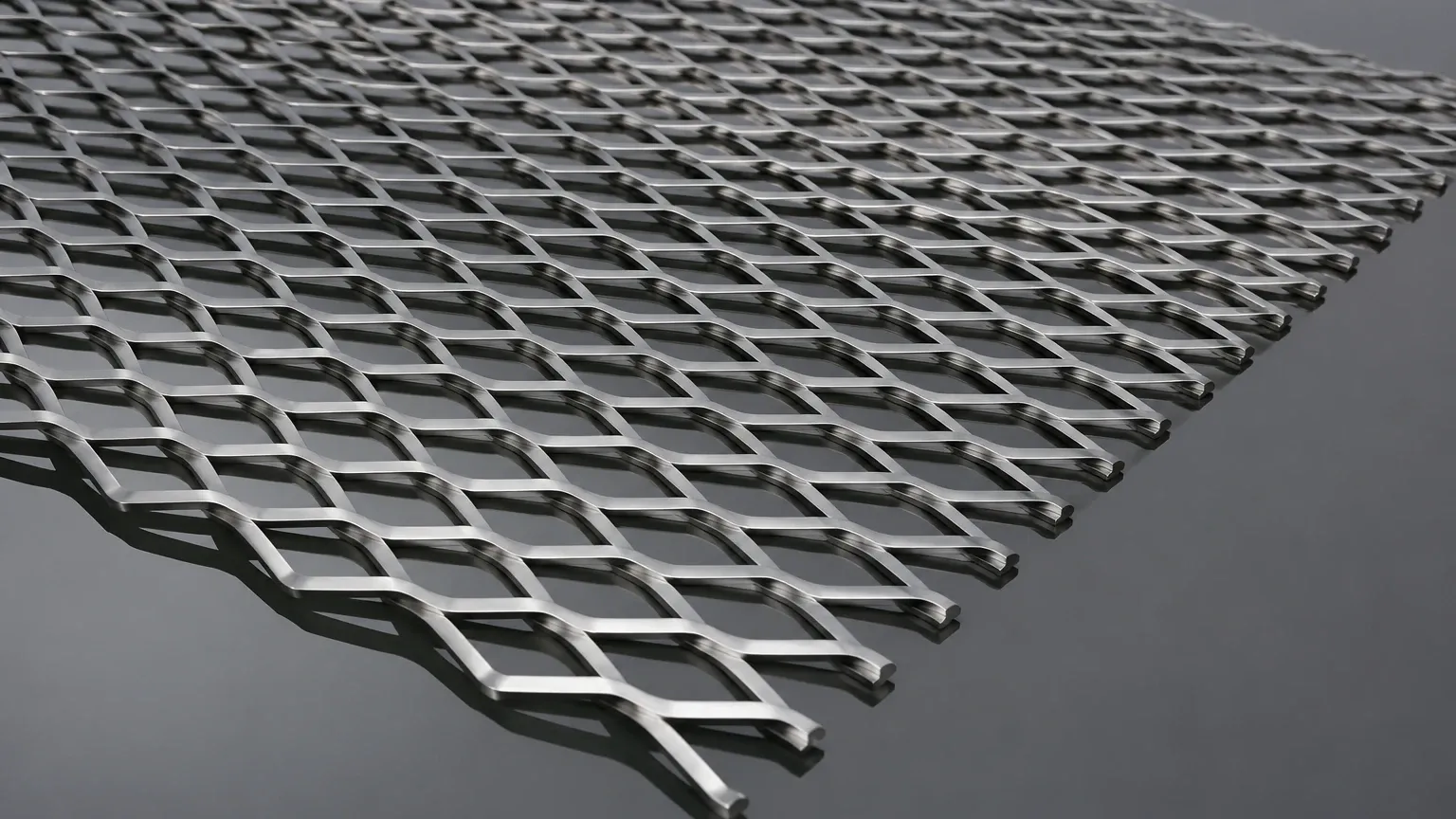
When specifying 2×4 expanded metal for industrial use, the "2×4" designation typically denotes the physical footprint of the panel. However, the performance of the metal is defined by the diamond pattern and the thickness of the strands. Expanded metal is produced by simultaneously slitting and stretching a solid metal sheet, creating a seamless mesh with diamond-shaped openings. Unlike woven wire mesh, expanded metal is a single piece of material, which eliminates the risk of fraying or strand migration.
Key Geometric Parameters
To ensure the material meets engineering requirements, several key measurements must be defined:
* SWD (Short Way of Design): The distance from the center of one bond to the center of the next bond across the short diamond axis.
* LWD (Long Way of Design): The distance across the long diamond axis.
* Strand Thickness: The thickness of the base metal used to create the mesh.
* Strand Width: The amount of metal fed into the precision dies to create the strand.
* Open Area Percentage: A critical calculation for filtration and ventilation, determining how much fluid or air can pass through the mesh relative to the total surface area.
For filtration applications, the relationship between SWD and LWD is paramount. A smaller diamond pattern provides greater rigidity and finer particulate retention, whereas a larger pattern minimizes pressure drop in high-flow systems.
The Role of Expanded Metal in Industrial Filtration Systems
In the context of Kaifil’s expertise, 2×4 expanded metal panels are rarely used as standalone filters. Instead, they serve as the structural backbone for complex filtration assemblies. Their primary roles include:
1. Media Support and Reinforcement
In high-pressure hydraulic or gas filtration, fine wire mesh or synthetic filter media lack the inherent strength to withstand significant differential pressure. Expanded metal is formed into cylindrical cages or flat support plates to prevent the primary media from collapsing or deforming under load. The raised or flattened profile of the expanded metal provides a stable surface that maintains the integrity of the pleated media.
2. Protective Sleeves and Outer Cages
Industrial filter cartridges often operate in turbulent environments where mechanical impact or high-velocity debris is a concern. An outer layer of expanded metal acts as a protective shield, preventing damage to the delicate internal filtration layers during installation, operation, or cleaning cycles.
3. Pre-Filtration and Coarse Separation
In water treatment and chemical processing, expanded metal can function as a primary screen to capture large contaminants before they reach the precision filter stages. This extends the service life of the more expensive fine-filtration components by reducing the overall particulate load.
Material Selection: Why Stainless Steel is Essential
While expanded metal can be produced from various materials, industrial applications almost exclusively demand stainless steel. Kaifil focuses on high-grade alloys to ensure longevity and chemical compatibility in harsh environments.
* Stainless Steel 304: The standard choice for general industrial applications. It offers excellent corrosion resistance and mechanical strength, making it suitable for food and beverage processing or standard hydraulic systems.
* Stainless Steel 316/316L: Specified for environments involving high salinity, acidic chemicals, or pharmaceutical production. The addition of molybdenum enhances resistance to pitting and crevice corrosion.
* High-Temperature Alloys: For petrochemical or exhaust filtration, specialized alloys are used to maintain structural integrity at temperatures exceeding 500°C.
Choosing the correct material for a 2×4 expanded metal panel ensures that the component does not introduce contaminants through oxidation or fail prematurely due to chemical degradation.
Engineering Considerations for Custom Expanded Metal Components
When integrating 2×4 expanded metal into a system, engineers must account for the mechanical behavior of the material. Unlike solid plate, expanded metal exhibits anisotropic properties, meaning its strength and flexibility differ depending on the orientation of the diamond pattern.
Flow Dynamics and Pressure Drop
The open area of the mesh is a decisive factor in system efficiency. A 2×4 panel with a high open-area percentage allows for maximum flow with minimal resistance. However, increasing the open area often requires thinner strands, which may compromise the structural support required for high-pressure applications. Engineering teams must strike a balance between the required flow rate and the mechanical load the mesh must support.
Flattened vs. Raised Expanded Metal
* Raised (Standard) Expanded Metal: The strands are turned at an angle to the plane of the sheet. This creates a three-dimensional surface that provides excellent grip and high rigidity. In filtration, the angled strands can help direct flow or provide better support for certain types of media.
* Flattened Expanded Metal: The raised mesh is passed through a cold-rolling mill, resulting in a smooth, flat surface. This is often preferred when the mesh needs to be bonded to other layers or when a precise thickness is required for tight-tolerance assemblies.
Comparative Analysis: Expanded Metal vs. Perforated Metal
Engineers frequently choose between expanded metal and perforated metal for filtration supports. While both are effective, expanded metal offers distinct advantages in specific B2B contexts.
| Feature | Expanded Metal | Perforated Metal |
| :— | :— | :— |
| Material Waste | Near zero; the metal is stretched. | High; the holes are punched out. |
| Strength-to-Weight | Superior due to the interconnected bonds. | Dependent on hole pattern and bridge size. |
| Cost-Efficiency | Generally lower cost for large areas. | Higher cost due to material scrap and tooling. |
| Surface Texture | Naturally slip-resistant (raised version). | Smooth and flat. |
| Customization | Diamond size and strand width are adjustable. | Hole shape, size, and pitch are highly customizable. |
For many industrial support applications, expanded metal is the more sustainable and cost-effective choice, particularly when working with expensive alloys like 316L stainless steel.
Manufacturing and Customization Options at Kaifil
As an OEM-focused manufacturer, Kaifil provides extensive customization for 2×4 expanded metal components to ensure they integrate seamlessly into existing industrial processes. Our manufacturing capabilities allow us to move beyond standard commodity sheets to provide precision-engineered parts.
Precision Cutting and Forming
While a 2×4 panel is a common starting point, many filtration systems require circular discs, custom-sized rectangles, or cylindrical forms. We utilize advanced shearing and CNC cutting to achieve tight tolerances, ensuring that the mesh fits perfectly within filter housings or support frames.
Surface Finishing
Depending on the application, we offer various finishing processes:
* Electropolishing: Essential for pharmaceutical and food-grade applications to remove surface impurities and create a mirror-like, easy-to-clean finish.
* Pickling and Passivation: Enhances the corrosion resistance of stainless steel by removing free iron from the surface.
* Degreasing: Ensures the mesh is free from manufacturing oils, which is critical for oxygen service or high-purity chemical filtration.
Best Practices for Procurement and Quality Assurance
To avoid common pitfalls in the procurement of industrial expanded metal, purchasing teams and engineers should confirm several critical factors before finalizing an order:
1. Verify the Alloy Grade: Ensure the material certification (MTR) matches the application requirements, especially for corrosive environments.
2. Confirm Dimensional Tolerances: Specify the allowable variance in sheet size and diamond dimensions. In precision filtration, even a small deviation can affect the assembly of the filter cartridge.
3. Inspect for Burrs and Sharp Edges: In filtration, burrs can puncture delicate media or shed metallic particles into the process stream. High-quality expanded metal should be deburred or processed to minimize these risks.
4. Evaluate Flatness Requirements: If the 2×4 panel is to be used in a multi-layer stack, specify the required flatness to prevent gaps between layers.
5. Calculate Total Cost of Ownership: Consider the durability and maintenance cycles. A higher-grade stainless steel expanded metal component may have a higher upfront cost but significantly lower replacement frequency in aggressive industrial settings.
Conclusion
2×4 expanded metal is a versatile and indispensable material in the world of industrial filtration and structural engineering. By selecting the appropriate material, diamond configuration, and finishing process, engineers can optimize the performance and reliability of their filtration systems. Kaifil’s commitment to technical precision and customized manufacturing ensures that every expanded metal component meets the specific needs of demanding industrial environments, from chemical plants to pharmaceutical laboratories.
When evaluating your next project, consider the mechanical and chemical requirements of your application. Choosing a partner with deep expertise in stainless steel fabrication allows you to leverage the full potential of expanded metal, ensuring efficient flow, robust support, and long-term durability.
