


20 Gauge Expanded Metal
In the landscape of industrial filtration and structural component manufacturing, material selection is dictated by the balance between mechanical strength, weight, and permeability. 20 gauge expanded metal represents a specific engineering sweet spot for many medium-to-light-duty applications. As a versatile material produced by simultaneously slitting and stretching a solid metal sheet, it offers a unique combination of structural integrity and open-area efficiency that is critical for precision filtration systems.
For engineers and procurement professionals, understanding the technical nuances of Perforated & Expanded Metal is essential for optimizing the performance of filter cartridges, protective screens, and industrial partitions. This guide examines the technical specifications, material properties, and application-specific considerations of 20 gauge expanded metal within industrial environments.
Understanding 20 Gauge Specifications in Expanded Metal
The term "20 gauge" refers to the thickness of the base metal sheet before it undergoes the expansion process. In the United States Standard Gauge for sheet and plate iron and steel, 20 gauge typically corresponds to a nominal thickness of approximately 0.0359 inches (0.91 mm). When dealing with stainless steel, this measurement is slightly different, usually cited around 0.0375 inches (0.95 mm).
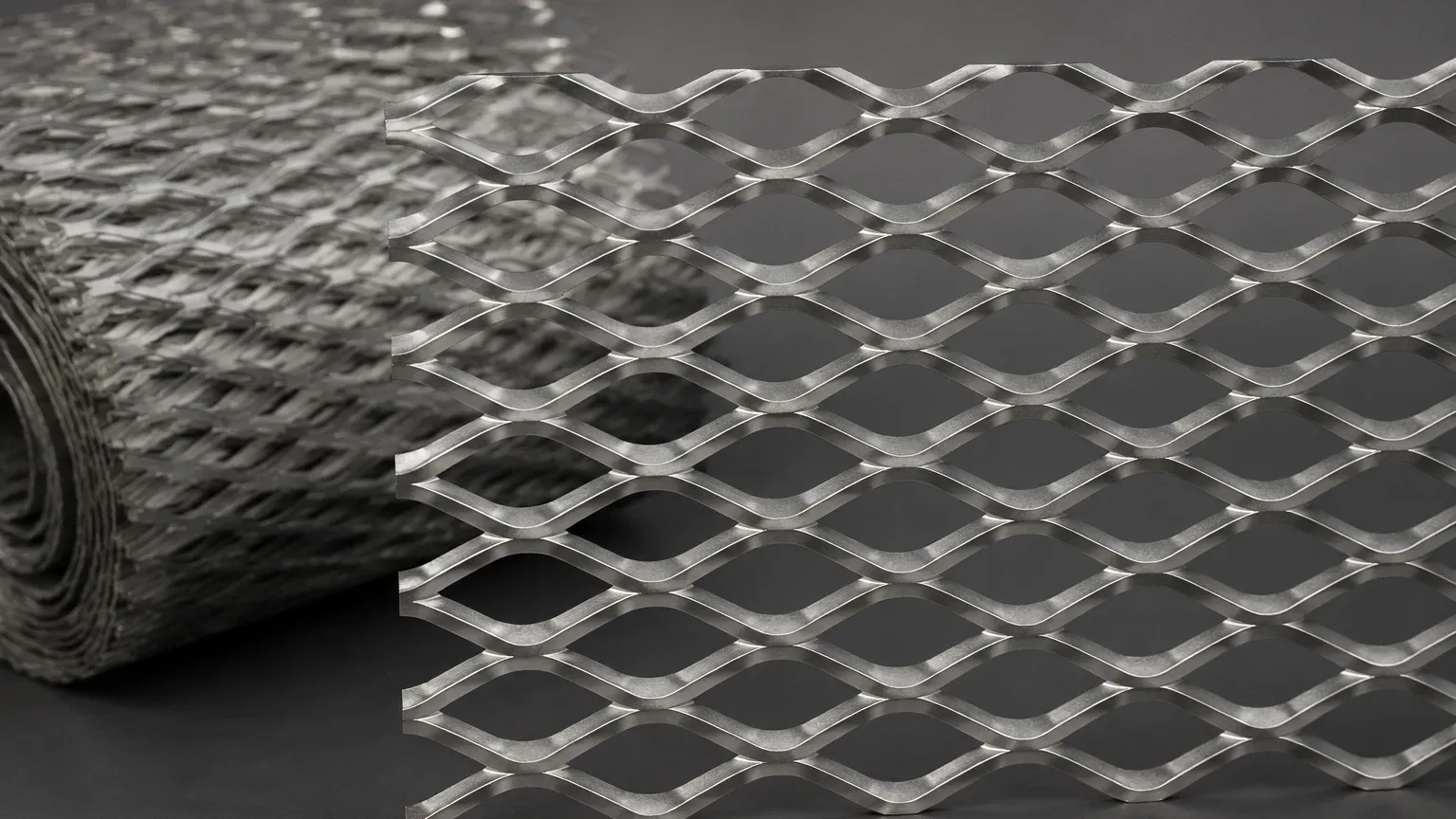
When this sheet is expanded, it is transformed into a mesh-like pattern of diamond-shaped openings. Unlike woven wire mesh, expanded metal is a single-piece construction with no joins or welds, which eliminates the risk of unraveling or joint failure under vibration. There are two primary forms of 20 gauge expanded metal used in industrial settings:
1. Standard (Raised) Expanded Metal: This is the product as it comes off the expanding machine. The strands and bonds are set at a uniform angle to the plane of the sheet, providing a three-dimensional texture that increases the overall thickness and rigidity of the material.
2. Flattened Expanded Metal: This version is produced by passing the standard expanded metal through a cold-roll reducing mill. This process flattens the strands and bonds into a single plane, resulting in a smooth, level surface. While flattening reduces the thickness to nearly the original gauge of the base metal, it provides a consistent profile useful for filter support layers where a flush surface is required.
Engineering Characteristics and Performance Benefits
Selecting 20 gauge expanded metal involves analyzing its physical properties against the requirements of the specific industrial application. Its performance is defined by several key engineering characteristics:
Strength-to-Weight Ratio
Because the expansion process creates a larger surface area from a smaller volume of solid metal without removing any material, 20 gauge expanded metal is significantly lighter than a solid sheet of the same dimensions while retaining a high degree of structural rigidity. The diamond-shaped trusses act as structural supports, distributing loads efficiently across the mesh.
Open Area and Flow Dynamics
The "open area" percentage is a critical metric for filtration applications. It determines the flow rate and pressure drop across the filter. 20 gauge expanded metal can be manufactured with various diamond sizes, ranging from micro-mesh to larger openings. A higher open area reduces resistance to fluid or air flow, which is vital for maintaining system efficiency and reducing energy consumption in hydraulic or HVAC systems.
Mechanical Stability
Unlike perforated metal, where holes are punched out (resulting in material waste), expanded metal is stretched. This stretching creates a continuous web that is inherently stable. It can be cut into various shapes without losing its structural form, making it an excellent choice for custom-designed filter cages or cylindrical support cores.
Material Selection for Industrial Filtration Environments
The utility of 20 gauge expanded metal is heavily influenced by the alloy from which it is manufactured. In the B2B sector, material selection is usually driven by the chemical and thermal conditions of the operating environment.
* Stainless Steel (304 and 316): These are the most common materials for filtration. Grade 304 offers excellent corrosion resistance for general industrial use, while Grade 316 contains molybdenum, providing superior resistance to chlorides and acidic environments. These are standard in food processing, pharmaceuticals, and chemical manufacturing.
* Carbon Steel: Often used in dry applications or environments where the metal is protected by coatings (such as galvanization or powder coating). It is a cost-effective solution for structural supports where corrosion is not a primary concern.
* Aluminum: Chosen for its lightweight properties and natural resistance to atmospheric corrosion. It is frequently used in air filtration and aerospace components where weight reduction is a priority.
Key Applications in Filtration and Industrial Systems
20 gauge expanded metal serves as a foundational component in several high-performance filtration and industrial products. Its ability to provide support without significantly obstructing flow makes it indispensable in the following areas:
Support Cores for Filter Cartridges
In high-pressure liquid filtration, the primary filter media (such as fine wire mesh or synthetic fabric) often lacks the structural strength to withstand the differential pressure. A cylindrical core made of 20 gauge expanded metal provides the necessary internal or external reinforcement to prevent the media from collapsing or bursting.
Outer Protective Wraps
For filters exposed to high-velocity debris or mechanical handling, an outer wrap of expanded metal acts as a shield. The 20 gauge thickness is robust enough to deflect physical impacts while maintaining a high enough open area to ensure the filter's intake is not throttled.
Debris Strainers and Intake Screens
In water treatment and hydraulic systems, 20 gauge expanded metal is used to create strainers that capture large particulates before they reach more sensitive downstream components. Its rigid structure allows it to be cleaned via backwashing or mechanical scraping without deformation.
HVAC and Air Intake Systems
The material is frequently used in air handling units to support pre-filters or to act as a primary barrier against insects and large airborne debris in industrial air intakes. Its uniform pattern ensures consistent air distribution across the entire surface of the filtration unit.
Evaluating Quality and Precision in Manufacturing
When sourcing 20 gauge expanded metal, engineers must look beyond the basic gauge thickness. Precision in manufacturing determines the reliability of the final filtration solution. Key quality indicators include:
* Dimensional Accuracy: This includes the Short Way of Design (SWD) and Long Way of Design (LWD). Consistency in these measurements ensures that the mesh fits perfectly into housings or frames without gaps that could lead to bypass leaks.
* Strand Consistency: The width of the metal strands must be uniform. Variations in strand width can lead to weak points in the mesh or uneven flow patterns.
* Surface Finish: For many B2B applications, especially in the food and pharmaceutical industries, the metal must be free of burrs, oils, and manufacturing residues. Post-processing steps like ultrasonic cleaning or electropolishing are often required to meet hygiene and safety standards.
* Flatness Tolerances: For flattened expanded metal, the degree of flatness is critical for applications where the mesh must be bonded or welded to other flat surfaces. Excessive camber or waviness can complicate the assembly process.
Selection Guide: Factors to Consider Before Procurement
Before finalizing a specification for 20 gauge expanded metal, procurement teams and engineers should confirm several factors to ensure the material is fit for purpose:
1. Pressure Drop Requirements: Calculate the required open area percentage to ensure the mesh does not create an unacceptable bottleneck in the system. 20 gauge offers a range of patterns that can vary the open area from 30% to over 70%.
2. Environmental Exposure: Identify the presence of corrosive agents, extreme temperatures, or abrasive particles. This will dictate whether 304 stainless steel is sufficient or if a more robust alloy like 316L or a specialized coating is necessary.
3. Fabrication Compatibility: Determine if the material will be rolled, welded, or formed. 20 gauge is generally easy to work with, but the orientation of the diamonds (LWD vs. SWD) can affect how the material bends and its final structural strength in a cylindrical form.
4. Total Cost of Ownership: While carbon steel may have a lower initial purchase price, the longevity and reduced maintenance requirements of stainless steel often result in a lower total cost over the lifecycle of the filtration equipment.
Conclusion
20 gauge expanded metal is a critical component in the design of efficient and durable industrial filtration systems. Its unique structural properties, combined with the ability to customize material and pattern, make it a versatile choice for engineers facing complex filtration challenges. By focusing on precision manufacturing and appropriate material selection, companies can ensure their filtration systems operate with maximum reliability and minimum downtime.
At Kaifil, we specialize in providing high-performance Perforated & Expanded Metal solutions tailored to the rigorous demands of industrial processing. Our expertise in stainless steel filtration ensures that every component, from support cores to protective wraps, meets the exact tolerances required for your specific application. Whether you are designing a new hydraulic system or optimizing a chemical processing line, selecting the right expanded metal specification is the first step toward achieving superior filtration performance.
