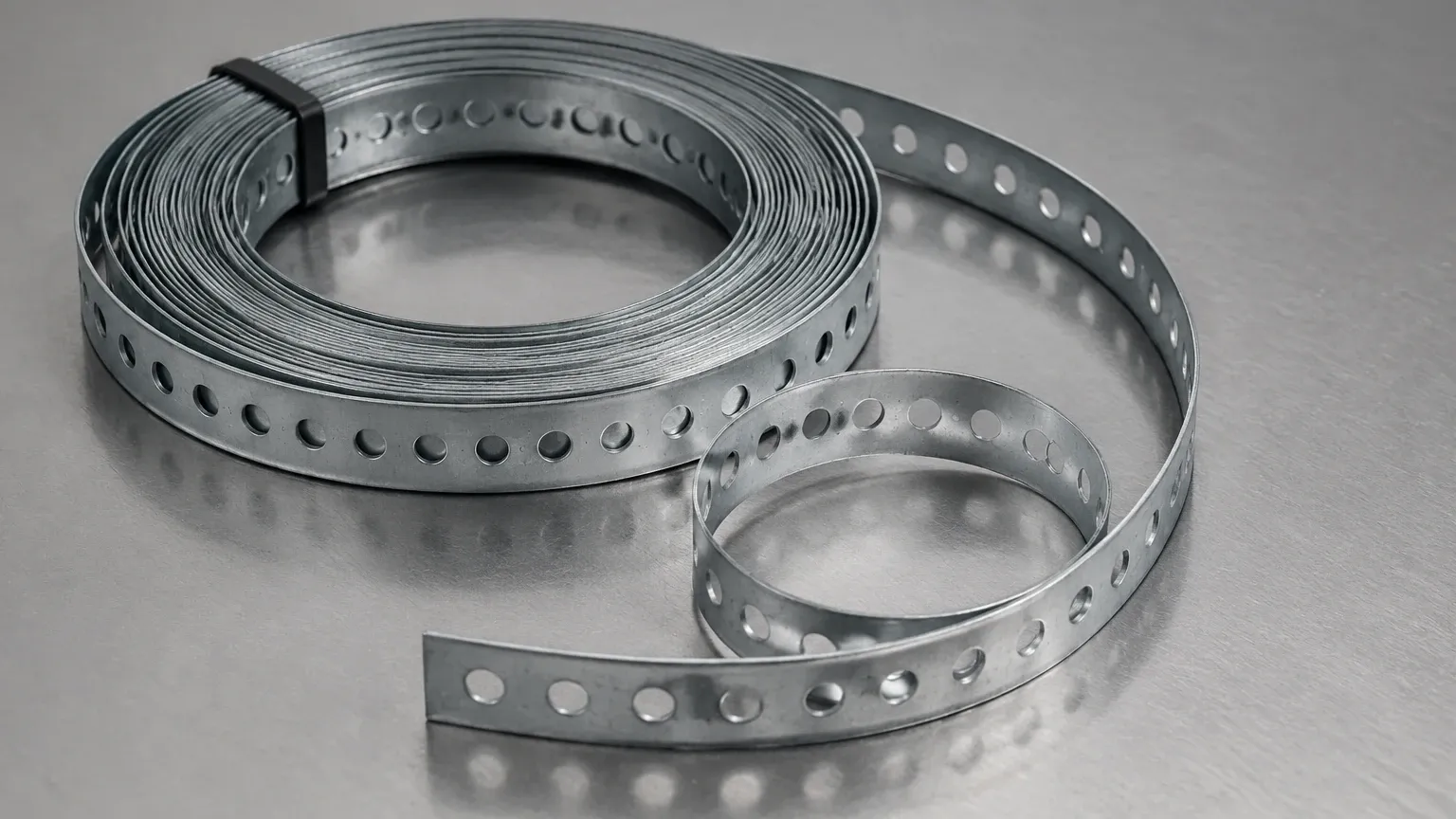
3 4 Perforated Metal Strapping
In industrial engineering and filtration system design, 3 4 perforated metal strapping serves as a critical structural component. Measuring 3/4 of an inch in width, this specialized hardware is more than a simple fastener; it is a precision-engineered tensioning and support member used to secure filter media, stabilize piping, and reinforce industrial assemblies. For procurement teams and engineers, understanding the technical nuances of material grade, perforation patterns, and mechanical load limits is essential for ensuring long-term system integrity, especially in corrosive or high-pressure environments.
Technical Fundamentals of 3/4-Inch Perforated Strapping
The designation "3 4" refers to the width of the metal strip, which is a standard dimension in many industrial fastening systems. This width provides a balance between high tensile strength and the flexibility required to wrap around cylindrical objects, such as filter cartridges or large-diameter pipes.
Perforated metal strapping is characterized by a series of punched holes—typically circular—spaced at regular intervals. These holes serve two primary purposes: they allow for the use of bolts, screws, or rivets at nearly any point along the strap, and they reduce the overall weight of the component without significantly compromising its longitudinal strength. In the context of Perforated & Expanded Metal manufacturing, the precision of these holes is paramount. Inconsistent hole spacing or jagged edges (burrs) can lead to stress concentrations, which may result in premature fatigue failure under vibration or thermal expansion.
Material Selection and Metallurgical Considerations
For B2B applications, particularly in the chemical processing and pharmaceutical sectors, the choice of material for 3 4 perforated metal strapping is usually limited to high-grade stainless steel. While galvanized steel is available for light-duty HVAC applications, industrial filtration environments require the superior corrosion resistance of the 300-series stainless steels.
1. AISI 304 Stainless Steel: This is the most common grade for general industrial use. It offers excellent resistance to atmospheric corrosion and is suitable for most food and beverage applications. However, in environments with high chloride concentrations, it may be susceptible to pitting.
2. AISI 316/316L Stainless Steel: For marine environments, chemical processing plants, or pharmaceutical cleanrooms, 316 stainless steel is the standard. The addition of molybdenum (typically 2-3%) significantly enhances its resistance to chloride-induced corrosion and acetic acid vapors.
3. Specialty Alloys: In extreme cases involving high-temperature exhaust or highly acidic filtration stages, alloys such as Monel or Inconel may be utilized, though these are typically custom-manufactured solutions rather than off-the-shelf strapping.
Mechanical Performance and Load-Bearing Capacity
When specifying 3 4 perforated metal strapping, engineers must calculate the "net section" strength. Because the perforations remove material, the effective cross-sectional area of the strap is reduced. The tensile strength of the strap is determined by the narrowest point of the metal—the "bridge" between the holes.
* Tensile Strength: This is the maximum stress the strap can withstand while being stretched before breaking. For a 3/4-inch strap made of 304 stainless steel with a thickness of 20 gauge (approx. 0.036 inches), the breaking strength must be balanced against the diameter and frequency of the holes.
* Yield Strength: This is the point at which the metal will permanently deform. In filtration assemblies where the strap is under constant tension to hold a filter mesh in place, staying well below the yield strength is necessary to prevent the mesh from loosening over time.
* Work Hardening: The process of punching holes in the metal strip can cause localized work hardening around the edges of the perforations. While this increases hardness, it can also increase brittleness. High-quality 3 4 perforated metal strapping undergoes stress-relief processes or precision punching to maintain ductility.
Integration with Perforated & Expanded Metal Systems
In many industrial filtration setups, strapping is used in conjunction with larger Perforated & Expanded Metal components. For example, a stainless steel filter cartridge may consist of a perforated inner core and an outer expanded metal guard. The 3 4 perforated metal strapping is often used to secure the ends of the filter media or to provide circumferential reinforcement to the entire assembly.
The compatibility between the strapping and the primary filter housing is vital. Using the same material grade for both the strap and the filter body prevents galvanic corrosion—a common failure mode where two dissimilar metals in the presence of an electrolyte (such as process water) create a battery-like effect that accelerates the corrosion of the more anodic metal.
Perforation Patterns and Engineering Specifications
The utility of 3 4 perforated metal strapping is largely defined by its hole pattern. The most common specifications include:
* Hole Diameter: Typically ranging from 1/8 inch to 1/4 inch. The hole size must be compatible with standard industrial fasteners (e.g., M6 or 1/4" bolts).
* Center-to-Center Spacing (Pitch): This determines the adjustability of the strap. A tighter pitch allows for more precise tensioning but removes more material, potentially weakening the strap.
* Straight vs. Staggered Rows: For a narrow 3/4-inch strap, a single row of centered holes is standard. However, wider strapping may use staggered patterns to distribute stress more evenly.
Engineers should also consider the "open area" percentage. While usually associated with filtration efficiency in sheets, in strapping, the open area percentage is an inverse indicator of structural mass. A higher open area means a lighter strap but lower total load capacity.
Industrial Applications and Use Cases
The versatility of 3 4 perforated metal strapping allows it to be utilized across diverse sectors:
1. Filtration and Separation
In the manufacture of custom industrial filters, strapping is used to bind layers of wire mesh to a perforated metal support core. It provides the necessary compression to ensure that the filter media does not bypass fluids at the edges. Because it is perforated, the strap itself does not create a significant "blind spot" in the filtration surface, allowing for more uniform flow.
2. Chemical and Petrochemical Processing
In these environments, strapping is used to secure insulation (cladding) around high-pressure piping. The 3/4-inch width is ideal for these applications as it provides enough surface area to hold insulation in place without cutting into the material. The use of 316L stainless steel ensures the strapping survives exposure to volatile organic compounds (VOCs) and corrosive vapors.
3. Food and Beverage Production
Cleanability is the primary concern in food-grade environments. 3 4 perforated metal strapping made of polished 304 or 316 stainless steel resists bacterial growth and can withstand the harsh chemicals used in Clean-in-Place (CIP) cycles. The perforations allow for thorough drainage, preventing the accumulation of organic matter that could lead to contamination.
4. HVAC and Ducting
In large-scale industrial ventilation, perforated strapping is used to suspend ductwork. The holes allow for easy height adjustment during installation, which is critical when navigating complex overhead utility runs in a factory setting.
Selection Criteria for Purchasing Teams
When sourcing 3 4 perforated metal strapping for an industrial project, several factors beyond the basic dimensions must be confirmed with the manufacturer:
* Edge Finish: For manual installation, "deburred" or "safe-edge" strapping is preferred to prevent injury to technicians and damage to the materials being secured.
* Coil Length vs. Pre-cut Strips: Depending on the application, purchasing in bulk coils (e.g., 50ft or 100ft) may be more cost-effective for pipe hanging, whereas pre-cut and deburred strips are better for OEM filter assembly lines.
* Tolerances: Precision applications require tight tolerances on hole alignment. If the holes are even slightly off-center, the strap may twist when tensioned, leading to uneven pressure distribution.
* Certification: For pharmaceutical or aerospace applications, ensure the manufacturer can provide Mill Test Reports (MTRs) to verify the chemical composition and mechanical properties of the steel.
Installation Best Practices
To maximize the lifespan of 3 4 perforated metal strapping, proper installation techniques are required. When securing the strap with fasteners, it is important to use washers that distribute the load across the metal "bridge" rather than just the edges of the hole. Over-tightening can lead to "necking," where the metal thins and eventually shears at the hole site.
Furthermore, in vibration-heavy environments—such as those near industrial pumps or compressors—the use of vibration-damping liners (typically EPDM or silicone) between the strap and the pipe is recommended. This prevents the metal strap from abrading the surface it is securing and reduces the risk of fatigue cracking in the strap itself.
Conclusion
3 4 perforated metal strapping is a fundamental component that supports the structural integrity of complex industrial systems. Whether it is used to reinforce a high-precision filter or to secure critical piping in a chemical plant, its performance is a product of material science and mechanical design. By selecting the appropriate stainless steel grade and understanding the load implications of the perforation pattern, engineers can ensure that these components contribute to the overall efficiency and safety of their operations. For those integrating these components into broader filtration or structural projects, leveraging high-quality Perforated & Expanded Metal solutions ensures that every part of the assembly meets the rigorous demands of modern industry.