


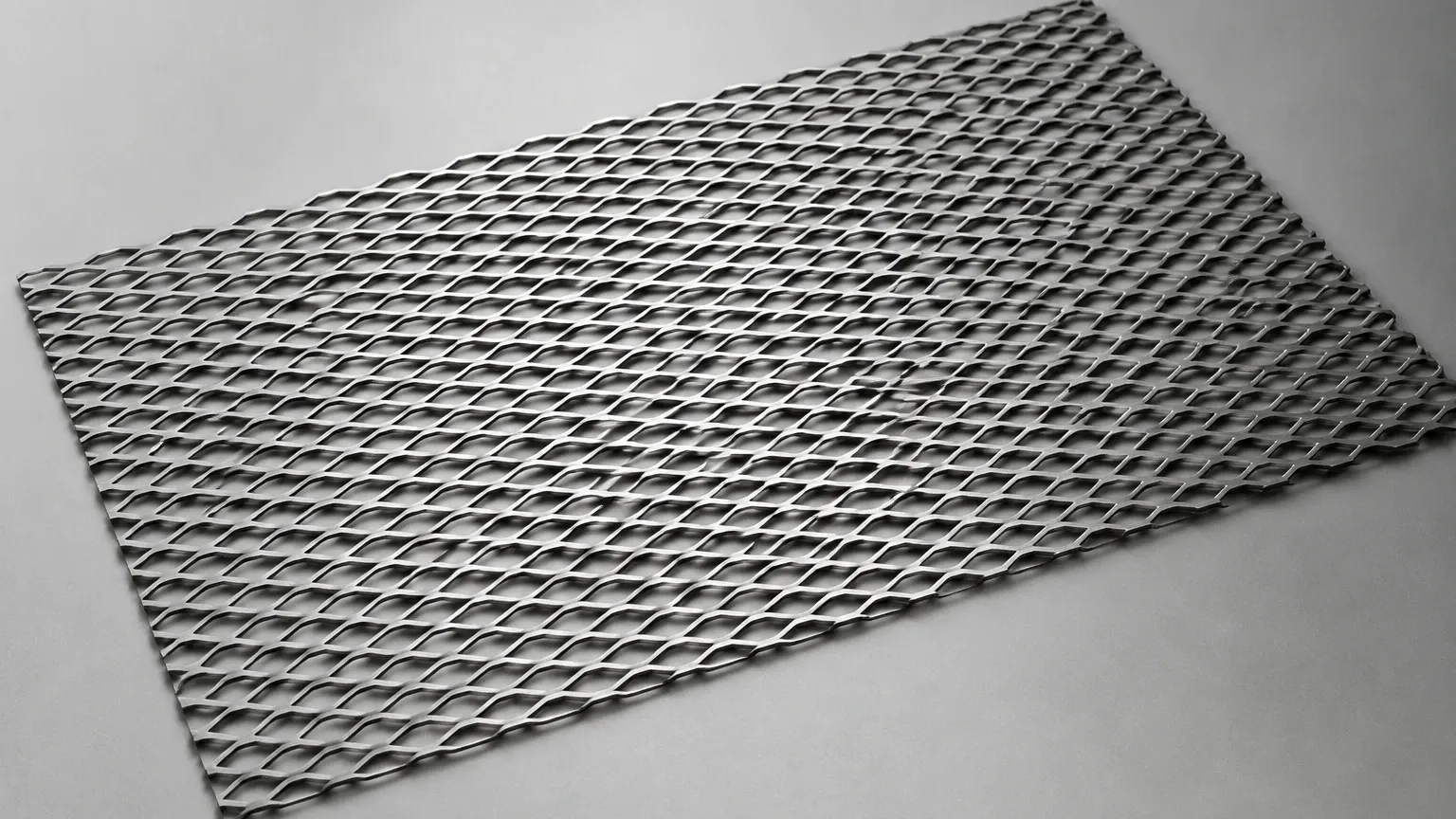
4 X 8 Expanded Metal Sheet
In industrial manufacturing and filtration engineering, the 4 x 8 expanded metal sheet represents one of the most versatile and widely utilized material formats. Measuring four feet by eight feet, this standard sheet size serves as the foundational raw material for a vast array of structural, protective, and filtration components. For engineers and procurement specialists, understanding the technical nuances of expanded metal—from its manufacturing process to its mechanical properties—is essential for ensuring the performance and longevity of industrial systems.
Expanded metal is distinct from other metal types, such as perforated or woven wire, due to its unique production method. It is created by simultaneously slitting and stretching a solid metal sheet. This process results in a continuous piece of metal with diamond-shaped openings, characterized by a lack of joints or welds. Within the context of high-performance filtration, these sheets provide the structural rigidity required to support delicate filter media under high-pressure conditions.
The Manufacturing Process and Structural Integrity
The production of a 4 x 8 expanded metal sheet involves a reciprocating knife that shears the base metal while it is being pulled. Because the metal is expanded rather than punched, there is zero material waste during the expansion process. This makes expanded metal an economically efficient choice compared to perforated metal, where the "slugs" or punched-out circles represent lost material costs.
From an engineering perspective, the continuous nature of the strands provides superior strength-to-weight ratios. Since the material is not welded or woven, there are no points of potential failure at the intersections (bonds). This structural integrity is critical when the metal is used as a support core or outer cage for industrial filter cartridges, where it must withstand significant differential pressures without deforming.
Standard vs. Flattened Expanded Metal
When specifying a 4 x 8 expanded metal sheet, engineers must choose between two primary finishes: standard (raised) and flattened.
1. Standard Expanded Metal: This is the material as it comes off the expansion machine. The strands and bonds are set at a uniform angle to the plane of the sheet. This creates a textured, three-dimensional surface that offers high rigidity and excellent grip. In filtration, standard expanded metal is often used in heavy-duty pre-filters where the angular strands help break up laminar flow and trap larger particulates.
2. Flattened Expanded Metal: To produce this variant, standard expanded metal is passed through a cold-roll reducing mill. This flattens the strands and bonds into the same plane, resulting in a smooth, flat surface. Flattened sheets are typically 5% to 10% thinner than the base material used to create them. In the production of precision filter components, flattened expanded metal is preferred because its smooth surface prevents abrasion or tearing of secondary filter media, such as fine wire mesh or synthetic membranes.
Material Selection for Industrial Environments
The performance of a 4 x 8 expanded metal sheet is heavily dependent on the alloy selected. At Kaifil, the focus is often on stainless steel and specialized alloys to meet the rigorous demands of chemical processing, food and beverage production, and pharmaceutical manufacturing.
* Stainless Steel (304 and 316L): These are the most common materials for filtration applications. Grade 304 offers excellent corrosion resistance for general industrial use, while Grade 316L (low carbon) is specified for environments involving high chlorides or acidic solutions. Stainless steel expanded metal is essential for maintaining hygiene standards in food-grade applications and ensuring the purity of pharmaceutical products.
* Carbon Steel: Frequently used in hydraulic filtration and general industrial screening where corrosion is less of a concern or where the metal is protected by a fluid (such as oil). Carbon steel provides high tensile strength at a lower price point.
* Aluminum: Selected for applications requiring lightweight materials and moderate corrosion resistance. It is often found in HVAC filtration and aerospace components.
Technical Specifications and Design Parameters
To accurately specify a 4 x 8 expanded metal sheet for a technical project, engineers must define several key dimensions. These parameters dictate the flow rate, pressure drop, and mechanical strength of the final component.
* SWD (Short Way of Design): The distance from the center of one bond to the center of the next bond measured across the short diamond diagonal.
* LWD (Long Way of Design): The distance from the center of one bond to the center of the next bond measured across the long diamond diagonal.
* Strand Width: The amount of metal fed into the machine between the shearing and stretching steps.
* Strand Thickness: The thickness of the original base metal sheet.
* Percent Open Area: This is perhaps the most critical calculation for filtration engineers. It determines the volume of fluid or gas that can pass through the sheet at a given velocity. A higher open area reduces pressure drop but may compromise the structural support of the filter media.
For those seeking specific configurations for industrial projects, Perforated & Expanded Metal solutions provide the necessary data sheets to match these parameters to application requirements.
Applications in Industrial Filtration
The 4 x 8 expanded metal sheet is rarely used in its raw form in filtration; rather, it is fabricated into specific components. Its primary roles include:
1. Filter Support Cores
In high-pressure hydraulic and liquid filtration, the internal core of a cartridge must resist collapsing under pressure. Expanded metal is rolled into cylinders and welded to form these cores. The diamond pattern allows for maximum flow while providing a rigid backbone for the pleated filter media wrapped around it.
2. Outer Protective Cages
For filters exposed to high-velocity flow or mechanical handling, an outer cage made from expanded metal protects the delicate inner media from impact and prevents the pleats from bunching or shifting. The 4 x 8 sheet size allows for the efficient cutting of multiple cage blanks with minimal waste.
3. Pre-Filtration Screens
In water treatment and large-scale industrial intake systems, expanded metal sheets act as primary screens to remove large debris before the fluid reaches finer filtration stages. The durability of stainless steel expanded metal ensures these screens can be cleaned and reused multiple times.
4. Catalyst Support
In chemical reactors, expanded metal sheets are used to hold catalyst beds in place. The uniform openings ensure even distribution of reactants across the catalyst surface, which is vital for maintaining reaction efficiency.
Engineering Considerations: Flow and Pressure
When integrating a 4 x 8 expanded metal sheet into a filtration system, the engineer must account for the "Total Cost of Ownership," which includes not just the purchase price, but also the energy costs associated with pressure drop.
A common mistake in filter design is selecting a strand width that is too large in an attempt to increase strength. While this does make the filter more robust, it significantly reduces the open area, leading to a higher pressure drop across the filter. This requires pumps to work harder, increasing energy consumption. Conversely, if the strand is too thin, the sheet may fail under the mechanical stress of backwashing or high-pressure surges.
Compatibility is another critical factor. The expanded metal must be chemically compatible with both the fluid being filtered and any cleaning agents used during maintenance cycles. For example, in the pharmaceutical industry, the metal must withstand aggressive CIP (Clean-in-Place) chemicals without leaching ions into the product stream.
Customization and Fabrication Capabilities
While the 4 x 8 expanded metal sheet is the standard supply size, most B2B applications require further processing. Kaifil provides extensive OEM and customization capabilities to transform these sheets into precision components. These services include:
* Precision Shearing: Cutting the 4 x 8 sheets into exact dimensions for specific filter housings.
* Forming and Rolling: Shaping the metal into cylinders, cones, or custom profiles.
* Welding: Utilizing TIG, MIG, or spot welding to ensure strong, clean joints that meet industrial standards.
* Surface Finishing: Including electropolishing, passivating, or coating to enhance corrosion resistance and surface smoothness.
Selection Guide: Questions for Engineers
Before purchasing 4 x 8 expanded metal sheets for a filtration project, engineers should confirm the following details to ensure the material is fit for purpose:
1. What is the maximum differential pressure? This determines the required strand thickness and whether standard or flattened metal is necessary for structural support.
2. What is the chemical composition of the filtrate? This dictates the choice between 304, 316L, or more exotic alloys.
3. What is the required flow rate? This will help calculate the necessary open area percentage and the SWD/LWD dimensions.
4. Will the filter be cleaned or replaced? If the filter is intended for long-term use with multiple cleaning cycles, stainless steel is typically the most cost-effective choice over the long term.
5. Is there a secondary media involved? If the expanded metal is supporting a fine mesh or membrane, flattened expanded metal is usually required to prevent damage to the more fragile layer.
Conclusion
The 4 x 8 expanded metal sheet is more than just a piece of industrial hardware; it is a precision-engineered component that plays a vital role in the efficiency and reliability of industrial filtration systems. By selecting the correct material, diamond pattern, and finish, engineers can optimize their systems for maximum flow, minimal pressure drop, and long-term durability. Whether used as a support core in a hydraulic filter or a protective screen in a chemical plant, the quality of the expanded metal directly impacts the performance of the entire filtration process. For those looking to integrate these materials into their next project, consulting with a specialized manufacturer like Kaifil ensures that every technical requirement is met with precision.
