


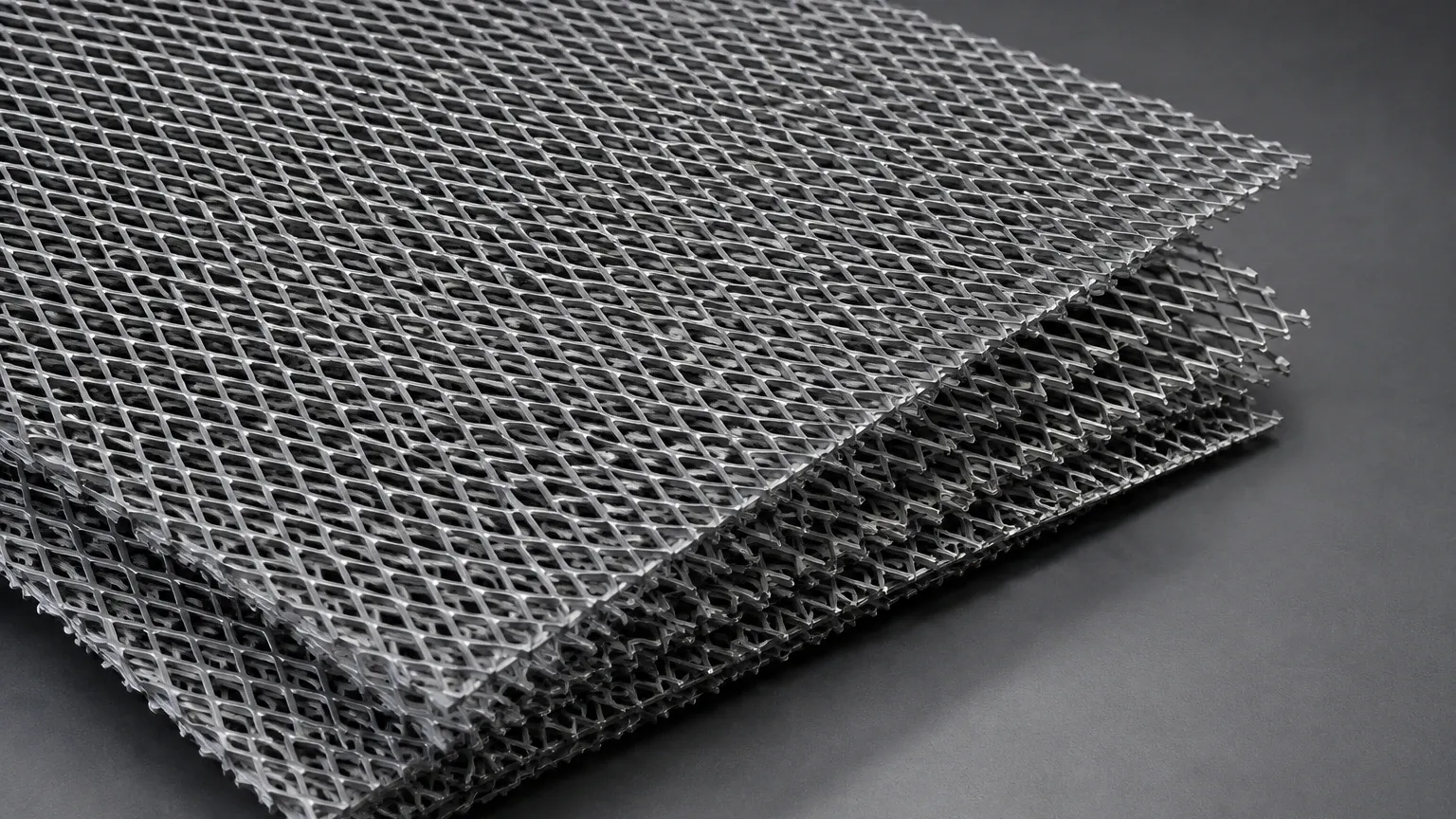
4×8 Expanded Metal Sheet
In the landscape of industrial filtration and structural support, the 4×8 expanded metal sheet remains a foundational component. This standardized dimension—four feet by eight feet—is the industry benchmark for material handling, fabrication efficiency, and logistical compatibility. For engineers and procurement specialists, selecting the right expanded metal requires more than just specifying dimensions; it involves a technical understanding of material properties, manufacturing processes, and the specific demands of the filtration environment.
Expanded metal is produced by simultaneously slitting and stretching a solid metal sheet, creating a diamond-shaped pattern of openings. Unlike perforated metal, which involves punching out material and creating waste, expanded metal is formed through a process that retains the original material volume while increasing the surface area. This results in a high strength-to-weight ratio, making it an ideal candidate for support structures in high-pressure filtration systems.
Understanding the Geometry and Manufacturing of Expanded Metal
The performance of a 4×8 expanded metal sheet is dictated by its geometric configuration. Unlike woven wire mesh, expanded metal is a single, continuous piece of material with no joins or welds within the pattern. This structural integrity is critical in industrial applications where mechanical stress is a constant factor.
Key Geometric Parameters
When specifying expanded metal for industrial use, engineers must define several critical measurements:
* SWD (Short Way of Design): The distance from the center of one bond to the center of the next bond across the short axis of the diamond.
* LWD (Long Way of Design): The distance from the center of one bond to the center of the next bond across the long axis.
* Strand Width: The amount of metal fed into the precision dies to create the diamond pattern.
* Strand Thickness: The gauge of the original base metal.
At Kaifil, we recognize that these dimensions directly influence the "Open Area" percentage. In filtration, the open area determines the flow rate and pressure drop across the medium. A higher open area reduces resistance to fluid or gas flow but may compromise the structural rigidity required to support finer filter media, such as stainless steel wire mesh.
Material Considerations for Industrial Filtration Environments
The choice of alloy for a 4×8 expanded metal sheet is the most significant factor in determining its service life and compatibility with the process fluid. While carbon steel is common for general structural use, industrial filtration typically demands higher performance alloys.
Stainless Steel (304 and 316)
Stainless steel is the preferred material for chemical processing, food and beverage, and pharmaceutical applications.
* Grade 304: Offers excellent corrosion resistance and is suitable for most atmospheric and water treatment applications.
* Grade 316: Contains molybdenum, providing superior resistance to chlorides and pitting. This is essential for marine environments or highly acidic chemical filtration.
Specialty Alloys and Aluminum
For weight-sensitive applications, aluminum expanded metal provides a lightweight alternative with moderate corrosion resistance. In high-temperature or extremely corrosive environments, specialty alloys like Monel or Inconel may be specified, though these are typically reserved for specialized OEM filtration components where standard stainless steel fails to meet the chemical resistance requirements.
Standard vs. Flattened 4×8 Expanded Metal Sheets
One of the most important decisions during the design phase is whether to use "Standard" (raised) or "Flattened" expanded metal. Each has distinct mechanical characteristics that affect its role in a filtration assembly.
Standard (Raised) Expanded Metal
In its standard form, the strands and bonds are set at a uniform angle to the plane of the sheet. This creates a three-dimensional profile that offers several advantages:
* Increased Rigidity: The angled strands act like structural beams, providing higher resistance to bending.
* Enhanced Grip and Turbulence: In some gas filtration or separation processes, the raised profile can help create localized turbulence, which may assist in certain types of particulate impingement.
Flattened Expanded Metal
Flattened expanded metal is produced by passing the standard expanded sheet through a cold-roll reducing mill. This process flattens the strands and bonds into the same plane as the sheet. The primary benefits include:
* Smooth Surface: Essential when the expanded metal is used as a support layer for delicate filter media. A flat surface prevents the strands from cutting or abrading the finer wire mesh or synthetic fabric placed against it.
* Consistent Thickness: Provides a more predictable profile for integration into filter cartridges or housing frames where tolerances are tight.
Engineering Applications: Support and Protection in Filtration Systems
The 4×8 expanded metal sheet serves several critical roles within industrial filtration systems, often acting as the "skeleton" of a more complex assembly.
Support for Fine Media
In high-pressure hydraulic or liquid filtration, fine wire mesh lacks the structural integrity to withstand the differential pressure (ΔP) across the filter element. By placing a layer of Perforated & Expanded Metal behind the mesh, engineers can ensure the filter maintains its shape and prevents media migration or collapse under load.
Pre-Filtration and Debris Guards
For large-scale water intake or industrial exhaust systems, expanded metal acts as a primary barrier. It captures large debris—such as stones, wood, or large particulates—before they reach the secondary, more expensive precision filter cartridges. This extends the replacement cycle of the primary filtration elements and reduces the total cost of ownership.
Protective Cages
In many industrial filter cartridges, expanded metal is rolled into a cylinder to form an outer protective cage. This protects the pleated filter media from mechanical damage during installation, cleaning, and operation. The diamond pattern allows for maximum flow while providing a robust physical barrier.
Technical Specification Checklist for Procurement
When sourcing 4×8 expanded metal sheets for B2B applications, procurement teams should confirm several technical details to ensure the product meets engineering requirements. Vague specifications often lead to performance failures or integration issues.
1. Material Grade: Specify exactly (e.g., SS316L vs. SS304) rather than just "Stainless Steel."
2. Style Designation: This is usually a combination of the gauge and the SWD (e.g., 1/2" #13).
3. Flattened vs. Standard: Clearly state the required finish based on whether the sheet will contact sensitive media.
4. Tolerance Requirements: Standard industrial tolerances for 4×8 sheets may vary. If the sheet is being CNC laser cut into smaller components, tighter tolerances on the LWD/SWD consistency are required.
5. Surface Treatment: Determine if the material requires degreasing, pickling, or electropolishing, especially for food-grade or pharmaceutical applications where surface contaminants must be eliminated.
Evaluating the Total Cost of Ownership and Performance
While the initial purchase price of a 4×8 expanded metal sheet is a factor, engineers must evaluate the total cost of ownership (TCO). In the context of industrial filtration, a lower-quality sheet can lead to higher long-term costs due to:
* Premature Corrosion: Using a lower grade of steel in a corrosive environment leads to frequent replacements and system downtime.
* Structural Failure: If the expanded metal cannot handle the pressure loads, it may deform, leading to the failure of the entire filter element and potential downstream contamination.
* Cleaning Efficiency: In reusable filtration systems, the quality of the expanded metal's finish affects how easily it can be cleaned. Burrs or irregular strands can trap particulates, making backwashing or ultrasonic cleaning less effective.
Kaifil’s expertise in manufacturing custom stainless steel filtration solutions ensures that every component, from the base expanded metal to the final assembly, is engineered for durability. By focusing on precision manufacturing and material integrity, we help our clients achieve optimized filtration performance in the most demanding industrial environments.
Conclusion
The 4×8 expanded metal sheet is more than a commodity; it is a versatile engineering material that provides the structural foundation for modern industrial filtration. Whether used as a support for precision mesh or as a protective outer cage, its selection requires a deep understanding of geometry, metallurgy, and application-specific stresses. By carefully specifying the SWD, LWD, material grade, and finish, engineers can ensure that their filtration systems operate efficiently, safely, and cost-effectively over their entire service life.
