


Expanded Metal 4×8 Price
In the industrial sector, expanded metal is a versatile material used for everything from heavy-duty walkways and security fencing to high-precision filtration components. For many engineers and procurement specialists, the 4×8 foot sheet (48 inches by 96 inches) serves as the standard unit for cost estimation and project planning. However, determining a definitive expanded metal 4×8 price requires a deep dive into material science, manufacturing tolerances, and application-specific requirements.
At Kaifil, we specialize in providing high-performance Perforated & Expanded Metal solutions tailored for demanding industrial environments. Understanding the variables that drive pricing is essential for optimizing the total cost of ownership (TCO) while ensuring the structural or filtration integrity of your final product.
Material Composition and Market Fluctuations
The primary driver of the expanded metal 4×8 price is the raw material used. Unlike woven wire mesh, expanded metal is produced from a single solid sheet of metal that is slit and stretched simultaneously. Consequently, the cost of that base sheet directly dictates the price of the expanded product.
Stainless Steel (304, 316, and 316L)
For industries such as chemical processing, food and beverage, and pharmaceuticals, stainless steel is the preferred choice due to its corrosion resistance. Grade 304 is the standard industrial choice, offering a balance of performance and cost. However, for marine environments or highly acidic chemical applications, Grade 316 or 316L (low carbon) is required. The inclusion of molybdenum in 316 stainless steel significantly increases the price per sheet compared to 304, often by 30% to 50%, depending on global nickel and molybdenum market prices.
Carbon Steel and Galvanized Options
Carbon steel is the most economical choice for structural applications where corrosion is not a primary concern or where the metal will be coated post-production. To enhance durability, many buyers opt for galvanized carbon steel. Hot-dipped galvanizing adds a protective zinc layer, which increases the price but extends the service life of a 4×8 sheet in outdoor or humid environments.
Aluminum and Specialty Alloys
Aluminum expanded metal is prized for its high strength-to-weight ratio and natural resistance to atmospheric corrosion. While the raw material cost of aluminum can be higher than carbon steel, its lightweight nature can reduce shipping costs and simplify installation. For specialized filtration or aerospace applications, exotic alloys like Monel or Titanium may be used, though these are rarely stocked in standard 4×8 sheets and are priced on a per-project basis.
Technical Specifications: SWD, LWD, and Strand Geometry
The geometry of the diamond opening is not just an aesthetic choice; it is a critical engineering specification that influences the weight of the material and, by extension, the expanded metal 4×8 price. Expanded metal is defined by two primary dimensions: the Short Way of the Diamond (SWD) and the Long Way of the Diamond (LWD).
Aperture Size and Material Volume
A "heavy" expanded metal sheet has smaller openings and wider strands, meaning more raw material is retained per square foot. Conversely, a "light" or "micro-mesh" expanded metal has a higher percentage of open area. While one might assume that more open area equals a lower price, the manufacturing complexity of expanding very fine or thin materials can sometimes offset the savings in raw material volume.
Strand Width and Thickness
The thickness of the original sheet (gauge) and the width of the strand (the amount of metal between the openings) determine the sheet's rigidity and weight. In the B2B procurement process, it is vital to specify these dimensions accurately. A 4×8 sheet of 9-gauge expanded metal will naturally command a higher price than a 13-gauge sheet due to the sheer volume of steel involved.
Raised vs. Flattened Expanded Metal
When evaluating the expanded metal 4×8 price, you must choose between the two primary finishes: raised (standard) and flattened.
Raised Expanded Metal
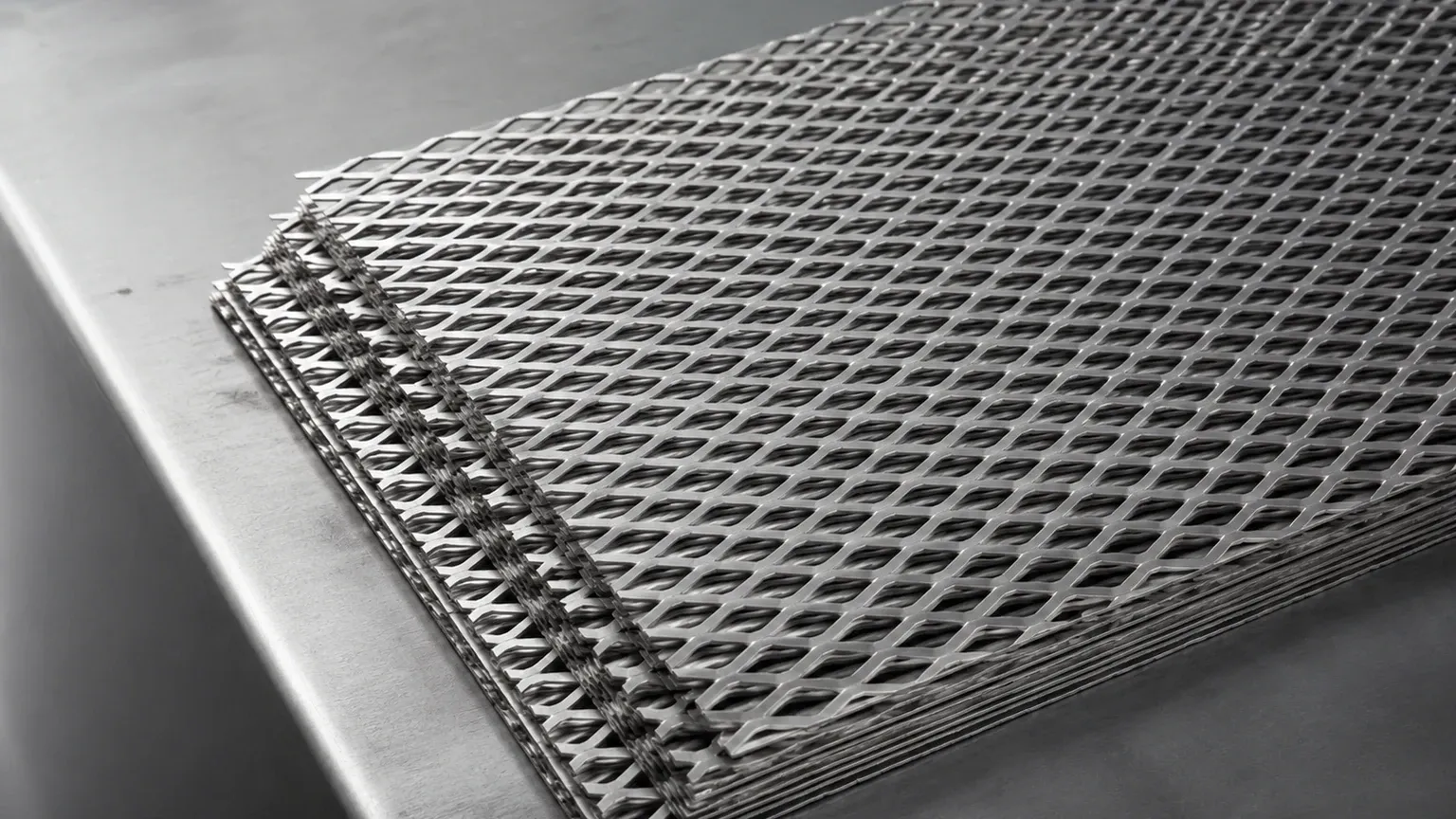
Raised expanded metal is the product as it comes off the expanding machine. The strands and bonds are set at a uniform angle to the plane of the sheet. This creates a textured surface that provides excellent slip resistance and structural strength. Because it requires no further processing, raised expanded metal is typically the baseline for pricing.
Flattened Expanded Metal
Flattened expanded metal is produced by passing the standard raised sheet through a cold-roll reducing mill. This process flattens the strands and bonds into the same plane as the sheet surface. Flattening makes the sheet smoother and thinner, which is often required for filtration support layers or architectural panels where a flush surface is necessary. Because flattening is a secondary manufacturing step, it adds to the labor and equipment costs, generally resulting in a higher price per 4×8 sheet compared to the raised version of the same specification.
Manufacturing Efficiency: Expanded vs. Perforated Metal
From a cost-efficiency standpoint, expanded metal is often more economical than perforated metal. This is due to the "zero-waste" nature of the expansion process.
When manufacturing perforated metal, holes are punched out of a solid sheet, and the resulting "slugs" are scrap metal. In contrast, expanded metal is slit and stretched, meaning a 4-foot long solid sheet can be expanded into a 12-foot or 20-foot long expanded sheet without losing any material. This high yield is why the expanded metal 4×8 price is often lower than a perforated sheet of the same material and thickness with a similar open area.
However, for high-precision filtration where exact hole geometry and spacing are non-negotiable, perforated metal may still be the required choice. Engineers must weigh the cost benefits of expanded metal against the specific technical requirements of their filtration or separation process.
Customization and Post-Processing Costs
While a standard 4×8 sheet is common, industrial applications often require additional processing that influences the final quote.
1. Shearing and Squaring: If your application requires precise dimensions within the 4×8 footprint, or if the edges must be perfectly square for welding into a frame, additional shearing is required.
2. Degreasing and Cleaning: For pharmaceutical or food-grade applications, the residual lubricants used during the expansion process must be removed. Ultrasonic cleaning or chemical degreasing adds to the per-sheet cost.
3. Surface Finishing: Beyond galvanizing, options like powder coating, PVC coating, or electropolishing (for stainless steel) provide specific aesthetic or functional properties. These finishes are usually calculated based on the total surface area of the expanded metal, which is significantly higher than the flat 32 square feet of a 4×8 sheet.
4. Annealing: For applications requiring high ductility, such as deep-drawn filter components, the metal may need to be annealed to relieve internal stresses caused by the expansion process.
Logistics and Volume Considerations in B2B Procurement
The expanded metal 4×8 price is heavily influenced by order volume and logistics. Because 4×8 sheets are bulky and relatively heavy, shipping costs can represent a significant portion of the total invoice, especially for small orders.
Bulk Purchasing
For OEM manufacturers and large-scale industrial projects, purchasing in bulk (e.g., pallet quantities of 25, 50, or 100 sheets) significantly reduces the price per sheet. Manufacturers like Kaifil can optimize production runs when volume is high, passing those efficiencies on to the customer.
Packaging and Protection
To prevent warping or damage to the diamond edges during transit, 4×8 sheets are typically shipped on heavy-duty wooden pallets and secured with steel strapping. For stainless steel or aluminum sheets where surface finish is critical, interleave paper or plastic film may be used, which adds a marginal cost but prevents expensive material rejection upon delivery.
Why Technical Accuracy Matters for ROI
Choosing the wrong specification based solely on the lowest expanded metal 4×8 price can lead to premature failure in industrial environments. For example, in a hydraulic filtration system, selecting a mesh with insufficient strand thickness may lead to deformation under high pressure, resulting in bypass or system failure.
Similarly, in chemical processing, opting for 304 stainless steel over 316 to save on initial costs can lead to pitting corrosion and frequent replacement cycles, ultimately costing more in downtime and maintenance than the initial investment in the correct material.
Conclusion
Navigating the expanded metal 4×8 price requires a balance between material costs, manufacturing processes, and the specific demands of your industrial application. By understanding how SWD/LWD dimensions, material grades, and finishing processes affect the bottom line, procurement teams can make more informed decisions that support both the budget and the engineering requirements of the project.
Kaifil remains committed to providing technical expertise and high-quality manufacturing for all your filtration and metal component needs. Whether you require standard sheets or custom-engineered Perforated & Expanded Metal, our team is ready to assist with material selection, precision manufacturing, and cost-effective solutions for your global operations.
