


4×8 Sheet Expanded Metal Price Home Depot
For engineers, procurement specialists, and project managers, the search for a "4×8 sheet expanded metal price home depot" often serves as an initial benchmarking exercise. While retail environments provide a quick reference for standard material costs, industrial applications—particularly those involving filtration, chemical processing, and structural support—require a deeper analysis of material specifications, manufacturing tolerances, and long-term performance.
Expanded metal is a versatile material produced by simultaneously slitting and stretching a metal sheet, creating a diamond-shaped pattern of openings. In the B2B sector, selecting the right expanded metal involves more than just finding the lowest price per sheet; it requires an understanding of how the geometry, material grade, and finishing processes impact the total cost of ownership and the efficiency of the final system.
Understanding the 4×8 Sheet Benchmark
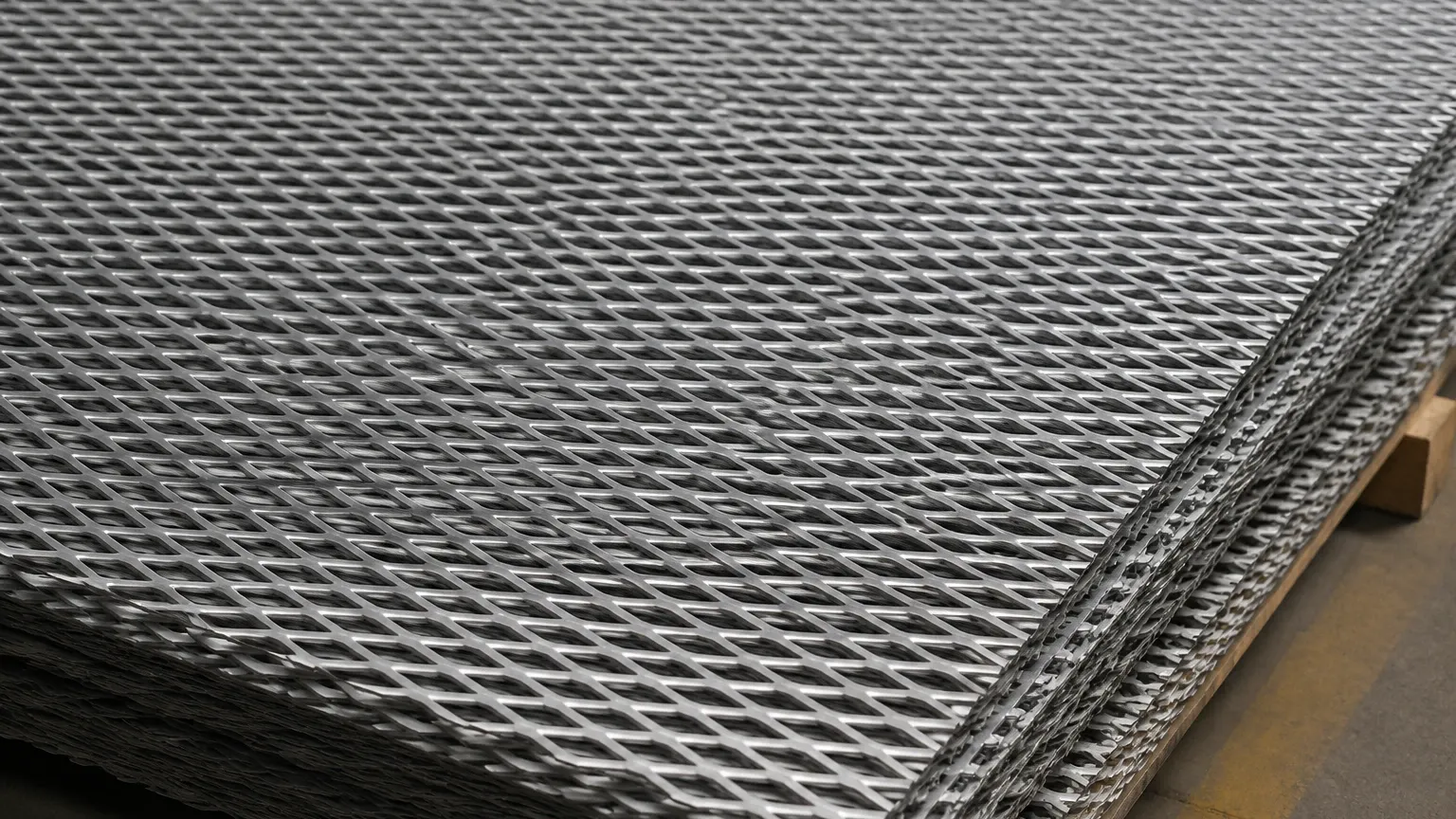
The 4×8 foot (48" x 96") sheet is the industry standard for metal distribution. In a retail context, such as Home Depot, these sheets are typically stocked in common carbon steel or aluminum grades, intended for general-purpose DIY projects, basic security screens, or small-scale architectural accents.
However, for industrial-grade Perforated & Expanded Metal, the pricing structure is influenced by variables that retail outlets rarely address. While a retail price might range significantly depending on the gauge and opening size, industrial buyers must account for:
* Material Grade: Retailers often stock "plain steel." Industrial projects frequently demand 304 or 316L stainless steel for corrosion resistance.
* Precision and Tolerances: Standard retail sheets may have wider tolerances in terms of squareness and strand consistency, which can interfere with automated welding or precise filtration housing fits.
* Volume Scaling: Unlike retail pricing, which is fixed per unit, industrial procurement benefits from economies of scale, where the price per sheet drops significantly as the order volume increases.
Technical Specifications: Beyond the Sheet Size
When evaluating expanded metal for technical applications, engineers must look past the 4×8 dimensions and focus on the internal geometry. The performance of the metal is defined by several key metrics:
SWD and LWD (Short Way of Design and Long Way of Design)
These measurements refer to the distances from the center of one bond to the center of the next bond across the short and long diamonds. In filtration support, the SWD and LWD determine the percentage of open area, which directly correlates to pressure drop and flow rate. A retail-grade sheet might provide a "standard" diamond, but industrial manufacturers like Kaifil can customize these dimensions to optimize the mechanical support of a wire mesh filter element.
Strand Width and Thickness
The strand is the individual metal strip that forms the diamond pattern. The thickness of the strand is determined by the original gauge of the sheet, while the width is controlled during the expanding process. Increasing the strand width enhances the rigidity and load-bearing capacity of the 4×8 sheet but reduces the open area.
Standard vs. Flattened Expanded Metal
* Standard (Raised): This version is produced directly from the expanding machine. The strands and bonds are set at a uniform angle to the plane of the sheet. This provides maximum strength and a high-friction surface, often used for industrial walkways or heavy-duty filter guards.
* Flattened: After the expanding process, the sheet is passed through a cold-roll reducing mill. This flattens the strands and bonds into the same plane, resulting in a smooth, flat surface. Flattened expanded metal is often preferred when the sheet must be bonded to other materials or when a low-profile support structure is required for fine filter media.
Material Selection and Corrosion Resistance
A primary reason industrial buyers move away from retail-sourced materials is the requirement for specific alloys. While a "4×8 sheet expanded metal price home depot" search might yield results for galvanized or plain steel, these materials are often insufficient for demanding environments.
Stainless Steel (304, 316, 316L)
In chemical processing, pharmaceutical manufacturing, and food production, stainless steel is mandatory. Stainless steel expanded metal provides the necessary resistance to oxidation and chemical attack. 316L, in particular, is used in marine environments or high-acid applications due to its molybdenum content, which prevents pitting corrosion.
Specialty Alloys
For high-temperature applications or extreme chemical exposure, materials like Monel, Inconel, or Titanium may be required. These are never found in retail inventory and must be sourced through specialized manufacturers who understand the metallurgical properties and the complexities of expanding high-strength alloys.
Evaluating the Total Cost of Ownership (TCO)
Choosing a 4×8 sheet based solely on the upfront retail price can lead to hidden costs during the fabrication and operational phases of a project. Industrial buyers should consider the following factors when calculating the true cost of their materials:
1. Scrap and Yield Optimization: A standard 4×8 sheet may not be the most efficient size for a specific filter cartridge or machine guard. Industrial manufacturers can often provide custom-sized sheets or coils that minimize scrap, potentially reducing the total material cost despite a higher price per square foot.
2. Secondary Operations: Retail sheets are often sold with "random" edges, meaning the diamonds are cut through at the edges of the sheet. For many industrial applications, "bond edges" (where the cut follows the solid metal bond) are required for safety and ease of welding. Sourcing sheets that require manual trimming to reach the desired edge condition adds significant labor costs.
3. Finishing and Cleaning: For B2B applications, expanded metal often requires degreasing, pickling, or passivation (especially for stainless steel) to ensure it meets hygiene and corrosion standards. Retail products are rarely cleaned to this level and may contain residual oils from the manufacturing process that can contaminate sensitive industrial systems.
4. Logistics and Packaging: Shipping a single 4×8 sheet from a retail store is different from receiving a pallet of industrial-grade material. Professional manufacturers ensure that sheets remain flat and undamaged during transit, preventing the warping that can occur with improper handling.
The Role of Expanded Metal in Industrial Filtration
In the context of Kaifil’s expertise, expanded metal serves a critical role as a support structure for more delicate filtration media. When designing a high-pressure hydraulic filter or a large-scale water treatment element, the expanded metal provides the "backbone" that prevents the wire mesh from collapsing under the force of the fluid flow.
Engineers must calculate the mechanical stress on the expanded metal to ensure it can withstand the differential pressure. This involves analyzing the material's yield strength and the geometry of the diamond openings. A 4×8 sheet sourced from a retail outlet without a Mill Test Report (MTR) presents a significant risk in these applications, as the mechanical properties of the steel cannot be verified.
Sourcing Strategies for Engineers and Purchasing Teams
When transitioning from a retail price search to an industrial procurement process, there are several steps technical professionals should take to ensure they receive the correct product:
* Define the Open Area Requirement: Calculate the necessary flow rate to determine the percentage of open area required. This will dictate the SWD, LWD, and strand width.
* Specify the Edge Condition: Clearly state whether the application requires a bond edge or if a random cut is acceptable. This is vital for projects involving manual handling or precise assembly.
* Request Documentation: For any B2B application, always request MTRs to verify the chemical composition and physical properties of the metal. This is a standard part of the quality assurance process for manufacturers like Kaifil but is unavailable at retail stores.
* Consider Custom Dimensions: If the project requires thousands of small components, purchasing 4×8 sheets and cutting them down may be less efficient than ordering custom-slit coils or pre-cut blanks.
Conclusion
While the "4×8 sheet expanded metal price home depot" is a useful starting point for understanding the baseline cost of metal, it does not reflect the complexities of industrial sourcing. For B2B applications where durability, precision, and material integrity are paramount, working with a specialized manufacturer is essential.
By focusing on technical specifications—such as material grade, diamond geometry, and finishing requirements—engineers can select expanded metal solutions that offer superior performance and a lower total cost of ownership than off-the-shelf retail products. Whether the goal is to provide structural support for a filtration system or to create a durable industrial barrier, the value lies in the engineering expertise and customization capabilities that go far beyond a standard 4×8 sheet.
