


4×8 Sheet Expanded Metal Price Nearby
In the industrial procurement landscape, the 4×8 sheet of expanded metal serves as a fundamental building block for applications ranging from heavy-duty walkways and security fencing to precision filtration components. For engineers and purchasing managers, searching for a "4×8 sheet expanded metal price nearby" is often the first step in a procurement cycle. However, understanding the variables that dictate this price—beyond simple geographic proximity—is essential for optimizing total cost of ownership and ensuring performance reliability.
Expanded metal is manufactured by simultaneously slitting and stretching a solid metal sheet, creating a diamond-shaped pattern of openings. Unlike perforated metal, which involves punching holes and generating scrap, expanded metal is produced with virtually no waste, making it a highly resource-efficient material. When evaluating prices, technical professionals must look beyond the sticker price of a single sheet and consider material grade, pattern specifications, and the manufacturing process used.
Factors Influencing 4×8 Sheet Expanded Metal Prices
The price of a 4×8 sheet of expanded metal is primarily driven by three factors: the raw material market, the complexity of the expansion pattern, and the weight of the finished product. Because the expansion process increases the surface area of the original sheet, the cost is often calculated based on the weight of the base metal used to create the 32-square-foot panel.
Raw Material Fluctuations
Steel, aluminum, and stainless steel prices are subject to global market volatility. Carbon steel is typically the most economical option, but its susceptibility to corrosion often necessitates secondary treatments like galvanizing or powder coating, which add to the final cost. In contrast, stainless steel—specifically 304 and 316 grades—commands a higher initial price but offers superior longevity in corrosive or high-temperature environments, such as chemical processing or marine applications.
Pattern Specifications and Tooling
The dimensions of the diamond pattern—Short Way of Design (SWD) and Long Way of Design (LWD)—affect the machine time required for production. Smaller openings require more slits per inch, increasing the mechanical wear on the tooling and the time spent on the press. Consequently, a sheet with a very fine mesh pattern will generally have a higher price point than a heavy-duty grating with large openings, even if the total weight of the metal is similar.
Gauge and Strand Thickness
The thickness of the original sheet (gauge) and the width of the resulting strands determine the strength and weight of the final product. Heavier gauges require more robust machinery and consume more raw material, directly impacting the price. For industrial filtration and structural support, selecting the correct gauge is a balance between meeting load-bearing requirements and managing material costs.
Standard vs. Flattened Expanded Metal: Cost and Performance Trade-offs
When requesting quotes for a 4×8 sheet, it is critical to specify whether the application requires "Standard" (raised) or "Flattened" expanded metal. This distinction significantly impacts both the price and the physical properties of the material.
Standard Expanded Metal
Standard expanded metal is the product as it comes off the expansion press. The strands and bonds are set at a sharp angle to the plane of the sheet, creating a three-dimensional surface. This provides excellent grip for walkways and high rigidity for structural frames. Because it requires no additional processing, standard expanded metal is usually the most cost-effective option. However, the raised edges can be problematic in filtration or decorative applications where a smooth surface is required.
Flattened Expanded Metal
Flattened expanded metal is produced by passing standard expanded metal through a cold-roll reducing mill. This process flattens the strands and bonds into the same plane as the sheet, resulting in a smooth, two-dimensional surface. While flattening increases the surface area slightly and makes the sheet easier to handle, it also adds a manufacturing step. This additional labor and machinery use typically results in a higher price per sheet compared to its standard counterpart. For precision filtration systems, flattened metal is often preferred because it provides a consistent thickness and a more uniform substrate for fine mesh overlays.
Material Selection: Why Stainless Steel is a Long-Term Investment
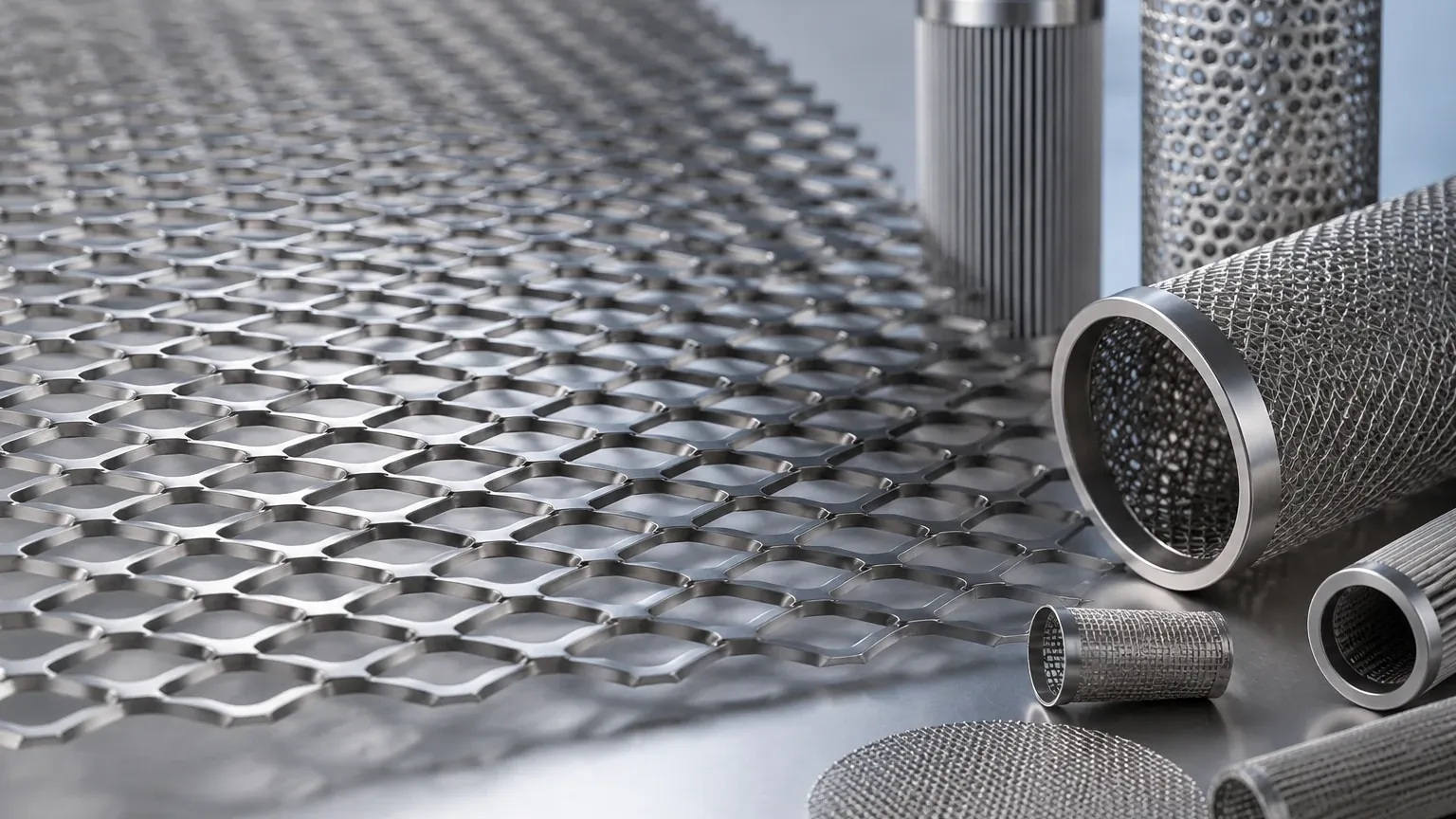
While many local suppliers focus on carbon steel, specialized industrial applications often require the properties of stainless steel. Kaifil specializes in high-performance Perforated & Expanded Metal solutions, particularly in stainless steel grades that withstand the rigors of industrial filtration.
Corrosion Resistance
In industries such as food and beverage or pharmaceuticals, the risk of rust contamination is unacceptable. Stainless steel 304 and 316 provide the necessary resistance to oxidation and chemical cleaning agents. While the initial 4×8 sheet expanded metal price nearby for stainless steel may be three to four times that of carbon steel, the elimination of replacement cycles and maintenance costs often makes it the more economical choice over the life of the project.
Temperature Stability
Expanded metal used in heat exchangers or high-temperature exhaust systems must maintain its structural integrity under thermal stress. Stainless steel alloys are engineered to resist scaling and maintain tensile strength at temperatures where carbon steel would fail. This technical advantage is a key consideration for engineers designing long-life industrial equipment.
Evaluating Local vs. Direct Sourcing for 4×8 Sheets
The search for a "nearby" price is often motivated by a desire to minimize shipping costs. A 4×8 sheet of expanded metal is a bulky item, and freight can represent a significant portion of the total invoice. However, there are several reasons why sourcing directly from a specialized manufacturer like Kaifil may be more advantageous than buying from a local general hardware distributor.
Customization and Precision
Local distributors typically stock standard commercial grades and patterns. If your application requires a specific open area percentage for airflow, or a custom strand width for a filtration cartridge, a local warehouse may not be able to meet those specifications. Manufacturers can provide custom-cut sizes or specific expansion ratios that optimize performance, potentially reducing the total amount of material needed for a project.
Quality Assurance
For B2B buyers, traceability and quality documentation are often mandatory. Direct sourcing ensures that the material meets specific ASTM or ISO standards. When purchasing from a local middleman, obtaining material test reports (MTRs) or certificates of conformance can be difficult and slow down the procurement process.
Volume Discounts
While a single 4×8 sheet might be cheaper locally due to lower shipping, bulk orders for industrial projects are almost always more cost-effective when sourced directly. Manufacturers can offer tiered pricing that local retailers cannot match, and they can coordinate logistics to minimize the impact of freight costs on the unit price.
Perforated & Expanded Metal: Choosing the Right Solution for Filtration
In the context of industrial filtration, the choice between perforated and expanded metal is a technical decision that affects both cost and efficiency. Both materials are used as support structures for filter media, but they offer different advantages.
Expanded metal is often favored for its high open-area-to-weight ratio. Because the metal is stretched rather than punched, a lightweight sheet can provide significant structural support. This is particularly useful in large-scale air filtration or water treatment systems where reducing the weight of the filter assembly is a priority. Additionally, the angled strands of standard expanded metal can help deflect larger debris, acting as a pre-filter.
Perforated metal, on the other hand, offers more precise control over hole size and spacing. In applications where a specific micron rating is required for the support layer itself, perforated metal may be the better choice. However, because of the waste generated during the punching process, perforated sheets are often more expensive than expanded metal of the same material and thickness.
When evaluating Perforated & Expanded Metal options, engineers should consider the pressure drop across the filter. Expanded metal typically offers a higher percentage of open area, which results in lower resistance to flow and improved energy efficiency for the overall system.
Engineering Checklist for Purchasing Expanded Metal Sheets
Before finalizing a purchase based on a 4×8 sheet expanded metal price nearby, technical teams should confirm several key parameters to ensure the material is fit for purpose:
1. Style Designation: Is the requirement for Standard (Raised) or Flattened? This affects thickness, grip, and ease of welding.
2. Opening Size (SWD x LWD): The dimensions of the diamond. Smaller diamonds provide more surface area for bonding filter media but may increase pressure drop.
3. Strand Width and Thickness: These dimensions determine the overall weight and strength. Ensure they meet the load-bearing requirements of the application.
4. Material Grade: Does the environment require the corrosion resistance of 316 stainless steel, or is 304 sufficient? Is aluminum a viable option for weight reduction?
5. Percent Open Area: Critical for filtration and ventilation. This calculation determines how much fluid or air can pass through the sheet.
6. Tolerances: Standard commercial tolerances may not be sufficient for precision engineering. Confirm the manufacturer's ability to meet tighter specs if the sheet is being integrated into a complex assembly.
7. Edge Conditions: Does the sheet need to be "random sheared" (edges may have open diamonds) or "bond sheared" (edges are cut through the center of the bonds for a finished look)?
By focusing on these technical details, procurement professionals can move beyond the simple search for a "nearby" price and instead secure a filtration or structural solution that provides the best balance of performance, durability, and cost-effectiveness. Whether the application is a simple security screen or a complex industrial filter cartridge, the quality of the expanded metal sheet is the foundation of the final product's success.
