


#6 Expanded Metal
In industrial engineering and filtration design, the selection of structural support materials is as critical as the selection of the filtration media itself. #6 expanded metal represents a heavy-duty category of expanded metal, typically characterized by its gauge thickness or specific style designation within industrial standards. For engineers and procurement specialists, understanding the mechanical properties, material compatibility, and manufacturing tolerances of #6 expanded metal is essential for ensuring the longevity and efficiency of industrial filtration systems.
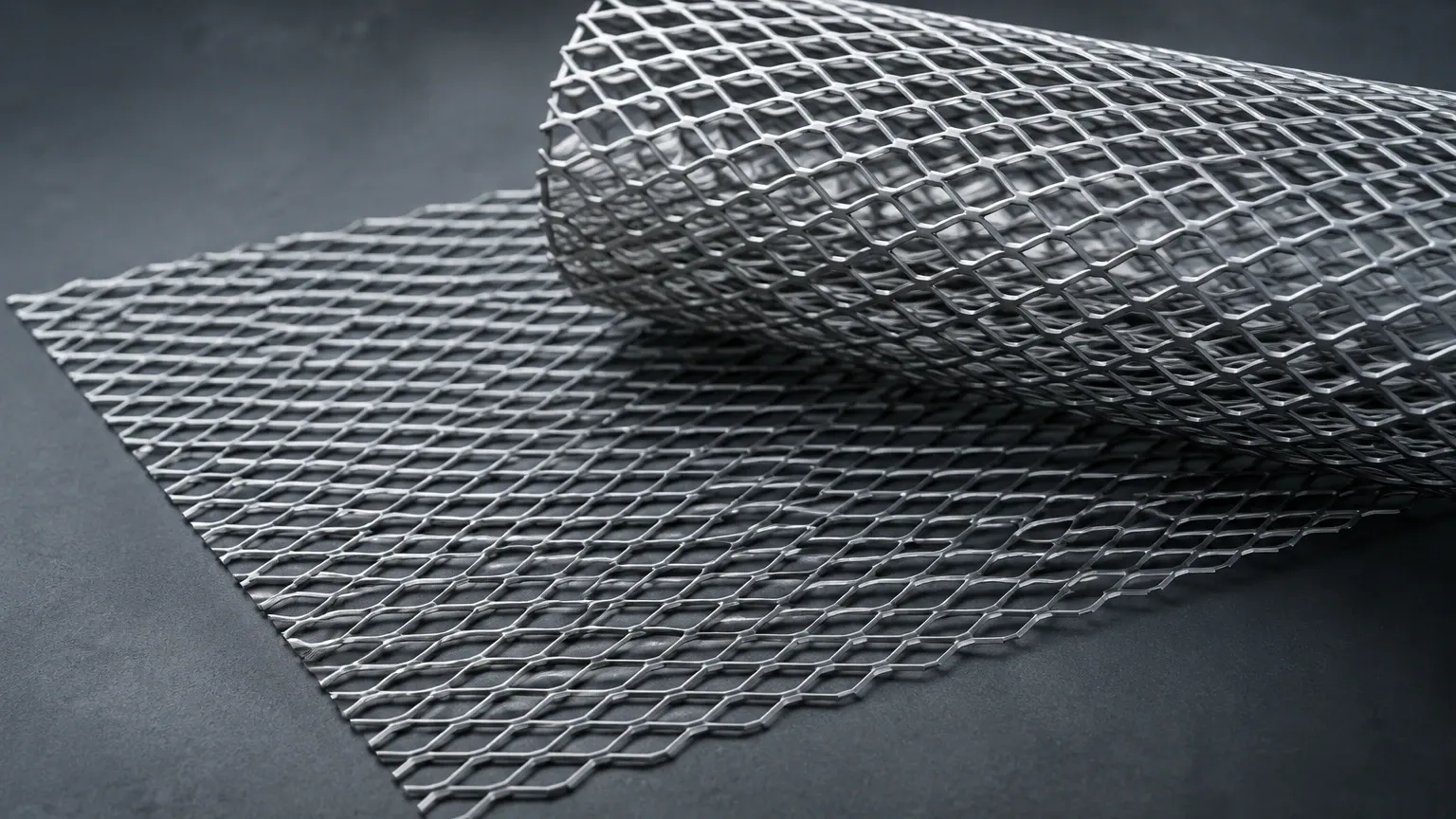
Expanded metal is produced by simultaneously slitting and stretching a solid metal sheet, creating a diamond-shaped pattern of openings. Unlike perforated metal, which involves punching holes and generating scrap material, the expansion process is highly resource-efficient. When used in the context of Perforated & Expanded Metal, these components serve as the backbone for high-pressure filter cartridges, protective guards for delicate wire mesh, and primary strainers in heavy-duty fluid processing.
Understanding #6 Expanded Metal in Industrial Applications
The designation "#6" in the context of expanded metal typically refers to the gauge of the base metal used before the expansion process. A #6 gauge sheet is approximately 0.1943 inches (4.94 mm) thick. When this heavy-gauge material is expanded, it results in a robust, rigid structure capable of withstanding significant mechanical stress.
In filtration, #6 expanded metal is rarely used as the primary filtration surface for fine particles. Instead, its primary function is structural reinforcement. It acts as an internal core or external cage for filter elements that must operate under high differential pressures. The diamond-shaped apertures allow for high flow rates while the interconnected strands provide a continuous path for load distribution, preventing the collapse of finer mesh layers.
Standard vs. Flattened Expanded Metal
There are two primary forms of expanded metal relevant to industrial filtration:
1. Standard (Raised) Expanded Metal: The strands are turned at an angle to the plane of the sheet. This creates a three-dimensional surface that can help break up laminar flow and increase turbulence, which is sometimes desirable in specific heat exchange or mixing applications.
2. Flattened Expanded Metal: The standard expanded metal is passed through a cold-rolling reducing mill, which flattens the strands and bonds to create a smooth, level surface. Flattened #6 expanded metal is often preferred for filter support because it provides a uniform contact surface for wire mesh, reducing the risk of point-loading or abrasion that could damage finer filtration layers.
Technical Specifications and Dimensional Geometry
To accurately specify #6 expanded metal for a project, engineers must define several key dimensional parameters. These measurements determine the open area, the structural rigidity, and the overall footprint of the component.
* SWD (Short Way of Design): The distance from the center of one bond to the center of the next bond measured across the short diamond diagonal.
* LWD (Long Way of Design): The distance from the center of one bond to the center of the next bond measured across the long diamond diagonal.
* Strand Width: The amount of metal fed into the expanding machine for each stroke. For #6 gauge material, the strand width is often increased to enhance the structural integrity of the finished product.
* Strand Thickness: In standard expanded metal, this is the thickness of the original base metal (#6 gauge). In flattened expanded metal, the final thickness will be slightly less than the original gauge due to the rolling process.
Calculating Open Area
The percentage of open area is a critical metric for filtration applications, as it directly impacts pressure drop (delta P) and flow velocity. For #6 expanded metal, the open area is calculated based on the relationship between the strand width and the SWD. A larger open area reduces resistance to flow but may compromise the structural support provided to the primary filter media. Engineers must balance these two factors based on the specific operating pressures of the system.
Material Selection for Corrosive Environments
While carbon steel is common for general structural use, industrial filtration often requires materials that can withstand aggressive chemical environments, high temperatures, and stringent hygiene standards. Kaifil specializes in manufacturing these components using high-performance alloys.
Stainless Steel (304 and 316L)
Stainless steel is the industry standard for most chemical, pharmaceutical, and food processing applications.
* Type 304: Offers excellent strength and basic corrosion resistance. It is suitable for water treatment and general industrial filtration.
* Type 316L: Contains molybdenum, which provides superior resistance to chlorides and pitting. This is the preferred material for marine environments, acidic chemical processing, and applications requiring high-temperature sterilization.
Specialty Alloys
In extreme cases, such as highly acidic or high-temperature gas filtration, materials like Monel, Inconel, or Hastelloy may be required. These alloys maintain their mechanical properties at temperatures where standard stainless steels would fail or oxidize. Selecting the correct alloy for #6 expanded metal ensures that the support structure does not become the point of failure due to stress corrosion cracking or chemical erosion.
The Role of Expanded Metal in Filtration Systems
In a multi-layer filtration assembly, #6 expanded metal serves several distinct roles. Understanding these functions helps in selecting the right pattern and finish.
1. Support Cores for Filter Cartridges
In high-pressure hydraulic or liquid process filters, the internal core must resist the inward pressure of the fluid. #6 expanded metal, when rolled into a cylinder and seam-welded, provides a high strength-to-weight ratio. The diamond pattern ensures that the fluid passing through the media has immediate access to the drainage path, minimizing dead zones within the filter housing.
2. Protective Outer Guards
Filter elements are often susceptible to damage during installation, cleaning, or from large debris in the influent. An outer wrap of #6 expanded metal protects the delicate inner mesh or pleated media from mechanical impact. The heavy gauge of the #6 material ensures that the guard remains intact even in turbulent flow conditions.
3. Pre-Filtration and Trash Straining
In water intake systems or large-scale industrial sumps, #6 expanded metal can function as a primary strainer. It captures large debris—such as wood chips, plastic, or large scale—before the fluid reaches more sensitive downstream equipment. Its rigidity allows it to be cleaned via backwashing or mechanical scraping without deforming.
Customization Options and Engineering Considerations
Standard off-the-shelf expanded metal rarely meets the precise requirements of high-performance industrial equipment. Customization is necessary to ensure the component integrates seamlessly into the final assembly.
Precision Cutting and Forming
#6 expanded metal is difficult to work with due to its thickness. Precision shearing is required to ensure that the diamond pattern is cut consistently, which is vital for automated welding processes. Furthermore, when rolling expanded metal into cylinders for filter cores, the orientation of the diamonds (SWD vs. LWD) affects the ease of rolling and the final collapse strength of the tube.
Edge Treatments and Deburring
The expansion process leaves sharp edges (bonds and strands). In filtration, these burrs can be catastrophic, potentially shedding metal particles into the filtrate or piercing the primary filter mesh. Kaifil employs various deburring techniques, including mechanical tumbling and electropolishing, to ensure a smooth finish. For certain applications, U-edging or solid borders can be welded to the expanded metal to provide a safe handling edge and a clean surface for gasket seating.
Surface Coatings and Finishes
Depending on the application, surface treatments such as passivating (for stainless steel), galvanizing (for carbon steel), or PTFE coating may be applied. Passivation is particularly important in the pharmaceutical and food industries to remove surface iron and enhance the protective oxide layer of the stainless steel.
Procurement Checklist: Evaluating Suppliers and Quality Standards
When sourcing #6 expanded metal for industrial projects, purchasing teams should verify several factors to ensure they receive a product that meets engineering specifications.
1. Dimensional Tolerance: Confirm the manufacturer’s tolerances for SWD, LWD, and overall sheet flatness. For cylindrical components, concentricity and diameter tolerances are critical.
2. Material Certification: Request Mill Test Reports (MTRs) to verify the chemical composition of the alloy. This is non-negotiable for applications in regulated industries like food and beverage or oil and gas.
3. Weld Integrity: If the expanded metal is being supplied as a finished component (e.g., a welded cylinder), inspect the weld quality. Longitudinal welds should be full-penetration and free of porosity to ensure the structural integrity of the core.
4. Cleaning Standards: For oxygen service or high-purity chemical applications, ensure the manufacturer can provide specialized cleaning (e.g., ultrasonic cleaning) to remove all traces of cutting oils and lubricants.
By focusing on these technical details, engineers can leverage the strength and versatility of #6 expanded metal to build more durable and efficient filtration systems. Whether used as a simple guard or a critical pressure-retaining core, the quality of the expanded metal component is a fundamental building block of industrial reliability.
