


6 Gauge Expanded Metal
In industrial engineering and heavy-duty filtration, material thickness and structural integrity are paramount. Among the various specifications available in the realm of Perforated & Expanded Metal, 6 gauge expanded metal stands out as a robust solution for applications requiring high load-bearing capacity and durability. This gauge thickness, approximately 0.162 inches (4.11 mm), provides a significant mechanical advantage over thinner alternatives, making it a staple in chemical processing, hydraulic systems, and industrial safety installations.
Understanding the technical nuances of 6 gauge expanded metal is essential for engineers and purchasing teams who must balance filtration efficiency with structural longevity. This article examines the manufacturing specifications, engineering considerations, and industrial applications of this heavy-duty material.
Technical Specifications of 6 Gauge Expanded Metal
The term "gauge" refers to the thickness of the base metal sheet before it undergoes the expansion process. For steel, 6 gauge is a substantial thickness that transitions the material from a flexible mesh into a rigid structural component.
Dimensional Constants
When specifying 6 gauge expanded metal, engineers must consider several key dimensions beyond the base thickness:
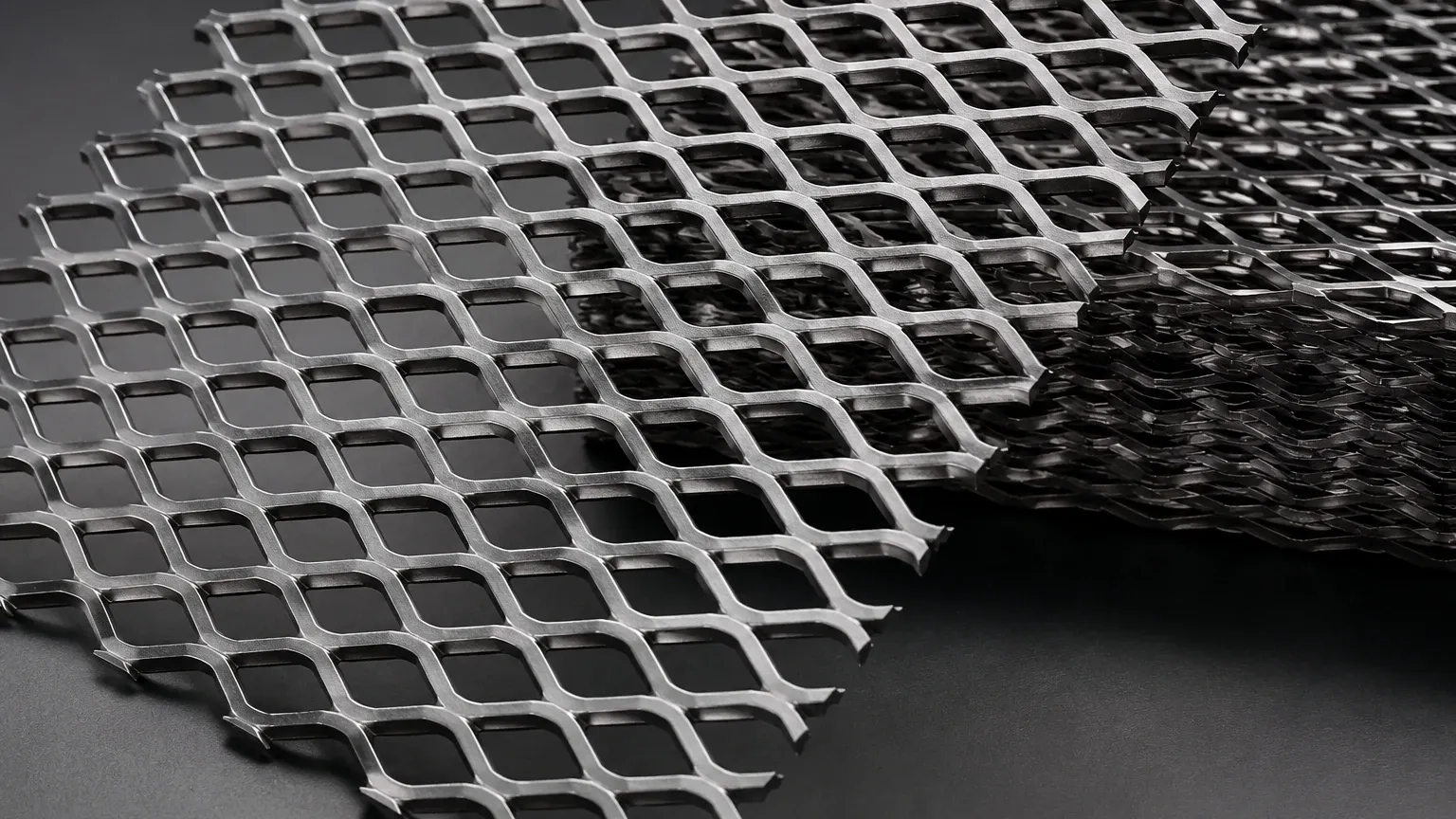
1. SWD (Short Way of Design): The distance from the center of one bond to the center of the next bond across the short axis of the diamond opening.
2. LWD (Long Way of Design): The distance across the long axis of the diamond opening.
3. Strand Width: The amount of metal fed into the expanding machine between the dies, which determines the final width of the individual strands.
4. Strand Thickness: In standard expanded metal, this matches the original gauge thickness (0.162" for 6 gauge). In flattened expanded metal, this thickness is slightly reduced as the material is cold-rolled.
Standard vs. Flattened Profiles
* Standard (Raised) Expanded Metal: This is the material as it comes off the expanding machine. The strands and bonds are set at a uniform angle to the plane of the sheet. This provides maximum rigidity and a high strength-to-weight ratio, as well as an anti-skid surface.
* Flattened Expanded Metal: The raised mesh is passed through a cold-roll reducing mill. This flattens the strands and bonds into a single plane, creating a smooth surface. While this reduces the overall thickness slightly, it is often preferred for applications where a flush surface is required to prevent snagging or to facilitate easier cleaning in food and beverage environments.
Manufacturing and Material Selection
The process of creating 6 gauge expanded metal involves slitting and stretching a solid metal sheet simultaneously. Unlike perforated metal, which involves punching holes and generating scrap material, the expansion process produces no waste. This makes it a cost-effective alternative for high-volume industrial projects.
Material Options for Industrial Environments
Selecting the correct alloy for 6 gauge expanded metal depends heavily on the chemical and thermal stresses of the application:
* Stainless Steel (304 and 316L): These are the primary choices for Kaifil’s filtration solutions. Grade 304 offers excellent corrosion resistance for general industrial use, while 316L (low carbon) is essential for chemical processing and marine environments where resistance to pitting and chloride-induced stress corrosion cracking is required.
* Carbon Steel: Frequently used in structural applications, walkways, and heavy machinery guards where corrosion is not the primary concern or where the material will be subsequently galvanized or powder-coated.
* Aluminum: Chosen for weight-sensitive applications, though it is less common in 6 gauge due to the inherent strength requirements typically associated with such a thick specification.
Role in Industrial Filtration Systems
While thinner meshes are used for fine particulate removal, 6 gauge expanded metal serves a critical role in the architecture of complex filtration systems. In high-pressure hydraulic or chemical processing environments, fine wire mesh lacks the structural rigidity to withstand differential pressures without deforming.
Support Cores and Outer Protectors
In the construction of stainless steel filter cartridges, 6 gauge expanded metal is often utilized as an internal support core or an external protective shroud. Its high open area allows for unimpeded fluid flow, while the 0.162-inch thickness ensures that the filter media (such as sintered mesh or pleated fabric) remains positioned correctly even under surging pressures.
Coarse Filtration and Pre-screening
For water treatment and large-scale industrial intake systems, 6 gauge expanded metal acts as a primary screen. It effectively captures large debris, protecting downstream pumps and sensitive fine-filtration components from mechanical damage. The diamond-shaped apertures are engineered to resist clogging better than circular perforations in certain turbulent flow conditions.
Engineering Considerations: Load and Flow
When integrating 6 gauge expanded metal into a design, engineers must calculate the balance between mechanical strength and hydraulic performance.
Open Area Calculations
The percentage of open area determines the pressure drop across the metal screen. For 6 gauge material, the open area can range from 40% to 80% depending on the SWD and LWD dimensions. A larger open area reduces the energy required for pumping but may compromise the structural integrity if the material is subjected to heavy point loads.
Load-Bearing Capacity
6 gauge expanded metal is frequently used for industrial flooring and catwalks. Because the strands are interconnected without welds, the material distributes weight more evenly than woven wire mesh. Engineers must refer to load tables that specify the maximum allowable span for a given deflection, ensuring the safety of personnel and equipment in industrial facilities.
Comparing Expanded Metal to Perforated Metal
In the broader category of Perforated & Expanded Metal, the choice between the two often comes down to the specific requirements of the application.
* Structural Integrity: Expanded metal is generally stronger per pound than perforated metal because the strands are not cut but stretched, maintaining the continuity of the metal's grain structure.
* Flow Characteristics: Perforated metal offers more precise control over hole size and spacing, which is critical for high-precision sieving. However, expanded metal offers a three-dimensional flow path (in the raised version) that can break up laminar flow and improve mixing in certain chemical reactors.
* Cost Efficiency: Since there is no scrap produced during the expansion of 6 gauge sheets, the material cost is typically lower than perforated metal of the same thickness and alloy.
Installation and Maintenance in Industrial Settings
Proper installation is vital to maximize the lifecycle of 6 gauge expanded metal components.
Welding and Fabrication
Due to its thickness, 6 gauge material is highly weldable. For stainless steel applications, TIG (Tungsten Inert Gas) welding is preferred to maintain the corrosion resistance of the joints. It is essential to ensure that the "bonds" of the expanded metal are securely fused to the support frame to prevent vibration-induced fatigue, which is a common failure mode in high-flow filtration housings.
Maintenance and Cleaning
In filtration applications, the accumulation of solids can lead to "blinding" of the mesh. The smooth surface of flattened 6 gauge expanded metal allows for easier mechanical cleaning and backwashing. In corrosive environments, regular inspection for signs of localized corrosion or erosion at the strand intersections is recommended to prevent catastrophic structural failure.
Procurement: What Engineers Should Confirm
Before finalizing a purchase order for 6 gauge expanded metal, technical teams should confirm the following parameters with the manufacturer:
1. Exact Alloy Composition: Ensure the material meets ASTM or ISO standards for the intended environment (e.g., SS316L for pharmaceutical applications).
2. Direction of the Diamond: Specify whether the LWD should run parallel or perpendicular to the length of the sheet, as this affects both the aesthetic and the structural span capability.
3. Edge Conditions: Indicate if the sheets should have "random sheared" edges or "bond sheared" edges. Bond shearing provides a finished edge without protruding sharp points, which is safer for handling and easier to weld into frames.
4. Tolerances: Heavy gauges like 6 gauge can have slight variations in flatness and camber. Confirming acceptable tolerances is crucial for precision-engineered filter housings.
Conclusion
6 gauge expanded metal is a versatile, high-strength material that bridges the gap between decorative mesh and heavy plate steel. Its application in industrial filtration as a support structure and in general industry as a load-bearing component makes it an indispensable tool for modern engineering. By selecting the appropriate material grade and understanding the mechanical properties of the expanded diamond pattern, purchasing teams can ensure they achieve a solution that offers both high performance and a low total cost of ownership.
For technical specifications, custom sizing, and material compatibility analysis regarding heavy-gauge filtration components, engineers are encouraged to Review product options and application support to align these materials with specific project requirements.
