


6320c Expanded Metal
In the landscape of industrial filtration and structural support, material selection is dictated by the precise balance between mechanical strength and fluid dynamics. Expanded metal, a versatile material produced by simultaneously slitting and stretching a solid sheet of metal, offers a unique set of characteristics that make it indispensable in demanding environments. Among the various specifications available to engineers, 6320c expanded metal serves as a critical component for high-performance filtration systems, providing the structural integrity required to withstand high-pressure differentials while maintaining optimal flow rates.
As a specialized manufacturer of stainless steel filtration solutions, Kaifil recognizes that the performance of a filter assembly often depends on the quality of its support structures. Whether used as a protective outer cage or an internal support core, the geometry and material properties of the expanded metal must align with the specific chemical and thermal requirements of the application.
Understanding the Technical Specifications of 6320c Expanded Metal
The designation "6320c" refers to a specific configuration of expanded metal, characterized by its diamond-shaped openings and strand dimensions. To evaluate its suitability for a project, engineers must look beyond the nomenclature and analyze the physical dimensions that govern its performance.
Geometric Parameters
Expanded metal is defined by several key measurements:
* LWD (Long Way of Design): The distance from the center of one joint to the center of the next joint across the long axis of the diamond.
* SWD (Short Way of Design): The distance from the center of one joint to the center of the next joint across the short axis.
* Strand Width: The amount of metal between the openings, which determines the overall strength and weight of the sheet.
* Strand Thickness: The original thickness of the base metal sheet.
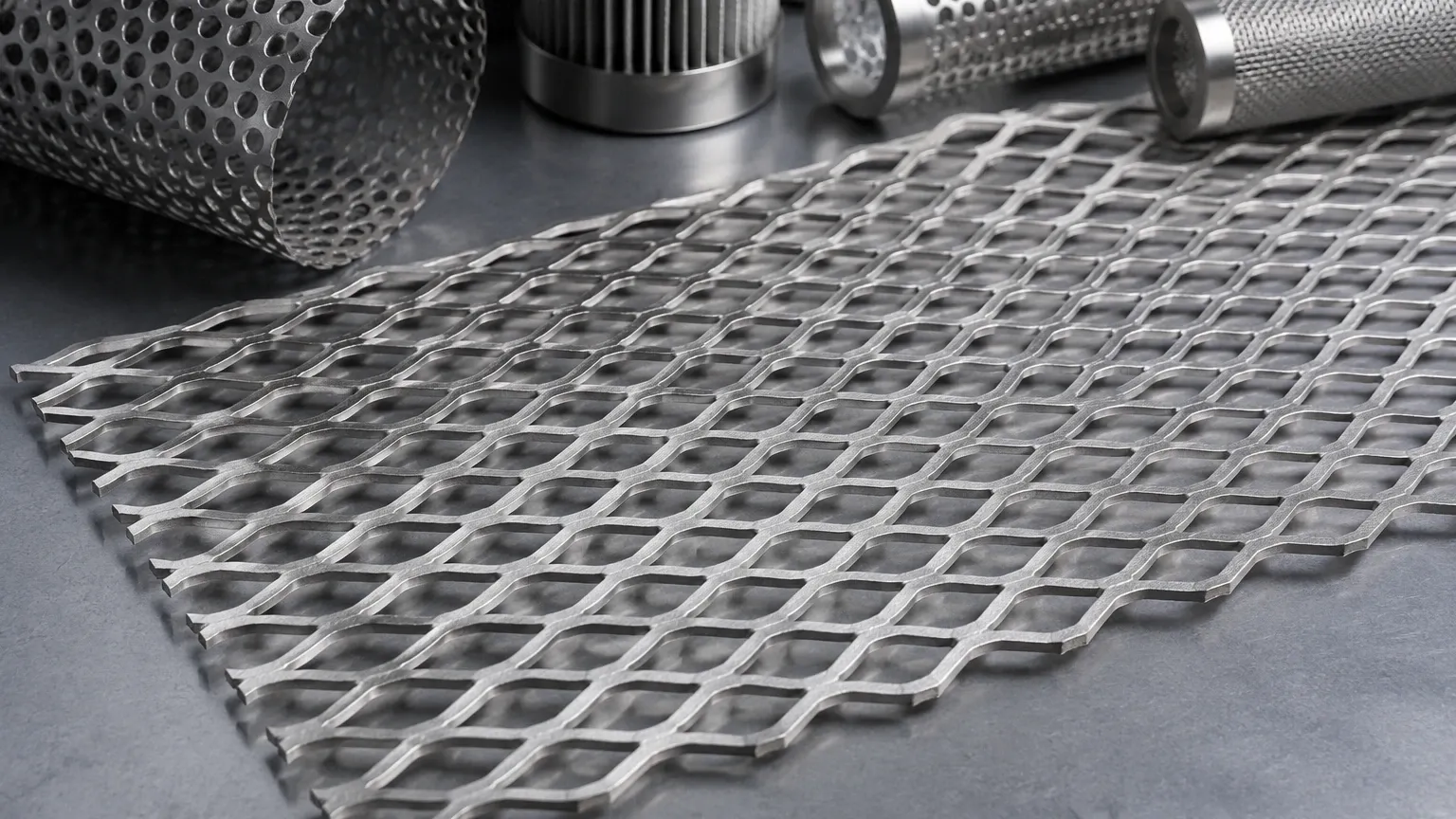
In the case of 6320c expanded metal, the geometry is optimized for a high percentage of open area without sacrificing the rigidity of the panel. Unlike perforated metal, which is created by punching holes and discarding the "slugs," expanded metal is produced without material waste. The stretching process creates a three-dimensional structure where the strands are set at an angle to the plane of the sheet. This angularity is particularly beneficial in filtration, as it can help break up laminar flow and increase turbulence, which may improve certain types of separation processes.
Flattened vs. Raised Configurations
6320c expanded metal can be supplied in two primary forms: raised (standard) and flattened. Raised expanded metal retains the original angular orientation of the strands, providing maximum strength and a slip-resistant surface. Flattened expanded metal undergoes an additional cold-rolling process that levels the strands into a single plane. For filtration applications, flattened 6320c is often preferred when it serves as a support for fine wire mesh, as the smooth surface prevents the mesh from being punctured or abraded during high-pressure cycles.
Material Selection for Industrial Filtration Environments
The utility of 6320c expanded metal is largely determined by the alloy from which it is manufactured. In industrial sectors such as chemical processing, pharmaceuticals, and food and beverage, stainless steel is the standard due to its corrosion resistance and hygienic properties.
Stainless Steel 304 and 316L
At Kaifil, we focus on high-grade stainless steel alloys to ensure long-term durability. Grade 304 is suitable for general industrial use, providing excellent resistance to atmospheric corrosion and many organic and inorganic chemicals. However, for applications involving chlorides or high-salinity environments—common in water treatment and marine applications—Grade 316L is the preferred choice. The addition of molybdenum in 316L enhances its resistance to pitting and crevice corrosion, which is vital when the expanded metal is used as a core in a submerged filter cartridge.
Thermal and Chemical Compatibility
Engineers must also consider the operating temperature and the chemical composition of the process fluid. Stainless steel 6320c expanded metal maintains its structural integrity at elevated temperatures where plastic or lower-grade alloy supports might fail. Furthermore, the passive oxide layer on stainless steel ensures that the filtration media does not introduce contaminants into the process stream, a critical requirement for pharmaceutical and food-grade applications.
Engineering Advantages of Expanded Metal over Perforated Metal
When designing filtration components, the choice between Perforated & Expanded Metal often comes down to weight, cost, and structural requirements. 6320c expanded metal offers several distinct engineering advantages:
1. Strength-to-Weight Ratio: Because the strands of expanded metal are interconnected and not welded or woven, the material acts as a single piece of metal. This structural continuity allows it to support significant loads with less weight than a solid sheet or a perforated plate of comparable thickness.
2. Material Efficiency: As previously mentioned, the expansion process involves no scrap. This makes expanded metal a more cost-effective solution for large-scale projects, especially when using expensive alloys like 316L stainless steel.
3. Flow Characteristics: The three-dimensional nature of standard expanded metal provides a larger surface area and different flow dynamics compared to the two-dimensional holes of perforated metal. This can be leveraged to manage pressure drops across a filter assembly.
4. Flexibility in Design: Expanded metal can be easily formed into cylinders or cones to serve as the skeleton for filter cartridges. The inherent rigidity of the 6320c pattern ensures that these shapes remain stable even under the mechanical stresses of backwashing or high-velocity fluid flow.
Key Applications in Chemical and Water Treatment Systems
6320c expanded metal is found in a wide array of industrial equipment, often serving roles that are invisible to the end-user but critical to the system's success.
Support for Fine Wire Mesh Filters
In precision filtration, fine wire mesh is used to capture microscopic particles. However, this mesh is often fragile and can collapse under pressure. 6320c expanded metal acts as the "backbone" for these filters. By wrapping the wire mesh around a cylindrical core of expanded metal, the assembly can handle high differential pressures while maintaining the precise filtration accuracy of the mesh.
Coarse Filtration and Strainers
In water treatment and hydraulic systems, 6320c expanded metal can function as a primary strainer. Its diamond openings are effective at capturing larger debris, such as scale, stones, or organic matter, protecting downstream pumps and sensitive instrumentation. Because it is easy to clean and highly durable, it is an ideal choice for reusable strainer baskets.
Catalyst Support in Chemical Reactors
In chemical processing, expanded metal grids are used to support catalyst beds. The 6320c specification provides the necessary open area to allow reactants to flow through the bed with minimal resistance, while the strength of the stainless steel supports the weight of the catalyst material at high operating temperatures.
Critical Evaluation Criteria for Procurement and Quality Control
When sourcing 6320c expanded metal for industrial projects, purchasing teams and engineers should confirm several quality benchmarks to ensure the material meets the intended performance specifications.
* Dimensional Tolerance: Variations in the SWD or LWD can affect the fit of the component within a housing. Suppliers should provide tight tolerances, especially for expanded metal intended for automated assembly lines.
* Burr-Free Finish: The expansion process can leave sharp edges. For filtration applications, it is essential that the material is deburred or annealed to prevent damage to other filter layers and to ensure the safety of maintenance personnel.
* Flatness Requirements: If the expanded metal is to be used as a flat screen or a support panel, its flatness must be verified. Bowing or camber can lead to gaps in the filtration seal, resulting in bypass—a failure mode where unfiltered fluid escapes the system.
* Material Certification: Always request Mill Test Reports (MTRs) to verify the chemical composition of the alloy. This is the only way to guarantee that the 6320c expanded metal will perform as expected in corrosive environments.
Customization and Integration into Filtration Assemblies
At Kaifil, we understand that standard off-the-shelf components rarely meet the specific needs of complex industrial systems. Our expertise lies in the customization of Perforated & Expanded Metal to fit unique OEM requirements.
Customization options for 6320c expanded metal include:
* Custom Dimensions: Cutting sheets to exact sizes to minimize waste and simplify onsite installation.
* Forming and Welding: Rolling expanded metal into cylinders and performing precision TIG or plasma welding to create seamless filter cores.
* Surface Treatments: Electropolishing or pickling to enhance the corrosion resistance and cleanliness of the stainless steel, which is particularly important for the pharmaceutical and food industries.
* Layer Integration: Combining 6320c expanded metal with multiple layers of sintered wire mesh or non-woven fibers to create multi-stage filtration cartridges.
Maintenance and Total Cost of Ownership
While the initial cost of 6320c expanded metal is a factor, engineers should focus on the total cost of ownership (TCO). A high-quality stainless steel expanded metal component may have a higher upfront price than galvanized steel or plastic alternatives, but its longevity and reliability significantly reduce TCO.
Stainless steel 6320c components are highly resistant to fouling and can be cleaned using chemical agents, high-pressure water, or ultrasonic baths. This cleanability extends the replacement cycle of the filter, reducing downtime and labor costs. Furthermore, the structural durability of expanded metal prevents catastrophic failures that could lead to downstream equipment damage or product contamination.
When evaluating 6320c expanded metal for your next project, consider the mechanical demands and chemical exposures of your specific application. By selecting the right material and specification, you ensure the efficiency and safety of your industrial processes. For technical assistance in selecting the optimal filtration support or to discuss custom OEM designs, reviewing the available material properties and geometric configurations is the first step toward a reliable solution.
