


70 Perforated Metal
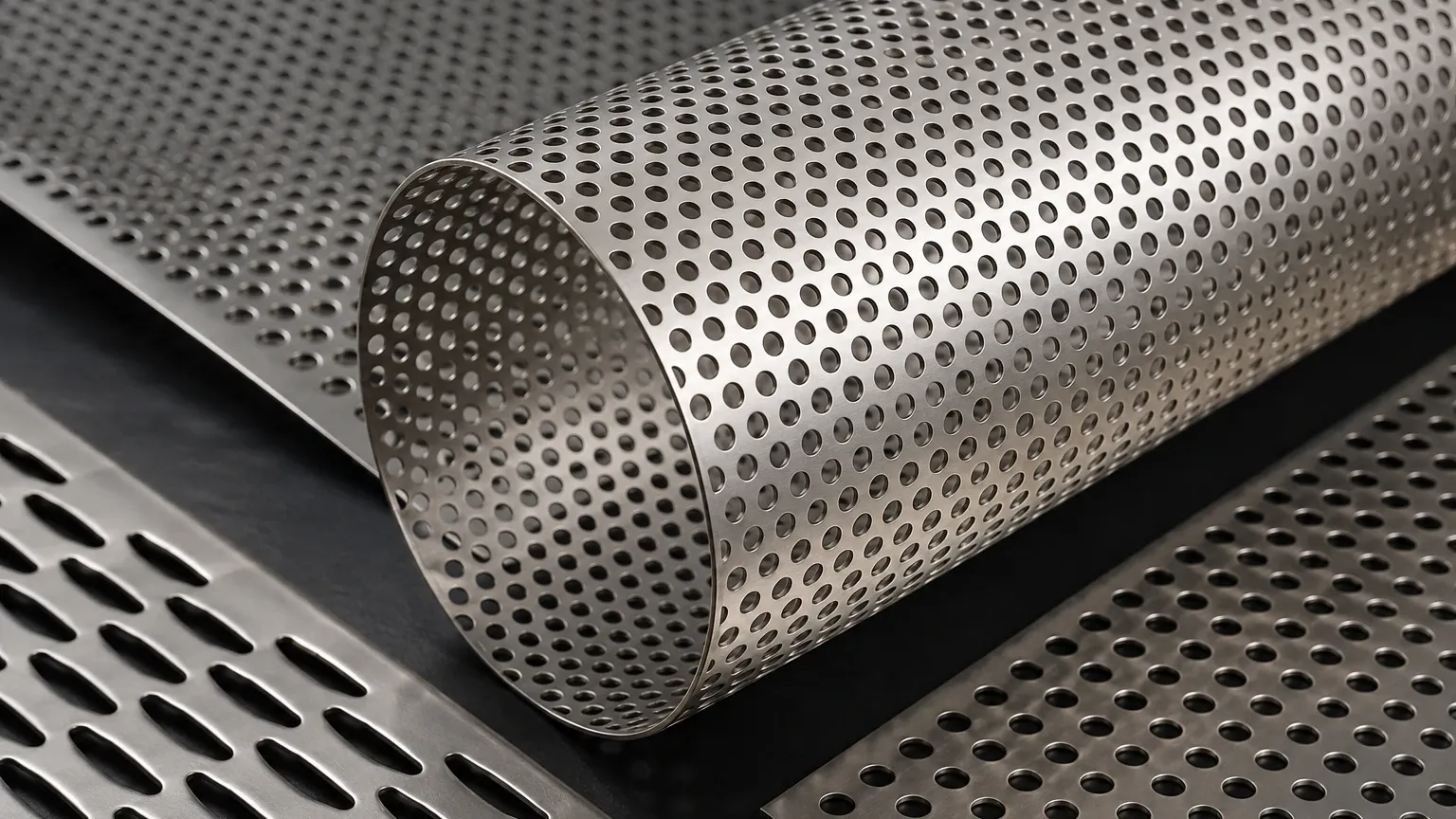
In the landscape of industrial filtration and structural engineering, the specification of "70" in relation to perforated metal typically refers to one of two critical technical parameters: a 70% open area or a specific hole diameter such as 0.070 inches. For engineers and procurement specialists, understanding how these dimensions influence fluid dynamics, structural integrity, and filtration efficiency is essential for optimizing system performance.
As a specialized manufacturer of Perforated & Expanded Metal, Kaifil provides precision-engineered components designed to meet the rigorous demands of chemical processing, food and beverage production, and hydraulic systems. This guide examines the technical nuances of 70 perforated metal, focusing on material selection, engineering trade-offs, and industrial applications.
Defining the Technical Specifications of 70 Perforated Metal
When specifying perforated metal, the "70" designation is most frequently associated with the open area percentage. A 70% open area represents a high-transparency configuration, where the majority of the sheet surface is removed to allow for maximum flow or light transmission.
Open Area Calculations
For an engineer, calculating the open area is the first step in determining the pressure drop across a filter or screen. For a standard 60-degree staggered round hole pattern—the most common configuration for industrial filtration—the formula for open area (OA) is:
OA = (D² × 90.69) / P²
* D: Hole Diameter
* P: Center-to-Center Pitch
To achieve a 70 perforated metal specification with a 70% open area, the bridge (the material remaining between the holes) must be significantly narrow relative to the hole diameter. For instance, if using a 0.125-inch hole, the pitch would need to be approximately 0.143 inches. This results in a bridge of only 0.018 inches. Such a high open area is ideal for applications requiring minimal resistance to airflow or liquid throughput, but it necessitates careful consideration of the material’s mechanical limits.
Hole Diameter vs. Gauge
In some contexts, "70" may refer to a hole diameter of 0.070 inches (approximately 1.78 mm). This size falls into the category of medium-fine perforation, often used in grain drying, centrifugal liners, and as a support medium for finer wire mesh in multi-layer filter cartridges. Understanding whether the requirement is for 70% open area or a 0.070-inch aperture is the first clarification a technical team must make during the RFQ (Request for Quote) process.
Engineering Considerations: Strength vs. Flow Rate
The primary challenge with high open-area perforated metal, such as a 70% configuration, is the reduction in structural rigidity. As the bridge size decreases to accommodate more holes, the sheet's ability to withstand mechanical stress, such as pressure surges in a hydraulic line or the weight of a catalyst bed, is compromised.
Structural Integrity
When designing a filter cartridge using 70% open area metal, engineers must account for the "Yield Strength Reduction Factor." A sheet with 70% of its material removed does not retain 30% of its original strength; the actual mechanical performance is often lower due to the stress concentrations around the hole edges. To compensate for this, Kaifil engineers often recommend:
1. Increasing the Material Gauge: Using a thicker starting sheet to maintain stiffness.
2. Strategic Margins: Leaving unperforated solid borders (margins) around the perimeter of the component to provide a welding surface and structural frame.
3. Alloy Selection: Utilizing high-strength alloys like 316L stainless steel or Duplex steels that offer better mechanical properties than standard carbon steel.
Pressure Drop and Flow Velocity
In filtration applications, 70 perforated metal is prized for its low-pressure drop (ΔP). High open areas allow for lower approach velocities, which reduces the risk of particle impingement and extends the life of secondary filter media (such as fine wire mesh) that may be wrapped around the perforated core. This is particularly vital in high-viscosity fluid processing, where every Pascal of pressure saved contributes to lower energy consumption for pumps and compressors.
Material Selection for Demanding Environments
The performance of perforated metal is inextricably linked to the alloy from which it is fabricated. Since these components are often exposed to corrosive chemicals, high temperatures, or high-pressure cleaning cycles, material selection is a non-negotiable aspect of the engineering process.
Stainless Steel (304 and 316L)
Stainless steel is the industry standard for Perforated & Expanded Metal in B2B industrial sectors.
* Grade 304: Suitable for general-purpose applications, providing good corrosion resistance and excellent formability. It is commonly used in food processing equipment where sanitation is required but chemical exposure is moderate.
* Grade 316L: The "L" stands for low carbon, which is essential for components that require welding. 316L contains molybdenum, providing superior resistance to chlorides and pitting. This makes it the preferred choice for pharmaceutical filtration and marine environments.
Specialized Alloys
For extreme environments, such as those found in petrochemical refining or geothermal energy, standard stainless steels may fail. In these cases, materials like Hastelloy, Monel, or Inconel are utilized. These alloys maintain their structural integrity at temperatures exceeding 800°C and resist oxidation in highly acidic or alkaline media. While the material cost is higher, the total cost of ownership is reduced through decreased downtime and longer replacement cycles.
Industrial Applications of 70% Open Area Perforated Metal
The versatility of perforated metal allows it to serve multiple roles across various industries. When configured with a high open area, its utility shifts toward maximum throughput and protection.
1. Support Cores for Filter Cartridges
In many industrial filter elements, the primary filtration is performed by a delicate layer of sintered wire mesh or pleated synthetic media. This media cannot withstand high differential pressures on its own. A 70% open area perforated tube acts as the internal support core or external cage. The high open area ensures that the support structure does not restrict the flow, while the metal provides the necessary hoop strength to prevent the filter from collapsing.
2. Chemical Processing and Catalysis
In reactor vessels, perforated metal plates are used to support catalyst beds. A 70 perforated metal plate allows the reactants to flow freely through the bed with minimal resistance, ensuring uniform contact time with the catalyst. The precision of the hole size is critical here to prevent catalyst migration (the loss of expensive catalyst particles into the downstream flow).
3. Food and Beverage Processing
In the beverage industry, particularly in brewing and juice extraction, perforated screens are used for initial separation. A high open area is necessary to handle large volumes of liquid quickly. Stainless steel is mandatory here to meet FDA and EHEDG sanitary standards, ensuring that the surface can be effectively cleaned using CIP (Clean-in-Place) systems.
4. Acoustic and Thermal Shielding
Beyond filtration, 70% open area perforated metal is used in industrial silencing and heat dissipation. In power plants, it serves as a facing for acoustic insulation, allowing sound waves to pass through the holes into the absorbing material while protecting the insulation from mechanical damage.
Manufacturing Precision and Customization
Producing high-quality 70 perforated metal requires advanced CNC punching or laser cutting capabilities. At Kaifil, the focus is on maintaining tight tolerances to ensure that every component fits perfectly into the final assembly.
Precision Punching vs. Laser Cutting
* CNC Punching: This is the most cost-effective method for high-volume production. It produces clean, consistent holes. However, for 70% open area patterns, the tool path must be carefully managed to prevent the sheet from warping due to the high density of hits.
* Laser Cutting: Ideal for thicker materials or complex geometries where punching might cause excessive deformation. Laser cutting allows for custom hole shapes (hexagonal, slotted, or square) that can further optimize open area and flow characteristics.
Secondary Processing
To ensure the perforated metal is ready for industrial use, several secondary processes are often required:
* Leveling: The perforation process introduces internal stresses that can cause the metal to curl. Precision leveling restores the flatness of the sheet.
* Deburring: Removing the small burrs left by the punch is essential for safety and to prevent turbulence in fluid flow.
* Degreasing and Passivation: For stainless steel, passivation is critical to restore the protective oxide layer, ensuring maximum corrosion resistance in the field.
Selection Guide: Confirming Specifications Before Purchase
When sourcing 70 perforated metal, engineers should confirm the following details with their manufacturer to ensure the product meets the application requirements:
1. Exact Intent of "70": Confirm if the requirement is for 70% open area, 0.070" hole diameter, or 70mm dimensions.
2. Material Grade: Specify the exact alloy (e.g., 316L vs. 304) based on the chemical environment.
3. Thickness (Gauge): Determine the minimum thickness required to maintain structural integrity under operating pressure.
4. Hole Pattern: Staggered patterns (60-degree) offer the highest strength and open area efficiency compared to straight-row patterns.
5. Margins and Blank Areas: Define if any solid borders are needed for welding or mounting.
6. Quantity and Lead Time: High open-area sheets may require specialized handling during shipping to prevent damage.
Conclusion
70 perforated metal represents a high-performance solution for industrial applications where flow efficiency is the priority. Whether utilized as a robust support core for a multi-stage filter or as a primary separation screen in chemical processing, the technical execution of the perforation pattern is paramount. By balancing open area with material thickness and alloy selection, engineers can achieve a filtration solution that is both durable and efficient.
For technical professionals seeking reliable, custom-manufactured Perforated & Expanded Metal, Kaifil offers the engineering expertise and production capacity to deliver precision components tailored to specific industrial challenges. From initial material selection to final quality inspection, ensuring the integrity of the filtration media is the key to operational success.
