


#8 Expanded Metal
In the landscape of industrial filtration and structural support, material selection is dictated by the precise balance of mechanical strength, open area, and chemical compatibility. Among the various specifications used by engineers, #8 expanded metal represents a heavy-duty category of material often utilized in demanding environments. Whether used as a protective outer shroud for high-pressure filter cartridges or as a structural reinforcement in fluid processing systems, understanding the technical nuances of this specification is essential for optimizing system performance and longevity.
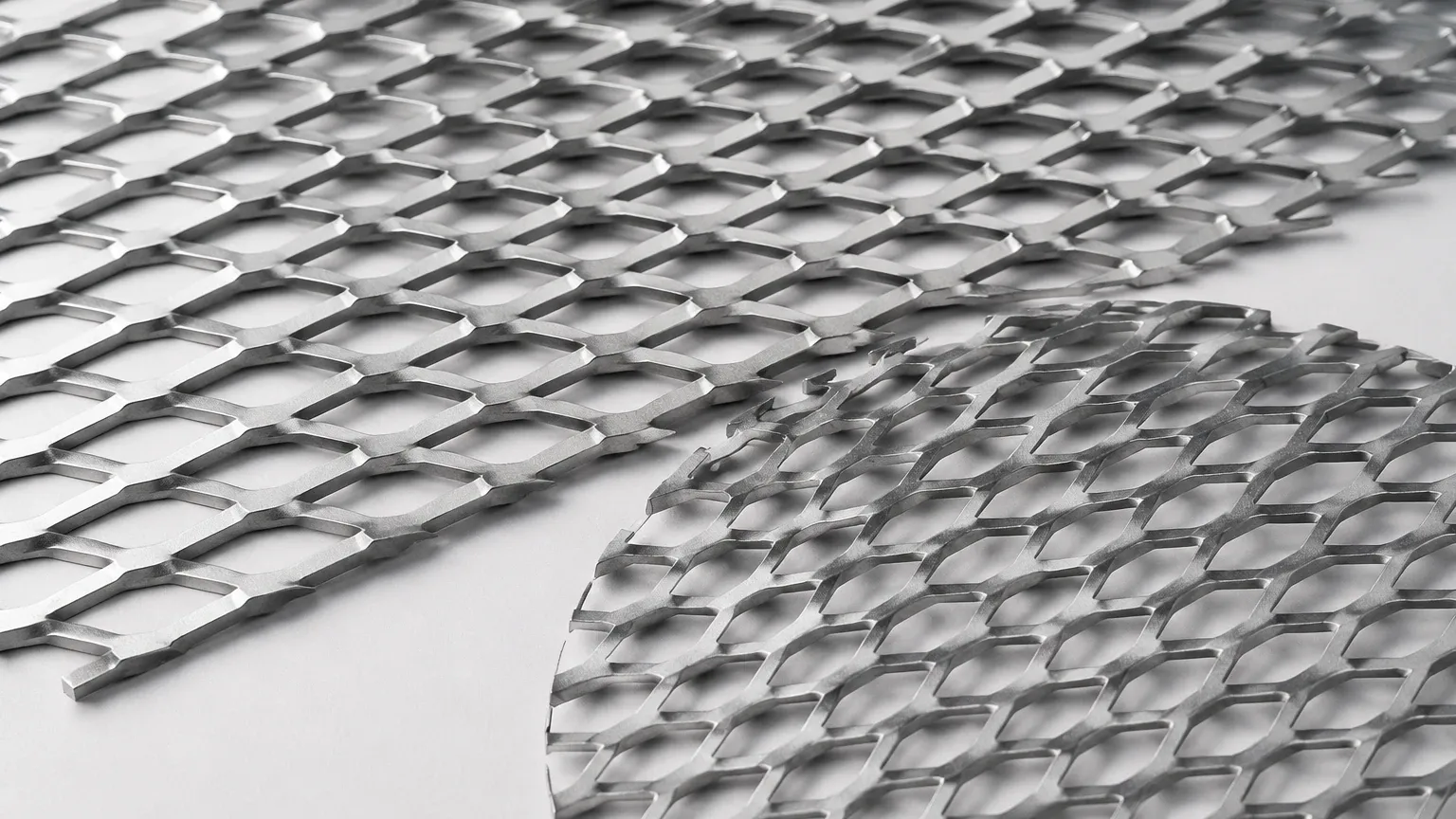
Expanded metal is a versatile product created by simultaneously slitting and stretching a solid sheet of metal. Unlike perforated metal, which involves punching out material and creating waste (slugs), the expansion process produces a diamond-shaped pattern without any material loss. This makes the production of Perforated & Expanded Metal highly efficient and cost-effective for large-scale industrial applications. When specifying #8 expanded metal, professionals are typically referring to the material thickness—specifically 8-gauge—or a specific trade size that utilizes 8-gauge strands.
Technical Specifications and Designations
The designation "#8" in the context of expanded metal primarily refers to the gauge of the base metal. In the United States Standard Gauge for sheet steel, 8-gauge corresponds to a nominal thickness of approximately 0.1644 inches (4.18 mm). For stainless steel, which is the primary focus for high-performance filtration solutions at Kaifil, the thickness may vary slightly based on manufacturing tolerances but remains a robust, heavy-duty option.
When reviewing technical data sheets for #8 expanded metal, engineers must consider four primary dimensions:
1. Short Way of Design (SWD): The distance from the center of a bond to the center of the next bond across the short axis of the diamond.
2. Long Way of Design (LWD): The distance from the center of a bond to the center of the next bond across the long axis of the diamond.
3. Strand Width: The amount of metal fed into the expanding machine for each stroke, which determines the width of the resulting diamond's "ribs."
4. Strand Thickness: The gauge of the original metal sheet (in this case, 8-gauge).
There are two primary forms of this material: Raised (Standard) and Flattened. Raised expanded metal features strands that are set at an angle to the plane of the sheet, providing a three-dimensional texture and high rigidity. Flattened expanded metal is cold-rolled after expansion, resulting in a smooth, flat surface. For filtration applications where the expanded metal is in direct contact with delicate wire mesh or synthetic media, flattened #8 expanded metal is often preferred to prevent abrasion.
Manufacturing Processes: Perforated vs. Expanded Metal
While both perforated and expanded metals are used for filtration and separation, their manufacturing processes result in different mechanical properties. Perforated metal is created by CNC-controlled punching, allowing for highly precise hole shapes (round, square, slotted) and specific margins. However, the expansion process used for #8 expanded metal offers unique structural advantages.
Because the metal is stretched rather than punched, the structural integrity of the original sheet is maintained in a continuous web. There are no welds or joints within the mesh, which eliminates potential points of failure under mechanical stress. Furthermore, the expansion process work-hardens the metal, often resulting in a higher strength-to-weight ratio than the original solid sheet. This is particularly beneficial in high-pressure hydraulic or chemical processing applications where the filter core must withstand significant differential pressure without collapsing.
Material Selection and Corrosion Resistance
In industrial filtration, the choice of material is as critical as the mesh size. Kaifil specializes in stainless steel solutions, which are the industry standard for applications requiring high heat resistance and chemical stability. #8 expanded metal is commonly fabricated from several key alloys:
* 304/304L Stainless Steel: The most common grade, offering excellent corrosion resistance in a wide range of atmospheric and mildly corrosive environments. It is frequently used in food and beverage processing due to its ease of cleaning and sanitization.
* 316/316L Stainless Steel: Containing molybdenum, this grade offers superior resistance to chlorides and marine environments. It is the preferred choice for pharmaceutical manufacturing and aggressive chemical processing where 304 might succumb to pitting or crevice corrosion.
* Carbon Steel: While less expensive, carbon steel #8 expanded metal requires protective coatings (such as galvanizing or powder coating) to prevent oxidation. It is typically reserved for structural supports where chemical exposure is minimal.
* Aluminum: Lightweight and naturally corrosion-resistant, aluminum expanded metal is used in aerospace or specialized water treatment applications where weight reduction is a priority.
For engineers, selecting the correct alloy ensures that the #8 expanded metal component will not contaminate the process fluid or degrade prematurely, thereby maintaining the purity of the filtration cycle.
Applications in Industrial Filtration and Support
The robustness of #8 expanded metal makes it an ideal candidate for heavy-duty industrial roles. In filtration systems, it rarely acts as the primary filtration medium; instead, it serves as the "backbone" of the filter assembly.
Filter Core and Cage Construction
In large-scale industrial filter cartridges, such as those used in oil and gas or water treatment, the internal core must support the filter media against the force of the fluid flow. Using 8-gauge expanded metal provides the necessary hoop strength to prevent the cartridge from collapsing under high differential pressures. Conversely, as an outer shroud or cage, it protects the inner delicate mesh from mechanical damage during installation and operation.
Pre-Filtration and Trash Racks
In water intake systems or coarse chemical processing, #8 expanded metal can serve as a primary screen to remove large debris. Its high open area allows for high flow rates with minimal pressure drop, while the 8-gauge thickness ensures it can withstand the impact of heavy solids without deforming.
Catalyst Support
In petrochemical reactors, expanded metal sheets are used to support catalyst beds. The diamond pattern provides a stable platform while allowing the process gases or liquids to pass through with uniform distribution. The thermal stability of stainless steel #8 expanded metal is crucial here, as these reactions often occur at elevated temperatures.
Evaluating Performance: Strength vs. Open Area
One of the most critical engineering trade-offs when specifying #8 expanded metal is the relationship between strength and open area. The open area percentage determines the flow capacity and the pressure drop across the component.
For a standard #8 expanded metal pattern, the open area can range from 40% to 70%, depending on the SWD and LWD dimensions. A larger diamond pattern increases the open area and reduces weight but decreases the overall rigidity of the sheet. Conversely, a tighter diamond pattern with wider strands increases structural support but may restrict flow.
Engineers must calculate the Effective Open Area to ensure that the filtration system meets its flow requirements. If the expanded metal is used as a support for a fine wire mesh, the contact points between the mesh and the expanded metal must be minimized to prevent "blinding" (blocking) of the filter media, yet sufficient to provide uniform support. This is where the expertise of a specialized manufacturer like Kaifil becomes invaluable, as they can provide customized expansion ratios to meet specific flow and strength targets.
Customization and OEM Solutions
Standard off-the-shelf expanded metal often fails to meet the rigorous requirements of specialized industrial equipment. Customization of #8 expanded metal involves more than just cutting to size. It includes:
* Specific Alloy Blending: Matching the material exactly to the process chemistry.
* Precision Leveling: Ensuring the sheets are perfectly flat for integration into automated assembly lines.
* Edge Treatment: Providing sheared edges or bonded margins to eliminate sharp burrs that could damage filter media or injure personnel.
* Forming and Welding: Rolling the expanded metal into cylinders or cones and performing high-quality longitudinal welds to create seamless filter components.
By working with a manufacturer that understands both the metallurgy and the application, procurement teams can source components that are ready for immediate integration, reducing secondary processing costs and improving the overall reliability of the end product.
Selection Criteria for Engineers and Purchasing Teams
When sourcing #8 expanded metal for a project, several factors should be confirmed to ensure the material is fit for purpose:
1. Dimensional Tolerances: Industrial applications often require tighter tolerances than standard architectural expanded metal. Confirm the manufacturer's ability to maintain consistent SWD/LWD and flatness.
2. Surface Finish: For pharmaceutical or food-grade applications, the expanded metal may require electropolishing or passivating to remove surface contaminants and improve corrosion resistance.
3. Total Cost of Ownership: While carbon steel may have a lower initial purchase price, the long-term durability and reduced maintenance of stainless steel #8 expanded metal often result in a lower total cost over the equipment's lifecycle.
4. Certification: Ensure the material comes with Mill Test Reports (MTRs) to verify the chemical composition and physical properties of the steel, especially in regulated industries.
Conclusion
#8 expanded metal is a fundamental component in the construction of high-performance industrial filtration systems. Its combination of 8-gauge thickness and the inherent strengths of the expanded diamond pattern provides a robust solution for structural support and fluid management. By carefully selecting the appropriate material grade, diamond dimensions, and surface treatments, engineers can significantly enhance the efficiency and durability of their filtration processes.
For those seeking specialized guidance on integrating expanded metal into custom filtration designs, Kaifil offers extensive technical expertise and manufacturing capabilities. From material selection to precision fabrication, our team supports global industries in achieving reliable, high-performance filtration outcomes. Explore our range of Perforated & Expanded Metal solutions to find the ideal specification for your next project.
