


8 Gauge Expanded Metal
In industrial filtration and structural engineering, the selection of material thickness and pattern is a critical decision that dictates the longevity and efficiency of a system. 8 gauge expanded metal represents a heavy-duty solution frequently utilized in environments where mechanical strength and high-pressure resistance are non-negotiable. As a manufacturer specializing in stainless steel filtration solutions, Kaifil provides these components to serve as the structural backbone for complex filter assemblies, ensuring that media remains supported under extreme operational stress.
Understanding the technical nuances of 8 gauge thickness—approximately 0.1644 inches or 4.17mm—is essential for engineers and procurement teams. This specific gauge sits at a threshold where it offers significantly more rigidity than standard light-duty meshes while remaining more workable than thick plate steel. When integrated into Perforated & Expanded Metal configurations, it provides a unique balance of open area for flow and structural integrity for containment.
Technical Specifications of 8 Gauge Expanded Metal
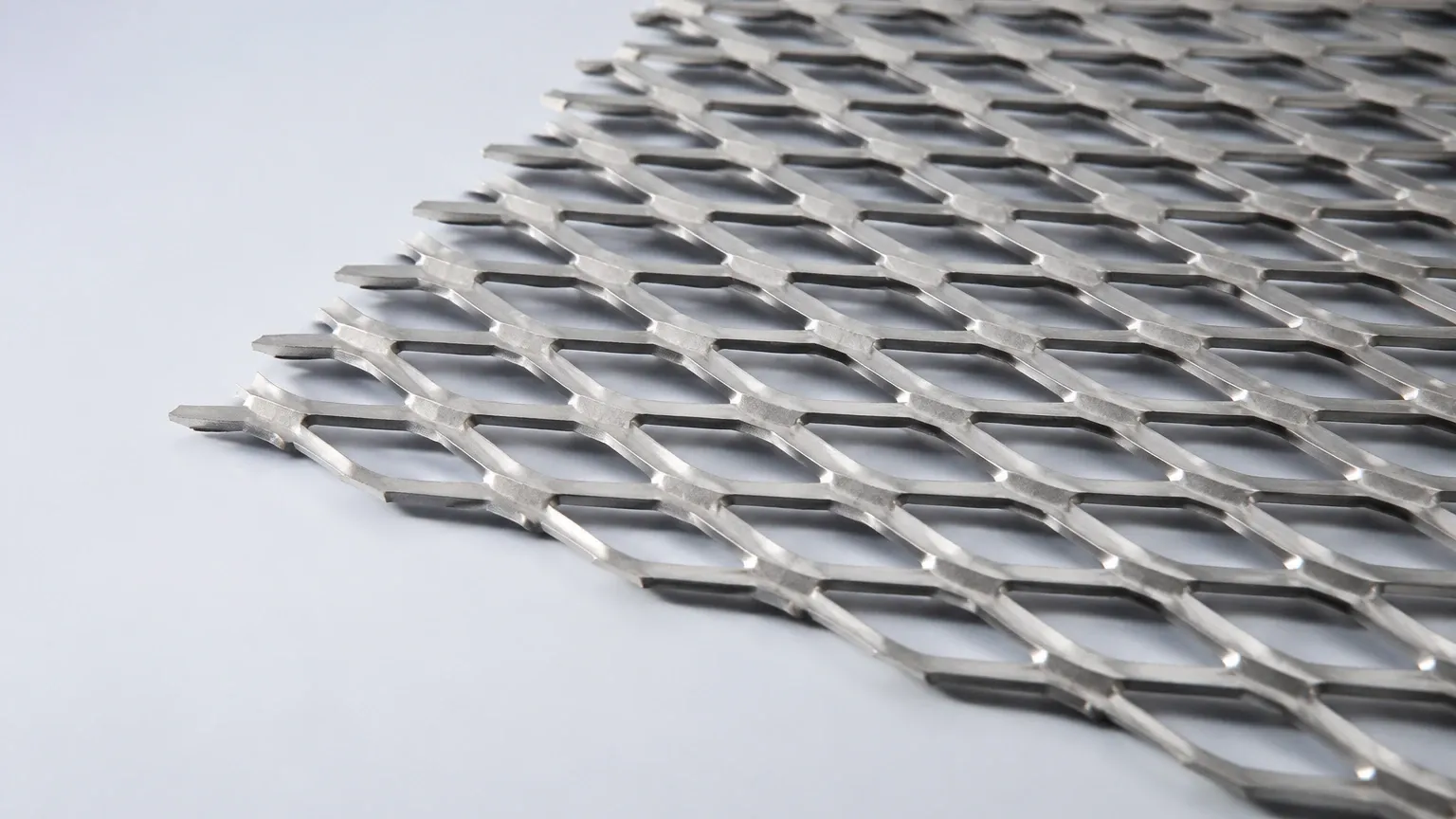
The term "expanded metal" refers to a process where a metal sheet is simultaneously slit and stretched, creating a diamond-shaped pattern. Unlike perforated metal, which involves punching out holes and creating scrap, expanded metal is produced without any material waste. For an 8 gauge specification, the starting material is a heavy-duty sheet that undergoes this precision expansion.
Dimensional Measurements
When evaluating 8 gauge expanded metal, engineers must consider four primary dimensions:
1. SWD (Short Way of Design): The distance from the center of one bond to the center of the next bond across the short axis of the diamond.
2. LWD (Long Way of Design): The distance across the long axis of the diamond.
3. Strand Width: The amount of metal fed into the machine between the slits, which determines the thickness of the "ribs" of the mesh.
4. Strand Thickness: In this case, the nominal 8 gauge thickness of the original sheet.
Because 8 gauge is relatively thick, the resulting mesh is exceptionally rigid. This makes it ideal for applications where the mesh must support its own weight over long spans or resist the crushing force of high-pressure fluid flow in hydraulic or chemical processing systems.
Material Selection: Stainless Steel vs. Carbon Steel
While 8 gauge expanded metal can be produced from various alloys, the choice of material is dictated by the operating environment. At Kaifil, the focus is often on stainless steel due to its superior performance in demanding industrial sectors.
Stainless Steel 304 and 316
For the pharmaceutical, food and beverage, and chemical industries, stainless steel is the standard. 8 gauge expanded metal made from Grade 304 offers excellent corrosion resistance and durability. However, in environments involving chlorides or high temperatures, Grade 316 is preferred due to its molybdenum content, which prevents pitting and stress corrosion cracking. In filtration, using a 316 stainless steel 8 gauge support core ensures that the filter cartridge does not introduce contaminants into the process stream through oxidation.
Carbon Steel
In applications where corrosion is not a primary concern—such as heavy machinery guards or basic structural supports—carbon steel 8 gauge expanded metal provides a cost-effective alternative. However, for industrial filtration, carbon steel often requires secondary treatments like galvanizing or coating, which may not be compatible with high-purity fluid processing.
Applications in Industrial Filtration Systems
In the context of industrial filtration, 8 gauge expanded metal is rarely the primary filtering medium. Instead, it serves as the essential support structure for finer meshes or synthetic membranes. Its role is to provide a rigid framework that can withstand differential pressure.
Filter Cartridge Support Cores
High-flow filter cartridges often utilize a cylindrical core made of 8 gauge expanded metal. During the filtration process, as contaminants build up on the outer layers, the pressure drop across the filter increases. A flimsy core would collapse, leading to system failure and potential downstream contamination. The 8 gauge thickness provides the necessary hoop strength to maintain the cartridge’s shape under several bars of pressure.
Outer Protective Cages
In addition to internal cores, expanded metal is used as an outer cage to protect delicate pleated filter media from mechanical damage during installation or backwashing cycles. The diamond pattern of the expanded metal ensures that there is minimal interference with the fluid flow while providing a robust physical barrier against impact.
Hydraulic and Water Treatment Applications
Hydraulic systems operate under extreme pressure fluctuations. 8 gauge expanded metal is used here to reinforce suction strainers and return-line filters. In water treatment, it acts as a primary screen for large debris or as a support for ion-exchange resin beds, where the weight of the media requires a high-strength substrate.
Key Evaluation Criteria for Procurement
When sourcing 8 gauge expanded metal for industrial projects, purchasing teams should look beyond the gauge alone. Several factors influence the performance and total cost of ownership.
Flattened vs. Raised Expanded Metal
* Raised (Standard): The strands are turned at an angle to the plane of the sheet. This provides maximum rigidity and a slip-resistant surface, but it creates a thicker profile.
* Flattened: The raised mesh is passed through a cold-roll reducing mill, which flattens the strands back into a single plane. Flattened 8 gauge expanded metal is smoother and easier to weld into frames, making it a common choice for filter housings where a flush fit is required.
Open Area Percentage
The open area determines the flow rate and pressure drop. A larger diamond pattern increases the open area but reduces the structural strength. Engineers must calculate the optimal balance to ensure that the 8 gauge frame does not restrict flow while still providing the necessary reinforcement for the primary filter media.
Edge Conditions and Tolerances
In precision filtration, tolerances are tight. If the expanded metal is to be rolled into a cylinder, the "random cut" vs. "bond cut" edges become important. Bond cuts provide a clean edge for welding, whereas random cuts may leave sharp points that could puncture delicate filter membranes.
Common Risks and Quality Control
Using heavy-gauge materials like 8 gauge expanded metal introduces specific manufacturing challenges that must be managed to avoid system failures.
1. Burrs and Sharp Edges: The expansion process naturally creates sharp edges. In filtration, these burrs can cause "media migration" by cutting into the finer mesh layers. High-quality manufacturers like Kaifil utilize deburring and polishing processes to ensure the metal is safe for contact with sensitive filter media.
2. Inconsistent Stretching: If the expansion machinery is not calibrated for the thickness of 8 gauge steel, the diamonds may be uneven. This leads to weak spots in the mesh that are prone to fatigue under cyclic loading.
3. Material Fatigue: In systems with frequent pressure pulsations, even 8 gauge metal can suffer from work hardening and eventual cracking. Selecting the right alloy and ensuring proper heat treatment (annealing) during the manufacturing process can mitigate this risk.
Customization and OEM Solutions
Every industrial application has unique requirements. A standard off-the-shelf expanded metal sheet may not fit the specific dimensions of a custom-engineered filter housing. This is where OEM capabilities become vital.
Customization options for 8 gauge expanded metal include:
* Custom Sheet Sizes: Reducing waste by ordering sheets cut to the exact dimensions needed for the production run.
* Specialty Alloys: Utilizing Monel, Inconel, or Duplex stainless steel for highly corrosive or high-temperature chemical environments.
* Variable Patterns: Adjusting the SWD and LWD to meet specific flow dynamics or structural load requirements.
By working closely with a manufacturer that understands the engineering behind the filtration, procurement teams can ensure that the 8 gauge components they receive are optimized for the total lifecycle of the equipment, rather than just the initial purchase price.
Conclusion: The Importance of Structural Integrity
8 gauge expanded metal is more than just a piece of hardware; it is a critical engineering component that ensures the reliability of industrial filtration systems. Whether it is supporting a high-pressure hydraulic filter or protecting a pharmaceutical grade membrane, the strength and durability of the 8 gauge framework are fundamental to process safety and efficiency.
When selecting a partner for these components, it is essential to confirm their expertise in material science and precision manufacturing. By focusing on technical specifications, material compatibility, and application-specific designs, engineers can leverage the benefits of 8 gauge expanded metal to create robust, high-performance filtration solutions that stand up to the most demanding industrial environments.
