


8×4 Expanded Metal
In the landscape of industrial manufacturing and filtration engineering, the 8×4 expanded metal sheet—measuring 96 inches by 48 inches—serves as a primary standard for material procurement and component fabrication. This specific dimension is favored due to its compatibility with standard industrial machinery and its efficiency in minimizing waste during the production of filtration elements, protective guards, and structural supports. As a specialized manufacturer, Kaifil utilizes these dimensions to provide high-performance Perforated & Expanded Metal solutions tailored to the rigorous demands of chemical processing, water treatment, and food production.
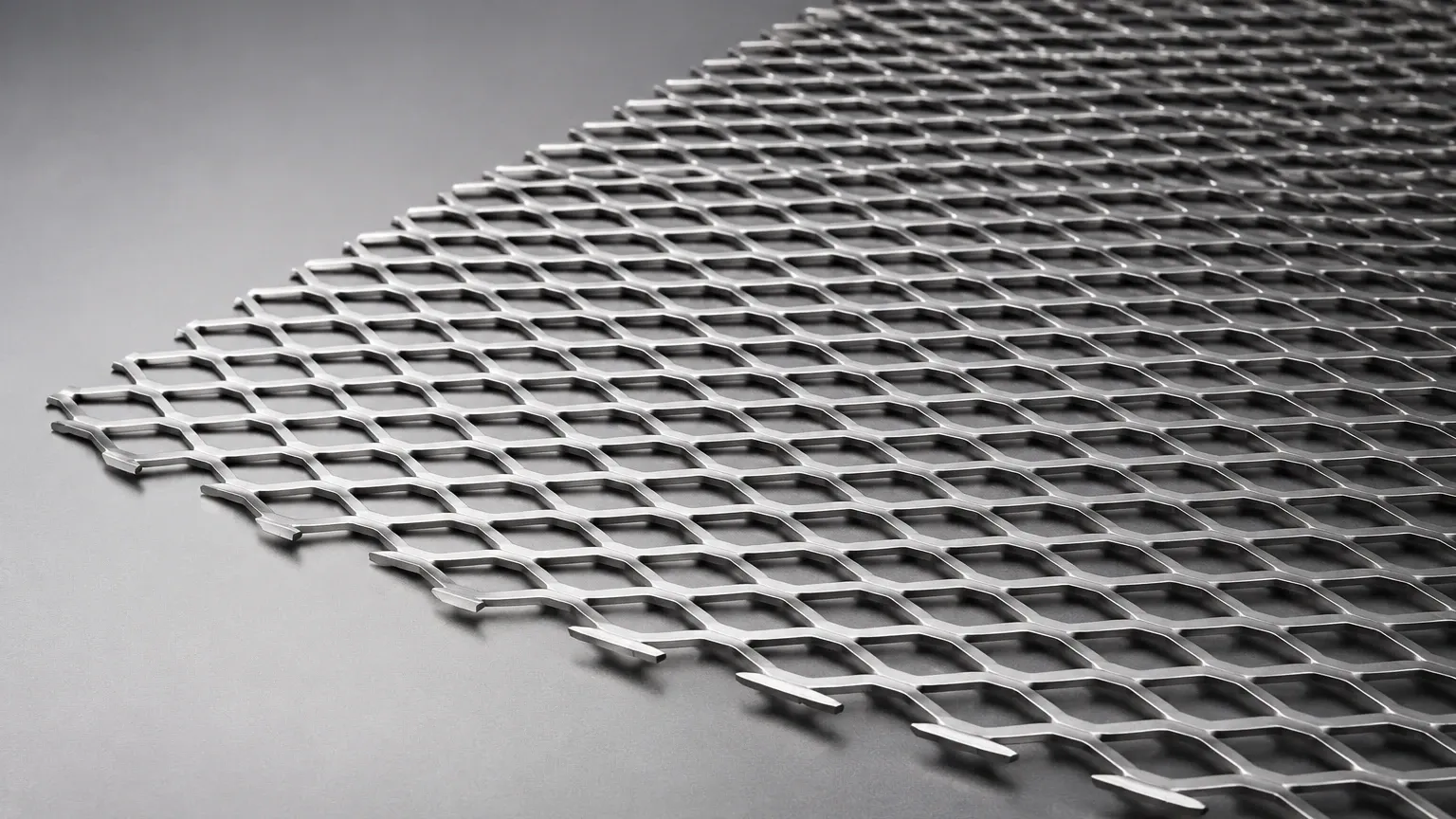
Understanding the technical nuances of 8×4 expanded metal is essential for engineers and purchasing teams who must balance structural integrity with specific filtration performance. Unlike perforated metal, which is created by punching holes and generating scrap, expanded metal is produced by simultaneously slitting and stretching the base material. This process results in a continuous, one-piece mesh that maintains a high strength-to-weight ratio, making it an ideal candidate for heavy-duty industrial applications.
Technical Specifications and Mesh Geometry
When specifying an 8×4 expanded metal sheet for an industrial project, the geometry of the openings is the most critical factor. The expansion process creates diamond-shaped openings, and the dimensions of these diamonds dictate the flow characteristics and mechanical strength of the finished product. Engineers typically define these openings using four primary measurements:
1. Short Way of Design (SWD): The distance from the center of one bond to the center of the next bond across the short axis of the diamond.
2. Long Way of Design (LWD): The distance from the center of one bond to the center of the next bond across the long axis of the diamond.
3. Strand Width: The amount of metal fed into the expanding machine between the slits.
4. Strand Thickness: The thickness of the original base metal sheet.
For filtration applications, the SWD and LWD determine the size of the particles that can be retained or the level of support provided to a secondary filter medium, such as a fine wire mesh or non-woven fabric. In an 8×4 sheet, the orientation of the diamonds—whether the LWD runs parallel to the 8-foot side or the 4-foot side—can affect the rigidity of the sheet and how it behaves when rolled into cylindrical filter cartridges.
Material Selection for Industrial Environments
The performance of 8×4 expanded metal is heavily dependent on the alloy selected. At Kaifil, we focus on materials that offer longevity and chemical compatibility in demanding environments:
* Stainless Steel (304 and 316L): This is the industry standard for filtration. Grade 316L is particularly valued in pharmaceutical and marine applications due to its superior resistance to pitting and creasing in chloride-rich environments. Stainless steel 8×4 expanded metal provides the necessary durability for high-temperature processes and caustic cleaning cycles.
* Carbon Steel: Often used in hydraulic oil filtration or structural applications where corrosion is managed through coatings or the presence of oil. It offers a cost-effective solution for high-pressure environments.
* Aluminum: Selected for applications requiring lightweight components and moderate corrosion resistance, such as in aerospace or specialized air filtration systems.
Choosing the correct material ensures that the 8×4 expanded metal sheet can withstand the mechanical stresses of the application without succumbing to oxidation or chemical degradation, which could otherwise lead to system-wide contamination.
The Manufacturing Advantage: Standard vs. Flattened
When ordering 8×4 expanded metal, engineers must choose between "Standard" (raised) and "Flattened" variations. Each has distinct advantages depending on the intended use in a filtration system.
Standard Expanded Metal
Standard expanded metal features strands that are set at a sharp angle to the plane of the sheet. This creates a three-dimensional surface that is inherently rigid. In filtration, this raised profile is often used to create turbulence in fluid flow, which can be beneficial in certain mixing or pre-filtration stages. It also provides excellent grip and structural support for thicker filter media.
Flattened Expanded Metal
Flattened expanded metal is produced by passing the standard expanded sheet through a cold-roll reducing mill. This process flattens the strands and bonds into a single plane, resulting in a smooth, flat surface. For B2B applications involving precision filtration, flattened 8×4 expanded metal is often preferred because it provides a uniform thickness and a smooth interface for delicate wire mesh layers, preventing abrasion or puncturing of the finer media.
Key Applications in Filtration and Industry
The 8×4 expanded metal format is ubiquitous across several sectors due to its versatility. In the context of Kaifil’s manufacturing expertise, several key applications stand out:
Filter Element Support
In high-pressure hydraulic and liquid filtration, fine wire mesh is often too delicate to withstand the differential pressure on its own. Expanded metal serves as a robust internal or external support core. The 8×4 sheet size allows for the fabrication of large-scale industrial filter cartridges with minimal seams, enhancing the structural integrity of the entire assembly.
Protective Cages and Debris Screens
For water treatment and intake systems, expanded metal acts as a primary barrier against large debris. The diamond mesh structure is effective at catching solids while maintaining a high open area for fluid flow. Using 8×4 sheets allows for the construction of large-scale screening panels that are both lightweight and durable.
Chemical Processing Trays
In chemical reactors and processing towers, expanded metal is used to support catalyst beds or as part of distillation trays. The material’s ability to maintain its shape under thermal expansion makes it superior to many woven alternatives in these high-temperature environments.
Engineering Considerations: Open Area and Flow Dynamics
One of the primary tasks for a design engineer is calculating the "Open Area" percentage of the 8×4 expanded metal. This percentage determines the pressure drop across the filter and the velocity of the fluid as it passes through the mesh.
Unlike perforated metal, where the open area is a simple calculation of hole diameter and pitch, expanded metal open area is influenced by the strand width and the angle of the expansion. A smaller strand width relative to the diamond size results in a higher open area, which reduces flow resistance but also reduces the mechanical strength of the sheet. Finding the optimal balance is crucial for maintaining efficient filtration performance without risking structural failure under high-pressure loads.
Furthermore, the orientation of the 8×4 sheet during fabrication matters. If the fluid flow is perpendicular to the slanted strands of a standard expanded metal sheet, the pressure drop will be higher than if the flow is parallel. These technical details are why Kaifil works closely with engineering teams to ensure the specified mesh geometry aligns with the hydraulic requirements of the system.
Quality Control and Procurement Best Practices
To ensure the reliability of 8×4 expanded metal in industrial settings, procurement teams should confirm several quality benchmarks before finalizing an order:
1. Dimensional Tolerances: While the nominal size is 8×4, manufacturing tolerances can lead to slight variations. Confirming the allowable margin for error is essential for precision-fit components.
2. Surface Finish: For food and pharmaceutical applications, the expanded metal must be free of burrs, oils, and scale. Processes such as pickling, passivation, or electropolishing are often required to ensure the material meets sanitary standards.
3. Flatness Requirements: If the metal is to be used in a multi-layered filter stack, the flatness of the 8×4 sheet is critical to prevent gaps between layers that could lead to bypass or mechanical wear.
4. Material Certification: Always request Mill Test Reports (MTRs) to verify the chemical composition and mechanical properties of the alloy, ensuring it meets the specific ASTM or ISO standards required for the project.
Total Cost of Ownership and Sustainability
From a B2B perspective, the choice of 8×4 expanded metal is often a decision based on the total cost of ownership. The expansion process is inherently more sustainable and cost-effective than perforation because it produces virtually zero waste. Every square inch of the original 8×4 raw plate is utilized in the final expanded product.
Additionally, the durability of stainless steel expanded metal reduces the frequency of replacement cycles. In harsh chemical environments, a higher initial investment in a 316L 8×4 expanded metal sheet often results in lower long-term costs by preventing unplanned downtime and reducing maintenance labor. At Kaifil, we assist our clients in evaluating these factors, providing customized filtration solutions that optimize both performance and budget.
Conclusion
The 8×4 expanded metal sheet is more than just a raw material; it is a fundamental component in the design of efficient and durable industrial filtration systems. Whether used as a support structure for pleated media or as a standalone debris screen, its unique combination of strength, open area, and material efficiency makes it indispensable. By understanding the technical specifications—from SWD/LWD dimensions to the benefits of flattening—engineers can better specify the right product for their specific application needs.
For organizations seeking precision-engineered filtration components, Kaifil provides the technical expertise and manufacturing capability to transform standard sheets into high-performance solutions. Review product options and application support to discover how our customized approach to expanded metal can enhance your industrial processes.
