


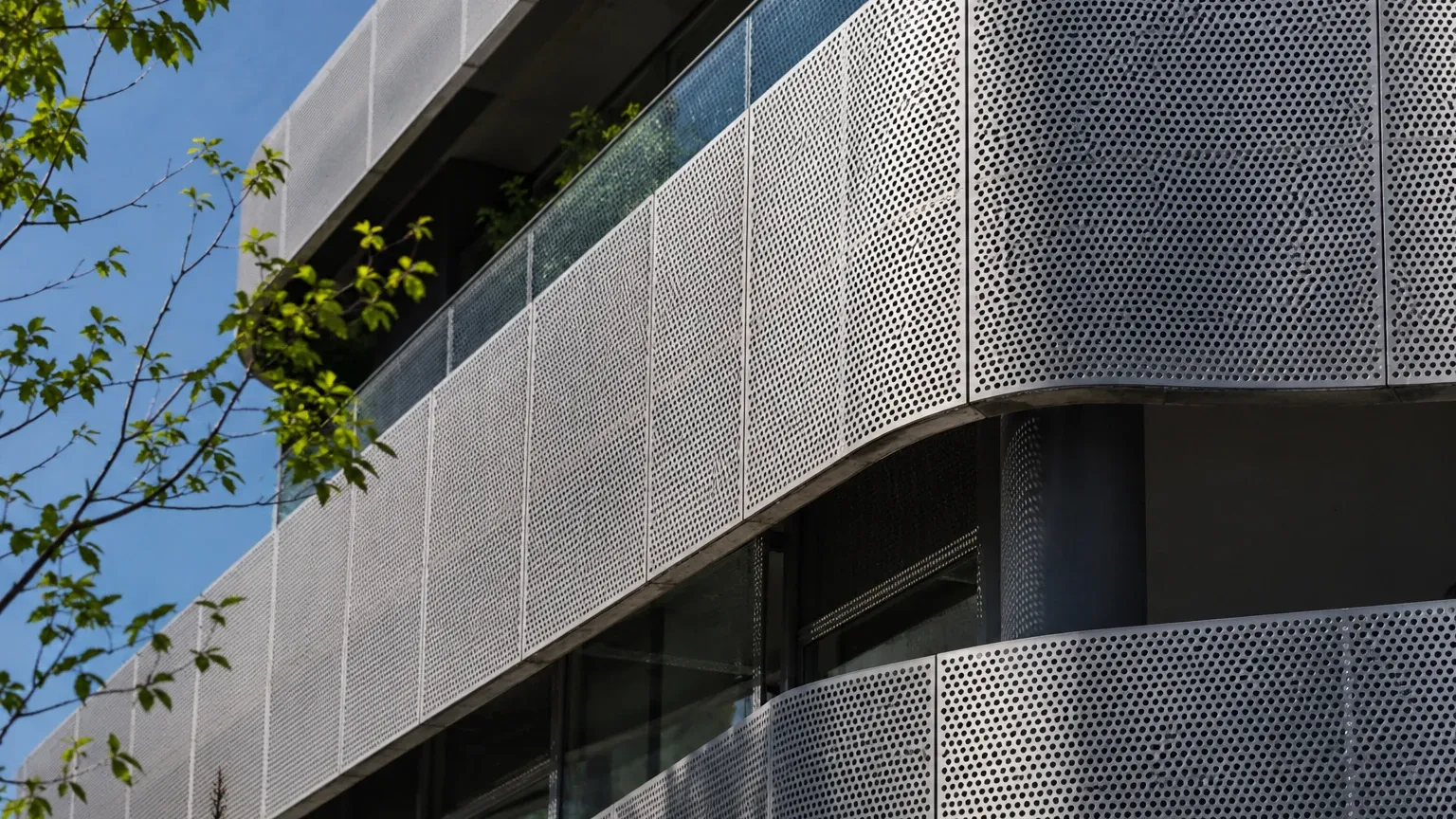
Architecture Perforated Metal Sheet
In industrial engineering and facility design, the term "architecture perforated metal sheet" refers to more than just aesthetic cladding. It encompasses a range of precision-engineered metal components designed to balance structural integrity, fluid dynamics, and environmental protection. For engineers and procurement specialists, selecting the right perforated or expanded metal involves a deep understanding of material science, mechanical tolerances, and the specific requirements of the industrial environment in which the component will operate.
As a critical component in systems ranging from heavy-duty filtration supports to protective machine guarding, the architecture perforated metal sheet must be evaluated based on its functional performance under stress. This guide explores the technical specifications, material considerations, and engineering applications that define high-quality perforated metal solutions.
Engineering Principles of Perforated Metal in Industrial Design
The primary function of a perforated metal sheet is to provide a controlled interface between two environments. Whether that interface manages the flow of air, the filtration of liquids, or the containment of sound, the engineering behind the perforations is precise. Unlike standard mesh, perforated sheets offer superior rigidity and can be manufactured to exact load-bearing specifications.
When specifying Perforated & Expanded Metal, engineers must consider the relationship between the hole size, the pitch (the distance between the centers of adjacent holes), and the resulting open area. The open area is a percentage that dictates how much of the sheet is comprised of holes versus solid metal. This calculation is vital for determining pressure drop in filtration systems and airflow efficiency in cooling applications.
For example, a staggered hole pattern typically provides higher strength and a more uniform distribution of stress across the sheet compared to a straight-line pattern. In industrial architecture, where sheets may be subjected to vibration or mechanical pressure, the choice of pattern directly impacts the component's fatigue life.
Material Selection for Durability and Chemical Compatibility
The longevity of an architecture perforated metal sheet is largely determined by its base material. In the industrial sectors served by Kaifil—including chemical processing, pharmaceuticals, and food and beverage—stainless steel is the industry standard due to its corrosion resistance and hygienic properties.
Stainless Steel Grades
* Grade 304: The most common grade, offering excellent corrosion resistance in most atmospheric and freshwater environments. It is widely used in food processing equipment and general industrial shielding.
* Grade 316/316L: Contains molybdenum, which provides superior resistance to chlorides and marine environments. This is the preferred choice for chemical processing plants and pharmaceutical cleanrooms where aggressive cleaning agents are used.
* Specialty Alloys: For high-temperature applications or highly acidic environments, alloys such as Duplex stainless steel or Monel may be required to prevent stress corrosion cracking.
Beyond the alloy type, the thickness (gauge) of the metal must be matched to the structural requirements. Thicker sheets provide better impact resistance and can support heavier filter media, but they also require more force to form and may increase the total weight of the assembly.
Analyzing Hole Patterns and Open Area for Filtration Efficiency
In filtration applications, the architecture perforated metal sheet often serves as the primary support structure for finer wire mesh or as a coarse filter itself. The geometry of the perforations determines the flow characteristics of the system.
1. Round Holes: The most versatile and cost-effective pattern. Round holes provide the best balance of strength and open area, making them ideal for high-pressure hydraulic filters and industrial strainers.
2. Square Holes: Offer a higher open area than round holes, which is beneficial for applications requiring maximum airflow or high-volume liquid throughput. However, they possess lower mechanical strength due to stress concentrations at the corners.
3. Slotted Holes: Frequently used in sorting and sifting applications. Slotted perforations allow for the passage of specific particle shapes while maintaining structural rigidity in one direction.
The "bridge" or "bar" (the solid metal between holes) must be wide enough to maintain the sheet's integrity during the manufacturing of filter cartridges. If the bridge is too narrow, the sheet may deform during the rolling or welding processes, leading to premature failure in the field.
Industrial Applications: Beyond Aesthetics to Functional Performance
While "architectural" often implies exterior building design, in a B2B context, it refers to the structural architecture of industrial systems. The architecture perforated metal sheet is utilized across several demanding sectors:
Acoustic and Thermal Management
In power plants and manufacturing facilities, perforated metal sheets are used as the facing for acoustic insulation. The perforations allow sound waves to pass through the metal and be absorbed by the underlying material, significantly reducing noise pollution. Similarly, in heat exchange systems, these sheets facilitate controlled thermal dissipation while protecting sensitive internal components.
Protective Guarding and Safety
Machine guards made from perforated metal provide visibility for operators while ensuring a physical barrier against moving parts. Unlike solid sheets, the perforations allow for ventilation, preventing motors and electronic components from overheating.
Fluid Dynamics and Filtration
In water treatment and chemical processing, perforated sheets act as diffusers to break up high-velocity fluid streams, preventing turbulence and ensuring even distribution across filter beds. They are also the foundational component for stainless steel filter cartridges, providing the necessary collapse strength to withstand high differential pressures.
Customization and Precision Manufacturing Considerations
Industrial applications rarely permit "off-the-shelf" solutions. Customization is essential to ensure that the architecture perforated metal sheet integrates perfectly with existing equipment. Kaifil specializes in providing OEM solutions where every variable—from hole diameter to margin width—is tailored to the application.
Tolerances and Precision
For engineers, the tolerance on hole diameter and pitch is critical. In precision filtration, even a minor deviation can lead to bypass or inconsistent flow rates. High-speed CNC punching and laser cutting technologies allow for extremely tight tolerances, ensuring that each component meets the rigorous standards of the pharmaceutical and aerospace industries.
Finishing and Surface Treatments
Post-perforation treatments can enhance the performance of the metal sheet. Common finishes include:
* Electropolishing: Removes surface impurities and creates a microscopically smooth finish, essential for food-grade and pharmaceutical applications to prevent bacterial growth.
* Degreasing: Ensures the metal is free from manufacturing oils, which is vital for oxygen service or high-purity chemical filtration.
* Annealing: Relieves internal stresses caused by the punching process, making the sheet easier to form into cylindrical filter shapes without cracking.
Maintenance and Longevity in Demanding Environments
The total cost of ownership (TCO) for industrial components is heavily influenced by maintenance requirements and replacement cycles. An architecture perforated metal sheet made from high-quality stainless steel is designed for long-term service, but its lifespan depends on proper selection and upkeep.
In filtration systems, the primary cause of failure is often blinding (clogging) or mechanical fatigue. Engineers should specify hole sizes that are slightly larger than the particles being filtered if the sheet is used as a support, or ensure that the cleaning protocol (such as backwashing or ultrasonic cleaning) is compatible with the metal's surface finish.
Regular inspection for signs of pitting corrosion or stress fractures is necessary, especially in environments involving high-pressure cycles or corrosive chemicals. By choosing the correct grade of stainless steel and a robust hole pattern, facilities can extend the interval between maintenance shutdowns, improving overall operational efficiency.
Technical Checklist for Engineering Procurement
Before finalizing a purchase order for architecture perforated metal sheets, technical teams should confirm the following parameters to ensure the product is fit for purpose:
* Material Certification: Does the supplier provide mill test reports (MTRs) to verify the chemical composition of the stainless steel?
* Open Area Calculation: Has the airflow or fluid flow requirement been cross-referenced with the sheet's open area percentage?
* Margin Requirements: Are specific solid borders (margins) required for welding or mounting the sheet into a frame?
* Flatness Tolerances: Does the application require the sheet to be leveled after perforation to ensure it remains perfectly flat for precision assembly?
* Environmental Factors: Will the sheet be exposed to cryogenic temperatures, high heat, or specific chemical catalysts that require specialized alloys?
By addressing these technical details during the design phase, engineers can avoid costly retrofits and ensure that their filtration or structural systems perform reliably under industrial loads. Whether used as a protective barrier or a critical component in a complex filtration assembly, the architecture perforated metal sheet remains a cornerstone of modern industrial engineering.
