


B&q Expanded Metal
For engineering and procurement professionals, selecting the right metal substrate is a balance between availability, cost, and technical performance. While retail options like B&Q expanded metal serve a vital role in domestic DIY projects, light repairs, and decorative home applications, industrial-scale operations require a deeper analysis of material specifications, tolerances, and chemical compatibility. In the context of heavy-duty filtration, chemical processing, and structural support, the transition from retail-grade products to industrial-grade Perforated & Expanded Metal is often a necessity driven by precision requirements.
This guide examines the technical characteristics of expanded metal, the differences between retail and industrial procurement, and the critical factors engineers must confirm before integrating these components into complex systems.
Understanding Expanded Metal Specifications
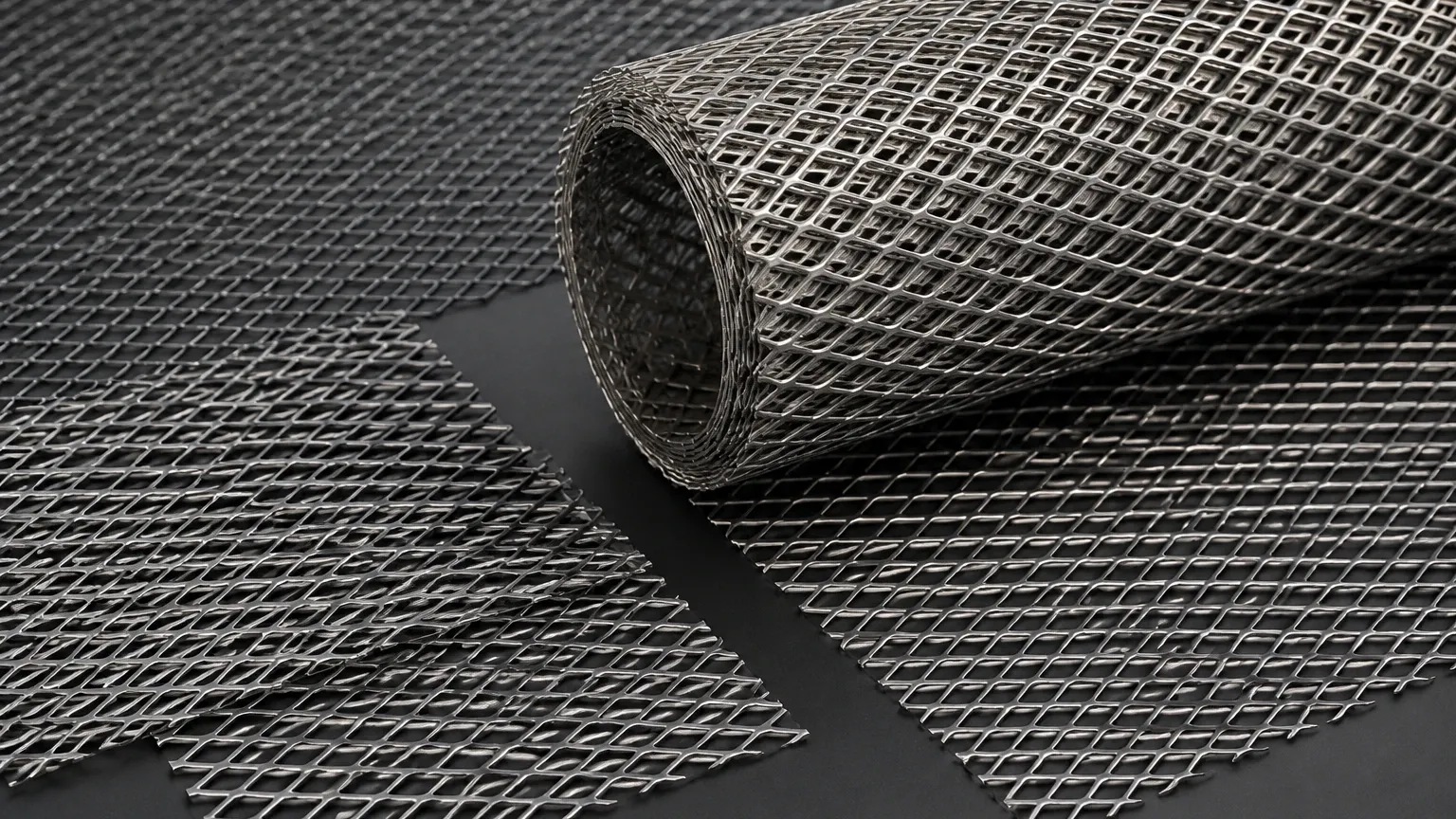
Expanded metal is a versatile material produced by simultaneously slitting and stretching a solid sheet of metal. Unlike perforated metal, which involves punching out holes and creating scrap, the expansion process creates a diamond-shaped pattern without any material waste. This makes it an inherently cost-effective solution for many industrial applications.
To specify expanded metal accurately, engineers use four primary measurements:
1. LWD (Long Way of Diamond): The distance from the center of one joint to the center of the next joint across the long axis of the diamond.
2. SWD (Short Way of Diamond): The distance from the center of one joint to the center of the next joint across the short axis.
3. Strand Width: The amount of metal between the openings.
4. Strand Thickness: The thickness of the original base metal sheet.
Beyond these dimensions, the material is categorized as either "Raised" (Standard) or "Flattened." Raised expanded metal has a textured surface where the strands are set at an angle to the plane of the sheet. Flattened expanded metal is cold-rolled after expansion to create a smooth, flat surface. For filtration support layers, flattened metal is often preferred to prevent damage to delicate wire mesh overlays.
Retail vs. Industrial Grade: Evaluating B&Q Expanded Metal for Commercial Use
When a maintenance team or engineer searches for B&Q expanded metal, they are typically looking for immediate, local availability for small-scale tasks. Retail outlets provide a valuable service for quick fixes, such as basic vent covers, garden trellises, or small security screens. However, there are fundamental differences between retail-grade products and industrial-manufactured solutions.
Material Selection and Traceability
Retail products are generally offered in standard mild steel or basic aluminum. In industrial environments—particularly in chemical processing or food and beverage production—material traceability is paramount. Industrial manufacturers provide Mill Test Reports (MTRs) and certifications for specific alloys like 304, 316, or 316L stainless steel. These alloys offer the corrosion resistance required for harsh environments that standard retail-grade steel cannot withstand.
Dimensional Consistency and Tolerances
Industrial filtration systems often require exact tolerances to fit within housings or to maintain specific flow rates. Retail-grade expanded metal may have wider tolerances in diamond size and sheet squareness. For high-precision OEM applications, custom manufacturing ensures that every sheet or roll meets the exact LWD and SWD requirements necessary for consistent performance.
Scale and Customization
B&Q and similar retailers stock pre-cut sheets in limited sizes. Industrial projects often require large-format sheets, continuous rolls, or custom-cut shapes that minimize waste and reduce the need for secondary welding or joining. Customization also extends to the "open area" percentage, which is critical for calculating pressure drop in fluid systems.
Engineering Considerations for Filtration and Support
In the world of industrial filtration, expanded metal serves two primary roles: as a coarse filter for large particulates and as a structural support for finer filter media. When evaluating Perforated & Expanded Metal for these roles, several engineering factors must be considered.
Open Area and Flow Dynamics
The open area of expanded metal determines the flow capacity of the system. Unlike woven wire mesh, where the open area is determined by wire diameter and mesh count, expanded metal's open area is a function of the strand width and the degree of expansion. Engineers must calculate this carefully to ensure that the filter does not create an excessive pressure drop, which could damage pumps or reduce system efficiency.
Structural Integrity and Load Bearing
Expanded metal is known for its high strength-to-weight ratio. Because the diamonds are part of a continuous piece of metal, rather than being welded or woven, the material distributes loads effectively. In high-pressure hydraulic or water treatment applications, the expanded metal core of a filter cartridge must resist collapsing under the force of the fluid flow. The orientation of the diamonds (LWD vs. SWD) can also affect the stiffness of the component in a specific direction.
Bonding and Compatibility
When used as a support for stainless steel wire mesh, the surface finish of the expanded metal is critical. Any burrs or sharp edges left over from the slitting process can puncture the fine mesh. Industrial manufacturers use specialized deburring and cleaning processes to ensure the substrate is compatible with secondary layers, whether they are bonded via resistance welding, sintering, or mechanical pleating.
Manufacturing Processes and Customization
The production of industrial expanded metal is a precision process that allows for significant customization. Understanding this process helps engineers specify the right product for their application.
1. The Slitting and Stretching Phase: A heavy-duty press equipped with a serrated knife slits the metal sheet while simultaneously stretching it forward. The shape of the knife determines the diamond size. By adjusting the stroke of the machine and the width of the metal feed, manufacturers can create a vast array of patterns.
2. Flattening (Optional): As mentioned, the expanded sheet can be passed through a cold-roll reducing mill. This process increases the length of the sheet (usually by about 5%) but maintains the width, resulting in a smooth, flat surface.
3. Annealing and Stress Relieving: For certain high-performance alloys, the expansion process can introduce internal stresses. Annealing the metal after expansion can restore ductility and improve the material's performance in high-vibration or high-temperature environments.
4. Surface Finishing: Industrial expanded metal can be passivated, electro-polished, or coated (e.g., powder coating or galvanizing) to enhance corrosion resistance or aesthetic appeal.
For B2B buyers, the ability to specify these manufacturing steps is what differentiates a professional filtration component from a generic retail product.
Common Risks and Quality Control in Industrial Procurement
Procuring expanded metal for industrial use involves more than just selecting a diamond size. Failure to account for quality control can lead to system failures or increased maintenance costs. Key risks include:
* Material Substitution: In lower-tier supply chains, 200-series stainless steel is sometimes substituted for 304 or 316. While it looks similar, it lacks the nickel content required for long-term corrosion resistance. Always verify material certifications.
* Edge Burrs and Sharpness: In applications involving manual handling or contact with delicate fabrics/membranes, un-deburred expanded metal is a safety and functional hazard. Ensure the specification includes "deburred" or "edge-trimmed" if necessary.
* Inconsistent Diamond Geometry: If the expansion press is not properly calibrated, the diamonds may vary in size across the sheet. This can lead to uneven flow distribution in filtration applications.
* Oil and Contaminants: The expansion process uses lubricants. For food-grade or pharmaceutical applications, the metal must be thoroughly degreased and cleaned to meet sanitary standards. Retail-grade B&Q expanded metal is rarely cleaned to these industrial standards.
Applications in Industrial Filtration and Protection
Customized metal filtration components are used across a wide spectrum of industries. While a retail product might suffice for a home gutter guard, the following sectors require the precision of industrial-grade Perforated & Expanded Metal:
Chemical and Petrochemical Processing
In these environments, filters are exposed to aggressive solvents and high temperatures. Stainless steel expanded metal provides the necessary chemical resistance and structural support for catalyst recovery and particulate removal.
Food and Beverage Production
Sanitary design is critical. Expanded metal used in food processing must be easy to clean and free of crevices where bacteria can grow. Electropolished stainless steel expanded metal is often used in drying trays and coarse filtration stages.
Hydraulic and Lubrication Systems
High-pressure hydraulic systems use expanded metal as a core support for pleated filter elements. The material must withstand high differential pressures without deforming, ensuring the integrity of the hydraulic fluid.
Water Treatment and Desalination
Expanded metal screens are used in the pre-filtration stages of water treatment plants to remove large debris before the water reaches sensitive reverse osmosis membranes. Corrosion resistance in saline environments (using 316L or Duplex stainless) is a primary requirement here.
Conclusion: Making Informed Purchasing Decisions
When evaluating expanded metal, the choice between a retail source like B&Q and a specialized industrial manufacturer depends entirely on the application's demands. For non-critical, low-stress, or decorative uses, retail options provide convenience. However, for engineers and purchasing teams focused on reliability, durability, and precise filtration performance, partnering with a manufacturer like Kaifil is essential.
Before taking the next step in your procurement process, confirm the following with your technical team:
* What is the specific alloy required for the operating environment?
* What is the maximum allowable pressure drop for the filtration stage?
* Does the application require a flattened surface to protect secondary media?
* Are there specific certifications (MTRs, FDA compliance) required for the project?
By focusing on these technical boundaries, you ensure that your filtration solutions deliver the total cost of ownership and performance expectations required for demanding industrial environments.
