


Decorative Perforated Metal Sheet
In industrial and architectural engineering, the selection of materials often requires a balance between aesthetic appeal and rigorous functional performance. The decorative perforated metal sheet serves as a primary example of this intersection. While the term "decorative" suggests a focus on visual design, in a B2B and industrial context, these components must adhere to strict mechanical specifications, material tolerances, and environmental resistance standards.
As a specialized manufacturer, Kaifil provides precision-engineered Perforated & Expanded Metal solutions that cater to diverse sectors, including chemical processing, pharmaceutical manufacturing, and high-end architectural filtration. Understanding the technical nuances of these materials is essential for engineers and purchasing teams to ensure long-term durability and cost-efficiency in their projects.
Understanding the Technical Foundations of Decorative Perforated Metal
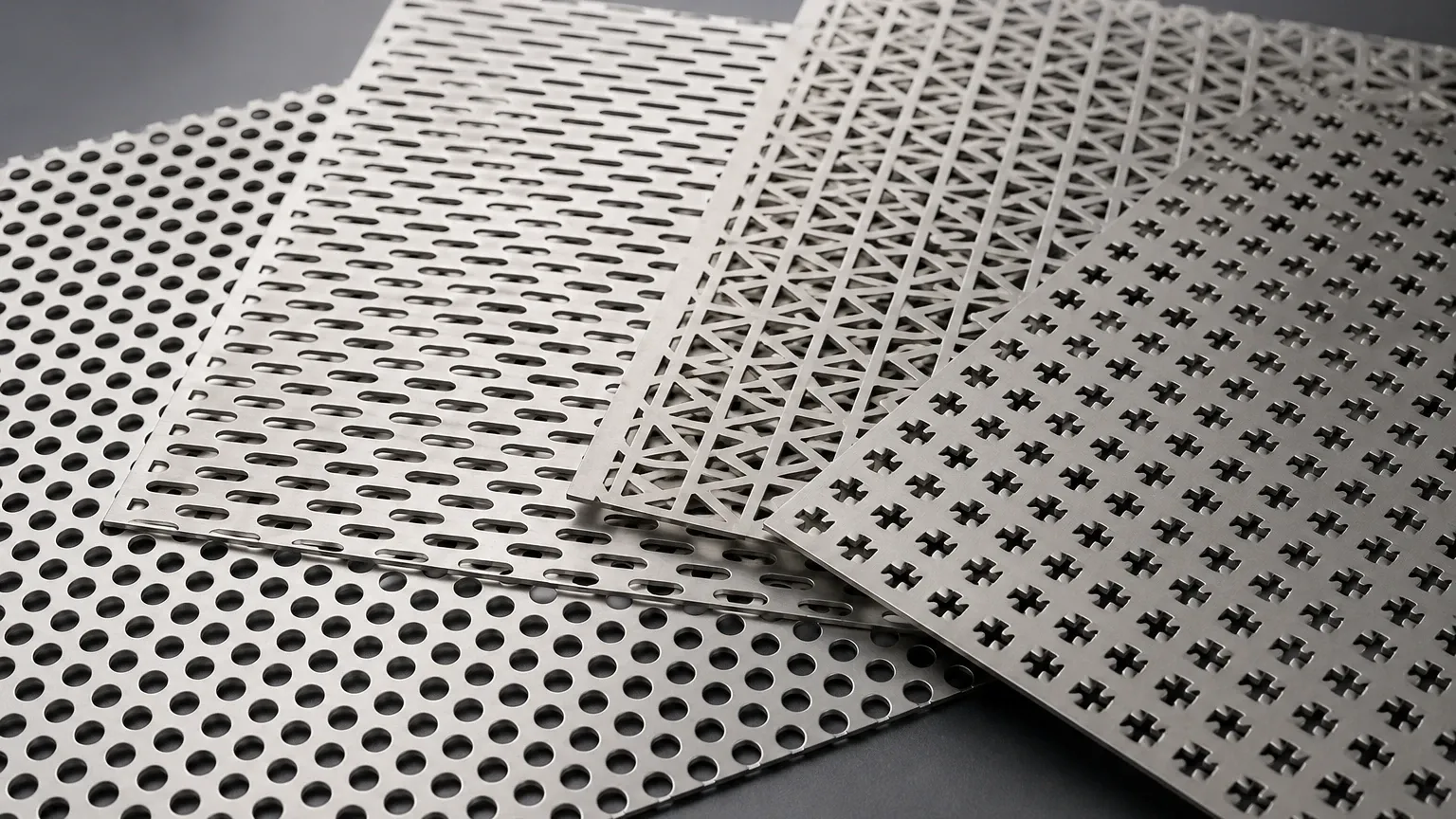
A decorative perforated metal sheet is produced by mechanically punching or laser-cutting a specific pattern of holes into a metal substrate. Unlike standard industrial perforated sheets, which may prioritize filtration efficiency above all else, decorative variants utilize geometric patterns to achieve specific visual effects while maintaining the structural integrity required for industrial applications.
The primary engineering challenge lies in the "Open Area" calculation. The open area refers to the percentage of the sheet that is comprised of holes versus solid material. This ratio determines not only the visual transparency and airflow but also the mechanical strength and weight-bearing capacity of the panel. For engineers, selecting a decorative pattern is not merely a stylistic choice; it is a calculation of how much material can be removed before the sheet fails to meet load-bearing or pressure requirements.
Material Selection: Durability and Chemical Compatibility
Material choice is the most critical factor in the performance of a decorative perforated metal sheet. In industrial environments, exposure to corrosive agents, extreme temperatures, and mechanical stress necessitates high-performance alloys. Kaifil specializes in stainless steel solutions, which offer the best balance of longevity and aesthetic maintenance.
Stainless Steel Grades
* Grade 304: The most common choice for general industrial and architectural use. It provides excellent corrosion resistance and is suitable for most indoor and moderate outdoor applications.
* Grade 316/316L: Recommended for marine environments, chemical processing plants, or pharmaceutical facilities where exposure to chlorides or high-acidity cleaning agents is frequent. The addition of molybdenum enhances pitting resistance.
* Specialty Alloys: For high-temperature applications or specific chemical environments, materials such as Duplex stainless steel or nickel alloys may be utilized, though these are typically reserved for highly specialized filtration or structural components.
When selecting a material, engineers must consider the "Total Cost of Ownership." While Grade 316 may have a higher initial procurement cost than Grade 304, its resistance to corrosion can significantly extend the replacement cycle, reducing long-term maintenance and downtime costs.
Engineering Specifications: Hole Patterns and Structural Integrity
The pattern of a decorative perforated metal sheet influences more than just the look. It dictates how the material reacts to stress and how fluids or air pass through the medium. Common patterns include:
1. Round Holes (Staggered or Straight): The most efficient pattern for filtration and airflow. Staggered patterns (typically at 60 degrees) provide the highest structural strength because they distribute stress more evenly across the metal bridges.
2. Square and Rectangular Holes: Often used for high open-area requirements. While visually striking, square holes can create stress concentration points at the corners, which may lead to fatigue if the sheet is subjected to constant vibration or pressure fluctuations.
3. Hexagonal (Honeycomb) Patterns: These offer an exceptionally high open area (up to 80% or more) while maintaining a high strength-to-weight ratio. They are frequently used in ventilation and high-flow filtration systems.
4. Custom Geometric Patterns: These are the hallmark of the decorative perforated metal sheet. Custom patterns can include logos, intricate floral designs, or varying hole sizes across a single panel to create "image perforation."
The Importance of "Margins"
In industrial fabrication, margins refer to the unperforated area around the edges of the sheet. Proper margin specification is vital for welding, framing, and installation. Engineers must confirm whether they require "finished" margins (where the pattern stops cleanly before the edge) or "unfinished" margins (where the pattern is sheared through). Finished margins generally provide better structural stability and ease of installation.
Manufacturing Precision: Perforated & Expanded Metal Processes
While this article focuses on perforated sheets, it is important to distinguish them from expanded metal, as both fall under the broader category of Perforated & Expanded Metal solutions.
* Perforation: This process involves punching holes out of a solid sheet. It allows for high precision in hole size and shape. The "slugs" (the metal removed) are typically recycled. Perforation is the preferred method for decorative sheets where specific, intricate designs are required.
* Expansion: Expanded metal is created by slitting and stretching a single sheet of metal simultaneously. This process creates diamond-shaped openings without any waste of material. While expanded metal is highly cost-effective and provides excellent grip and structural rigidity, it offers less flexibility in terms of decorative pattern variety compared to perforated sheets.
For B2B buyers, the choice between perforated and expanded metal often comes down to the specific application. Perforated sheets are superior for fine filtration and complex aesthetic designs, whereas expanded metal is often utilized for heavy-duty walkways, safety guards, and industrial screening where cost-per-square-foot is a primary driver.
Customization and OEM Capabilities for Specialized Projects
In the B2B sector, "off-the-shelf" solutions rarely meet the exact needs of complex industrial projects. Customization is essential, particularly when integrating a decorative perforated metal sheet into a larger mechanical system or architectural structure.
Kaifil’s OEM capabilities allow for precise tailoring of several factors:
* Dimensional Accuracy: Custom sheet sizes and thicknesses (ranging from foil-thin to heavy plate) to fit specific housing or frames.
* Secondary Fabrication: Services such as bending, rolling into cylinders (for filter cartridges), welding, and bolt-hole drilling.
* Surface Finishing: To enhance both the decorative appeal and the functional resistance of the sheet, various finishes can be applied. These include electropolishing (for pharmaceutical/food grade cleanliness), powder coating (for color and UV protection), and anodizing (for aluminum substrates).
When working with an OEM partner, engineers should provide detailed CAD drawings and specify the "critical-to-quality" (CTQ) dimensions. This ensures that the final product integrates seamlessly into the assembly without the need for on-site modifications, which can compromise the material's protective coatings.
Application Guidance: Beyond Aesthetics
Where does a decorative perforated metal sheet actually perform in an industrial setting? The applications are more functional than they might appear at first glance.
1. Acoustic Dampening and Sound Control
In power plants, manufacturing floors, and HVAC systems, perforated metal is used as a facing for sound-absorbing materials. The decorative pattern allows sound waves to pass through the metal to be trapped by the insulation behind it, while the metal itself provides a durable, impact-resistant surface.
2. Specialized Filtration and Separation
In the food and beverage industry, decorative patterns are sometimes used in sorting and grading equipment. The specific geometry of the holes can be designed to allow certain shapes of produce or grains to pass through while retaining others. The use of high-grade stainless steel ensures compliance with hygiene standards.
3. Heat Dissipation and Ventilation
Electronic enclosures and industrial machinery require constant airflow to prevent overheating. A decorative perforated metal sheet can serve as a protective vent cover that prevents debris from entering the system while allowing for maximum heat exchange. The aesthetic component allows these machines to maintain a professional, high-end appearance for the end-user.
4. Architectural Sunshades and Facades
On a larger scale, these sheets are used in industrial architecture to manage solar gain. By calculating the angle of the sun and the open area of the perforation, engineers can design building skins that reduce cooling costs while still providing natural light and visibility.
Evaluating Performance and Quality Control
Before finalizing a purchase, technical professionals must confirm that the decorative perforated metal sheet meets the necessary quality benchmarks. Key evaluation criteria include:
* Flatness Tolerances: Perforation can introduce internal stresses into the metal, causing it to curl or buckle. High-quality manufacturers use leveling rollers to ensure the final sheet is perfectly flat.
* Burr-Free Edges: In filtration and food-grade applications, burrs (sharp edges left by the punching process) can trap contaminants or cause injury. Precision manufacturing ensures clean, smooth holes.
* Consistency of Pitch: The distance between the centers of the holes (pitch) must be consistent across the entire sheet to ensure uniform airflow and structural integrity.
Common risks in procurement include selecting a sheet that is too thin for the required span, leading to "oil-canning" or sagging. It is also common to overlook the impact of the perforation process on the material's corrosion resistance; for instance, if the punching tools are contaminated with carbon steel particles, they can embed these into a stainless steel sheet, leading to localized rusting (tea-staining).
Conclusion: Making Informed Procurement Decisions
Selecting the right decorative perforated metal sheet requires a deep understanding of material science, mechanical engineering, and manufacturing constraints. By focusing on high-quality materials like stainless steel and partnering with a manufacturer capable of precise Perforated & Expanded Metal fabrication, B2B buyers can ensure their components deliver both the visual impact and the industrial performance required for demanding applications.
Engineers are encouraged to confirm the following before proceeding with an order:
1. Exact Alloy Grade: Is the material suitable for the chemical environment?
2. Open Area Percentage: Does it meet the flow or transparency requirements without sacrificing strength?
3. Fabrication Requirements: Does the sheet need to be rolled, welded, or finished before delivery?
4. Compliance Standards: Does the product meet industry-specific certifications (e.g., FDA for food contact or ISO for general manufacturing)?
By addressing these technical considerations early in the design phase, organizations can optimize their filtration and structural solutions for maximum efficiency and longevity.
