


Enscape Perforated Metal Material
In modern architectural and industrial engineering, the transition from a digital concept to a physical installation requires high-fidelity visualization and precise technical specification. For professionals utilizing real-time rendering tools, the use of an enscape perforated metal material is a standard method for simulating how light, airflow, and structural components interact within a space. However, for engineers and procurement teams, the digital representation is only the first step. Understanding the physical properties, manufacturing constraints, and performance metrics of Perforated & Expanded Metal is essential to ensure that what is rendered in software can be successfully manufactured and deployed in demanding industrial environments.
This guide explores the relationship between digital material simulation and physical product specification, focusing on the technical parameters that define high-quality perforated and expanded metal solutions.
The Role of Digital Visualization in Metal Specification
Digital rendering software like Enscape allows designers to apply "materials" to 3D models. An enscape perforated metal material typically relies on a combination of textures: an Albedo map for color, a Bump or Normal map for depth, and, most importantly, an Opacity or Alpha map to define the holes. While these digital assets provide a visual approximation of transparency and shadow, they often lack the underlying engineering data required for industrial applications.
When specifying Perforated & Expanded Metal for a project, engineers must look beyond the visual "transparency" of a rendering. They must consider the actual open area percentage, the structural integrity of the remaining metal (the "bridges" or "bars"), and the specific filtration or ventilation requirements of the application. The digital model serves as a visual placeholder, but the physical specification must be grounded in manufacturing reality.
Technical Parameters of Perforated Metal
To move from a digital enscape perforated metal material to a physical order, several critical geometric and material parameters must be defined. These factors influence not only the aesthetic of the final product but also its mechanical performance and durability.
1. Hole Patterns and Geometry
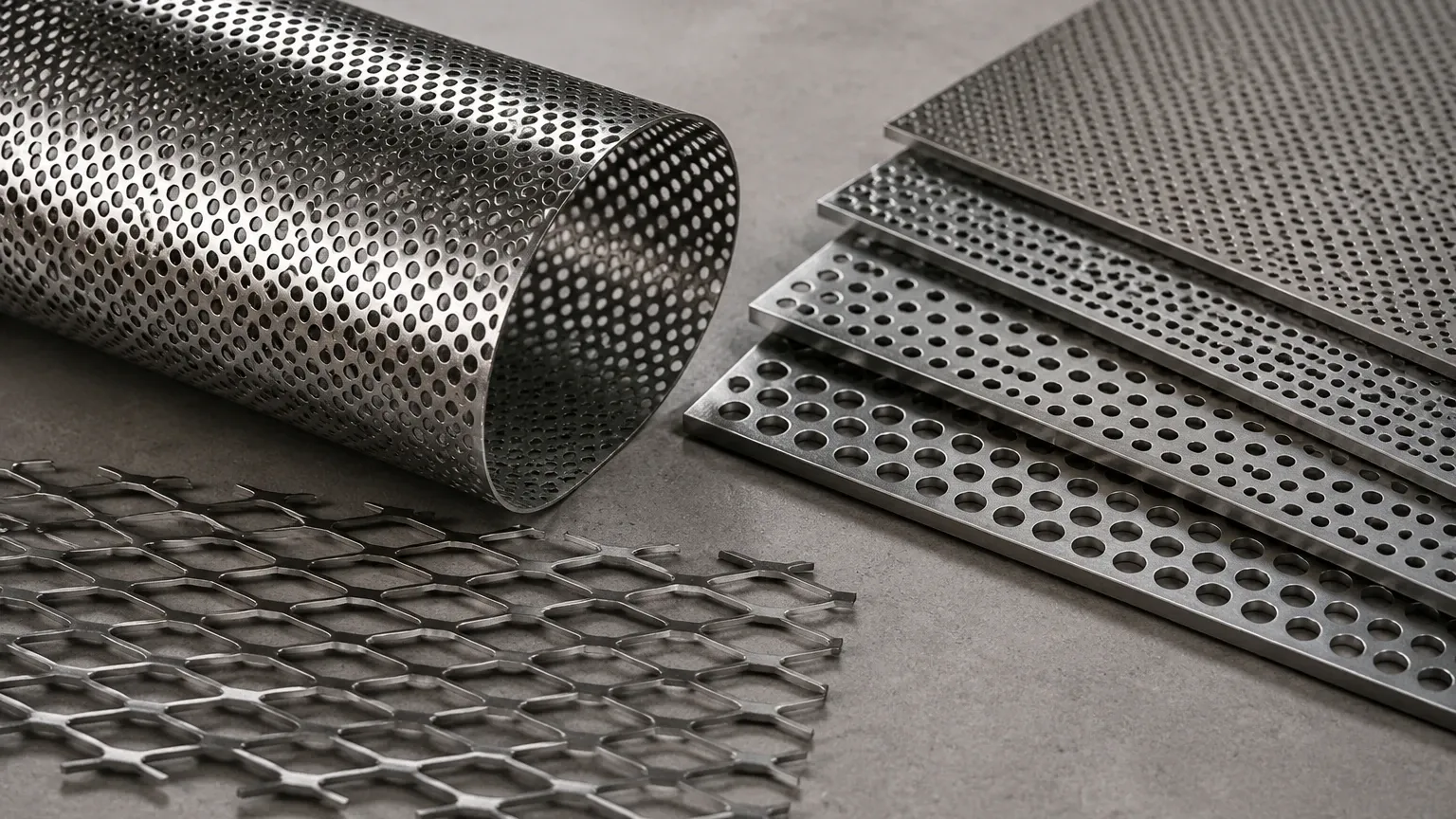
Perforated metal is created by punching a series of holes into a solid sheet. The geometry of these holes is the primary driver of both visual appeal and functional performance. Common patterns include:
* Round Holes: The most versatile and common pattern, offering a balance of strength and open area. They are often arranged in 60-degree staggered patterns to maximize structural efficiency.
* Square Holes: Frequently used for high-visibility applications or where maximum airflow is required. They offer a modern aesthetic but may have lower structural rigidity than round holes.
* Slotted Holes: Ideal for sorting and filtration applications where elongated particles or specific flow directions are a factor.
* Hexagonal (Honeycomb) Holes: Provide an extremely high open area (up to 80% or more), making them suitable for high-performance ventilation and weight-sensitive designs.
2. Open Area Calculations
The "Open Area" is the percentage of the sheet that is occupied by holes. In an enscape perforated metal material, this is represented by the black areas of an opacity map. In engineering, this is a calculated value that determines how much air, light, or liquid can pass through the medium.
For a standard 60-degree staggered round hole pattern, the formula is:
OA% = (d² × 90.69) / p²
*(Where d = hole diameter and p = pitch/center-to-center distance)*
Accurately calculating the open area is critical for applications such as industrial filtration, where pressure drop and flow rate are paramount. A discrepancy between the digital visualization and the physical product's open area can lead to system failures or insufficient ventilation.
Understanding Expanded Metal vs. Perforated Metal
While often grouped together in digital material libraries, expanded metal and perforated metal are manufactured through entirely different processes, leading to distinct physical characteristics.
Perforated Metal
Perforated metal is produced by punching holes out of a sheet, which removes material. This allows for precise control over hole size and placement, as well as the ability to leave solid "margins" or blank areas on the edges of the sheet for easier mounting and welding.
Expanded Metal
Expanded metal is manufactured by simultaneously slitting and stretching a metal sheet. This process creates diamond-shaped openings without any material waste. The resulting mesh is structurally rigid because the "strands" are set at an angle to the plane of the sheet. In a digital enscape perforated metal material, expanded metal is often harder to simulate accurately because of its three-dimensional profile, which creates different visual effects depending on the viewing angle.
For industrial applications, Perforated & Expanded Metal choices depend on whether the priority is precision (perforated) or cost-efficiency and weight-to-strength ratio (expanded).
Material Selection for Industrial Environments
The durability of the final component depends heavily on the material alloy selected. While a digital material might simply look like "brushed steel," the physical environment dictates the necessary grade of stainless steel or other metals.
* Stainless Steel 304: The standard grade for general industrial use, offering good corrosion resistance and excellent forming properties.
* Stainless Steel 316/316L: Contains molybdenum, providing superior resistance to chlorides and marine environments. This is the preferred choice for chemical processing and offshore applications.
* Aluminum Alloys: Used where weight reduction is critical, though they offer lower structural strength than stainless steel.
* Specialty Alloys: For high-temperature or highly acidic environments, alloys like Monel or Inconel may be required.
When translating an enscape perforated metal material into a procurement spec, engineers must ensure the material choice aligns with the chemical compatibility requirements of the application, especially in filtration and food processing sectors.
Engineering Considerations for Fabrication
Beyond the pattern and material, several fabrication details must be confirmed before production. These are often overlooked in the digital design phase but are vital for successful installation.
Margins and Blank Areas
Unlike a digital texture that repeats infinitely, physical sheets have edges. "Margins" are the solid areas around the perimeter of the perforated pattern. Specifying the correct margins is essential for welding the sheet into a frame or securing it with fasteners. Standard margins are typically 20mm, but custom dimensions are often required for specific architectural or industrial housings.
Flatness and Stress Relief
The punching process can introduce internal stresses into the metal sheet, causing it to curl or bow. High-quality manufacturers use leveling rollers to ensure the final product meets flatness tolerances. If the Perforated & Expanded Metal is intended for a precision filter cartridge or a large architectural facade, maintaining flatness is a critical quality metric.
Surface Finishes
In rendering software, surface finish is handled by the roughness and metallic sliders. In manufacturing, finishes serve both aesthetic and functional purposes:
* Pickling and Passivation: Removes surface contaminants and restores the protective oxide layer on stainless steel.
* Electropolishing: Provides a mirror-like finish and improves cleanability, which is essential for pharmaceutical and food-grade applications.
* Powder Coating: Adds color and an extra layer of environmental protection.
Common Risks in Specifying from Digital Models
One of the primary risks when using an enscape perforated metal material as a reference is the "Moiré effect" or visual aliasing. In a digital environment, very fine patterns can create distracting visual artifacts. This may lead designers to specify larger holes than are technically appropriate for the application.
Furthermore, digital models often fail to account for the thickness of the material. A 2mm thick sheet with 2mm holes will behave differently than a 5mm thick sheet with the same hole size. The ratio of hole diameter to material thickness (aspect ratio) affects the ease of manufacturing and the likelihood of tool breakage during the punching process. Generally, the hole diameter should not be less than the material thickness.
Transitioning to Procurement: What to Confirm
Before moving from a visual concept to a purchase order for Perforated & Expanded Metal, engineering and purchasing teams should confirm the following technical details with the manufacturer:
1. Exact Hole Diameter and Pitch: Do not rely on visual approximations from a digital texture.
2. Open Area Percentage: Ensure it meets the specific airflow or filtration requirements of the system.
3. Material Grade: Confirm that the alloy is suitable for the operating environment (e.g., temperature, chemical exposure).
4. Sheet Dimensions and Margins: Provide clear drawings showing where the perforation should start and stop.
5. Quantity and Lead Time: Industrial projects often require large volumes that may impact production scheduling.
By bridging the gap between the digital enscape perforated metal material and these physical manufacturing realities, project teams can avoid costly redesigns and ensure that the final installation performs as intended.
Conclusion
Digital visualization tools like Enscape are invaluable for communicating design intent, but they are not a substitute for rigorous technical specification. Whether you are designing a high-efficiency industrial filter, a protective machine guard, or an architectural screen, the performance of the final product depends on the precise configuration of the Perforated & Expanded Metal.
At Kaifil, we specialize in translating complex design requirements into high-performance metal filtration and structural components. Our expertise in stainless steel fabrication ensures that every custom perforated solution meets the exact tolerances and durability standards required by your industry. By focusing on the technical fundamentals of hole geometry, material science, and fabrication precision, we help engineers move confidently from a digital render to a reliable physical solution.
