


Expanded Metal 2496
In the landscape of industrial filtration and structural support, material selection is dictated by the precise balance of mechanical strength, open area, and chemical compatibility. Among the various configurations available to engineers and procurement specialists, expanded metal 2496 represents a specific dimensional standard frequently utilized in the fabrication of filter housings, support cages, and protective screens. Understanding the technical nuances of this specification is essential for ensuring the longevity and efficiency of industrial filtration systems.
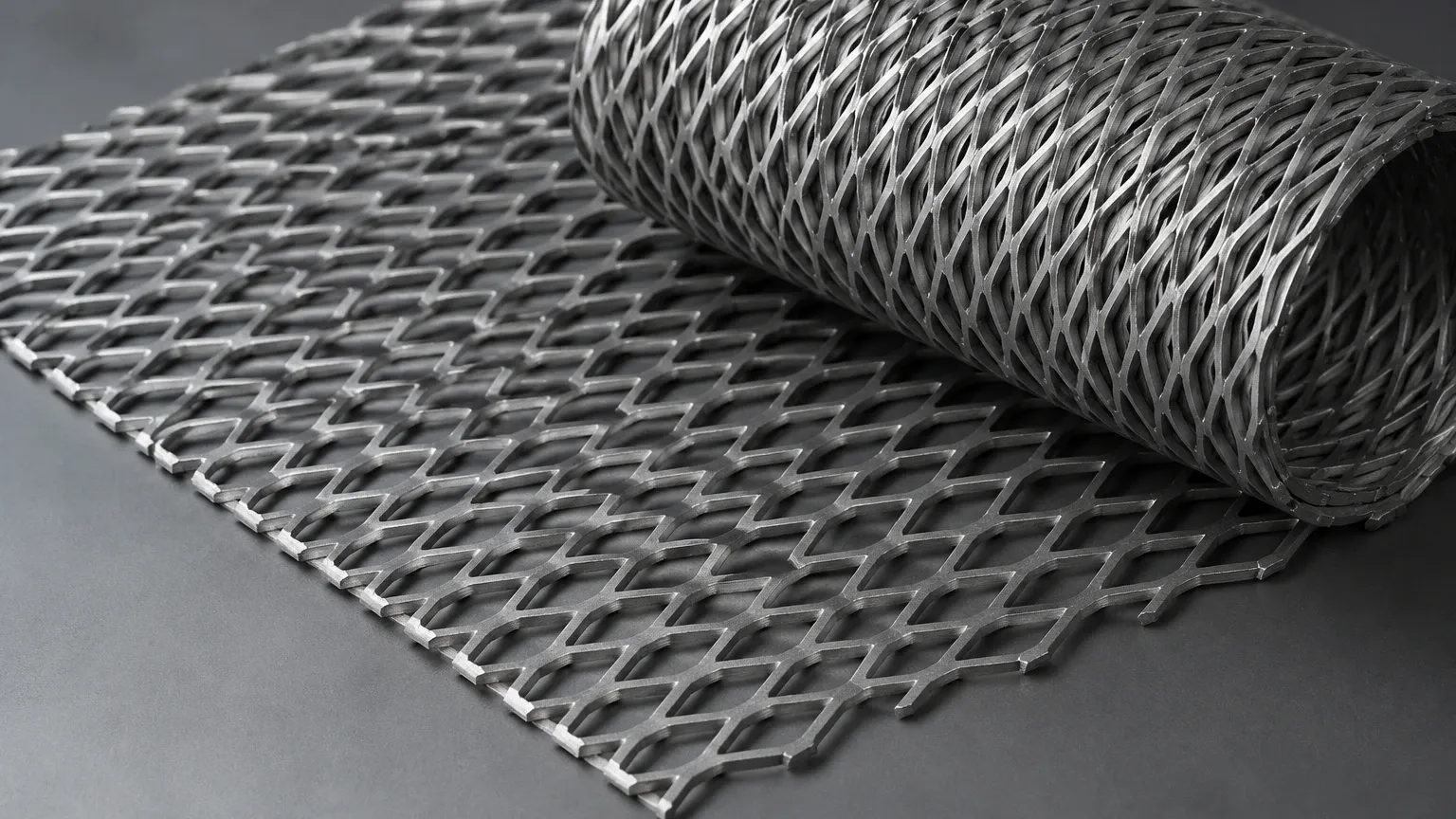
Expanded metal is produced by simultaneously slitting and stretching a solid metal sheet, creating a diamond-shaped pattern of openings. Unlike woven wire mesh, expanded metal is a single-piece construction that does not unravel, providing superior structural integrity. The designation "2496" typically refers to the standard sheet dimensions—24 inches by 96 inches—which serves as the primary stock size for further fabrication into specialized filtration components.
Understanding the Specifications of Expanded Metal 2496
When specifying expanded metal 2496 for industrial applications, engineers must look beyond the overall sheet size and evaluate the internal geometry of the mesh. The performance of the material is defined by several key parameters:
* Long Way of Diamond (LWD): The distance from the center of one bridge to the center of the next bridge across the long axis of the diamond.
* Short Way of Diamond (SWD): The distance across the short axis of the diamond.
* Strand Width and Thickness: These dimensions determine the overall weight and mechanical strength of the mesh. For filtration support, a thicker strand may be required to withstand high differential pressures.
* Open Area Percentage: This is a critical metric for filtration. It determines the flow rate and pressure drop across the media. A higher open area reduces resistance but may compromise the structural support of the primary filter medium.
In the context of Perforated & Expanded Metal, the expanded variety offers a unique advantage: the stretching process creates angled strands. These angles can be utilized to direct fluid flow or provide a mechanical "grip" for secondary filter layers, such as fine wire cloth or non-woven membranes.
Material Properties and Environmental Compatibility
The utility of expanded metal 2496 is heavily dependent on the alloy from which it is manufactured. In industrial filtration, where exposure to corrosive chemicals, high temperatures, or high-pressure steam is common, stainless steel is the preferred material.
Stainless Steel 304 vs. 316
For most general industrial applications, Grade 304 stainless steel provides adequate corrosion resistance and structural durability. However, in environments involving chlorides, marine conditions, or aggressive chemical processing, Grade 316 is specified. The addition of molybdenum in 316 stainless steel significantly enhances its resistance to pitting and crevice corrosion, which is vital when the expanded metal serves as a permanent internal support for a filter cartridge.
Specialty Alloys
In extreme cases, such as petrochemical refining or specialized pharmaceutical synthesis, expanded metal may be produced from high-nickel alloys or titanium. These materials ensure that the expanded metal 2496 component does not introduce metallic contaminants into the process stream and remains structurally sound despite thermal cycling.
Structural Advantages in Industrial Filtration
One of the primary reasons engineers select expanded metal 2496 for filtration projects is its inherent rigidity. In high-viscosity or high-pressure hydraulic applications, the filter media (such as fine mesh or fiber) is susceptible to deformation or collapse. Expanded metal acts as a "skeleton," maintaining the shape of the filter element under stress.
Support for Pleated Media
In pleated filter cartridges, expanded metal is often used as an outer wrap or an inner core. Its diamond pattern provides multiple contact points for the pleats, ensuring they remain evenly spaced. This prevents "pleat bunching," a common failure mode that reduces the effective filtration area and leads to premature pressure spikes.
Flow Dynamics
The three-dimensional nature of expanded metal—where the strands are turned at an angle to the plane of the sheet—promotes turbulence. In certain liquid filtration processes, this controlled turbulence can help prevent the accumulation of a filter cake that is too dense, thereby extending the service life of the filter before cleaning or replacement is required.
Comparing Perforated & Expanded Metal for Support Structures
While both perforated and expanded metals are used in filtration, they serve different engineering requirements. Choosing between them involves evaluating the specific needs of the application.
Perforated Metal is created by punching holes into a sheet. This process allows for extremely precise hole sizes and shapes (round, square, hexagonal). It is often used when a very specific, flat surface is required for the filter media to rest against. However, perforated metal results in significant material waste (the "slugs" that are punched out), which can increase the cost of high-grade alloys.
Expanded Metal, including the expanded metal 2496 format, is produced without any material waste. The slitting and stretching process expands the original sheet to several times its length. This makes it a more cost-effective solution for large-scale industrial filtration projects. Furthermore, the "raised" version of expanded metal provides a textured surface that can be beneficial for mechanical bonding in composite filter designs, while the "flattened" version offers a smooth surface similar to perforated metal but with the structural benefits of the expanded diamond bond.
Engineering Considerations for High-Pressure Environments
In heavy-duty industrial sectors like oil and gas or water treatment, filtration components are subjected to intense mechanical loads. When integrating expanded metal 2496 into these systems, engineers must calculate the "bond" strength. The bond is where the strands intersect; it is the strongest point of the mesh and is responsible for distributing the load across the entire sheet.
Pressure Drop Calculations
Every component in a filtration assembly contributes to the total pressure drop (ΔP). Engineers must ensure that the expanded metal 2496 used for support does not create an excessive restriction. By selecting the appropriate SWD and LWD, the open area can be optimized to balance structural support with flow efficiency. If the open area is too low, the pump energy required to move fluid through the system increases, raising the total cost of operation.
Fatigue Resistance
Industrial filters often undergo backwashing or pulse-jet cleaning to remove accumulated debris. These processes subject the internal support structures to cyclic loading. Expanded metal's monolithic structure is particularly resistant to metal fatigue compared to welded or woven alternatives, as there are no joints or intersections that can work loose over time.
Customization and OEM Integration for Filtration Systems
While 2496 identifies the stock sheet size, most industrial applications require significant customization. For OEM manufacturers, the ability to transform expanded metal 2496 into finished components is a critical part of the value chain. Customization options typically include:
* Slitting and Shearing: Cutting the 24" x 96" sheets into precise strips or blanks for cylinder forming.
* Cylindrical Forming and Welding: Rolling the expanded metal into tubes to serve as filter cores or outer guards. Precise welding techniques (such as TIG or plasma welding) are required to ensure the seam does not become a point of failure.
* Flattening: Passing the expanded metal through a cold-rolling mill to create a smooth, flat surface. This is essential when the expanded metal will be in direct contact with delicate membrane filters.
* Surface Finishing: Electropolishing or passivating the stainless steel to remove surface impurities and enhance corrosion resistance, which is standard practice in the food, beverage, and pharmaceutical industries.
Maintenance and Replacement Cycles
The durability of expanded metal 2496 often means it outlasts the primary filtration media. In many industrial designs, the expanded metal support is a permanent part of the filter housing or a reusable core. However, it is not immune to wear. Maintenance protocols should include:
1. Visual Inspection for Deformation: Over-pressurization can cause the diamond pattern to stretch or the cylinder to collapse. Any visible bowing indicates the material has exceeded its yield strength.
2. Corrosion Monitoring: Even stainless steel can succumb to localized corrosion if the fluid chemistry changes or if stagnant zones allow for the buildup of corrosive agents.
3. Cleaning Verification: In reusable systems, it is vital to ensure that the intersections (bonds) of the expanded metal are free from trapped particulates, which could lead to bacterial growth in food-grade applications.
Conclusion: Selecting the Right Filtration Partner
Expanded metal 2496 is more than just a commodity material; it is a fundamental engineering component that ensures the reliability of industrial filtration processes. Whether used as a support for pleated cartridges, a protective screen for intake valves, or a structural element in a large-scale water treatment plant, the quality of the expanded metal directly impacts the performance of the entire system.
For engineers and purchasing teams, the key to success lies in working with a manufacturer that understands the technical requirements of filtration. Precision in material grade, diamond dimensions, and finishing processes ensures that the expanded metal 2496 component will perform predictably in demanding environments. By prioritizing technical specifications and structural integrity, industrial operators can achieve efficient, durable, and cost-effective filtration performance across their most critical applications.
