


Expanded Metal 24×24
In the landscape of industrial filtration and structural support, the specification of "expanded metal 24×24" typically refers to a standardized panel size of 24 inches by 24 inches. While this dimension is common in maintenance, repair, and operations (MRO) and small-scale equipment manufacturing, the technical performance of the material depends entirely on the underlying geometry, material composition, and manufacturing process. For engineers and procurement specialists, selecting the correct expanded metal involves more than just identifying the outer dimensions; it requires a deep understanding of how the mesh structure interacts with fluid dynamics, mechanical loads, and corrosive environments.
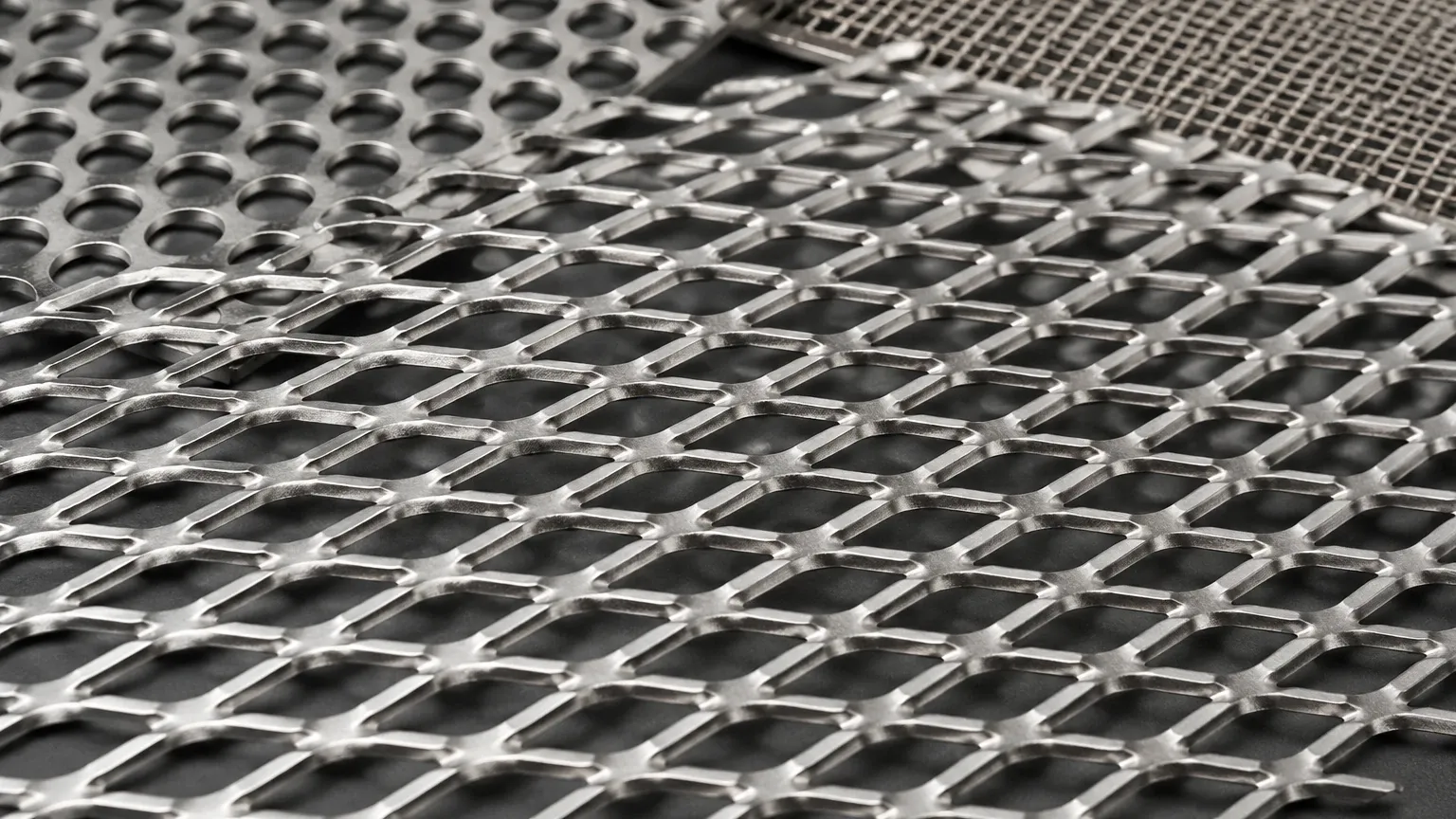
Expanded metal is produced by simultaneously slitting and stretching a solid metal sheet. This process creates a diamond-shaped pattern that is integral to the sheet, meaning there are no joins, welds, or points of potential mechanical failure common in woven or welded wire products. When integrated into filtration systems, Perforated & Expanded Metal serves as a critical structural component, often acting as the rigid skeleton that supports delicate filter media against high-pressure differentials.
Understanding the Technical Specifications of Expanded Metal
When specifying expanded metal 24×24, the external dimensions are only the starting point. To ensure the component performs as expected in an industrial filtration or support application, several geometric variables must be defined:
SWD and LWD (Short Way of Design and Long Way of Design)
These terms refer to the dimensions of the diamond-shaped openings. The SWD is the distance from the center of a bond to the center of the next bond across the short axis of the diamond. The LWD is the corresponding distance across the long axis. In filtration, the ratio between SWD and LWD determines the orientation of the mesh relative to fluid flow, which can influence turbulence and pressure drop.
Strand Width and Thickness
The strand is the single metal strip that forms the border of the diamond opening. The thickness refers to the gauge of the original base metal, while the strand width is the amount of metal fed into the precision dies during the expanding process. Together, these determine the overall weight per square foot and the mechanical rigidity of the 24×24 panel.
Standard (Raised) vs. Flattened
* Standard Expanded Metal: This is the product as it comes off the expanding machine. The strands and bonds are set at a uniform angle to the plane of the sheet. This provides maximum rigidity and a high strength-to-weight ratio, making it ideal for support cages where air or liquid must be diverted or where high mechanical grip is required.
* Flattened Expanded Metal: The standard expanded metal is passed through a cold-roll reducing mill, which flattens the strands and bonds into a single plane. Flattened expanded metal 24×24 is often preferred in filtration applications where the mesh must sit flush against a secondary filter membrane to prevent abrasion or puncturing of the media.
The Role of Perforated & Expanded Metal in Industrial Filtration
In industrial environments such as chemical processing, water treatment, and hydraulic systems, expanded metal is rarely a standalone filter. Instead, it functions as a support structure for finer wire mesh or synthetic membranes.
Structural Support and Pleat Spacing
In pleated filter cartridges, expanded metal provides the necessary internal or external support to prevent the pleats from collapsing under the force of the process fluid. A 24×24 panel might be rolled into a cylinder to form the core of a large-scale filter. The inherent rigidity of the expanded structure allows it to withstand significant collapse pressures that would deform standard woven wire cloth.
Flow Dynamics and Open Area
The "open area" percentage is a critical calculation for any engineer. It represents the ratio of the area of the openings to the total area of the sheet. For expanded metal 24×24, the open area determines the initial pressure drop ($ΔP$) across the filter assembly. Unlike perforated metal, where the open area is limited by the distance between punched holes, expanded metal can achieve very high open area percentages (up to 80% or more) while maintaining structural integrity, as the material is stretched rather than removed.
Key Evaluation Criteria for Industrial Applications
Selecting the right expanded metal 24×24 requires balancing mechanical requirements with environmental constraints. Engineers should evaluate the following criteria before finalizing a specification:
1. Material Compatibility
For B2B applications in the chemical or food and beverage industries, material selection is paramount.
* Stainless Steel 304: Suitable for general-purpose applications with moderate corrosion resistance.
* Stainless Steel 316/316L: The industry standard for pharmaceutical and marine applications due to its superior resistance to pitting and crevice corrosion in chloride-rich environments.
* Carbon Steel: Often used in hydraulic oil filtration where corrosion is less of a concern, provided the fluid remains anhydrous.
2. Load-Bearing Requirements
If the 24×24 panel is used as a tray or a screen in a vibrating separator, it must resist fatigue. The orientation of the LWD relative to the support frame is crucial. Generally, the LWD should run across the shortest span to maximize the load-bearing capacity of the panel.
3. Surface Finish and Cleanability
In food processing or pharmaceutical filtration, the surface finish of the expanded metal must be free of burrs, sharp edges, and oil residues. Standard expanding processes can leave microscopic fractures or "teeth" on the strand edges. Secondary processes such as electropolishing, pickling, or degreasing are often necessary to ensure the component meets sanitary standards and does not introduce contaminants into the process stream.
Common Risks and Procurement Challenges
Procuring expanded metal 24×24 involves navigating several technical risks that can impact the total cost of ownership and the performance of the final product.
Dimensional Tolerances
Because the expanding process involves stretching metal, achieving tight tolerances can be challenging. A standard 24×24 panel may have a tolerance of +/- 1/8 inch or more depending on the gauge. For precision filtration components, engineers must specify if "exact" shearing is required, which involves secondary trimming to ensure the panel fits perfectly into a housing or frame.
Material Thinning
During the expansion process, the thickness of the strands may slightly decrease as the metal is stretched. If a specific mechanical strength is required, engineers should specify the minimum strand thickness rather than just the starting gauge of the sheet. This ensures the 24×24 panel can handle the calculated pressure loads without yielding.
Edge Safety and Integration
Raw expanded metal has "open" diamonds at the edges, which can be sharp and difficult to weld. For OEM applications, it is often more efficient to order expanded metal 24×24 with "closed" edges or to have the manufacturer provide the panels pre-framed or edge-bound. This reduces assembly time and prevents damage to other filter components during installation.
Customization and Engineering Support
While 24×24 is a standard size, most industrial filtration challenges require a customized approach to the mesh geometry itself. Customization options go beyond the dimensions of the sheet and include:
* Variable Pitch: Adjusting the SWD and LWD to match the specific particle size retention of a pre-filter stage.
* Multi-Layer Composites: Sintering expanded metal with multiple layers of fine wire mesh to create a single, high-strength filtration plate.
* Forming and Shaping: Beyond flat panels, expanded metal can be formed into cones, cylinders, or baskets. For a 24×24 starting sheet, this might involve precision rolling and longitudinal welding to create a support cage for a liquid filter housing.
Total Cost of Ownership and Replacement Cycles
In a B2B context, the initial purchase price of expanded metal 24×24 is often a small fraction of the total cost of ownership. Durability is the primary driver of value. A high-quality stainless steel expanded metal support can last through dozens of filter media replacement cycles.
Conversely, choosing an inadequate material or gauge can lead to premature failure. If the expanded metal support deforms, it can cause the primary filter media to tear, leading to "bypass"—where unfiltered fluid enters the clean side of the system. The cost of downstream equipment damage or product contamination far outweighs the savings from a lower-spec support panel.
Engineers should also consider the ease of cleaning. In applications like food processing, the diamond intersections of expanded metal can trap particles. Specifying a flattened and electropolished finish can significantly reduce cleaning time and chemical usage during CIP (Clean-In-Place) cycles.
Conclusion: Confirming Specifications Before Procurement
Before moving forward with an order for expanded metal 24×24, technical teams should confirm the following data points with their manufacturer:
1. Exact Material Grade: (e.g., SS316L for high-acid environments).
2. Mesh Orientation: (LWD parallel or perpendicular to the 24-inch side).
3. Opening Dimensions: (Specific SWD and LWD requirements).
4. Surface Treatment: (Requirement for degreasing or passivation).
5. Tolerances: (Allowable variance in sheet size and flatness).
By focusing on these technical boundaries, engineers can ensure that the expanded metal components they integrate into their systems provide the necessary reliability and performance for demanding industrial filtration applications.
