


Expanded Metal 24×48
In the landscape of industrial filtration and structural support, the specification "expanded metal 24×48" refers to a standard panel dimension—24 inches by 48 inches—that serves as a foundational component for various engineering applications. While the dimensions are standard, the technical performance of these panels depends heavily on material selection, mesh geometry, and the manufacturing process. For engineers and procurement specialists, understanding the nuances of Perforated & Expanded Metal is essential for ensuring the longevity and efficiency of filtration systems, machine guards, and industrial enclosures.
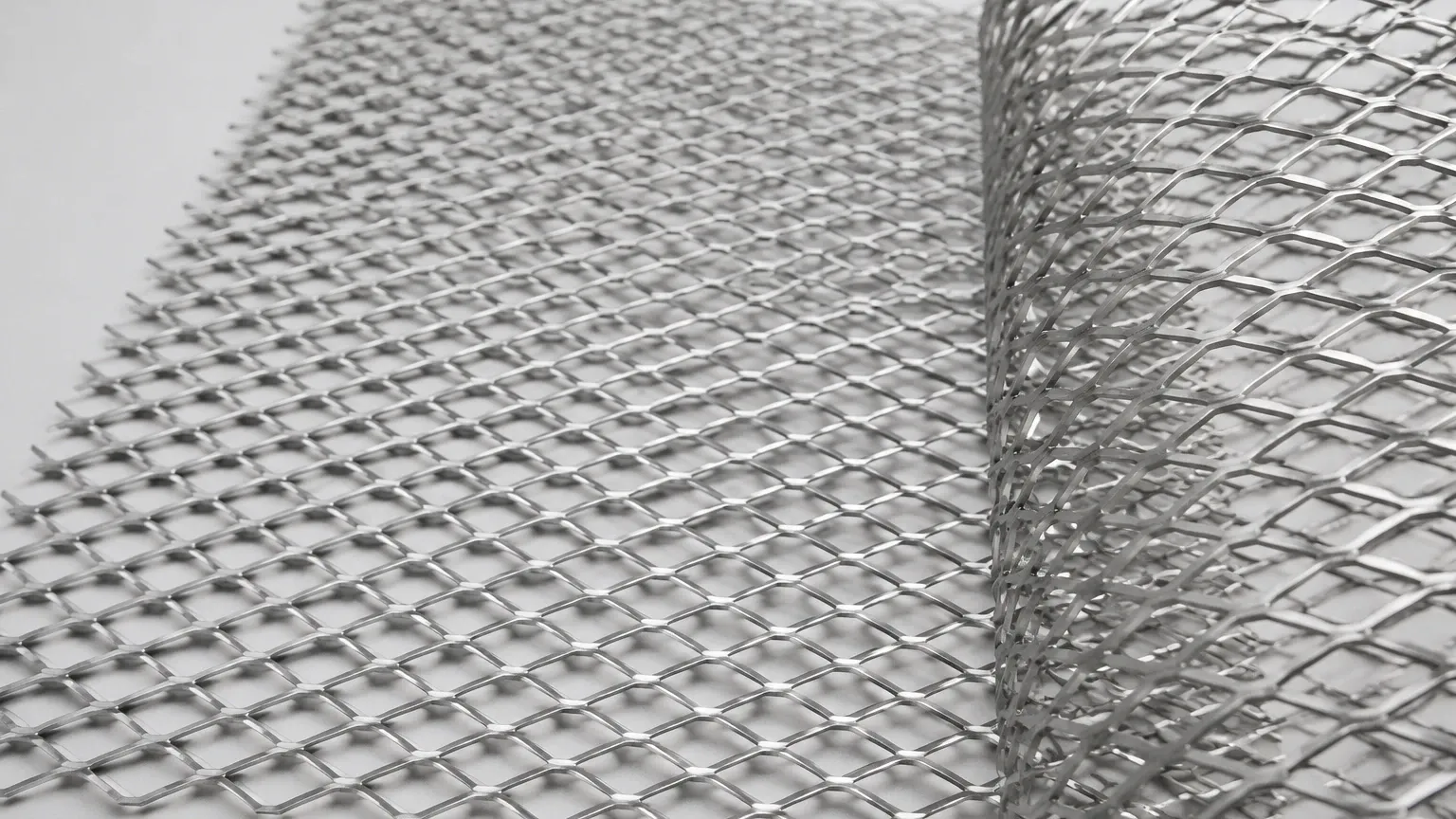
Expanded metal is produced by simultaneously slitting and stretching a solid metal sheet. This process creates a diamond-shaped pattern of openings, which provides a high strength-to-weight ratio and maintains structural integrity because the material is not punched out but rather reshaped. Unlike woven wire mesh, expanded metal is a single piece of material, eliminating the risk of fraying or strand migration under high-pressure conditions.
Technical Specifications of 24×48 Expanded Metal Panels
When specifying a 24×48 panel, engineers must look beyond the external dimensions. The performance of the mesh is defined by several critical geometric parameters:
* SWD (Short Way of Design): The distance from the center of one bond to the center of the next bond measured across the short diamond diagonal.
* LWD (Long Way of Design): The distance measured across the long diamond diagonal.
* Strand Width: The amount of metal fed into the machine between slits.
* Strand Thickness: The thickness of the original base metal.
* Open Area Percentage: This is perhaps the most critical metric for filtration applications, as it determines the flow rate and pressure drop across the panel.
A standard 24×48 sheet provides a manageable surface area for secondary operations such as welding into frames, rolling into cylindrical filter cartridges, or laser cutting into precision components. In industrial filtration, these panels often serve as the rigid support structure for finer wire cloth or as a primary coarse filter in heavy-duty hydraulic and water treatment systems.
Material Selection: Stainless Steel vs. Carbon Steel
For the industries Kaifil serves—including chemical processing, pharmaceuticals, and food and beverage—material selection is non-negotiable. While carbon steel expanded metal is common in general construction, industrial filtration requires the corrosion resistance and thermal stability of stainless steel.
SS304 vs. SS316
Stainless steel 304 is the standard for many industrial environments, offering excellent durability and resistance to oxidation. However, in marine environments or chemical processing plants involving chlorides and high-acidity fluids, SS316 is the preferred choice. The addition of molybdenum in SS316 provides superior resistance to pitting and crevice corrosion, which is vital when the expanded metal 24×48 panel is used as a support element in corrosive filtration housings.
Specialty Alloys
In high-temperature applications or highly aggressive chemical environments, specialty alloys such as Monel, Inconel, or Hastelloy may be required. These materials ensure that the expanded metal structure does not degrade, which could lead to downstream contamination or structural failure of the filter assembly.
Raised vs. Flattened Expanded Metal
One of the most important decisions an engineer must make when selecting a 24×48 panel is whether to use a "raised" or "flattened" finish. This choice significantly impacts the mechanical properties and flow dynamics of the component.
Raised (Standard) Expanded Metal
In its "as-manufactured" state, expanded metal features strands that are set at an angle to the plane of the sheet. This creates a three-dimensional surface.
* Advantages: Higher rigidity, better grip (if used for walkways), and unique flow turbulence that can be beneficial in certain mixing or coarse filtration applications.
* Disadvantages: Increased thickness and a non-uniform surface that can be difficult to bond with fine mesh layers.
Flattened Expanded Metal
Flattened expanded metal is produced by passing the standard raised sheet through a cold-roll reducing mill. This process levels the strands and bonds into a single plane.
* Advantages: Consistent thickness, smooth surface, and ease of cleaning. In filtration, flattened expanded metal is ideal as a support substrate for fine wire mesh, as it provides a flat surface that prevents the mesh from being punctured or distorted under pressure.
* Disadvantages: Slightly reduced structural rigidity compared to the raised version of the same weight.
Engineering Considerations: Flow and Pressure Drop
In B2B industrial procurement, the "expanded metal 24×48" panel is rarely the end product; it is a component in a larger system. Engineers must calculate the pressure drop (ΔP) across the filter to ensure the system pump can maintain the required flow rate.
The open area of expanded metal is determined by the relationship between the strand width and the SWD/LWD. A panel with a high percentage of open area allows for high flow rates with minimal resistance but offers less structural support. Conversely, a "heavy" expanded metal with wide strands and small openings provides immense strength but may cause an unacceptable pressure drop if used as a primary filter screen.
When designing custom filtration solutions, Kaifil assists engineers in balancing these factors. For instance, in a hydraulic return line filter, the expanded metal must be strong enough to withstand sudden pressure surges (bypass events) without collapsing, while still allowing the fluid to pass through during normal operation.
Customization and OEM Integration
While 24×48 is a standard size, many industrial applications require custom dimensions, circular shapes, or specialized edge treatments. Relying on a manufacturer with OEM capabilities allows for the procurement of components that are ready for immediate installation.
Customization options include:
* Specific Cut-to-Size: Precise dimensions beyond the 24×48 standard to fit unique housings.
* Edge Treatments: Deburring, U-edging, or solid borders to improve safety and ease of welding.
* Forming: Rolling the panels into cylinders or cones for use in filter cartridges.
* Surface Finishes: Electropolishing or passivating stainless steel components to meet the strict hygiene standards of the food and pharmaceutical industries.
By working with a specialist in Perforated & Expanded Metal, purchasing teams can reduce waste and secondary processing costs. Instead of buying standard 24×48 sheets and processing them in-house, they can receive precision-engineered components that meet exact application requirements.
Common Risks and Quality Assurance
Procuring expanded metal for industrial use involves risks that are often overlooked in general hardware procurement. These include:
1. Material Substitution: Ensuring the alloy grade (e.g., SS316) matches the mill test report (MTR). Lower-grade materials will fail prematurely in corrosive environments.
2. Dimensional Tolerances: In precision filtration, even a small deviation in SWD or LWD can affect the calculated open area and, consequently, the filtration performance.
3. Burrs and Sharp Edges: In food-grade or pharmaceutical applications, burrs can trap contaminants or shed metal particles into the process stream. High-quality manufacturing includes rigorous deburring and cleaning protocols.
4. Flatness Issues: For panels intended to be used as support for fine mesh, any bowing or warping in the 24×48 sheet can lead to gaps and bypass in the final filter assembly.
Conclusion: Selecting the Right Solution
The expanded metal 24×48 panel is a versatile and essential component in the industrial toolkit. Whether it is used as a protective guard, a support structure for high-precision filter media, or a coarse strainer, its performance is dictated by the engineering choices made during the specification phase.
For technical professionals, the key to a successful implementation lies in defining the environmental constraints (temperature, chemistry, pressure) and the required mechanical properties (flow rate, rigidity, surface finish). By moving beyond generic stock and focusing on precision-manufactured stainless steel solutions, industries can achieve higher reliability and lower total cost of ownership in their filtration processes.
