


Expanded Metal 2.4×1 2m
In the realm of industrial material science and filtration engineering, the selection of structural components is dictated by a balance of mechanical strength, weight, and permeability. Among the most versatile formats utilized in global manufacturing is the expanded metal 2.4×1 2m sheet. This specific dimension, roughly equivalent to the 8ft x 4ft standard, serves as a fundamental building block for various industrial applications ranging from heavy-duty filtration support to architectural safety barriers.
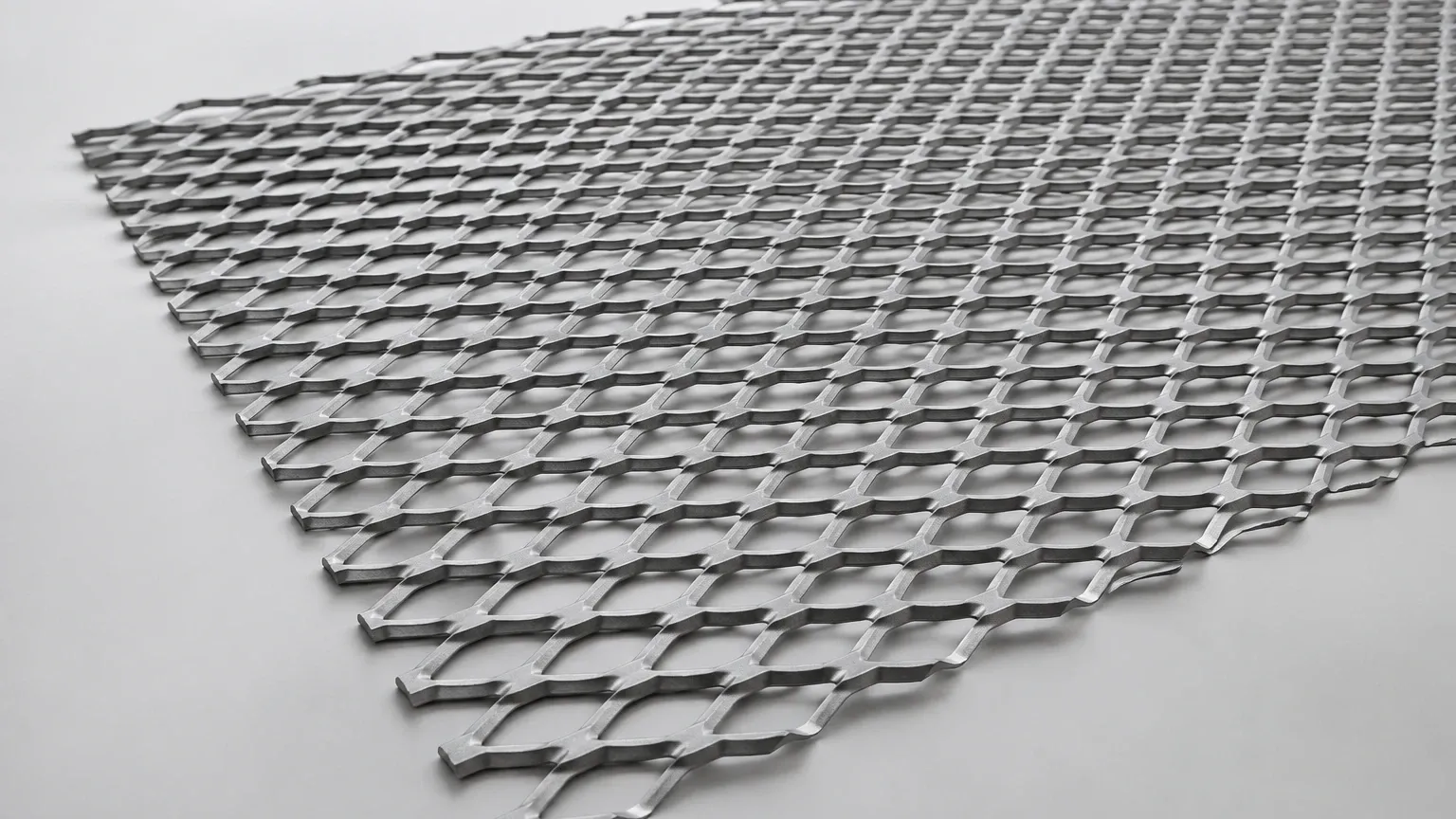
Expanded metal is produced through a process of simultaneous slitting and stretching of metal coils or sheets. Unlike perforated materials, which involve punching out holes and creating scrap, expanded metal is formed without any material loss. This makes it an inherently cost-effective and sustainable choice for engineers looking to optimize material usage while maintaining structural integrity. When dealing with specialized materials like stainless steel, the efficiency of the expanded metal process becomes even more critical due to the higher raw material costs.
Technical Specifications and Geometry
To effectively integrate expanded metal 2.4×1 2m into an industrial system, engineers must understand the specific terminology used to define its geometry. The performance of the sheet is not merely determined by its outer dimensions but by the intricate details of the mesh pattern.
1. LWD (Long Way of Diamond): This is the distance from a point on a diamond to the corresponding point on the next diamond, measured across the long axis. In a standard 2.4×1.2m sheet, the LWD usually runs parallel to the length of the sheet.
2. SWD (Short Way of Diamond): This is the distance across the short axis of the diamond. The relationship between LWD and SWD determines the "openness" of the mesh.
3. Strand Width and Thickness: The strand width refers to the amount of metal between the diamonds, while the thickness refers to the gauge of the original base material. These two factors are the primary drivers of the sheet's load-bearing capacity.
4. Raised vs. Flattened: Expanded metal is naturally "raised," meaning the strands are at an angle to the plane of the sheet. For applications requiring a smooth surface, such as certain filtration layers or walkways, the material can be cold-rolled to produce "flattened" expanded metal.
Understanding these variables allows for the calculation of the open area percentage, which is a vital metric for fluid dynamics and airflow in industrial environments.
Material Integrity: The Role of Stainless Steel
While expanded metal can be manufactured from carbon steel or aluminum, high-performance industrial applications—particularly in chemical processing and filtration—demand the use of stainless steel. As a manufacturer specializing in Perforated & Expanded Metal, Kaifil emphasizes the selection of appropriate alloys to ensure longevity and performance.
* Grade 304 Stainless Steel: This is the standard choice for general industrial use. It offers excellent corrosion resistance and is suitable for most environments where high-strength support is needed without exposure to extreme chlorides.
* Grade 316/316L Stainless Steel: For more demanding environments, such as marine applications, pharmaceutical production, or aggressive chemical filtration, 316 stainless steel is preferred. The addition of molybdenum provides superior resistance to pitting and crevice corrosion.
The use of stainless steel in expanded metal 2.4×1 2m sheets ensures that the structure remains stable under thermal stress and does not introduce contaminants into the process stream, which is a critical requirement in the food and beverage industry.
Advantages in Industrial Filtration Support
One of the primary uses for expanded metal 2.4×1 2m is as a support structure for finer filtration media. In high-pressure hydraulic systems or large-scale water treatment plants, fine wire mesh filters lack the rigidity to withstand the differential pressure of the flow. Expanded metal provides the necessary "skeleton."
Structural Rigidity
Because the diamonds are formed from a single piece of metal, the strands are interconnected, creating a truss-like structure. This allows a relatively thin sheet of expanded metal to support significant loads without deforming. When used as an outer cage or inner core for filter cartridges, it protects the delicate filter media from collapsing under pressure spikes.
Optimized Flow Dynamics
The angled strands of raised expanded metal can be used to influence flow patterns. In certain gas filtration applications, the geometry of the mesh helps in diffusing the flow, preventing "channeling" where the gas passes through only a small portion of the filter media. This ensures a more uniform distribution and extends the service life of the primary filter element.
Minimal Pressure Drop
By selecting a large LWD and SWD, engineers can achieve a high open-area percentage. This is crucial for minimizing the pressure drop across the filtration system. A well-designed expanded metal support provides maximum strength with minimum resistance to the fluid or gas being processed.
Comparing Perforated & Expanded Metal for Industrial Use
When specifying metal components, engineers often weigh the pros and cons of perforated metal versus expanded metal. While both serve similar roles in filtration and protection, their manufacturing processes and physical properties differ significantly.
Material Efficiency: Perforated metal is created by punching holes, which can result in up to 40% material waste. Expanded metal is slit and stretched, resulting in zero waste. This makes expanded metal 2.4×1 2m a more economical choice, especially in high-grade alloys.
Strength-to-Weight Ratio: Expanded metal is generally stronger than a perforated sheet of the same weight because the strands are oriented at an angle, providing three-dimensional rigidity. This allows for the use of lighter-weight sheets to achieve the same structural goals, reducing the overall weight of the industrial equipment.
Surface Texture: Perforated metal is naturally flat. Expanded metal is naturally raised. If a flat surface is required for a specific filtration interface, flattened expanded metal must be specified. However, the raised texture of standard expanded metal can be an advantage in applications requiring high friction or mechanical grip.
Procurement Considerations: Quality Standards and Tolerances
When purchasing expanded metal 2.4×1 2m for industrial projects, technical professionals must confirm several quality parameters to ensure the material is fit for purpose. Variations in manufacturing can lead to issues during installation or premature failure in the field.
1. Camber and Out-of-Squareness: In a 2.4m sheet, even a slight deviation in the squareness can cause alignment issues when welding or framing the mesh. It is essential to confirm that the manufacturer adheres to strict dimensional tolerances.
2. Edge Conditions: Expanded metal can be supplied with "random sheared" or "bond sheared" edges. Bond sheared edges provide a closed diamond pattern along the perimeter, which is safer to handle and easier to weld into frames.
3. Surface Cleanliness: For pharmaceutical and food-grade applications, the expanded metal must be free from manufacturing oils and burrs. Ultrasonic cleaning or electropolishing may be required as secondary processes to ensure the material meets sanitary standards.
4. Flatness: For sheets intended for use as support plates, flatness is critical. Any bowing in the 2.4×1.2m sheet can create gaps between the support and the filter media, leading to bypass or mechanical wear.
Customization and Secondary Processing
While the 2.4×1.2m sheet is a standard size, many industrial applications require further customization. Kaifil provides extensive OEM capabilities to tailor these components to specific technical requirements.
Beyond simple cutting to size, secondary processing can include:
* Forming and Bending: Expanded metal can be rolled into cylinders for use as filter cores or bent into U-shapes for protective guards.
* Welding and Framing: To facilitate easy installation, expanded metal sheets can be pre-welded into stainless steel frames or angles.
* Coating and Finishing: While stainless steel is often left in its natural state, other materials may require galvanizing or powder coating for added protection or aesthetic purposes in architectural applications.
Engineers should work closely with the manufacturer during the design phase to determine the optimal mesh size and strand configuration. For example, a custom LWD/SWD ratio might be necessary to match the pleat spacing of a high-efficiency particulate air (HEPA) filter or a heavy-duty hydraulic element.
Conclusion
The expanded metal 2.4×1 2m sheet remains a cornerstone of industrial design due to its unique combination of strength, efficiency, and versatility. Whether acting as a robust support for precision filtration media or providing a durable safety barrier in a chemical plant, its performance is rooted in the precision of its manufacture and the quality of the base material.
For engineering and procurement teams, the key to a successful implementation lies in defining the exact geometric and material requirements of the application. By understanding the nuances of LWD, SWD, and the benefits of stainless steel alloys, professionals can ensure they select a solution that offers the best total cost of ownership and long-term reliability. As industrial processes become more demanding, the role of high-quality Perforated & Expanded Metal continues to expand, providing the structural foundation for modern filtration and industrial infrastructure.
