


Expanded Metal 3 4 #9 Flat
In industrial engineering and manufacturing, selecting the correct structural media is critical for ensuring the longevity and efficiency of filtration systems, protective enclosures, and architectural components. Among the various specifications available, expanded metal 3 4 #9 flat stands out as a versatile and robust choice. This specific configuration offers a balance of open area, mechanical strength, and surface smoothness that is particularly valuable in heavy-duty industrial applications.
Understanding the technical nuances of this material requires a deep dive into its nomenclature, manufacturing process, and performance characteristics. For engineers and procurement specialists, the decision to utilize expanded metal 3 4 #9 flat often hinges on its ability to provide structural support without significantly impeding fluid flow or adding excessive weight to a system.
Technical Specifications and Nomenclature
The designation "3/4 #9 Flat" follows a standardized industry nomenclature that defines the geometric and material properties of the expanded metal. To make an informed selection, it is essential to break down these components from an engineering perspective.
The 3/4" Designation (Nominal Diamond Size)
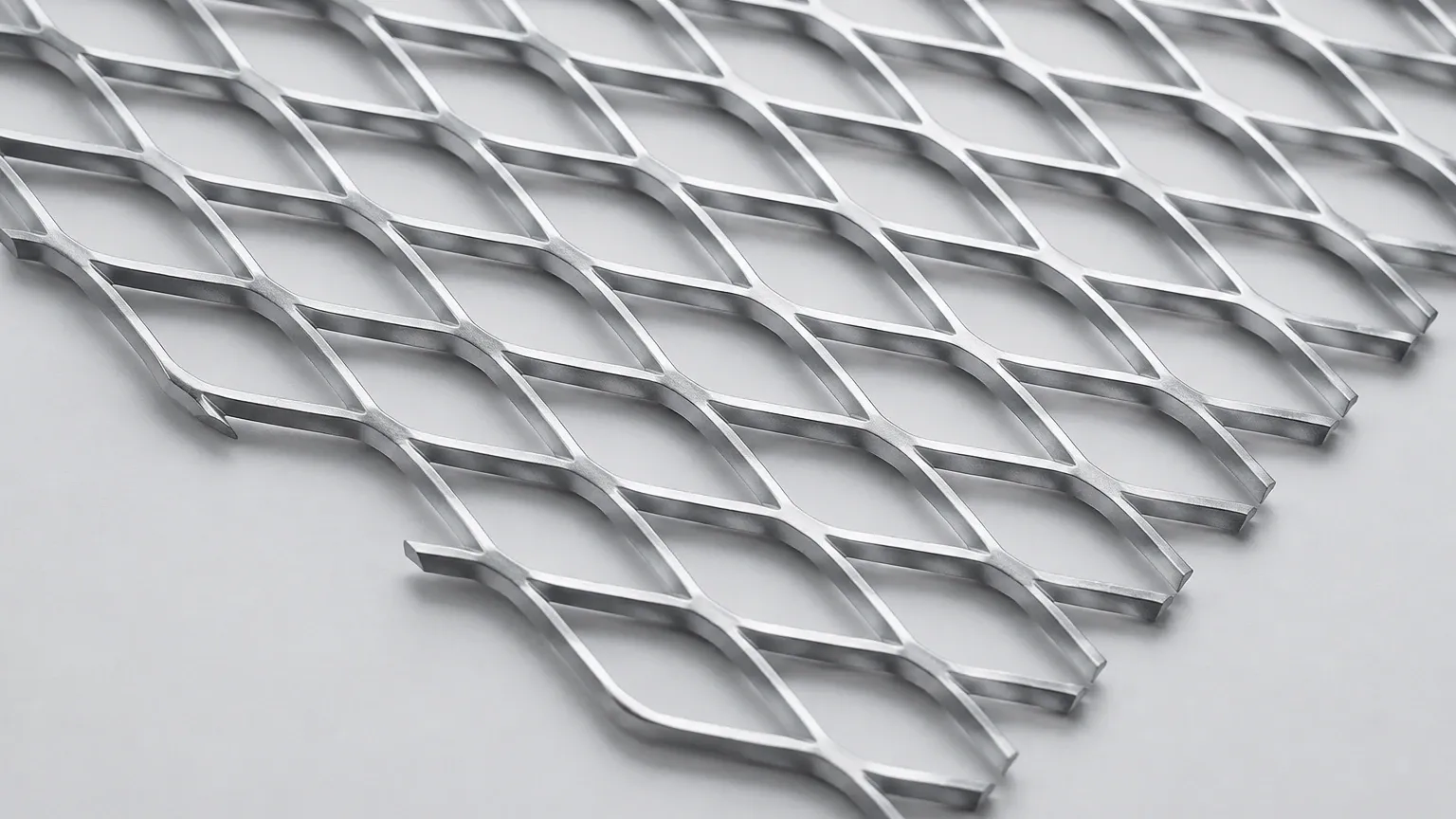
The "3/4" refers to the nominal width of the diamond opening, specifically the Short Way of Design (SWD). In the context of expanded metal, the SWD is measured from the center of one bond to the center of the next bond across the short axis of the diamond. While the nominal size is 3/4", the actual opening size may vary slightly depending on the strand width and the specific manufacturing tolerances. Typically, for a 3/4 #9 specification, the actual SWD opening is approximately 0.688 inches to 0.812 inches.
The #9 Gauge (Material Thickness)
The "#9" refers to the thickness of the metal used before the expansion process. In the United States, this gauge corresponds to approximately 0.120 inches (about 3.0mm) for carbon steel. It is important to note that the gauge system can differ slightly between materials (e.g., aluminum vs. stainless steel), but in the context of Perforated & Expanded Metal, #9 remains one of the more substantial thicknesses used for industrial-grade mesh.
The "Flat" Characteristic
Expanded metal is naturally produced in a "raised" or "standard" state, where the strands are set at an angle to the plane of the sheet. To produce expanded metal 3 4 #9 flat, the standard expanded sheet is passed through a cold-roll reducing mill. This process flattens the strands and bonds into a single plane, resulting in a smooth, level surface. Flattening reduces the overall thickness of the sheet (usually by about 20-30%) and slightly elongates the diamond pattern, but it provides a surface that is safer to handle and easier to integrate into multi-layered filtration assemblies.
The Flattening Process and Its Mechanical Impact
The transition from raised to flattened expanded metal is not merely aesthetic; it significantly alters the mechanical behavior of the material. When a #9 gauge sheet is flattened, the cold-rolling process work-hardens the metal, which can increase its yield strength but may slightly reduce its ductility.
For engineers designing filtration supports or machine guards, the flatness of the material is a primary requirement. In filtration, a raised surface can create uneven pressure points on delicate filter media, such as fine wire mesh or synthetic membranes. By using expanded metal 3 4 #9 flat, the pressure is distributed across a smooth surface, preventing the "dimpling" or tearing of the primary filtration layer. Furthermore, the flattening process ensures that the overall profile of the component remains thin, which is often a constraint in compact hydraulic or chemical processing units.
Material Selection: Stainless Steel vs. Carbon Steel
While expanded metal 3 4 #9 flat can be manufactured from various alloys, the choice of material is dictated by the operating environment. At Kaifil, the focus is often on high-performance alloys that withstand demanding industrial conditions.
1. Stainless Steel (304 and 316L): This is the preferred choice for chemical processing, food and beverage, and pharmaceutical applications. Stainless steel 316L, in particular, offers superior resistance to pitting and crevice corrosion in chloride-rich environments. The use of stainless steel ensures that the expanded metal does not introduce contaminants into the process stream.
2. Carbon Steel: Frequently used in applications where corrosion is not a primary concern or where the material will be subsequently coated (e.g., galvanized or powder-coated). It offers a cost-effective solution for structural supports and safety partitions.
3. Aluminum: Chosen for its high strength-to-weight ratio and natural corrosion resistance in atmospheric conditions. However, it is less common in high-pressure filtration applications due to its lower modulus of elasticity compared to steel.
Engineering Considerations for Filtration and Support
When integrating expanded metal 3 4 #9 flat into a filtration system, several engineering factors must be evaluated to ensure system performance is optimized.
Open Area and Pressure Drop
The 3/4 #9 flat specification typically provides an open area of approximately 60% to 75%. This high percentage of open area is crucial for minimizing pressure drop across the filter element. In high-viscosity fluid applications, such as hydraulic oil filtration, maintaining a high open area ensures that the support structure does not become a bottleneck for flow, which could lead to pump cavitation or system inefficiency.
Structural Integrity and Load Bearing
Despite its high open area, the #9 gauge thickness provides significant structural rigidity. The diamond pattern acts as a series of interconnected trusses, distributing loads across the entire sheet. When used as a support core in a filter cartridge, the expanded metal must resist the differential pressure that builds up as the filter media becomes loaded with contaminants. Engineers must calculate the collapse strength of the expanded metal cylinder to ensure it exceeds the maximum possible differential pressure of the system.
Directional Strength
Expanded metal is anisotropic, meaning its mechanical properties differ depending on the direction of the load. The Long Way of Design (LWD) typically offers greater flexibility, while the Short Way of Design (SWD) provides more rigidity. When fabricating cylindrical filter supports, the orientation of the diamonds (whether the LWD or SWD runs axially) will affect the hoop strength and the ease of forming the cylinder.
Common Applications in Industrial Sectors
The versatility of expanded metal 3 4 #9 flat allows it to serve multiple functions across various industries. Its unique combination of durability and permeability makes it a staple in industrial design.
* Filtration Support Cores: Serving as the internal or external skeleton for pleated filter elements, providing the necessary strength to withstand high-pressure flows in water treatment and chemical processing.
* Machine Guarding: The 3/4" opening is small enough to prevent accidental contact with moving parts while allowing for excellent visibility and airflow for cooling motors and gearboxes.
* Industrial Walkways and Grating: In its flattened state, it provides a slip-resistant surface that is comfortable for foot traffic while allowing debris and liquids to pass through, keeping the walking surface clear.
* Vibration Dampening: When used in heavy machinery enclosures, the expanded metal can help break up sound waves and provide a mounting surface for acoustic insulation materials.
Procurement and Quality Verification
When sourcing expanded metal 3 4 #9 flat, purchasing teams and engineers should confirm several key details with the manufacturer to ensure the product meets the application's specific requirements.
Dimensional Tolerances
Standard industrial tolerances for expanded metal can vary. It is important to specify the allowable variance in sheet size, flatness, and diamond uniformity. For precision filtration components, tighter tolerances may be required to ensure a proper fit within the filter housing.
Edge Conditions
Expanded metal can be supplied with "random sheared" edges or "bond sheared" edges. Random shearing may leave sharp points (prongs) where the diamonds are cut, which can be hazardous or damage other components. Bond shearing or edge U-edging is often preferred for safety and ease of assembly.
Surface Finish and Cleanliness
In industries like pharmaceuticals or food processing, the surface finish of the expanded metal is paramount. The flattening process can sometimes leave trace amounts of rolling oils or surface imperfections. Specifying a bright annealed finish or an electropolished surface for stainless steel components ensures that the material meets the necessary hygienic standards and is free from burrs that could harbor bacteria.
Optimizing System Performance with Precision Components
Selecting the right structural media is a balance between performance, cost, and durability. Expanded metal 3 4 #9 flat provides a proven solution for engineers who require a high-strength, high-permeability material that can withstand the rigors of industrial environments. Whether it is used as a foundational support in a complex filtration assembly or as a robust safety barrier, its predictable mechanical properties and versatile material options make it an essential component in modern industrial design.
By focusing on the technical details—such as the impact of the flattening process on strand geometry and the importance of material compatibility—technical professionals can ensure that their systems operate at peak efficiency with minimal maintenance requirements. As industrial processes become more demanding, the reliance on high-quality, precision-manufactured expanded metal will only continue to grow.
