


Expanded Metal 3 4 #9 Weight
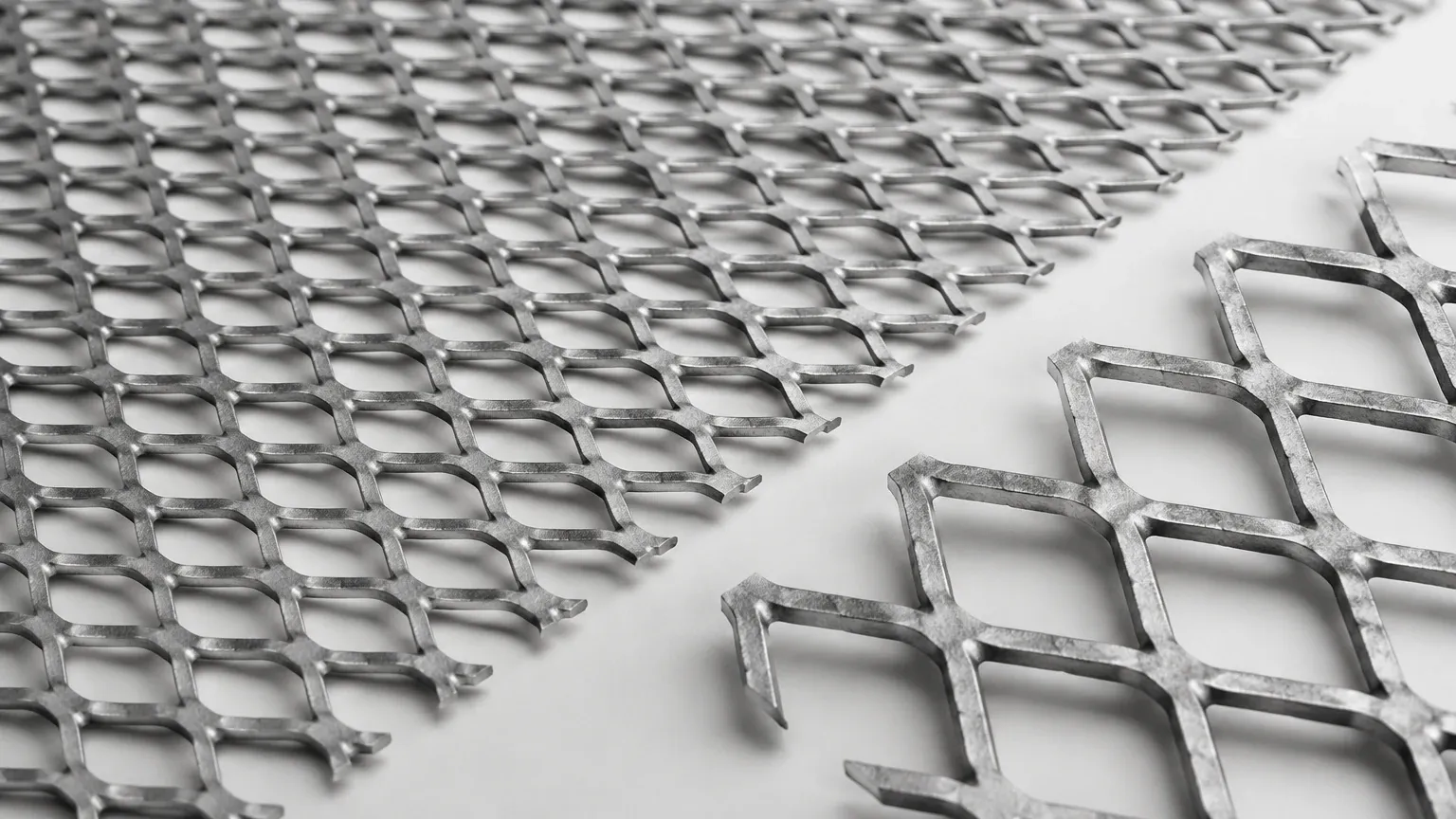
In the realm of industrial fabrication and filtration support, the specification "3/4 #9" represents one of the most versatile and widely utilized grades of expanded metal. For engineers and procurement specialists, understanding the technical nuances of expanded metal 3 4 #9 weight, structural integrity, and material performance is essential for ensuring the longevity of filtration systems and industrial components. Expanded metal is produced by simultaneously slitting and stretching a solid sheet of metal, creating a diamond-shaped pattern that maintains the structural continuity of the original material while significantly reducing its weight per square foot.
At Kaifil, where precision engineering meets industrial filtration requirements, we recognize that the choice of support media—whether Perforated & Expanded Metal—directly impacts the efficiency and durability of the final filter assembly. This article provides a technical deep dive into the specifications of 3/4 #9 expanded metal, focusing on weight calculations, material properties, and its role in demanding industrial environments.
Understanding the Geometry of 3/4 #9 Expanded Metal
The designation "3/4 #9" is not an arbitrary number; it refers to specific dimensional characteristics that dictate the mesh's performance.
Short Way of Diamond (SWD) and Long Way of Diamond (LWD)
The "3/4" in the specification refers to the nominal width of the diamond opening, measured from the center of one bridge to the center of the next bridge across the Short Way of the Diamond (SWD). In a standard 3/4 #9 configuration, the actual SWD opening is typically around 0.923 inches, while the Long Way of the Diamond (LWD) measures approximately 2.10 inches. These dimensions determine the "open area" of the mesh, which is a critical factor for fluid dynamics and airflow in filtration applications.
Gauge and Strand Dimensions
The "#9" refers to the thickness of the metal used before the expansion process. For carbon steel, #9 gauge is approximately 0.134 inches thick. During the expansion process, the metal is stretched, and the resulting strand width is typically around 0.150 inches. The interaction between the thickness and the strand width determines the overall strength and the weight of the finished product.
The Significance of Weight in Material Selection
When specifying expanded metal for industrial projects, weight is more than just a shipping consideration; it is a proxy for material density and structural capability. For expanded metal 3 4 #9 weight, the standard measurement is expressed in pounds per square foot (lb/ft²).
Standard Weight Benchmarks
* Raised Expanded Metal: In its standard (raised) form, 3/4 #9 carbon steel typically weighs approximately 1.80 lbs per square foot. The raised profile provides additional rigidity and a higher slip-resistance surface, which is beneficial for external guards or heavy-duty filter cages.
* Flattened Expanded Metal: When the mesh is passed through a cold-rolling reducing mill, it becomes "flattened." This process reduces the thickness of the strands and increases the overall dimensions slightly. Flattened 3/4 #9 carbon steel typically weighs approximately 1.71 lbs per square foot. Flattened mesh is often preferred for filtration applications where a smooth surface is required to prevent damage to delicate filter media like wire mesh or non-woven fabrics.
Weight Variations by Material
While carbon steel is the baseline for weight calculations, industrial filtration often requires stainless steel (typically 304 or 316 grade) to withstand corrosive environments. Stainless steel has a slightly higher density than carbon steel, meaning a 3/4 #9 stainless steel sheet will be marginally heavier than its carbon steel counterpart, though the difference is often negligible in structural calculations. However, the chemical resistance provided by stainless steel is paramount in pharmaceutical and chemical processing applications.
Material Options: Carbon Steel vs. Stainless Steel
Kaifil specializes in custom stainless steel filtration solutions, and while 3/4 #9 expanded metal is available in various alloys, the choice of material should be dictated by the operating environment.
1. Carbon Steel: Often used in hydraulic oil filtration or general industrial machinery where corrosion is not a primary concern. It is cost-effective but requires coating (such as galvanizing or powder coating) if exposed to moisture.
2. Stainless Steel (304/316): The gold standard for filtration. Stainless steel 3/4 #9 offers exceptional resistance to oxidation and organic chemicals. In high-temperature applications, such as steam filtration or hot gas emission control, stainless steel maintains its mechanical properties far better than carbon steel.
3. Aluminum: Used where weight reduction is the primary goal. Aluminum expanded metal is roughly one-third the weight of steel, though it offers significantly lower tensile strength and is less common in high-pressure filtration systems.
Role of Expanded Metal in Industrial Filtration Systems
In the context of industrial filtration, 3/4 #9 expanded metal rarely acts as the primary filter medium. Instead, it serves as a critical structural component. Its primary functions include:
Structural Reinforcement (Filter Cages)
High-performance filter cartridges, especially those used in high-viscosity fluid processing or high-pressure hydraulic systems, require an internal or external support structure. The 3/4 #9 mesh provides the necessary hoop strength to prevent the collapse of the pleats or the primary filter media (such as fine wire mesh or fiberglass) under differential pressure.
Pre-Filtration and Debris Shielding
In water treatment or intake systems, expanded metal acts as a coarse pre-filter. The diamond pattern is effective at catching large debris—such as twigs, plastic, or large scale—before it reaches the finer filtration stages. The 3/4-inch opening is particularly well-suited for protecting pumps and valves from medium-sized contaminants.
Flow Distribution
The geometry of expanded metal helps in breaking up laminar flow and promoting turbulent flow, which can be advantageous in certain heat exchange or chemical reaction vessels where uniform fluid distribution across the filter bed is required.
Evaluating Structural Integrity and Load Performance
Engineers must calculate the load-bearing capacity of expanded metal when it is used in platforms, covers, or large-scale filter housings. The 3/4 #9 specification is considered a "heavy-duty" mesh.
Deflection and Span
When used as a support, the orientation of the diamond matters. The Long Way of the Diamond (LWD) should typically run perpendicular to the support members to maximize strength. For a 3/4 #9 mesh, the deflection under a uniform load is significantly lower than lighter gauges like #13 or #18. If the filter system is expected to handle high-pressure surges, the #9 gauge provides a safety margin against permanent deformation.
Open Area Percentage
The open area of 3/4 #9 expanded metal is approximately 68% to 75%, depending on whether it is raised or flattened. This high percentage of open area is critical for filtration because it minimizes pressure drop across the support structure. An engineer must balance the need for structural thickness (#9 gauge) with the need for maximum flow (open area).
Comparing Perforated & Expanded Metal for Filtration Support
Choosing between expanded metal and perforated metal is a common dilemma in filter design. Both materials are available through Kaifil's Perforated & Expanded Metal solutions, but they serve different engineering goals.
* Material Efficiency: Expanded metal is more resource-efficient. Since it is stretched rather than punched, there is zero material waste during production. This often makes 3/4 #9 expanded metal more cost-effective than a perforated sheet of similar thickness and open area.
* Strength-to-Weight Ratio: Expanded metal generally offers a higher strength-to-weight ratio because the bridges and bonds form a truss-like structure. However, perforated metal offers more precise control over hole size and spacing, which is necessary for fine filtration.
* Surface Consistency: Perforated metal provides a perfectly flat surface. Even flattened expanded metal has slight variations at the bonds where the strands intersect. If the filter media is extremely thin or sensitive to abrasion, perforated metal may be the safer choice.
Customization and Procurement Checklist for Engineers
When sourcing expanded metal 3 4 #9 for a project, providing precise specifications to the manufacturer ensures the component will perform as expected. Before placing an order, confirm the following parameters:
1. Style: Specify "Standard (Raised)" or "Flattened."
2. Material Grade: Specify the exact alloy (e.g., 316L Stainless Steel for marine or medical applications).
3. Sheet Dimensions: Standard sheets are often 4'x8' or 4'x10', but custom-cut sizes reduce waste and assembly time.
4. Direction of Diamond: Confirm if the LWD should run parallel or perpendicular to the length of the sheet. This is vital for both structural strength and aesthetic consistency.
5. Finish Requirements: Does the metal need to be passivated (for stainless steel), degreased, or deburred? For filtration, removing sharp edges is essential to prevent tearing the primary filter media.
Maintenance and Durability in Industrial Environments
The durability of 3/4 #9 expanded metal is one of its primary selling points. In a well-designed filtration system, the expanded metal support should ideally outlast the replaceable filter elements.
* Cleaning: In systems where the filter is backwashed or cleaned in place (CIP), the open diamond pattern of 3/4 #9 allows for efficient debris removal. Unlike woven wire mesh, which can trap particles in the knuckles of the weave, the smooth strands of expanded metal are easier to sanitize.
* Corrosion Monitoring: In chemical processing, even stainless steel can suffer from pitting or stress corrosion cracking over time. Regular inspection of the bonds (the points where the strands meet) is recommended, as these are the areas of highest stress and potential failure.
By selecting the correct expanded metal 3 4 #9 weight and material, industrial operators can achieve a balance between robust mechanical support and efficient fluid processing. Whether used as a protective cage for a stainless steel filter cartridge or a structural component in a large-scale water treatment facility, this specification remains a cornerstone of industrial engineering.
