


Expanded Metal 3/4 #9
In the realm of industrial filtration and structural engineering, material selection is dictated by the balance between mechanical strength, open area, and environmental resistance. Among the various specifications available in the market, expanded metal 3/4 #9 stands out as one of the most versatile and widely utilized configurations. This specification is frequently employed in heavy-duty filtration systems, machine guards, and structural support frameworks where durability is non-negotiable.
As a specialized manufacturer of high-performance filtration solutions, Kaifil provides precision-engineered Perforated & Expanded Metal components tailored to the rigorous demands of chemical processing, food and beverage, and hydraulic applications. Understanding the technical nuances of expanded metal 3/4 #9 is essential for engineers and procurement teams to ensure the longevity and efficiency of their systems.
Technical Definition of Expanded Metal 3/4 #9
The designation "3/4 #9" is a standard industrial style number that defines the geometry and physical properties of the expanded metal sheet. To understand this specification, it is necessary to break down the two primary components of the name:
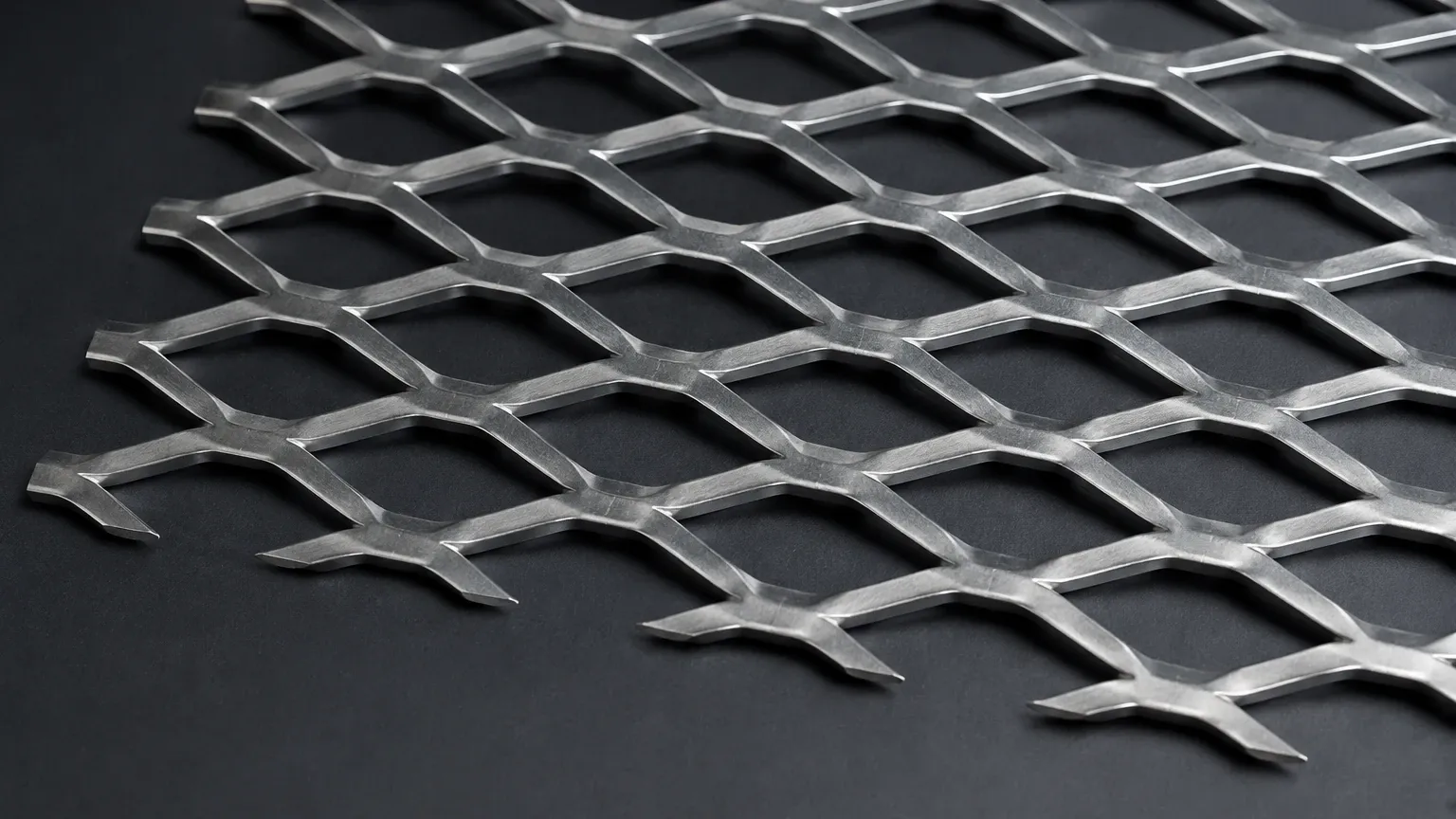
1. 3/4 (The Diamond Size): This refers to the nominal width of the diamond opening, measured as the Short Way of the Diamond (SWD). In a standard 3/4 #9 configuration, the SWD is typically 0.923 inches, while the Long Way of the Diamond (LWD) is approximately 2.000 inches. These dimensions determine the size of the particles or objects the mesh can retain or deflect.
2. #9 (The Gauge or Thickness): This indicates the thickness of the material before it is expanded. In the context of expanded metal, #9 generally corresponds to a thickness of approximately 0.134 inches (for carbon steel) or similar decimal equivalents for stainless steel. This thickness provides the structural rigidity required for high-pressure or high-load environments.
Unlike woven wire mesh, expanded metal is produced from a single solid sheet of metal that is simultaneously slit and stretched. This process creates a continuous piece of material without joins or welds, ensuring that the structural integrity is maintained throughout the sheet. For applications requiring a smooth surface, the material can be "flattened" after expansion, reducing the overall thickness but increasing the surface contact area.
Material Considerations for Expanded Metal 3/4 #9
The performance of expanded metal 3/4 #9 is heavily influenced by the base material. While carbon steel is common for general industrial use, specialized sectors such as pharmaceutical and chemical processing require materials with superior corrosion resistance and hygienic properties.
Stainless Steel (304 and 316)
For filtration and processing environments, stainless steel is the preferred choice. Grade 304 offers excellent resistance to atmospheric corrosion and many organic and inorganic chemicals. However, for more aggressive environments—such as those involving chlorides or high-salinity water—Grade 316 is recommended due to its molybdenum content, which provides enhanced pitting resistance.
Aluminum
In applications where weight is a critical factor, such as aerospace or portable filtration units, aluminum expanded metal 3/4 #9 offers a high strength-to-weight ratio. It is naturally resistant to corrosion and provides a clean, aesthetic finish without the need for additional coatings.
Specialty Alloys
For extreme conditions involving high temperatures or highly corrosive media, Kaifil can manufacture expanded metal using specialty alloys like Monel, Inconel, or Hastelloy. These materials ensure that the expanded metal 3/4 #9 maintains its structural properties even under thermal cycling or chemical exposure that would degrade standard steels.
Structural and Filtration Advantages
The unique geometry of expanded metal 3/4 #9 offers several engineering advantages over other types of metal mesh or perforated sheets. These benefits make it an ideal candidate for both primary filtration and as a support substrate for finer filter media.
High Strength-to-Weight Ratio
Because the expansion process stretches the metal rather than punching it out (which would create waste), the resulting mesh is stronger per pound than the original sheet. The interconnected bonds of the diamonds distribute loads evenly across the panel, making expanded metal 3/4 #9 exceptionally resistant to impact and deformation.
Optimal Open Area
Standard (raised) expanded metal 3/4 #9 typically provides an open area of approximately 65% to 75%. This high percentage of open area allows for high flow rates with minimal pressure drop, which is critical in hydraulic and liquid filtration systems. The angled strands of the mesh also create a three-dimensional surface that can help break up laminar flow, potentially enhancing the efficiency of certain filtration processes.
One-Piece Construction
The lack of welds or weaves means there are no points of failure that can unravel or corrode preferentially. In filtration applications, this prevents the migration of media and ensures that the structural support for finer meshes (such as wire cloth) remains stable over thousands of pressure cycles.
Key Evaluation Criteria for Engineers
When specifying expanded metal 3/4 #9 for a project, engineers must look beyond the basic style number. Several secondary factors will determine the success of the component in the field.
Strand Width and Thickness
The strand width is the amount of metal between the openings. For #9 gauge material, the strand width is typically around 0.150 inches. The combination of strand width and material thickness determines the "heaviness" of the mesh and its ability to withstand mechanical stress. Increasing the strand width can provide more surface area for bonding or welding but will decrease the percentage of open area.
Standard vs. Flattened
* Standard (Raised): The strands are set at a sharp angle to the plane of the sheet. This provides maximum rigidity and a slip-resistant surface. In filtration, the raised profile can act as a pre-filter for larger debris.
* Flattened: The raised mesh is passed through a cold-roll reducing mill. This flattens the strands and bonds into a single plane. Flattened expanded metal 3/4 #9 is thinner (usually around 0.120 inches) and provides a smooth surface that is easier to clean and safer to handle in manual maintenance environments.
Dimensional Tolerances
For precision filtration components, such as filter cartridges or internal support cores, tight tolerances on the SWD and LWD are essential. Variations in the expansion process can lead to inconsistencies in the mesh size, which may affect flow distribution or the fitment of the component within a housing. Kaifil utilizes advanced manufacturing controls to ensure that every sheet of expanded metal 3/4 #9 meets strict dimensional requirements.
Common Risks and Mitigation in Procurement
Procuring industrial-grade expanded metal involves navigating potential pitfalls that can lead to premature failure or increased total cost of ownership. Identifying these risks early in the design phase is crucial.
1. Corrosion Under Insulation (CUI) and Crevice Corrosion: In chemical plants, if the expanded metal is used as a guard or support, moisture can become trapped at the bond points. Selecting the correct grade of stainless steel and ensuring proper passivation after fabrication can mitigate this risk.
2. Edge Fraying and Safety: Expanded metal has sharp edges where the diamonds are cut. For components that require frequent handling or cleaning, specify "random sheared" or "bond sheared" edges carefully. In many cases, framing the expanded metal or using a U-edging profile is necessary to protect personnel and prevent damage to adjacent filter media.
3. Material Substitution: Not all #9 gauge materials are created equal. Some suppliers may provide a "lightweight" version of 3/4 #9 that uses thinner strands to reduce costs. Engineers should always verify the weight per square foot (typically around 1.80 lbs for standard carbon steel 3/4 #9) to ensure they are receiving the structural capacity they designed for.
Applications in Industrial Filtration and Beyond
While expanded metal 3/4 #9 is a staple in the construction and architectural industries, its role in industrial filtration is where its technical properties are most rigorously tested.
Support Cores for Filter Cartridges
In large-scale industrial filter cartridges, expanded metal 3/4 #9 serves as the internal or external support core. It provides the necessary collapse strength to protect fine wire mesh or pleated paper media from high differential pressures. Its high open area ensures that the core does not become a bottleneck for flow.
Intake Screens and Trash Racks
In water treatment and power generation, expanded metal is used to create intake screens that prevent large debris from entering pumps and turbines. The 3/4-inch opening is ideal for capturing organic matter and industrial waste while allowing water to pass through freely.
Centrifuge Baskets
In the chemical and food industries, expanded metal is often formed into cylindrical baskets for centrifuges. The 3/4 #9 specification provides the centrifugal strength required to hold heavy loads of solids while allowing the liquid phase to be expelled efficiently.
Customization Options with Kaifil
Every industrial application has unique requirements that standard off-the-shelf products may not satisfy. Kaifil specializes in the customization of Perforated & Expanded Metal to meet specific engineering challenges. Our capabilities include:
* Custom Slitting and Shearing: We provide expanded metal in precise dimensions to reduce on-site fabrication time and waste.
* Forming and Welding: Our facility can roll expanded metal 3/4 #9 into cylinders, cones, or custom shapes, providing ready-to-install filtration components.
* Surface Finishing: We offer a variety of finishes, including pickling, passivation, electropolishing, and powder coating, to enhance corrosion resistance and meet hygiene standards for food and pharmaceutical use.
* Integration with Wire Mesh: Kaifil can sinter or weld expanded metal supports to fine stainless steel wire mesh, creating composite filter elements that combine high filtration accuracy with extreme structural strength.
Conclusion: Making Informed Selection Decisions
Selecting expanded metal 3/4 #9 requires a comprehensive understanding of the operational environment, including mechanical loads, flow requirements, and chemical exposure. By focusing on the technical specifications—such as SWD, LWD, material grade, and the choice between standard or flattened profiles—engineers can optimize the performance of their filtration and structural systems.
At Kaifil, we combine manufacturing expertise with deep engineering knowledge to support our global customers in selecting and designing the right filtration components. Whether you are developing a new hydraulic system or upgrading a chemical processing line, our team is available to provide technical guidance and high-quality customized solutions. To explore our full range of capabilities and discuss your specific application requirements, we invite you to review product options and application support on our dedicated product pages.
