


Expanded Metal 3/4
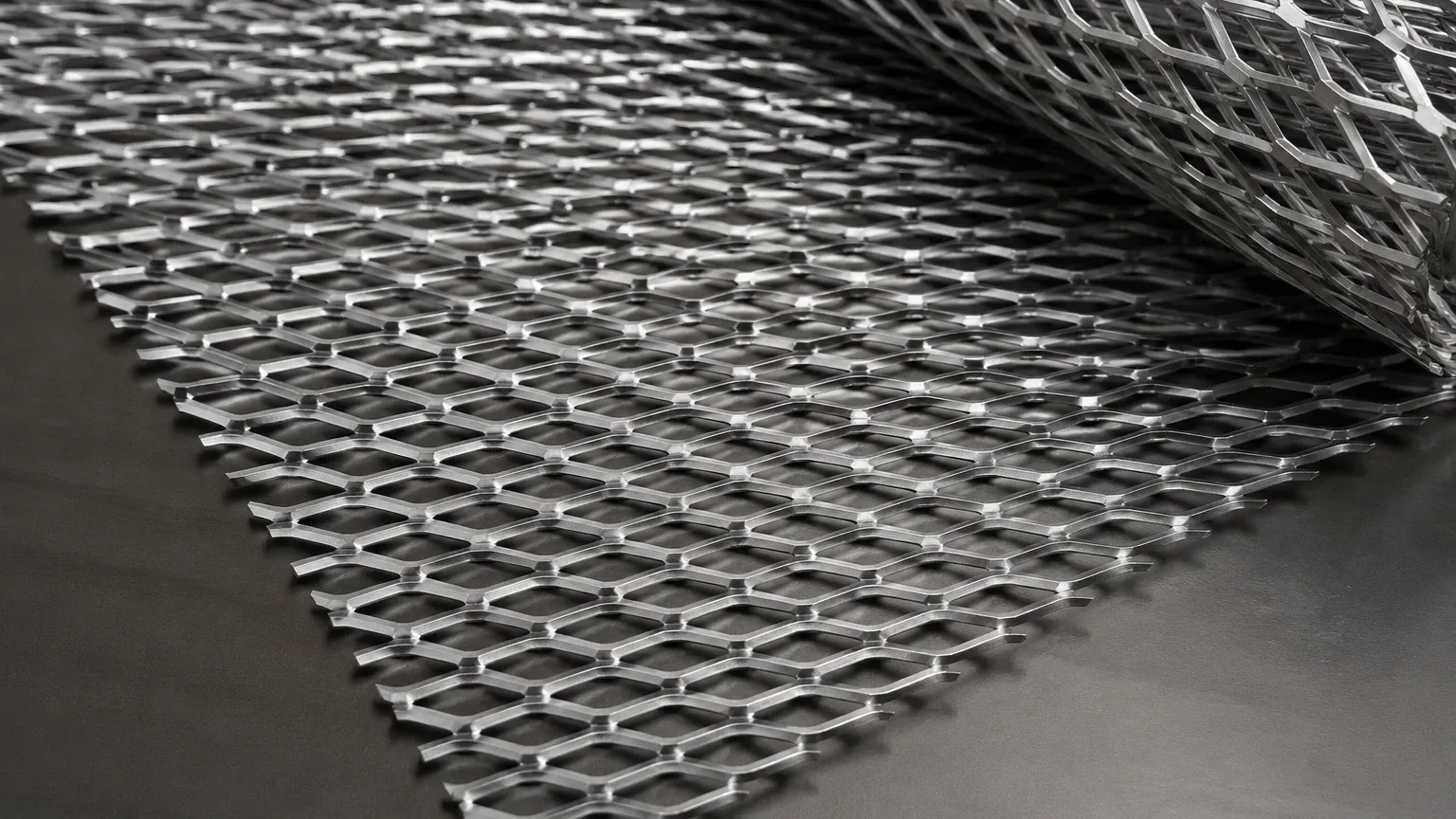
In the realm of industrial filtration and structural fabrication, expanded metal 3/4 stands as one of the most versatile and widely utilized specifications. Characterized by its diamond-shaped openings, this material is produced by simultaneously slitting and stretching a solid metal sheet. For engineers and procurement specialists, understanding the technical nuances of the 3/4-inch designation is critical for ensuring mechanical integrity, filtration efficiency, and long-term durability in demanding environments.
At Kaifil, we specialize in the precision manufacturing of stainless steel filtration components. While expanded metal is often viewed as a general-purpose industrial product, its application within specialized filtration systems requires a deep understanding of material science and fluid dynamics. This guide explores the technical specifications, performance variables, and engineering considerations of expanded metal 3/4 to assist in informed decision-making for industrial projects.
Understanding the Specifications of Expanded Metal 3/4
The term "3/4" in expanded metal nomenclature primarily refers to the nominal dimension of the diamond opening, specifically the Short Way of Design (SWD). However, it is a common misconception that the opening is exactly 0.75 inches. In standard industrial grading, a 3/4-inch style typically features an SWD of approximately 0.923 inches and a Long Way of Design (LWD) of roughly 2.10 inches.
Key Dimensional Variables
To accurately specify expanded metal 3/4 for a filtration or structural project, several variables must be defined:
* SWD (Short Way of Design): The distance from the center of one bond to the center of the next bond across the short axis of the diamond.
* LWD (Long Way of Design): The distance across the long axis of the diamond, measured from bond center to bond center.
* Strand Width: The amount of metal fed into the expanding machine between slits, which determines the thickness of the "mesh" walls.
* Strand Thickness: The gauge or thickness of the original base metal sheet.
* Style Designation: Often referred to by numbers such as #9 or #13. For example, 3/4 #9 indicates a heavier, thicker strand compared to 3/4 #13, which is lighter and offers more open area.
When evaluating Perforated & Expanded Metal, the choice between these two media types often depends on the required open area and the specific mechanical stresses the component will face. Expanded metal is unique because the process of stretching the metal creates a three-dimensional structure that provides inherent rigidity without the weight of a solid plate.
Manufacturing Processes: Standard vs. Flattened Configurations
Expanded metal 3/4 is available in two primary forms: Standard (Raised) and Flattened. The choice between these configurations significantly impacts the flow characteristics and physical profile of the filtration component.
Standard (Raised) Expanded Metal
Standard expanded metal comes directly from the expanding machine. The strands and bonds are set at a uniform angle to the plane of the sheet. This creates a textured, three-dimensional surface. In filtration applications, the raised profile can be advantageous for creating turbulence in fluid streams, which may prevent the rapid buildup of a filter cake on the surface. Additionally, the raised structure provides exceptional grip and structural stiffness, making it an ideal choice for heavy-duty support cages in industrial filter cartridges.
Flattened Expanded Metal
Flattened expanded metal undergoes an additional cold-rolling process after expansion. This process flattens the strands and bonds into the same plane as the sheet, resulting in a smooth, level surface. Flattened expanded metal 3/4 is often preferred when the filter media needs to be flush against another surface, such as a fine wire mesh or a synthetic membrane. It reduces the risk of mechanical abrasion against softer filter layers and is easier to clean in applications where surface-loading debris must be removed periodically.
Material Selection for Industrial Filtration Environments
Material compatibility is the cornerstone of effective filtration design. Because expanded metal 3/4 is used across diverse industries—from chemical processing to food production—the base alloy must be selected based on its resistance to corrosion, temperature, and mechanical wear.
Stainless Steel (304, 316, and 316L)
As a specialist in stainless steel solutions, Kaifil frequently recommends 300-series stainless steel for expanded metal components.
* Grade 304: The standard choice for general industrial applications. It offers excellent formability and good corrosion resistance for water treatment and basic chemical filtering.
* Grade 316/316L: Contains molybdenum, which provides superior resistance to chlorides and pitting. This is essential for pharmaceutical, marine, and high-acid chemical environments. The "L" (low carbon) variant is preferred for components requiring extensive welding to prevent carbide precipitation.
Specialty Alloys and Carbon Steel
While stainless steel is the benchmark for durability, carbon steel expanded metal 3/4 may be used in hydraulic oil systems or non-corrosive gas filtration where cost-efficiency is prioritized and the environment is controlled. For lightweight applications or those requiring specific thermal conductivity, aluminum is also an option, though it lacks the mechanical strength of steel in high-pressure filtration cycles.
Performance Characteristics in Fluid and Air Filtration
The performance of expanded metal 3/4 is measured by its ability to facilitate flow while providing the necessary mechanical support. Unlike fine wire cloth, 3/4-inch expanded metal is rarely used as the primary filtration stage for fine particulates. Instead, it serves critical roles in pre-filtration and structural reinforcement.
Open Area and Flow Rates
The percentage of open area is a vital metric for engineers calculating pressure drop across a filter. For 3/4-inch expanded metal, the open area typically ranges from 60% to 80%, depending on the strand width and gauge. A higher open area reduces the initial pressure drop (ΔP), allowing for higher flow velocities. However, this must be balanced against the need for structural support. If the strands are too thin, the mesh may deform under the high differential pressures encountered as a filter becomes loaded with contaminants.
Role as a Support Medium
In high-pressure hydraulic or gas filtration, fine mesh layers are often too delicate to withstand the force of the fluid flow. Expanded metal 3/4 acts as a robust "skeleton." By placing a layer of 3/4-inch expanded metal on the downstream side of a fine filter, the pressure is distributed across the rigid strands of the expanded metal, preventing the fine mesh from bursting or migrating. In pleated filter designs, expanded metal provides the necessary spacing between pleats to ensure the entire surface area of the filter media is utilized.
Structural Integrity and Load-Bearing Capabilities
One of the primary reasons engineers specify expanded metal 3/4 over other materials is its strength-to-weight ratio. Because the material is a single piece of metal with no joints or welds (unlike woven wire mesh), it possesses high structural integrity.
Directional Strength
It is important to note that expanded metal has different mechanical properties depending on the orientation of the diamonds. The sheet is significantly stronger across the Short Way of Design (SWD) than the Long Way of Design (LWD). When designing cylindrical filter cartridges or rectangular panels, the orientation of the 3/4-inch diamonds must be aligned with the primary stress vectors to prevent buckling.
Resistance to Mechanical Stress
In industrial environments, filters are often subjected to vibration, pressure surges, and mechanical cleaning. The solid bonds of expanded metal 3/4 ensure that the openings remain consistent in size and shape even under stress. This consistency is crucial for maintaining the integrity of the filtration system over thousands of operational hours. Unlike perforated metal, which can develop stress cracks between the punched holes, the expanded metal process redistributes stress along the continuous strands, enhancing the fatigue life of the component.
Engineering Guidelines for Custom Filter Design
When integrating expanded metal 3/4 into a custom filtration solution, several practical engineering considerations must be addressed during the design phase.
Edge Treatments and Safety
Standard expanded metal has "sharp" edges where the diamonds are cut. For industrial filters that require frequent manual handling or replacement, these edges must be addressed. Options include:
1. Framing: U-edging or angle iron can be welded around the perimeter to encapsulate the sharp strands.
2. Random vs. Bond Shearing: Engineers must specify if the sheet should be sheared through the bonds (leaving a closed edge) or randomly (leaving open prongs). Bond shearing provides a cleaner, safer edge but may require tighter manufacturing tolerances.
Welding and Fabrication
Stainless steel expanded metal 3/4 is highly weldable. However, because the strands are relatively thin compared to the overall sheet size, care must be taken to avoid burn-through. TIG (Tungsten Inert Gas) welding is often preferred for precision filtration components to ensure clean, slag-free joints that do not introduce contaminants into the process stream.
Cleaning and Maintenance
For reusable filtration systems, the cleanability of the expanded metal is a key factor in the total cost of ownership. The open, diamond-shaped geometry of the 3/4-inch style allows for effective backwashing or ultrasonic cleaning. In the food and beverage industry, ensuring that the bonds are smooth and free of crevices is essential for maintaining sanitary conditions and preventing bacterial growth.
Conclusion: Selecting the Right Solution
Expanded metal 3/4 is more than just a structural material; it is a critical engineering component that ensures the efficiency and safety of industrial filtration systems. Whether used as a protective outer guard, a rigid support core, or a primary screen for large debris, its performance depends on the precise calibration of material grade, strand dimensions, and surface finish.
At Kaifil, we combine manufacturing expertise with deep engineering knowledge to provide customized filtration solutions. By understanding the specific demands of your application—from chemical compatibility to pressure requirements—we help you select the optimal configuration of expanded metal to achieve long-lasting, cost-effective performance. For technical assistance or to discuss your specific project requirements, we invite you to Review product options and application support and leverage our experience in precision metal filtration.
